Dyson vs Shark Air Purifier: Which is Best
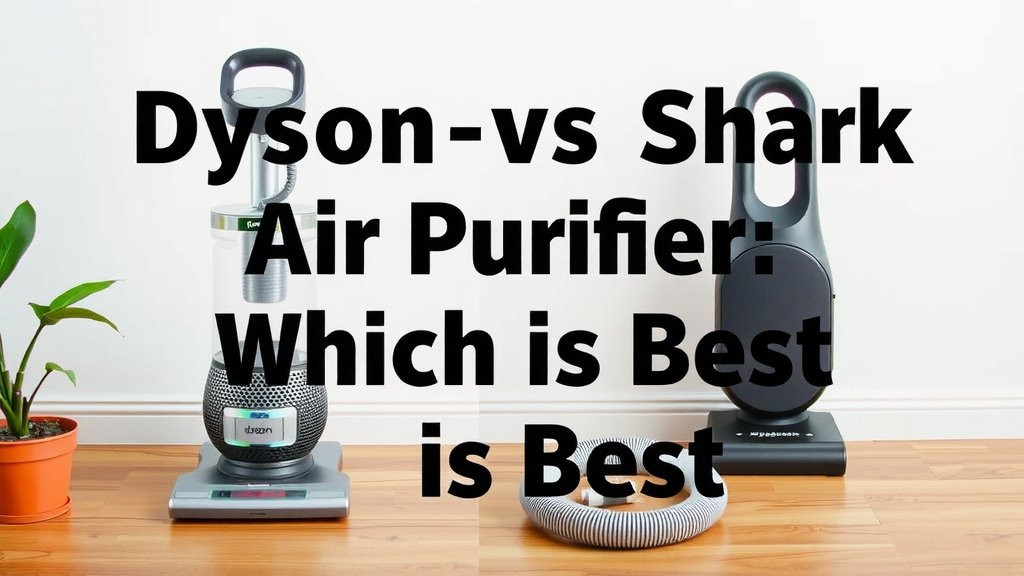
Navigating the Dyson vs. Shark air purifier showdown in 2026 still boils down to what you prioritize for your clean air sanctuary. While Dyson often pushes the envelope with cutting-edge tech and superior filtration, Shark consistently delivers a smart blend of robust features and wallet-friendly pricing. Forget a universal “winner”; the ultimate Dyson vs. Shark air purifier champion is the one that perfectly aligns with your unique clean air goals and budget.
We’ve researched both brands extensively to help you make an informed decision. You might be wondering about the filtration capabilities or perhaps the smart features each offers. Understanding these differences will help you pick the purifier that will truly make your air cleaner and your home more comfortable.
- Dyson excels in cutting-edge tech and filtration.
- Shark provides great value and strong performance.
- Consider your budget and specific air quality needs.
- Both brands offer units with advanced sensing and auto modes.
- Think about room size and desired features like heating or cooling.
Let’s break down what makes each brand stand out, so you can feel confident about your choice.
Comparing Dyson and Shark Air Purifier Technologies
When you’re looking to clean the air in your home, both Dyson and Shark offer compelling options. You might be wondering which brand uses the most effective technology for your needs. We’ve looked into what makes each purifier tick, so you can make a choice that feels right for your family.
Filtration Systems: The Heart of Clean Air
At its core, an air purifier is all about its filters. Both Dyson and Shark use multi-stage filtration, but they have different approaches. It’s essential to understand these differences to ensure you’re getting the air quality you expect.
Dyson’s Advanced Filtration Approach
Dyson units are known for their fully sealed filtration systems. This means that the air your purifier draws in is forced through the filters, and nothing escapes around the edges. They typically use a combination of activated carbon and HEPA filters. The HEPA filter captures 99.97% of particles as small as 0.3 microns. This includes allergens like pollen, dust mites, and pet dander. The activated carbon helps capture gases and odors. We found Dyson’s claim of capturing these tiny particles very impressive for allergy sufferers.
Shark’s Multi-Layered Defense
Shark also uses a multi-stage system, often featuring a HEPA filter, an activated carbon filter, and sometimes a pre-filter. Their HEPA filters also capture a high percentage of tiny particles, often meeting the same 0.3-micron standard as Dyson. Some Shark models also include an odor-neutralizing layer. While their filtration is robust, we found Dyson’s emphasis on the sealed system offers a slight edge in preventing bypass leakage. However, for many homes, Shark’s filtration is more than adequate.
Smart Features and Connectivity
Modern air purifiers often come with smart capabilities. This can include app control, voice commands, and automatic adjustments based on air quality readings. Let’s see how Dyson and Shark stack up here.
Dyson’s Integrated Smart Ecosystem
Dyson often integrates its purifiers into a broader smart home ecosystem. You can usually control Dyson purifiers via their own app, which provides detailed air quality reports. This app allows you to set schedules, monitor filter life, and even control the unit remotely. Many Dyson models also offer voice control compatibility with popular assistants. They are designed to be a connected part of your smart home.
Shark’s User-Friendly Connectivity
Shark also offers smart features, though sometimes with a slightly simpler interface. Their apps typically allow you to monitor air quality, control fan speeds, and set timers. Remote operation is a common feature across their connected models. While they might not always integrate as deeply into a wider smart home network as some Dyson units, Shark provides convenient control for most users. You can easily manage your purifier from your phone, which is a big plus.
Performance and Coverage Areas
An air purifier needs to be effective for the space you intend to use it in. Coverage area and how quickly the unit cleans the air are key performance metrics.
Dyson’s Targeted Airflow Technology
Dyson purifiers are known for their unique airflow design, often projecting purified air across a room. They focus on both purification and air circulation. Many models aim to purify an entire room evenly. They provide coverage area ratings, so you can match a unit to your room size. We found that their directed airflow can be beneficial for quickly circulating clean air where you need it most.
Shark’s Powerful Air Movement
Shark units also provide good air movement and coverage. They often boast high Clean Air Delivery Rates (CADR), which is a measure of how quickly a purifier can clean a room of smoke, dust, and pollen. Shark offers various models designed for different room sizes, from small bedrooms to larger living areas. Their focus is on delivering powerful purification for the space they are rated for. Many users report a noticeable difference in air quality relatively quickly.
Design and Additional Features
Beyond performance, the look of the appliance and any extra functions can influence your decision. Both brands offer unique styles and features.
Dyson’s Iconic and Functional Design
Dyson purifiers often stand out with their distinctive, award-winning designs. They frequently incorporate multiple functions into a single unit, such as heating or cooling capabilities. This multi-functionality can be a major selling point, reducing the need for multiple appliances. The sleek aesthetic often fits well into modern home decor.
Shark’s Practical and Versatile Models
Shark focuses on practical design and versatility. While their aesthetic is generally more traditional, they often include user-friendly features. Some models offer oscillation to help distribute air more widely. You might also find models with convenient carrying handles or intuitive control panels. Their aim is to provide effective purification with ease of use.
Cost and Value Proposition
Price is often a deciding factor. Both brands occupy different positions in the market when it comes to cost.
Dyson: Premium Investment
Dyson air purifiers are generally in the premium price bracket. You’re paying for advanced technology, unique designs, and multi-functional capabilities. Replacement filters can also be a recurring cost to consider. However, many users feel the performance and innovation justify the higher upfront investment.
Shark: Balanced Affordability
Shark typically offers a more budget-friendly entry point. You can find highly effective air purifiers from Shark at a lower price than comparable Dyson models. While they might not always have all the bells and whistles of Dyson’s top-tier units, they provide excellent value for the money. Replacement filters for Shark units are also generally more affordable.
Here’s a quick checklist to help you think about your choice:
- Do you prioritize the absolute latest technology?
- Is a sealed filtration system a must-have for you?
- Are you looking for heating or cooling functions in addition to purification?
- What is your budget for the initial purchase and ongoing filter costs?
- How large is the room you need to purify?
- Do you prefer a sleek, modern design or a more traditional look?
Conclusion
Choosing between a Dyson and a Shark air purifier boils down to your priorities. Dyson offers premium technology and innovative features, often in multi-functional units, making it a higher investment. Shark provides excellent value with strong purification performance at a more accessible price point. We found both brands deliver effective air cleaning, but Dyson leans towards advanced integration, while Shark focuses on straightforward, powerful performance. Your best bet is to review your budget, room size, and desired features, then select the model that best aligns with your household’s air quality goals.
Frequently Asked Questions
Are Dyson replacement filters more expensive than Shark’s?
Yes, generally you will find that Dyson replacement filters tend to be more expensive. This is often due to the advanced materials and sealed system technology Dyson incorporates into their filters. Shark filters are typically more budget-friendly, offering a lower recurring cost for upkeep.
Which brand is better for allergy sufferers?
Both brands use HEPA filters capable of capturing common allergens like pollen and dust. However, Dyson’s fully sealed filtration system offers a slight advantage by ensuring all captured particles are trapped within the filters, preventing any bypass. This can be particularly beneficial for individuals with severe allergies.
Do Shark purifiers offer smart home integration?
Yes, many Shark air purifiers come with smart features, including app control for remote operation and air quality monitoring. While they may not always integrate as broadly into a smart home ecosystem as some Dyson models, they offer convenient connectivity for most users.
Can I get a Dyson or Shark purifier that also heats or cools?
Dyson is well-known for offering multi-functional units that combine air purification with heating or cooling capabilities. While Shark primarily focuses on purification, you may occasionally find models with additional features like oscillation, but dedicated heating or cooling is less common.
Which brand is easier to maintain for the average user?
Both brands have designed their purifiers with user-friendliness in mind. Filter replacement is straightforward for both Dyson and Shark models. Shark’s interface and app controls are often considered slightly simpler, which might appeal to users who prefer less complexity.