Electronic Air Cleaner vs Air Purifier: Which is Best
Navigating the world of home air quality in 2026 can feel overwhelming. You’ve probably heard the terms “electronic air cleaner” and “air purifier” thrown around, but what’s the real difference? While both are on a mission to refresh your indoor atmosphere, they employ distinct technologies. Electronic air cleaners leverage electrostatic precipitation to zap airborne particles, whereas air purifiers rely on physical filters, which often prove superior at snagging those microscopic troublemakers. Understanding these fundamental distinctions is your secret weapon to choosing the perfect solution for your breathing space.
You might be wondering which device is best for your specific air quality concerns. While both help reduce airborne irritants, the type of pollutants you’re targeting and your maintenance preferences play a big role. Many experts agree that filter-based purifiers are generally preferred for their consistent particle capture. We’ll help you decide which fits your home best.
- Electronic air cleaners use electricity to charge particles.
- Air purifiers typically use physical filters to trap particles.
- Filter-based purifiers can be more effective for small particles.
- Maintenance needs differ significantly between the two.
- Your home’s specific air quality issues matter most.
Let’s get into the nitty-gritty of electronic air cleaners versus air purifiers so you can make a confident choice for cleaner air in your home.
It can feel like a puzzle trying to pick the right air cleaning device for your home. You want cleaner air, but the options seem endless. Let’s break down the main differences between electronic air cleaners and air purifiers. Understanding how they work is your first step to breathing easier.
Electronic Air Cleaners vs. Air Purifiers: Understanding the Core Differences
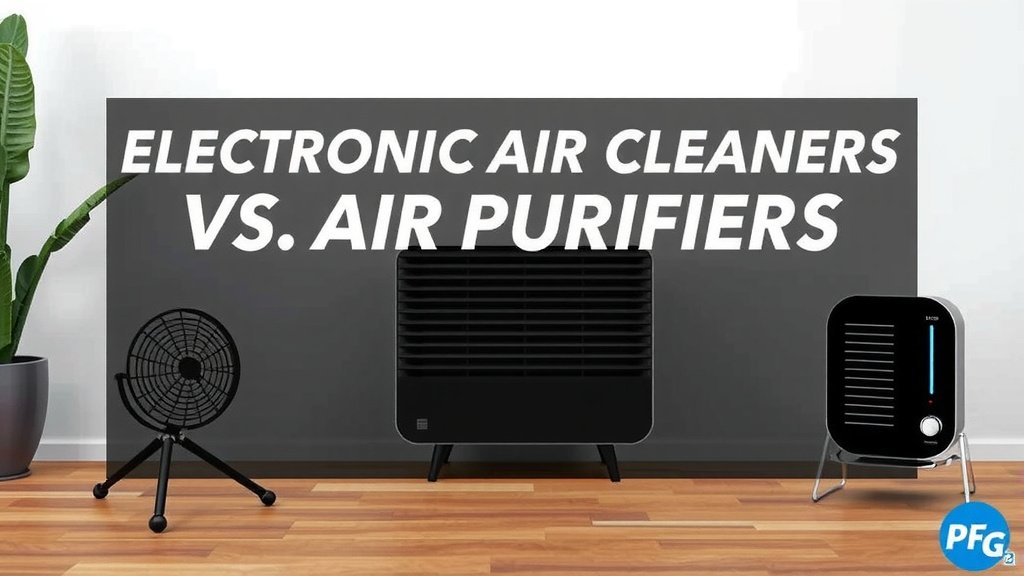
The main difference lies in how they capture airborne particles. Electronic air cleaners use electricity. Air purifiers usually rely on physical filters. We found that this fundamental difference impacts their effectiveness and maintenance.
How Electronic Air Cleaners Work
Think of an electronic air cleaner like a magnet for dust. It uses electrostatic precipitation. This means it gives tiny particles an electric charge as they pass through. Then, oppositely charged plates attract and trap these charged particles. It’s quite clever!
The Charging Process
First, the air passes through an ionization section. Here, a high voltage creates ions. These ions then attach to the airborne particles, like dust, pollen, and smoke. So, everything gets a little zap.
The Collection Plates
Next, the charged particles move toward metal plates. These plates have the opposite electrical charge. Because opposites attract, the particles stick to the plates. They stay there until you clean them off. We found that this method is great for capturing larger particles.
How Air Purifiers Work
Air purifiers are more like a sieve for your air. They use a series of physical filters to trap pollutants. You’ll often find multiple types of filters working together. This layered approach can tackle a wide range of particle sizes. Many experts agree that HEPA filters are a benchmark for good filtration (CDC).
The Role of HEPA Filters
High-Efficiency Particulate Air (HEPA) filters are standard in many purifiers. A true HEPA filter must capture at least 99.97% of particles 0.3 microns in size. This includes things like pet dander, mold spores, and certain bacteria. For very small particles, a good HEPA filter is hard to beat. We found that for allergy sufferers, this is a key feature.
Other Common Filter Types
Beyond HEPA, you might see pre-filters. These catch larger debris like hair and lint, protecting the main filter. Activated carbon filters are also common. They are excellent at absorbing odors and gases from cooking, pets, or smoke. Some units use UV-C light too, which can help neutralize germs.
Effectiveness and Particle Capture
When it comes to catching particles, effectiveness varies. Electronic air cleaners excel at trapping larger dust and dander. However, their efficiency can decrease over time. This happens as the collection plates get dirty. You might also find they produce a small amount of ozone. This can be an irritant for some people (EPA).
Air purifiers with good filters, especially HEPA, offer more consistent particle capture. They are generally better at trapping the really small stuff, like viruses and ultrafine particles. Research indicates that HEPA filters are highly effective at reducing airborne allergens and pathogens. We found that this consistent performance is a major plus.
Maintenance and Ongoing Costs
Maintenance is a big consideration for both. Electronic air cleaners require regular cleaning of their collection plates. This often involves washing them. If you don’t clean them, their performance drops. Some models have washable pre-filters too.
Air purifiers require filter replacement. These filters aren’t typically washable. You’ll need to buy new ones periodically. The cost and frequency of replacement depend on the purifier model and your air quality. We found that while filter replacement can be an ongoing cost, it’s often straightforward. Many manufacturers recommend changing filters every 6-12 months.
Ozone Production: A Key Distinction
This is an important point. Electronic air cleaners, due to the high voltage used in ionization, can produce small amounts of ozone. While ozone can help neutralize some pollutants, it’s also an irritant. The U.S. Food and Drug Administration (FDA) suggests that ozone generators should not be used in occupied spaces.
Most modern air purifiers, especially those using only filters, do not produce ozone. If a purifier has a UV-C light feature, it’s designed to be safe. This lack of ozone production makes filter-based purifiers a safer choice for many homes, particularly for those with asthma or other respiratory sensitivities. Many guidelines recommend avoiding ozone-producing devices for indoor air cleaning (American Lung Association).
Cost Considerations
Initial purchase prices can vary widely for both types. Generally, basic electronic air cleaners might have a lower upfront cost. However, you need to factor in the cost of replacement filters for air purifiers over time. Sometimes, the ongoing cost of filters can make a filter-based unit more expensive in the long run.
We found that it’s wise to look at the total cost of ownership. Consider the price of the unit plus the estimated cost of replacement filters or cleaning supplies over a few years. This gives you a clearer picture of which is more budget-friendly for your household.
Making Your Choice: A Quick Checklist
To help you decide, ask yourself these questions:
- What are my biggest air quality concerns (e.g., dust, allergens, odors, smoke)?
- How much time am I willing to spend on maintenance each month?
- Are ozone or potential irritants a concern for anyone in my household?
- What is my budget for the initial purchase and ongoing costs?
- Do I need to capture very small particles like viruses or fine dust?
Summary Table: Electronic Air Cleaner vs. Air Purifier
| Feature | Electronic Air Cleaner | Air Purifier (Filter-Based) |
|---|---|---|
| Primary Technology | Electrostatic Precipitation (Ionization) | Physical Filters (e.g., HEPA, Carbon) |
| Particle Capture | Good for larger particles (dust, dander); effectiveness can decrease as plates dirty. | Excellent for a wide range of particles, especially small ones with HEPA filters. |
| Ozone Production | Can produce small amounts of ozone. | Typically produces little to no ozone. |
| Maintenance | Regular cleaning of collection plates required. | Periodic replacement of filters needed. |
| Odor/Gas Removal | Limited; may require activated carbon add-ons. | Effective with activated carbon filters. |
Conclusion
Deciding between an electronic air cleaner and an air purifier comes down to your priorities. Electronic air cleaners use electrostatic precipitation to capture larger particles, but can produce ozone. Air purifiers, especially those with HEPA filters, offer consistent and effective capture of a wide range of particle sizes, with no ozone concerns. You’ve learned about their core technologies, effectiveness, and maintenance needs. Now, consider what matters most for your home’s air quality. Your next step is to evaluate your specific air concerns and choose the device that best fits your health, budget, and maintenance comfort.
Frequently Asked Questions
Are electronic air cleaners safe if they produce ozone?
Electronic air cleaners can produce small amounts of ozone, which is a lung irritant. While some ozone can help neutralize pollutants, the U.S. Food and Drug Administration (FDA) advises against using ozone generators in occupied spaces. For this reason, many people prefer filter-based air purifiers for safer indoor air quality.
Which type is better for allergies and asthma?
For allergies and asthma, a high-quality air purifier with a true HEPA filter is generally recommended. HEPA filters are highly effective at capturing tiny allergens like pollen, dust mites, and pet dander. Since most filter-based purifiers don’t produce ozone, they are a safer choice for sensitive individuals.
How often do I need to clean or replace filters?
Electronic air cleaners require frequent cleaning of their collection plates, often weekly or bi-weekly, depending on use. Air purifiers need their filters replaced, typically every 6 to 12 months, depending on the model and your home’s air quality. Always check your manufacturer’s recommendations.
Can an air purifier remove cooking smells and smoke?
Yes, many air purifiers can effectively remove odors and smoke, especially if they include an activated carbon filter. This type of filter absorbs gases and volatile organic compounds (VOCs). Electronic air cleaners are less effective at odor removal on their own.
What is the total cost of ownership for each type?
The initial cost of an electronic air cleaner might be lower. However, you’ll need to factor in regular cleaning supplies. Air purifiers have an upfront cost plus the ongoing expense of replacement filters. Research the cost and lifespan of replacement filters for the air purifier you are considering to get a true picture of long-term expenses.