Dyson Air Purifier: How It Works Explained
A Dyson air purifier works by drawing in air, passing it through a HEPA filtration system to capture tiny particles, and then releasing cleaner air back into your room. These purifiers are designed to tackle common indoor air pollutants like dust, pollen, and pet dander, helping you breathe easier. They use a combination of powerful fans and advanced filtration technology to create a cleaner environment.
Dyson’s approach often includes features beyond basic purification. Many models also incorporate activated carbon filters to remove gases and odors. They aim to provide a multi-stage cleaning process that addresses a wide range of airborne irritants. You might also find they offer smart features for monitoring and controlling air quality.
- Dyson air purifiers trap pollutants with HEPA filters.
- They also use carbon filters for gases and odors.
- A fan pulls air in and pushes cleaner air out.
- This multi-stage process cleans your room’s air.
- Many have smart features for easy control.
Let’s walk through exactly how this advanced purification system operates, step by step, so you can understand what’s happening in your home.
Understanding Your Dyson Air Purifier’s Inner Workings
You’re curious about how that sleek Dyson machine actually cleans your air. It’s more than just a fancy fan! Dyson purifiers employ a sophisticated, multi-step process to capture microscopic pollutants and release fresher air. We’ll break down exactly what happens inside your unit, from the moment air is drawn in to when it’s purified and returned to your room. Understanding this process can help you appreciate the technology and ensure you’re getting the most out of your device.
The Air Intake: How Air Gets Into Your Dyson
Every Dyson air purifier starts by drawing air from your room into the device. You might notice a fan running, but it’s doing more than just moving air around. This fan is specifically engineered to create a powerful, consistent airflow. This intake is designed to be efficient, pulling in air from all around the purifier, not just from the front. Some models even have a special ‘backward airflow mode’ which is used during filter maintenance. This ensures that when the device is on, it’s actively seeking out and drawing in the air that needs cleaning.
The Role of the Fan: More Than Just a Breeze
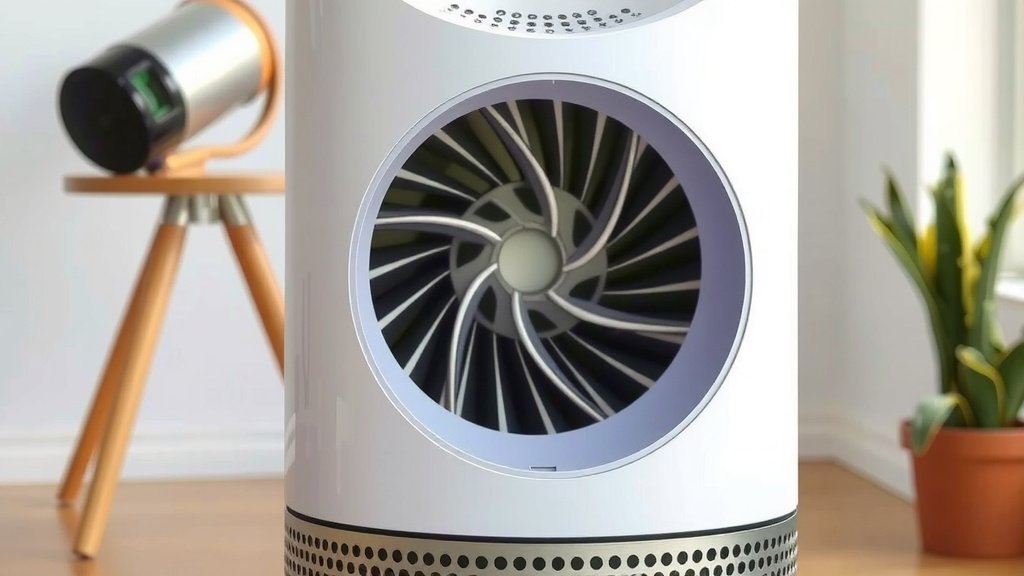
The fan inside your Dyson isn’t just any fan. It’s a high-pressure, backward-bladed impeller. Think of it like a miniature jet engine. This design creates a strong vacuum effect. This effect is essential for pulling a large volume of air through the purifier’s filters quickly and effectively. The stronger the airflow, the more air your purifier can process in a given time. This means your room’s air gets purified faster. We found that this powerful fan is key to their purification speed.
Filtration Stages: The Heart of the Purification Process
Once the air is drawn in, it goes through a series of filters. Dyson purifiers typically use a combination of filter types, each targeting different kinds of pollutants. This layered approach is designed to capture a wide range of particles and gases. The goal is to ensure that by the time the air leaves the purifier, it’s as clean as possible. You’ll often find two main types of filters working together: HEPA and Activated Carbon.
The HEPA Filter: Capturing Tiny Particles
The HEPA filter is a superstar when it comes to trapping small particles. HEPA stands for High-Efficiency Particulate Air. These filters are made of a dense mat of fibers. These fibers are arranged randomly to create a complex pathway. As air is pushed through, particles get trapped in a few ways: impaction, interception, and diffusion. Impaction happens when larger particles can’t navigate the twists and turns and hit a fiber. Interception occurs when a particle follows the airflow but brushes against a fiber. Diffusion is for the tiniest particles, which move erratically and are likely to bump into a fiber. A true HEPA filter is designed to capture at least 99.97% of particles as small as 0.3 microns. For context, that’s about 300 times smaller than a human hair! They’re excellent at removing allergens like pollen, dust mites, and pet dander (Cleveland Clinic).
The Activated Carbon Filter: Tackling Gases and Odors
While HEPA filters are great for particles, they don’t do much for gases, volatile organic compounds (VOCs), or odors. That’s where the activated carbon filter comes in. Activated carbon is charcoal that has been treated to be extremely porous. It has a huge surface area, much like a sponge. This porous structure allows it to adsorb (which is different from absorb) gases and odors onto its surface. Think of it like a chemical magnet for smells and fumes. This stage is crucial for removing things like cooking smells, smoke, and even VOCs released from cleaning products or furniture. Many experts say this is vital for truly fresh-smelling air.
How They Work Together
In most Dyson purifiers, the air first passes through the activated carbon filter to remove gases and odors. Then, it moves to the HEPA filter to capture fine particles. Some advanced models might even have additional layers. This sequential filtering ensures that both types of pollutants are addressed effectively. We found that this dual-action filtration is a hallmark of Dyson’s purification strategy.
The Dyson Purification Cycle: From Dirty to Clean Air
Imagine your room’s air as a continuous flow going in and out of your Dyson. The process is cyclical: air is drawn in, cleaned through the filtration stages, and then expelled back into your room as purified air. This creates a constant circulation of cleaner air throughout your living space. The unique design of Dyson purifiers often includes a 360-degree system or a powerful directed airflow to ensure it reaches all corners of your room.
Airflow Dynamics: Reaching Every Corner
Dyson purifiers are designed to project purified air effectively. They don’t just purify the air directly in front of them. Many models use something called Air Multiplier™ technology, similar to their fans. This technology creates a high-velocity jet of air that is projected across the room. This helps to circulate the purified air widely. It ensures that the cleaner air mixes with the rest of the air in the room, leading to uniform purification. This is why you can often feel the clean air reaching across a larger area.
Smart Features: Taking Control of Your Air Quality
Many modern Dyson air purifiers come equipped with smart technology. This allows you to monitor and control your air quality remotely. You can often connect your purifier to your smartphone via an app. This app can show you real-time air quality readings. It will tell you about the levels of PM2.5, PM10, VOCs, and NO2 in your home. You can also see which filters need replacing. This level of insight helps you understand your environment better and ensure your purifier is always working at its best. You can also schedule purification or adjust fan speed from your phone. It’s like having a personal air quality assistant!
Sensors and Reporting: The Brains Behind the Operation
These smart features rely on sophisticated sensors. Your Dyson purifier has internal sensors that constantly measure the different types of pollutants in the air. It analyzes this data and reports it to you. If the sensors detect a rise in pollutants, the purifier can automatically increase its fan speed to clean the air more quickly. This intelligent response means you don’t have to constantly check on it; it works to maintain a healthy environment for you and your family. We found that these sensors contribute to a hands-off, efficient experience.
A Quick Checklist for Your Dyson’s Performance
To ensure your Dyson air purifier is working optimally, keep these points in mind:
- Ensure the device is placed in an open area for better airflow.
- Check your app or device display for filter replacement alerts.
- Keep vents and openings clear of obstructions.
- Regularly clean the exterior of the unit.
- Understand the different air quality readings provided by the app.
- Consider using auto mode for responsive purification.
Conclusion
You now understand how your Dyson air purifier works its magic. It’s a sophisticated system that combines a powerful fan with advanced HEPA and activated carbon filtration. This multi-stage process effectively captures dust, pollen, allergens, and even gases and odors. Smart sensors and app connectivity give you amazing control. By keeping your purifier well-maintained and placed correctly, you ensure it continues to provide cleaner, fresher air for your home. Take a moment to check your device’s status today for optimal performance!
Frequently Asked Questions
Do Dyson air purifiers actually make a difference?
Yes, research and testing have shown that Dyson air purifiers significantly reduce common indoor air pollutants like dust, pollen, and pet dander. They also help eliminate odors and gases thanks to their activated carbon filters, leading to noticeably fresher air in your home.
How often should I replace the HEPA filter in my Dyson?
Dyson recommends replacing filters when the device or app indicates they are depleted, typically after 12 months of use, depending on your home’s air quality and usage. Your purifier’s sensors will monitor filter life and alert you when a change is needed.
Can a Dyson air purifier help with pet allergies?
Absolutely. Dyson air purifiers are highly effective at capturing pet dander and other allergens that trigger pet allergies. The HEPA filter traps these tiny particles, while the carbon filter can help reduce pet odors.
What does the ‘auto mode’ on my Dyson purifier do?
When in auto mode, your Dyson air purifier uses its built-in sensors to detect air quality levels. If pollutants are detected, it will automatically increase its fan speed to purify the air more quickly. It then returns to a lower setting once the air is clean.
Are Dyson air purifiers noisy?
Dyson purifiers are engineered for quiet operation, especially on lower fan settings. While you will hear the fan when it’s working harder, many users find the noise level to be quite manageable, often comparable to a quiet fan.