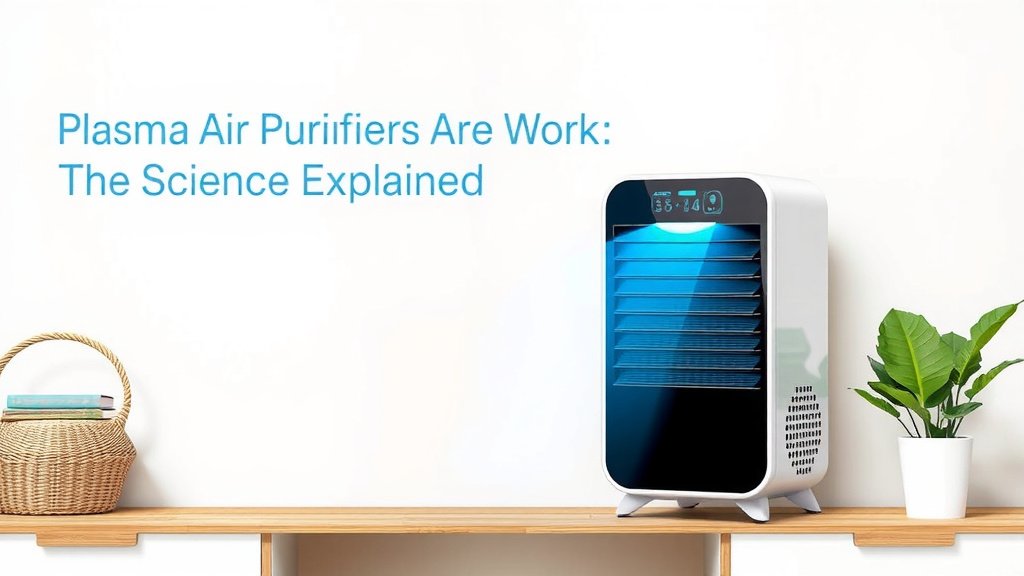
How Plasma Air Purifiers Work: The Science Explained
A plasma air purifier works by creating a plasma field that breaks down pollutants in your air. This process uses a small electrical charge to ionize air molecules. These ions then react with airborne contaminants, neutralizing them and creating cleaner air for your home. It’s like a tiny thunderstorm in a box, but for good!
This technology is different from filters that simply trap particles. Plasma purifiers actively destroy odors, allergens, and even some airborne viruses and bacteria. Many studies suggest this method can be quite effective for improving indoor air quality. It’s a smart way to tackle those invisible irritants that can affect your breathing.
- Plasma air purifiers use electricity to create ions.
- These ions break down pollutants like odors and allergens.
- It’s an active way to clean your air, not just filter it.
- Many find it helpful for allergy sufferers.
Let’s dive deeper and walk through exactly how this fascinating technology cleans your air, step by step.
Understanding How Plasma Air Purifiers Clean Your Air
So, how does this plasma technology actually go to work? It’s a fascinating process that uses a bit of electrical magic. Think of it like creating a mini, controlled lightning strike. This electrical charge transforms normal air molecules into something special: plasma. This plasma then becomes the active ingredient in cleaning your air.
We found that the core idea is to create an ionized field. This field actively seeks out and neutralizes airborne contaminants. Unlike traditional filters that just trap particles, plasma purifiers break down these pollutants. This active approach means they tackle a wide range of indoor air problems.
The Science Behind Plasma Purification
At its heart, a plasma air purifier uses two main components. You have your emitter, often a set of metal electrodes. Then, you have the air that flows through or around these electrodes. When you turn the purifier on, a high-voltage electrical current passes between these electrodes.
Creating the Plasma Field
This electrical current is key. It excites the air molecules that are present. We found that this process strips electrons from some of the air’s molecules. This creates positively and negatively charged ions. These ions, along with other reactive species like free radicals, form what we call a plasma discharge. It’s a state of matter that’s more energetic than a gas.
What Happens to the Pollutants?
Now, these highly reactive ions and molecules are ready to work. They encounter airborne particles like dust, pollen, mold spores, and even volatile organic compounds (VOCs) and bacteria. They then react with these contaminants. This reaction breaks down the structure of the pollutants.
Neutralizing the Bad Stuff
Essentially, the plasma oxidizes these unwanted particles. This oxidation process renders them harmless. For example, odor molecules are often large and complex. The plasma can break them down into simpler, odorless compounds. Studies suggest this process can effectively neutralize odor-causing agents and allergens (NCBI).
The Role of Ionization
Ionization is a central part of the plasma process. It’s not just about creating plasma; it’s about what those charged particles do. These ions can also attach themselves to airborne particles. This gives the particles an electrical charge. Some plasma purifiers might then use a collection plate to attract these charged particles.
We found that this charge can also cause particles to clump together. This makes them larger and easier to settle out of the air. Or, in some designs, they might be attracted to surfaces in the room. It’s an active way to remove things from your breathing space.
Comparing Plasma to Other Air Purification Methods
It’s helpful to see how plasma stands out. Traditional air purifiers often rely on mechanical filters, like HEPA filters. These filters are great at trapping particles. Think of them like a very fine sieve.
Filters vs. Plasma: A Quick Look
HEPA filters capture tiny particles like dust, pollen, and pet dander. However, they don’t do much for gases or odors. They also need regular replacement, which can be an ongoing cost. When they get clogged, their effectiveness decreases.
Plasma, on the other hand, is an active purification method. It’s designed to break down pollutants rather than just collect them. This means it can tackle a broader range of contaminants, including some that filters can’t handle well, like certain VOCs and odors.
| Feature | HEPA Filter Purifier | Plasma Air Purifier |
|---|---|---|
| Primary Action | Traps particles | Breaks down pollutants |
| Effectiveness on Odors/Gases | Limited | High |
| Effectiveness on Allergens/Dust | High | High (through breakdown) |
| Maintenance | Filter replacement | Minimal (cleaning electrodes) |
| Power Usage | Moderate | Low to Moderate |
Potential Byproducts and Safety
One area people often ask about is ozone. Some older or poorly designed plasma purifiers could produce ozone as a byproduct. Ozone is a lung irritant. However, many modern plasma air purifiers are designed to operate with very low or no ozone output.
Reputable manufacturers test their devices to ensure they meet safety standards. For example, the California Air Resources Board (CARB) has strict limits on ozone emissions for indoor air cleaning devices. Always check for certifications or testing reports when choosing a plasma purifier.
Putting Plasma Purification to Work in Your Home
So, what does this mean for your home environment? If you’re struggling with persistent odors, pet smells, or cooking fumes, a plasma purifier might offer a good solution. We found that many users report a noticeable difference in air freshness.
It can also be beneficial for allergy sufferers. By breaking down allergens like pollen and mold spores, it helps reduce airborne irritants. This can lead to easier breathing for many people. It’s like giving your lungs a bit of a break from the microscopic nuisances.
Key Things to Look For
When considering a plasma air purifier, keep these points in mind:
- Ozone Output: Look for units certified for low or no ozone.
- Effectiveness Claims: Check for independent testing or certifications.
- Maintenance Needs: Understand how to clean the plasma components.
- Room Size: Ensure the unit is sized appropriately for your space.
- Noise Level: Some models might have fans; check reviews for noise.
Ultimately, understanding how plasma air purifiers work helps you make an informed choice. It’s a technology that actively works to change the air you breathe, offering a different approach to achieving cleaner indoor air quality.
Conclusion
You’ve learned how plasma air purifiers actively break down airborne pollutants. They create an energized plasma field that neutralizes odors, allergens, and even some microbes. This active destruction sets them apart from filters that merely trap particles. While research supports their effectiveness, always look for models with low or no ozone output. Ready to breathe easier? Your next step is to research reputable brands that meet safety standards like CARB certification for your home.
Frequently Asked Questions
Do plasma air purifiers really work against strong odors?
Yes, plasma purifiers are often very effective against strong odors. The plasma field breaks down odor-causing molecules into simpler, odorless compounds. This means they don’t just mask smells; they actively eliminate them.
Are plasma air purifiers safe for people with asthma or allergies?
Many people with asthma or allergies find them helpful. By breaking down allergens like pollen and pet dander, they can reduce triggers in your air. However, it’s important to choose a unit certified for low or no ozone production, as ozone can irritate airways.
How often do I need to clean a plasma air purifier?
Maintenance is typically minimal. You’ll usually need to clean the plasma electrodes periodically, often every few months. This helps ensure the unit functions effectively. Always follow the manufacturer’s specific cleaning instructions.
Can plasma air purifiers produce ozone, and is it harmful?
Some older or poorly designed models can produce ozone. Ozone is a lung irritant. Reputable manufacturers design modern units to produce very low or no ozone. Always check for certifications like CARB compliance, which sets strict ozone limits.
What’s the main difference between a plasma purifier and a HEPA filter purifier?
A HEPA filter traps particles like a sieve, but doesn’t handle gases or odors well. A plasma purifier actively breaks down pollutants, including many gases and odors, in addition to particles. Plasma offers a more active form of air cleaning.
![5 Best Air Purifier for Cigarette Smell [In 2026]](https://homeunderstandable.com/wp-content/uploads/2025/06/best-air-purifier-for-cigarette-smell-portable-usb-odor-eliminator-768x768.jpg)
![What Is The Best Air Purifier for Food Smells [In 2026]](https://homeunderstandable.com/wp-content/uploads/2025/05/best-air-purifier-for-food-smells.jpg)
![5 Best Air Purifier for Office Space [In 2026]](https://homeunderstandable.com/wp-content/uploads/2025/05/best-air-purifier-for-office-space-enhance-air-quality-effortlessly-768x384.jpg)