How Long Should You Run Your Air Purifier
You’re probably wondering, “How long should my air purifier run?” For cleaner air every day, it’s best to run your air purifier continuously, especially when you’re home. This ensures it’s always working to remove pollutants and allergens. Think of it like leaving a light on; it’s more efficient to keep it going than to switch it on and off frequently.
Keeping your air purifier on 24/7 provides consistent air cleaning. This means it’s always filtering out particles like dust, pet dander, and even odors. Many studies show that consistent operation is key for maintaining good indoor air quality over time. It’s not just about big particles; it’s about continuously tackling tiny ones too.
- Run your air purifier constantly for best results.
- This keeps your air fresh and clean all day.
- It’s more efficient than frequent on/off cycles.
- Aim for 24/7 operation for optimal air quality.
- Consider running it more during allergy season or when cooking.
Let’s dive deeper into why continuous operation is so important and when you might adjust your air purifier’s schedule.
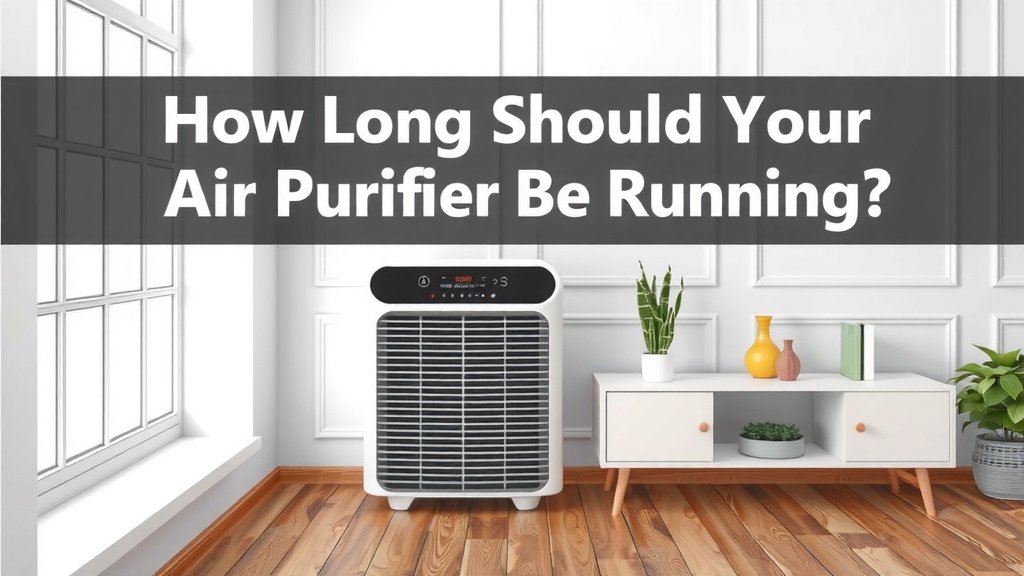
How Long Should Your Air Purifier Be Running?
You’ve invested in an air purifier to breathe easier. Now, how long should it actually be on to get the most benefit? The general consensus among air quality experts is to run your air purifier **continuously**, or as close to 24/7 as possible, especially when you’re at home.
Think of it like this: a clogged filter on your furnace doesn’t magically fix itself. Your air purifier is constantly battling airborne particles. To keep your indoor air **consistently clean**, it needs to be actively working. Turning it off and on frequently means you’re only cleaning the air when it’s on, and pollutants can build up again in the downtime.
Understanding Continuous Air Purification
Why is running it all the time so important? Your indoor environment is a dynamic space. Dust settles, cooking fumes linger, and allergens can easily become airborne. A continuously running air purifier acts as a **persistent guardian** against these everyday invaders.
The Science Behind Constant Airflow
Air purifiers work by drawing in air, passing it through filters, and releasing cleaner air back into the room. This process, called air exchange, needs time to be effective. Research suggests that the longer air is circulated through a good filter system, the more pollutants are removed (National Library of Medicine).
When you turn an air purifier off, the fan stops. This means air stops moving through the filters. If there are still particles in the air when the unit powers down, they’ll remain there until the purifier is turned back on. Continuous operation ensures a **steady reduction** of these particles over time.
Efficiency vs. Intermittent Use
You might be thinking about energy use. While it seems logical that turning a machine off would save energy, air purifiers are often designed for efficient, continuous operation. Many modern units have energy-saving modes and sensors that adjust fan speed based on detected air quality.
Starting up a motor can sometimes use a bit more power than keeping it running at a low, steady speed. So, the energy saved by turning it off might not be as much as you’d expect, especially when you consider the **benefit of cleaner air** being constantly maintained. It’s generally more efficient to let it run than to constantly restart it.
When to Prioritize Air Purifier Use
While 24/7 operation is ideal, there are specific times when running your air purifier is even more critical. These situations demand extra filtration power to manage increased pollutant levels.
During Allergy and Pollen Seasons
If you suffer from seasonal allergies, running your air purifier continuously during peak pollen seasons is a **game-changer**. Pollen counts can spike significantly, and an air purifier can help capture these microscopic allergens before they trigger your symptoms.
Many airborne allergens, like pollen, pet dander, and mold spores, don’t just disappear when you close your windows. They can recirculate within your home. Keeping the purifier running helps **reduce the allergen load** in your living spaces, making it easier to breathe comfortably.
When Cooking or Using Strong Scents
Cooking, especially frying or grilling, can release particulate matter and volatile organic compounds (VOCs) into the air. Similarly, using strong cleaning products, air fresheners, or candles can introduce unwanted chemicals.
Running your air purifier during and after these activities can significantly help **remove lingering odors** and airborne irritants. Some units are specifically designed with activated carbon filters that excel at trapping smells and VOCs.
If You Have Pets or Specific Health Concerns
Pet owners know that dander is a constant battle. An air purifier running continuously can make a noticeable difference in capturing pet hair and dander, which are common allergens. If anyone in your household has asthma, allergies, or other respiratory sensitivities, maintaining clean air is **even more important**.
The American Lung Association suggests that improving indoor air quality can help reduce symptoms for people with lung diseases. A HEPA filter, found in many air purifiers, is highly effective at capturing very small particles, including those that can aggravate respiratory conditions.
Optimizing Your Air Purifier Schedule
While 24/7 is the go-to, you can adjust based on your lifestyle and needs. Here’s a quick look at different scenarios:
| Scenario | Recommended Run Time | Why |
|---|---|---|
| General Home Use (No specific issues) | Continuously (24/7) | Maintains consistently clean air, removes daily pollutants. |
| High Allergen Periods (Pollen, Dust) | Continuously (24/7) | Captures allergens as they enter and circulate. |
| Cooking or Odor Issues | During and for 1-2 hours after cooking/scent use | Removes smoke, fumes, and strong odors quickly. |
| During Illness (Colds, Flu) | Continuously (24/7) | Helps reduce airborne virus particles and bacteria. |
| When Away from Home (Short Trips) | Turn off or set to low/eco mode | Saves energy when no one is present to benefit. |
| Overnight | Continuously (24/7) | Ensures clean air while you sleep, which is restorative. |
Smart Features and Energy Savings
Many newer air purifiers come with **smart features** that can help manage runtime and energy use. Auto modes use sensors to detect air quality and adjust fan speed automatically. This means the purifier works harder when needed and conserves energy when the air is clean.
Some models even have timers or scheduling functions. You can program them to run at higher settings during times you’re home most and lower them when you’re away or sleeping. This provides a good balance between **optimal air cleaning** and energy efficiency.
When Can You Turn It Off?
The main exception to the 24/7 rule is when you’re away from home for an extended period. If you’re going on vacation for a week, turning off your air purifier is a sensible way to **save energy**. When you return, simply turn it back on and let it run continuously again.
For shorter absences, like during a typical workday, keeping it on is generally better. The goal is to maintain a baseline level of clean air. If you’re only gone for 8-10 hours, the air can still accumulate pollutants quickly upon your return.
A Simple Checklist for Your Purifier Schedule
To help you decide, consider these quick points:
- Are you home? Run it.
- Is it allergy season? Run it.
- Did you just cook or use strong scents? Run it.
- Is someone in the house sick? Run it.
- Going away for more than a few days? Consider turning it off.
- Do you have pets? Keep it running for dander control.
Ultimately, the best approach is often the simplest: **run it continuously** when you’re home. This ensures you’re always getting the maximum benefit from your investment in cleaner indoor air.
Conclusion
To truly benefit from your air purifier, the simplest and most effective strategy is continuous operation. Running your unit 24/7, especially when you’re home, ensures you’re consistently removing allergens, dust, and other airborne irritants. While there are exceptions for extended absences, maintaining a steady clean air flow offers the best protection for your health and comfort. This constant battle against pollutants means your home environment stays healthier day in and day out. So, set it and forget it – your lungs will thank you for it!
Frequently Asked Questions
How much electricity does a running air purifier use?
Modern air purifiers are designed for energy efficiency. Most units use less electricity than a standard light bulb, especially when running on lower settings. Many also feature eco-modes or sensors that adjust power usage based on air quality, saving you money while keeping your air clean.
Should I run my air purifier in an empty room?
While it’s most beneficial to run your air purifier when people are present to directly benefit from cleaner air, it can still be useful in an empty room. This helps to prevent dust and other particles from settling and recirculating. If you’re away for an extended period, you can consider turning it off to save energy.
Can I run my air purifier overnight?
Yes, absolutely! Running your air purifier overnight is highly recommended. You spend a significant portion of your time sleeping, and breathing clean air during this restorative period is crucial for overall health. Many units have quiet modes perfect for nighttime use.
How often should I clean or replace my air purifier’s filters?
Filter maintenance is key to your air purifier’s effectiveness. Pre-filters (if yours has one) can often be washed or vacuumed every 2-4 weeks. The main HEPA and carbon filters typically need replacement every 6-12 months, depending on usage and the manufacturer’s recommendations. Check your unit’s manual for specific guidance.
Will running an air purifier constantly dry out the air?
Air purifiers do not significantly alter the humidity levels in your home. Their primary function is to filter particles from the air. If you’re concerned about dry air, you might consider a humidifier separately, rather than adjusting your air purifier’s run time.
![What Is The Best Air Purifiers for Pets [In 2026]](https://homeunderstandable.com/wp-content/uploads/2025/06/best-air-purifiers-for-pets-combat-odors-and-allergens-effectively-768x512.jpg)
![5 Best Air Purifiers for Emphysema [In 2026]](https://homeunderstandable.com/wp-content/uploads/2025/04/best-air-purifiers-for-emphysema.jpg)