How Long to Run HEPA Air Purifier for Clean Air
You should generally run your HEPA air purifier 24/7 for the best results. This ensures continuous removal of airborne pollutants like dust, allergens, and smoke. Leaving it on all the time offers the most consistent air quality for your home.
Many people wonder if it’s okay to turn their purifiers off when they’re not home. While you can turn it off, doing so means pollutants can build up again. Running it constantly means you’re always breathing the cleanest possible air, which is especially helpful for those with allergies or respiratory issues.
- Run your HEPA purifier all day, every day.
- This keeps pollutants like dust and allergens consistently low.
- It’s the best way to ensure cleaner air constantly.
- Consider it for allergies or breathing troubles.
Now, let’s dig into the details and help you figure out the perfect run time for your specific needs and space.
Optimizing Your HEPA Air Purifier’s Run Time
So, you’ve got your HEPA air purifier, and you’re wondering just how long you should let it work its magic. The short answer? For the best possible air quality, running your HEPA air purifier all the time, 24/7, is generally the way to go. This continuous operation ensures that airborne irritants are consistently removed from your home’s atmosphere.
Understanding Continuous Air Purification
Think of your HEPA air purifier like a diligent cleaning crew that never takes a break. If you turn it off, the pollutants that were just filtered out can start to accumulate again. Running it constantly means you’re always breathing the cleanest air possible, which is especially beneficial for anyone dealing with allergies or other respiratory sensitivities.
The Science Behind Constant Operation
HEPA filters are designed to capture microscopic particles. These can include everything from dust mites and pet dander to mold spores and smoke. When your purifier is running continuously, it actively prevents these particles from reaching levels that can trigger symptoms. Research suggests that sustained air cleaning can lead to a noticeable improvement in indoor air quality over time (Environmental Protection Agency).
When Can You Turn It Off?
While 24/7 operation is ideal, there are times you might consider turning your purifier off. If you’re going away for an extended period, like a week-long vacation, turning it off can save energy. However, for everyday use, even when you’re not home, keeping it on is usually best. Your home still has air circulating, and pollutants don’t just disappear when you leave the room.
Factors Influencing Your Purifier’s Schedule
Room Size and Air Changes Per Hour (ACH)
The effectiveness of your air purifier is closely tied to the size of the room it’s in. Air purifiers are rated for specific room sizes, often referred to as CADR (Clean Air Delivery Rate). You want a purifier that can adequately clean the air in your space. Many experts recommend an ACH of at least 4, meaning the unit should be able to filter all the air in the room at least four times per hour. If your purifier is undersized for the room, running it longer might seem like a solution, but it’s often more efficient to get a correctly sized unit.
Occupant Sensitivities and Health Conditions
If you or someone in your household suffers from allergies, asthma, or other respiratory conditions, continuous operation is highly recommended. Allergens like pollen, dust, and pet dander can trigger reactions. Keeping the air clean at all times helps minimize exposure. For individuals with severe sensitivities, a purifier running 24/7 can make a significant difference in daily comfort and well-being.
Specific Air Quality Concerns
Do you live in an area prone to wildfires? Or perhaps you have pets that shed heavily? These situations call for more intensive air purification. During wildfire season, smoke particles can infiltrate your home. Similarly, pet dander is a constant presence for pet owners. In these cases, running your HEPA air purifier around the clock is crucial for maintaining a healthy indoor environment. We found that during periods of high outdoor pollution, continuous operation indoors significantly reduced particle counts (National Institutes of Health).
Smart Ways to Manage Your Air Purifier’s Usage
Utilizing Timer Functions
Many modern air purifiers come equipped with timer functions. You can set these to turn the unit on or off at specific times. While not as effective as 24/7 operation, you could use a timer to ensure the purifier is running during peak times of activity or when you’re typically home. For example, running it longer in the morning and evening.
Variable Fan Speeds
Most HEPA air purifiers offer multiple fan speeds. You can run the unit on a lower, quieter setting when you’re home and trying to relax or sleep. Then, crank it up to a higher setting when you’re away or if air quality issues arise quickly, like when cooking. This allows you to balance purification needs with energy consumption and noise levels. Some units even have an ‘auto’ mode that adjusts fan speed based on detected air quality.
Energy Efficiency Considerations
Running an air purifier 24/7 will naturally use more electricity than turning it off periodically. However, modern HEPA air purifiers are quite energy-efficient, especially on lower settings. The cost of electricity versus the benefit of consistently clean air is a personal decision. Many find the health benefits and peace of mind outweigh the minor increase in their energy bill. If energy saving is a top priority, consider the lowest effective fan speed for continuous use.
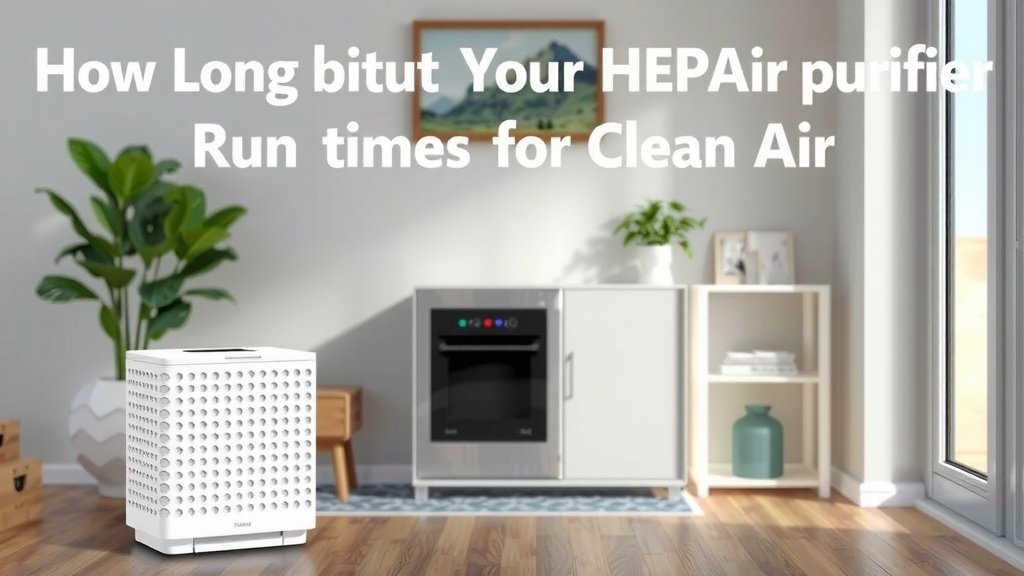
A Quick Checklist for Optimal Run Time
To help you decide, here’s a quick checklist:
- Is your purifier the correct size for the room?
- Does anyone in your home have allergies or asthma?
- Are there frequent sources of indoor pollution (pets, smoking, cooking)?
- Do you live in an area with poor outdoor air quality?
- What is your comfort level with energy consumption vs. air quality?
- Do you prefer the simplicity of “set it and forget it”?
When a Lower Run Time Might Suffice
In specific scenarios, you might not need to run your HEPA air purifier continuously. If you have a very well-sealed home, minimal indoor pollution sources, and no respiratory sensitivities, you might get by with running it only when you are home. Some people opt to run it for a few hours each day to ‘reset’ the air. However, research generally points to the benefits of consistent air cleaning. Turning it off for long stretches means pollutants have more time to build up between cycles.
HEPA Air Purifier Run Time Summary Table
Here’s a quick comparison to help you decide:
| Scenario | Recommended Run Time | Why? |
|---|---|---|
| General Use, No Sensitivities | When Home, or 12-18 hours/day | Balances air quality with energy use. |
| Allergies, Asthma, Respiratory Issues | 24/7 | Constant removal of triggers is key. |
| High Indoor Pollution (Pets, Smoke) | 24/7 | Maintains consistently clean air. |
| Poor Outdoor Air Quality Days | 24/7 | Prevents infiltration of outdoor pollutants. |
| Extended Absences (Vacation) | Off | Saves energy when the home is empty. |
Remember, these are general guidelines. Your specific needs may vary. The goal is always to maintain the best indoor air quality for your health and comfort.
Conclusion
You’ve learned that running your HEPA air purifier 24/7 is generally the best strategy for consistently clean air, especially if you deal with allergies or other health concerns. While there are times you might adjust the schedule, like during vacations, continuous operation helps maintain the healthiest environment for your home. Consider your specific needs, like room size, sensitivities, and local air quality, to fine-tune your usage. Now, take a moment to assess your home’s unique situation and set your purifier to provide the best possible air quality for you and your family starting today.
Frequently Asked Questions
Do I need to run my HEPA air purifier all day if I have pets?
Yes, if you have pets, running your HEPA air purifier 24/7 is highly recommended. Pet dander is a common allergen that can linger in the air. Continuous operation helps keep these particles at consistently low levels, improving air quality for everyone in your home.
How does room size affect how long I should run my air purifier?
The size of the room impacts how effectively your air purifier works. If your unit is undersized, you might need to run it longer to achieve good air quality. It’s best to ensure your purifier is rated for your room size for optimal performance, but continuous use still helps mitigate issues.
Can I just run my air purifier when I’m home to save energy?
While you can run your purifier only when you’re home, pollutants can build up when it’s off. If you don’t have significant air quality concerns or sensitivities, this might be an acceptable compromise. However, for the best air quality, especially with allergies, running it more consistently is advised.
What happens if I turn my air purifier off for several hours each day?
Turning your air purifier off for several hours means airborne pollutants have a chance to accumulate again. While it will still filter the air when it’s on, you won’t achieve the same level of consistent air cleaning as with 24/7 operation. This could be an issue if you have allergies or respiratory sensitivities.
Are modern HEPA air purifiers energy-efficient enough to run 24/7?
Yes, many modern HEPA air purifiers are designed with energy efficiency in mind, especially on lower fan speeds. While running it all the time will increase electricity usage, the health benefits of consistently clean air often outweigh the minor cost. You can use lower settings to balance efficiency and purification.
![5 Best Hepa Air Purifier for Pets [In 2026]](https://homeunderstandable.com/wp-content/uploads/2025/05/best-hepa-air-purifier-for-pets.jpg)

![5 Best Home Air Purifier for Pet Odor [In 2026]](https://homeunderstandable.com/wp-content/uploads/2025/05/best-home-air-purifier-for-pet-odor-top-picks-for-fresh-air-768x512.jpg)