How Many Plants Purify Air: The Science Explained
So, you’re wondering how many plants you need to actually purify your home’s air? While plants do a little bit of air cleaning, it turns out you’d need an impractical number of plants to make a major difference in air quality. Think thousands, not just a few.
The idea that a few houseplants can replace air filters is a common myth. While plants release oxygen and absorb some pollutants, the science suggests that their air-purifying power in a typical home is quite minimal. You’ll find more benefit from other methods.
- You need an enormous amount of plants for noticeable air purification.
- A few houseplants won’t significantly clean your air.
- Plants do offer other benefits, though!
- Focus on other methods for better air quality.
Let’s dive into what the research actually says about plants and air purification, and what you can do for cleaner air in your home.
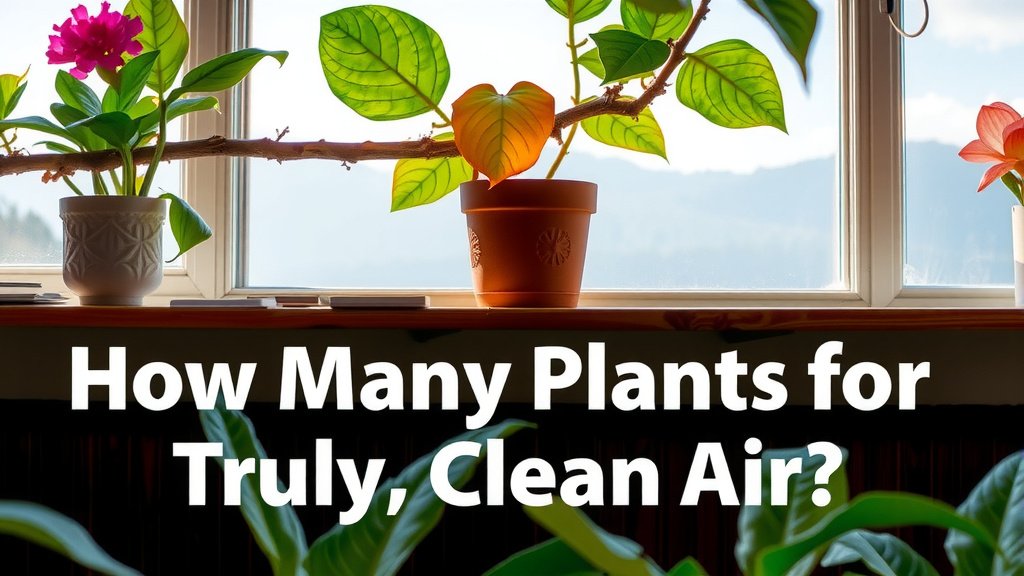
How Many Plants for Truly Clean Air? Let’s Get Real.
You’ve heard the buzz: plants are natural air purifiers. It sounds wonderful, doesn’t it? Imagine your home filled with lush greenery, not just looking good but actively cleaning the air you breathe. But how many plants do you *really* need to make that happen? The honest answer might surprise you. While plants do contribute, the number needed for a significant impact is far beyond what most of us can fit in our homes. Research suggests you’d need an enormous amount of greenery.
The Science Behind Plant Air Purification
Let’s break down what science tells us about plants and air cleaning. It all started with a NASA study in the 1980s. This study looked at how plants could help purify air in sealed environments like space stations. They found that certain common houseplants could remove some volatile organic compounds (VOCs) from the air. These VOCs are chemicals often found in household products, paints, and furnishings, and they can affect air quality.
What the NASA Study Really Found
It’s important to understand the context of that study. It was conducted in a sealed laboratory setting. Think of a small, enclosed chamber, not a typical home with open windows and air circulation. In these controlled conditions, plants showed some ability to absorb certain toxins like benzene, formaldehyde, and trichloroethylene. These are chemicals that can be emitted from things like furniture, cleaning supplies, and building materials. The plants essentially used them as a food source.
The Home Environment is Different
Now, consider your home. Your home isn’t a sealed lab. Air naturally circulates. You open windows, run fans, and use HVAC systems. This constant air exchange means that pollutants are diluted and removed by ventilation much faster than plants could process them. Studies published later, including one from the University of Southern California, examined the findings of the original NASA study in the context of a real home. They found that the air-purifying effect of houseplants in a normal home environment is negligible.
To achieve the same air-cleaning results as the NASA study in a typical home, you would need an overwhelming number of plants. We’re talking about an amount that would make your home resemble a dense jungle, not a comfortable living space. The sheer volume of plants required means their contribution to overall air quality is minimal compared to simply opening a window for fresh air.
Why So Many Plants Are Needed
So, why is the number so high? It comes down to the surface area and the rate at which plants absorb pollutants. Plants absorb these compounds through their leaves and roots. The process is quite slow. A single plant has a limited leaf surface. To tackle the volume of air in a room, you’d need thousands of plants working constantly.
Comparing Plants to Air Filters
Think about it like this: a plant might absorb a tiny bit of a pollutant over an hour. An electronic air purifier, on the other hand, can move and filter a large volume of air very quickly. Air purifiers use fans to draw air through a filter designed to trap particles and sometimes gases. They are engineered for efficient air cleaning. Plants simply weren’t designed for this purpose in our homes.
We found that the air changes in a typical home due to ventilation are much more effective at removing pollutants than the absorption rate of plants. For example, the University of Florida conducted research showing that houseplants would need to be placed about 10-12 plants per square foot to make a significant difference in removing formaldehyde. That’s an incredible density!
How Many is “Thousands”?
Let’s put some numbers to it. To noticeably reduce the concentration of VOCs in a moderately polluted room, you might need anywhere from 100 to over 1,000 plants, depending on the specific VOC and the plant species. For a larger home, the numbers escalate even further. Imagine filling your living room, bedrooms, and hallways with that many plants. It’s simply not practical for most people.
So, What’s the Verdict on Plants?
Does this mean you should get rid of your houseplants? Absolutely not! While they might not be the air-purifying powerhouses we once thought, plants offer so many other benefits. They can reduce stress, improve your mood, and add a beautiful touch of nature to your home. Some studies even suggest they can slightly increase humidity, which can be helpful.
Other Ways to Improve Your Home’s Air Quality
If your main goal is cleaner air, focusing on other methods will yield far better results. Here are some effective strategies that experts often recommend:
- Increase Ventilation: Regularly open windows and doors to let fresh air in. Even a few minutes a day can make a difference.
- Use Air Purifiers: Invest in high-quality HEPA air purifiers. Look for units with good Clean Air Delivery Rates (CADR) for your room sizes.
- Control Pollutant Sources: Opt for low-VOC paints and furnishings. Store chemicals properly and ventilate when using cleaning products.
- Maintain Your HVAC System: Regularly change your furnace filters and have your ducts cleaned if necessary.
- Reduce Indoor Humidity: Use dehumidifiers if your home is too humid, as this can prevent mold growth.
The Realistic Number of Plants for Air Purification
If you’re asking about a realistic number of plants for air purification, the answer is: don’t rely on them as your primary method. A few plants here and there won’t hurt, and they bring joy. But if you’re looking to significantly improve your indoor air quality, you’ll need to look beyond your plant collection. Many health organizations, like the EPA, suggest ventilation and filtration as the most effective ways to clean indoor air.
Consider this a quick checklist for a healthier home environment. Even if you can’t achieve that jungle-like density of plants, these steps are actionable:
- Open windows daily for fresh air.
- Choose a HEPA air purifier for main living areas.
- Use natural cleaning products when possible.
- Ensure your home’s ventilation systems are working well.
- Monitor indoor humidity levels.
So, while your little succulent won’t replace an air filter, it can still be a wonderful addition to your home. Just manage your expectations about its air-purifying superpowers. You’re better off combining the joy of plants with proven methods for cleaner air.
Conclusion
So, while the idea of plants as air purifiers is appealing, research shows you’d need an entire indoor jungle to truly make a dent in air quality. Don’t let that discourage you from enjoying your greenery! Your houseplants still bring joy and a touch of nature indoors. For genuinely cleaner air, focus your efforts on practical methods like increasing ventilation and using effective air purifiers. Start by opening your windows daily and consider a good HEPA filter for your main living spaces. That combination will do far more for your air quality than a thousand plants.
Frequently Asked Questions
If plants don’t purify air much, why do people say they do?
The idea largely stems from an older NASA study done in a sealed lab. In that controlled environment, plants showed some ability to absorb certain toxins. However, research found that a typical home with its air circulation has vastly different conditions. This makes the plant’s purifying effect in a real home very small.
Can I use a lot of plants to replace an air filter?
No, you really can’t. The amount of air purification a plant offers is quite slow. You would need an impractical number of plants, like 10-12 per square foot, to achieve the same results as a standard air filter. It’s just not feasible or enjoyable for most homes.
What’s a realistic number of plants to have for air purification?
For actual air purification, a few plants scattered around your home won’t make a noticeable difference. If you’re thinking about air cleaning as your main goal, the realistic number needed is in the hundreds or even thousands. It’s far more effective to rely on other methods for cleaner air.
Besides plants, what are the best ways to clean my home’s air?
The most effective methods include increasing ventilation by opening windows regularly, using high-quality HEPA air purifiers, controlling pollutant sources by choosing low-VOC products, and maintaining your home’s HVAC system. These strategies directly address air quality on a larger scale.
Do different types of plants purify air better than others?
While the original NASA study highlighted certain plants as better at absorbing specific VOCs, even the best performers in a home setting are still very limited. The differences between plant species are minor when it comes to their overall impact on air quality in a real house. Ventilation and filtration are still far more impactful.