How Many Plants for Pure Air? Your Guide
You’re wondering how many plants you need to truly purify your air. The answer isn’t a simple number; it depends on several factors, but **research suggests you’ll need quite a few plants** to make a noticeable difference in your home’s air quality. Don’t worry, it’s not as overwhelming as it sounds, and even a few plants can help.
While plants are lovely additions to any room, their air-purifying abilities are often overstated in popular belief. NASA’s famous study showed promising results in a sealed environment, but your home is different. We found that real-world effectiveness depends on airflow and the sheer volume of plants needed to compete with everyday air pollutants.
- There’s no single magic number of plants.
- Room size and ventilation play a big role.
- Plants help, but they aren’t a sole solution for bad air.
- Focus on a variety of plants for better results.
Let’s break down what the science says and how you can best use plants to freshen up your living space.
Understanding Plant Air Purification for Your Home
So, how many plants do you *actually* need to make a difference in your home’s air quality? It’s a question many of us have, especially after seeing those stunning plant-filled rooms online. We found that the answer isn’t a simple one-size-fits-all number. It depends on your room size, how well it’s ventilated, and the types of pollutants you’re dealing with.
Let’s clear the air on this. While plants are fantastic for adding beauty and a touch of nature, their ability to purify air in a typical home environment is often less powerful than commonly believed. Think of it like trying to cool a hot room with a single fan; it helps a little, but it won’t change the temperature dramatically on its own.
The NASA Study: What It Really Means
You might have heard about the famous NASA Clean Air Study. This research looked at how plants could filter out certain volatile organic compounds (VOCs) in sealed laboratory conditions. These are the kinds of chemicals that can off-gas from furniture, paints, and cleaning products. The study was a great starting point, showing that plants *can* absorb these compounds.
However, your home isn’t a sealed laboratory. We found that your house has much better air circulation thanks to windows, doors, and HVAC systems. This constant airflow means pollutants are diluted much faster than in a closed room. Therefore, the amount of air a plant can filter is significantly reduced in a real-world setting.
Factors Influencing Plant Air Purification
Several factors determine how effective plants will be:
- Room Size: A larger room needs more plants to have a noticeable effect.
- Ventilation: Good airflow dilutes pollutants, meaning plants have less impact.
- Plant Type: Some plants are better at filtering specific pollutants.
- Plant Health: Healthy, thriving plants perform better.
- Amount of Pollutants: Higher pollution levels require more plants.
So, if you’re hoping for a few houseplants to completely eliminate toxins, you might be disappointed. But don’t despair! Plants still offer benefits.
Quantifying the Number of Plants Needed
Pinpointing an exact number of plants for your home is tricky. Research and expert opinions offer some guidance, but it’s not a strict rulebook.
Estimates Based on Room Size
One common suggestion we found is to aim for at least one to two plants per 100 square feet of living space. This is a general guideline to start with. For a standard 10×10 foot room (100 sq ft), this means one or two medium-sized plants.
Now, what is a “medium-sized” plant? Think of plants like a Spider Plant, Snake Plant, or Peace Lily that are at least 6-8 inches in pot size. If you have larger floor plants, you might need fewer of those. Conversely, if you have many small succulents, you’d need a lot more to reach the same purifying potential.
The Airflow Factor: A Major Hurdle
Here’s where things get a bit more complicated. Many experts point out that for plants to significantly impact air quality, you’d need an unrealistically high density of plants. Imagine a dense jungle in your living room! The issue is that air needs to come into direct contact with the plant’s leaves and soil to be filtered.
In a normally ventilated home, the air moves around too quickly for plants to make a substantial dent in pollutant levels. A study by the University of Sydney suggested that to effectively remove pollutants from a typical room, you’d need somewhere around 400-1000 plants. That’s a lot of green!
So, while the NASA study showed potential, it was in a controlled environment. Your home has fresh air constantly coming in and out, which dilutes the pollutants before plants have a chance to process them efficiently.
Plant Varieties and Their Purifying Power
Not all plants are created equal when it comes to air purification. Some are known to be better at absorbing specific toxins.
Top Air-Purifying Plants (and their limitations)
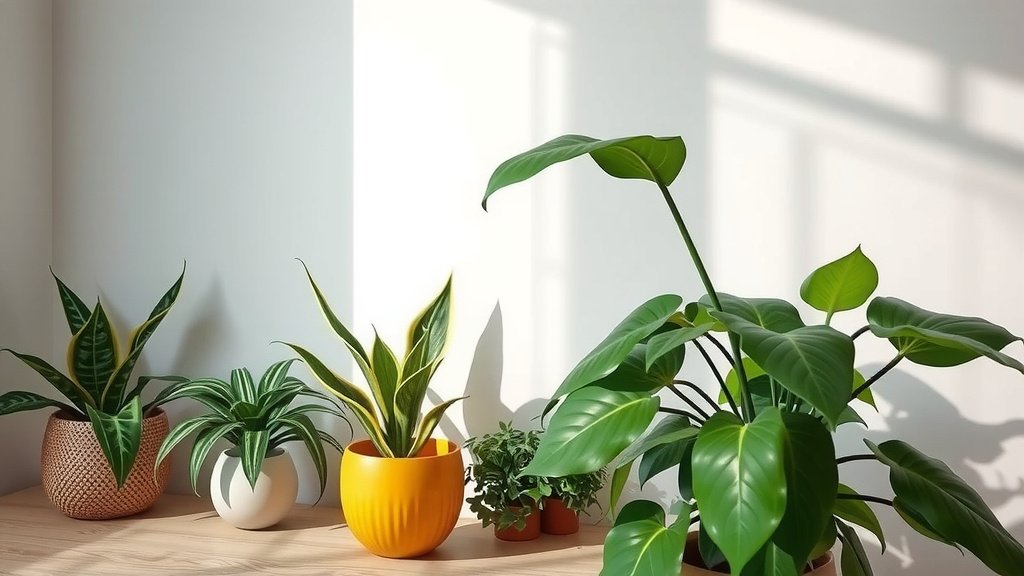
- Snake Plant (Sansevieria trifasciata): Known for filtering formaldehyde and benzene. It’s also great because it releases oxygen at night.
- Spider Plant (Chlorophytum comosum): Excellent at removing formaldehyde and xylene. They are also very easy to care for and propagate.
- Peace Lily (Spathiphyllum): Filters ammonia, benzene, and formaldehyde. Just be aware they can be toxic to pets if ingested.
- Pothos (Epipremnum aureum): Good for removing formaldehyde, benzene, and xylene. They are super forgiving plants for beginners.
- Areca Palm (Dypsis lutescens): Can filter several common toxins and also adds humidity to the air.
Even with these champions, remember that the quantity needed is still substantial to make a significant difference against everyday pollution levels.
Are Plants Enough for Clean Air?
Let’s be honest, relying solely on plants for air purification might not be the most effective strategy. While they offer a lovely aesthetic and some air-freshening benefits, they are best used as a part of a larger strategy.
Think of plants as a helpful assistant, not the main superhero. They contribute to a healthier environment, but they can’t do all the heavy lifting when it comes to removing indoor air pollutants.
Complementary Air Quality Solutions
For truly clean air, consider these approaches alongside your plants:
- Improve Ventilation: Open windows regularly to let fresh air in. Even a few minutes a day helps.
- Use Air Purifiers: High-efficiency particulate air (HEPA) filters are proven to remove a wide range of airborne particles and gases. We found these to be a very effective solution for improving indoor air quality.
- Reduce Pollutant Sources: Opt for low-VOC paints and furniture. Use natural cleaning products whenever possible.
- Control Humidity: Keep humidity levels between 30-50% to prevent mold and dust mites, which also affect air quality (CDC).
- Regular Cleaning: Dusting and vacuuming regularly removes settled pollutants.
Combining these methods with your green companions will give you the best chance at breathing easier.
A Realistic Number for Real Homes
So, what’s the takeaway? Instead of a precise number, focus on a healthy plant population in your home. If you have 5-10 healthy, medium-to-large plants spread across your main living areas, you’re doing a good job. This amount will contribute positively to your indoor environment without being an overwhelming jungle.
Remember, the goal is to improve your living space. Plants offer many benefits beyond just air purification, including stress reduction and improved mood. Enjoying your plants for their beauty and the calming effect they bring is perfectly valid, even if they aren’t the sole solution to air quality concerns.
Your Plant Air Quality Checklist:
- Assess your room size and number of plants accordingly.
- Choose a variety of plant types known for air purification.
- Ensure your plants are healthy and well-cared for.
- Don’t rely solely on plants; supplement with other methods.
- Prioritize good ventilation in your home.
- Consider adding a HEPA air purifier for significant improvement.
Conclusion
You’ve learned that while plants are wonderful for your home’s atmosphere, they aren’t a miracle cure for air pollution. Research shows that creating a truly purified environment with plants alone requires an unrealistic number of them. Instead of focusing on a magic plant count, aim for a healthy, vibrant collection of plants that makes your home feel good. Enjoy their beauty and calming presence, knowing they contribute to a healthier space as part of a bigger picture.
Your next step is to assess your space and add a few more green friends if needed. Then, focus on improving ventilation and considering an air purifier for the most effective clean air strategy.
Frequently Asked Questions
How many plants are realistically needed for a small apartment?
For a small apartment, aim for 3-5 healthy, medium-sized plants placed in your main living areas. This quantity can contribute positively to your air quality and overall ambiance. Focus on variety and plant health rather than just the number.
Can I rely on just a few plants to make my air noticeably cleaner?
While a few plants are great for aesthetics and can offer minor air-freshening benefits, they are unlikely to make a *noticeable* difference in overall air cleanliness on their own. Their impact is much greater in sealed environments than in well-ventilated homes.
What if I have a lot of plants already, but my air still feels stuffy?
If your air feels stuffy despite having many plants, it indicates other factors are at play. You may need to improve ventilation by opening windows more often or consider using a HEPA air purifier to address the root cause of poor air quality.
Are there specific plants that are much better at purifying air than others?
Yes, some plants like Snake Plants, Spider Plants, and Peace Lilies are known for their ability to filter certain VOCs. However, even these champion plants require a very high density to significantly impact air pollution levels in a typical home.
Should I place plants in every room for maximum air purification?
While more plants are generally better, placing them in main living areas where you spend the most time is a good strategy. Focusing on one or two rooms with a good plant population is more practical than trying to put plants in every single space.