Basement Air Purification: Simple Steps for Cleaner Air
You can purify air in your basement by improving ventilation, controlling moisture, and using air purifiers. These steps help remove musty odors and reduce the risk of mold growth. Often, basements have poor air circulation, making them prone to stale air and pollutants. Taking action can make your basement a much more pleasant and healthy space.
Basement air quality can be affected by many factors. Dampness from leaks or high humidity is a common culprit. This can lead to the growth of mold and mildew, which release spores into the air. Poor ventilation traps these spores, along with other airborne particles. Focusing on moisture control and fresh air exchange is key to cleaner basement air.
- Improve ventilation by opening windows or using fans.
- Control moisture with dehumidifiers and by fixing leaks.
- Use HEPA air purifiers to capture airborne particles.
- Address the source of any musty smells, often mold or mildew.
- Regularly check for and clean up any signs of dampness.
Let’s walk through the best ways to tackle that basement air, step by step, so you can breathe easier down there.
Improving Your Basement Air Quality
You’re probably wondering how to make your basement air feel fresher. It’s a common concern, especially in older homes. Basements can sometimes feel a bit “lived-in” with a musty scent. We’ve found that tackling this often comes down to a few key areas. Making these changes can turn your basement into a much more comfortable and healthy part of your home.
Ventilation: Letting Fresh Air In
One of the most effective ways to purify basement air is by improving its ventilation. Stale air can get trapped easily down there. Many basements lack adequate airflow, which allows pollutants to build up. Increasing the air exchange rate is a great starting point.
Natural Ventilation: Open Up!
Do you have windows in your basement? If so, using them is a fantastic, free way to get fresh air circulating. Opening them up, even for a few hours a day, can make a noticeable difference. Try to open windows on opposite sides of the basement if possible. This helps create a cross-breeze that pushes stale air out and draws fresh air in.
Mechanical Ventilation: Fans to the Rescue
Sometimes, natural ventilation isn’t enough. You might not have enough windows, or the weather might not cooperate. That’s where fans come in handy. A simple box fan placed in a window can work wonders. Point it outwards to exhaust stale air. Or, use it to pull fresh air in from another window.
Exhaust fans are another option. You can install an exhaust fan in the ceiling or wall of your basement. These are designed to actively pull air out of the space. Many homeowners find these a very effective solution for consistent air changes. We found that professional installation can ensure it’s ducted properly to the outside.
Consider a Whole-House System
For more extensive improvements, you might look into whole-house ventilation systems. These systems are designed to manage air quality throughout your entire home. Energy recovery ventilators (ERVs) and heat recovery ventilators (HRVs) are popular choices. They bring in fresh air while exhausting stale air. They also help retain some of the heating or cooling energy. This can save you money on utility bills. Many building science experts recommend these for optimal air quality (ASHRAE guidelines).
Moisture Control: The Root of Many Basement Woes
Dampness is the silent killer of good basement air quality. Mold and mildew thrive in moist environments. Their spores are a common cause of musty odors and can trigger allergies. Controlling moisture is absolutely essential for a healthy basement.
Dehumidifiers: Your Moisture-Fighting Ally
A dehumidifier is probably your best friend in the fight against basement dampness. These machines pull excess moisture right out of the air. We found that choosing the right size is important. A unit that’s too small won’t keep up. One that’s too large might cycle on and off too frequently, making it less efficient.
Look for a dehumidifier with a built-in humidistat. This allows you to set your desired humidity level. Many experts recommend keeping basement humidity between 30% and 50% (EPA recommendations). You’ll also need to empty the water tank regularly or set up a continuous drain hose.
Fixing Leaks and Water Intrusion
A dehumidifier can manage humidity, but it can’t fix the source of water. You need to address any leaks or water entry points. Check your foundation for cracks. Inspect where pipes enter the house. Look for any signs of water pooling around the exterior of your home. Sealing cracks and improving outdoor drainage are key steps.
Sump pumps are also vital if you have water issues. Ensure yours is working correctly. Consider a battery backup for your sump pump in case of power outages. This can prevent serious water damage and the subsequent mold growth.
Insulation and Vapor Barriers
Proper insulation can help. It prevents condensation from forming on cold basement walls. Installing a vapor barrier on the walls and floor can also stop moisture from seeping in from the soil. This is especially helpful if your basement walls are made of concrete. These measures help maintain a drier environment.
Air Purifiers: Capturing Airborne Particles
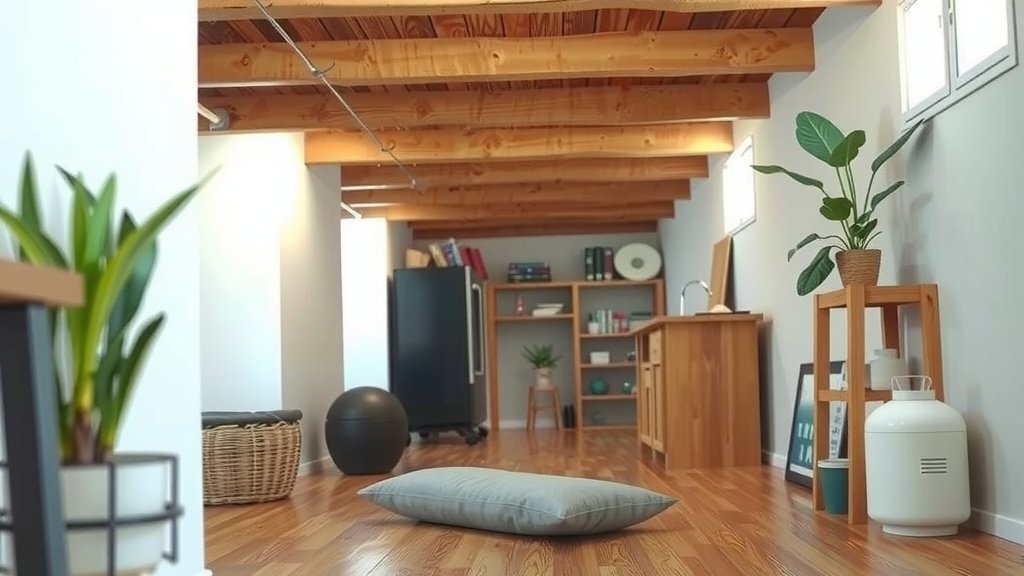
Once you’ve addressed ventilation and moisture, an air purifier can be a fantastic addition. These devices actively clean the air. They can trap dust, pollen, pet dander, and even mold spores that become airborne. This is especially helpful if you have family members with allergies or asthma.
HEPA Filters: The Gold Standard
When choosing an air purifier, look for one with a High-Efficiency Particulate Air (HEPA) filter. HEPA filters are designed to capture at least 99.97% of airborne particles 0.3 microns in size. This is a very small particle size. Many sources, like the Asthma and Allergy Foundation of America, recommend HEPA filters for allergy sufferers. They are very effective at removing fine dust and allergens.
Activated Carbon Filters: Tackling Odors
Many air purifiers also include activated carbon filters. These filters are excellent at absorbing odors and volatile organic compounds (VOCs). If your basement has lingering musty smells, an activated carbon filter can help neutralize them. You’ll want a purifier with both HEPA and activated carbon for the best results.
Choosing the Right Size and Placement
Just like dehumidifiers, air purifiers come in different sizes. You need one that’s appropriate for your basement’s square footage. Check the Clean Air Delivery Rate (CADR) rating. A higher CADR means it can clean the air in a larger space more quickly. Place the purifier in an area with good air circulation. Avoid placing it directly against a wall. We found that running it on a medium setting most of the time is a good balance between effectiveness and noise.
A Quick Checklist for Cleaner Basement Air
Here’s a simple way to remember the key steps:
- Open windows regularly for fresh air.
- Run a dehumidifier to control moisture levels.
- Fix any leaks or water entry points promptly.
- Use an air purifier with a HEPA filter.
- Check and clean any existing air vents.
- Consider adding an exhaust fan if needed.
| Solution | Primary Benefit | Considerations |
|---|---|---|
| Improved Ventilation | Reduces stale air and pollutant buildup | Requires windows or fan setup; can impact heating/cooling |
| Dehumidifier | Controls moisture, preventing mold and mildew | Needs regular emptying or drainage; uses electricity |
| Air Purifier (HEPA) | Captures airborne particles like dust and spores | Requires filter replacement; effectiveness depends on size |
| Fixing Leaks | Eliminates the source of dampness | Can involve repairs; essential for long-term health |
Conclusion
You’ve learned that cleaner basement air is within your reach. It boils down to managing moisture and boosting ventilation. By taking steps like using a dehumidifier, fixing leaks, and improving airflow, you tackle the root causes of stale air and musty odors. Adding a good air purifier offers a final layer of protection against airborne irritants.
Start today by checking your basement for dampness and opening a window. Making these changes will help you enjoy a healthier, more comfortable space. You deserve to breathe easy in every part of your home.
Frequently Asked Questions
How often should I run my basement dehumidifier?
You should run your dehumidifier consistently, especially during humid months or if you notice condensation. Aim to keep your basement’s humidity level between 30% and 50%. Monitor the water tank or ensure your continuous drain is properly set up.
Can I just use an air purifier without fixing moisture problems?
While an air purifier can help remove some mold spores and odors, it won’t solve the underlying moisture issue. Fixing leaks and controlling humidity with a dehumidifier is essential. An air purifier works best as a supplement to these core solutions.
What’s the best way to get air circulating in a basement with no windows?
If your basement lacks windows, mechanical ventilation is your best bet. Consider installing an exhaust fan to actively pull stale air out. You can also use a portable fan to move air around within the basement and direct it towards an open doorway or an existing vent.
How do I know if my basement air quality is bad?
Common signs of poor basement air quality include musty or damp odors, visible mold or mildew growth, and increased allergy symptoms like sneezing or coughing when you spend time downstairs. Frequent dampness or water pooling are also strong indicators.
Are basement air purifiers expensive to run?
The cost of running an air purifier depends on its energy efficiency and how often you use it. Look for models with a good ENERGY STAR rating to minimize electricity consumption. Running it on a medium setting most of the time usually offers a good balance between effectiveness and energy use.