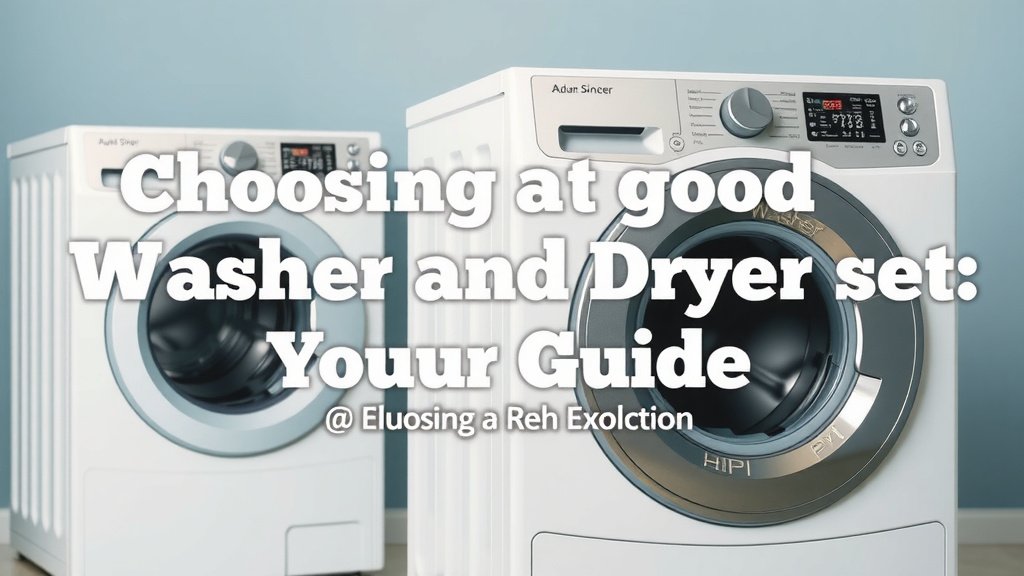
Choosing a Good Washer and Dryer Set: Your Guide
A good washer and dryer set means finding machines that clean your clothes effectively and dry them without damage. It’s about pairing reliable performance with features that fit your laundry needs and budget. You want a set that makes laundry day easier, not harder.
When choosing a set, consider drum size for your household’s needs. Energy efficiency ratings are also important for saving on utility bills. Many sets offer smart features, which can be a great convenience if you enjoy modern technology in your home. Think about the types of fabrics you wash most often.
- Look for effective cleaning and drying.
- Consider drum size for your load volume.
- Prioritize energy efficiency to save money.
- Think about smart features that simplify laundry.
- Match the set to the fabrics you wash.
Let’s walk through the key features and considerations to help you find the perfect washer and dryer set for your home. Our guide to the best new washer and dryer sets can help you find the perfect match.
Finding the Right Washer and Dryer for Your Home
Choosing a washer and dryer set that truly fits your needs can feel like a big decision. You want machines that are tough on stains but gentle on fabrics. Plus, they should be a good fit for your laundry room and your wallet. Let’s break down what makes a set a winner.
Understanding Washer Types and Their Strengths
Your washing machine is the workhorse. It handles everything from muddy sports uniforms to delicate silks. Knowing the main types available will help you choose the best one for your lifestyle.
Top-Load Washers: The Familiar Friend
Top-load washers are what many of us grew up with. You load clothes from the top. They are generally easier to load and unload. You can also add forgotten items mid-cycle. This makes them a convenient choice for many households.
Agitator vs. Impeller Models
Within top-loaders, you’ll find two main styles. Agitator models have a central post that twists and turns clothes. This can be very effective for heavy soils. However, it can sometimes be rougher on fabrics. Impeller models use a low-profile cone or disc at the bottom of the drum. This spins and tumbles clothes, using less water. They offer a larger capacity and are generally gentler on clothes.
Front-Load Washers: The Efficient Expert
Front-load washers are known for their superior cleaning performance. They tumble clothes through water, which mimics hand washing. This method is incredibly effective at removing dirt and stains. They also tend to be more energy and water-efficient than most top-loaders.
The Benefits of Front-Loaders
Many experts point to front-loaders as being the most effective at cleaning. They also use less water, which is great for your utility bills and the environment (Energy Star). Another big plus is their high spin speeds. This removes more water from clothes, leading to shorter drying times. The downside? They can be more expensive upfront and may require you to bend down to load and unload. You also need to be mindful of mold or mildew if the door isn’t left ajar between washes.
Key Features to Look for in a Dryer
The dryer’s job is to get your clothes dry. But a good dryer does it without shrinking your favorite sweater or creating static. Here’s what to consider:
Fuel Type: Gas vs. Electric
This is often determined by your home’s setup. Electric dryers plug into a standard outlet. Gas dryers require a gas line and a separate vent. If you already have a gas hookup, a gas dryer can be cheaper to operate over time. However, electric dryers are usually less expensive to purchase.
Capacity: Matching Your Laundry Needs
Dryer capacity is measured in cubic feet. You want a dryer that’s large enough for your typical loads. Overstuffing a dryer means clothes won’t tumble freely. This leads to uneven drying and increased wrinkles. As a general rule, the dryer’s capacity should be about twice that of your washer.
Matching Washer and Dryer Sizes
For example, a washer with a 4.5 cubic foot capacity would pair well with a dryer around 8 cubic feet. Many manufacturers offer matched sets, taking the guesswork out of this. We found that sets designed to work together often have optimized cycles.
Sensor Drying: Protecting Your Clothes
This is a feature you’ll want to prioritize. Sensor drying uses humidity sensors to detect when clothes are dry. It then automatically shuts off the dryer. This prevents over-drying and fabric damage. Timed dry, on the other hand, just runs for a set amount of time, risking shrinkage or static cling.
Advanced Features That Simplify Laundry Day
Beyond the basics, modern washer and dryer sets offer features that can make laundry less of a chore. Think of them as helpful assistants.
Smart Technology: Connected Convenience
Many new sets come with Wi-Fi connectivity. This allows you to control your washer and dryer from your smartphone. You can start a load, get cycle notifications, or even download new wash cycles. Some models even diagnose problems remotely. This can be incredibly convenient if you have a busy schedule.
Steam Functions: A Refreshing Option
Both washers and dryers can offer steam cycles. In a washer, steam can help sanitize clothes and remove allergens. In a dryer, steam can help de-wrinkle garments. This is perfect for refreshing clothes between washes or for items that can’t be ironed.
Energy Efficiency: Saving Money and the Planet
Energy Star certified appliances are designed to use less energy and water. This is good for your utility bills and for the environment. According to Energy Star, washers can use up to 30% less energy and 50% less water than older models. Dryers also benefit from efficiency improvements. Look for the Energy Star label when shopping.
Making Your Final Choice: A Quick Checklist
Before you commit, run through this quick checklist:
- Capacity: Does the drum size fit your typical laundry loads?
- Type: Does a top-load or front-load washer better suit your preferences?
- Dryer Fuel: Do you have the necessary hookups for gas or electric?
- Sensor Dry: Does the dryer have moisture sensors to prevent over-drying?
- Energy Star: Are the appliances energy-efficient to save on bills?
- Budget: Does the set fit within your financial comfort zone?
Conclusion
Finding a good washer and dryer set means balancing your laundry needs with reliable performance. You’ve learned about different washer types, dryer features like sensor drying, and the benefits of energy efficiency. Matching drum sizes and considering fuel types are also key. By using the checklist and understanding these elements, you’re well-prepared. Your next step is to compare specific models that align with your household’s requirements and budget to make laundry day truly easier.
Frequently Asked Questions
Are smart washer and dryer sets worth the extra cost?
Smart features like remote control and cycle downloads can offer convenience for busy households. If you enjoy managing tasks from your phone, they can simplify your routine. However, they do come with a higher price tag, so weigh the convenience against the cost for your budget.
How important is matching the washer and dryer capacity?
It’s quite important for optimal performance. A dryer with a capacity about twice that of your washer ensures clothes tumble freely. This leads to more even drying and fewer wrinkles, preventing over-drying and fabric damage.
Can I mix and match brands for my washer and dryer?
Yes, you absolutely can mix and match brands. While manufacturers often design matched sets to work together with optimized cycles, you can achieve great results by selecting individual machines that meet your needs. Focus on performance features that matter most to you.
What is the biggest mistake people make when buying a washer and dryer?
A common mistake is not considering the actual load sizes you typically wash. Buying a set that’s too small leads to frequent, smaller loads and potential damage from overstuffing. Conversely, a set that’s too large might waste water and energy on smaller loads.
How long should a good washer and dryer set typically last?
With proper maintenance, a good quality washer and dryer set should last between 10 to 15 years. Regular cleaning of filters and seals, along with avoiding overloading, helps extend their lifespan and maintain performance.