
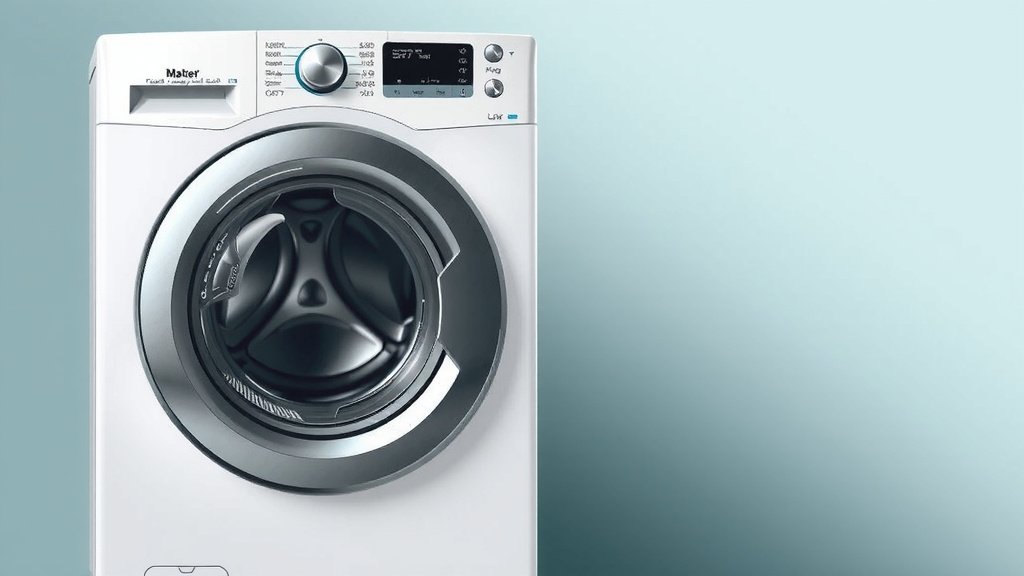
What to Look for When Buying a Washing Machine
When buying a washing machine, focus on your laundry needs and budget. Look for the right capacity, energy efficiency, and features that make sense for your household. A good machine saves you time and money in the long run.
Choosing a new washing machine can feel overwhelming with so many options. We’ve researched what matters most to homeowners. Understanding key factors like load size and wash cycles will help you find the perfect fit for your home and family.
- Consider your household size for proper capacity.
- Look for high energy and water efficiency ratings.
- Decide on essential features versus nice-to-haves.
- Factor in your budget for upfront and running costs.
- Read reviews from other users for real-world performance.
Let’s break down exactly what you should be looking for to make sure your next washing machine is a winner.
“`htmlChoosing Your Next Washing Machine: What to Look For
Finding the right washing machine is all about matching its features to your life. You want a machine that handles your laundry load efficiently. It should also fit your budget and be easy to use. We’ve gathered the key things to consider.
Understanding Washing Machine Capacity
The first big decision is capacity. This refers to how much laundry the drum can hold. It’s often measured in cubic feet. Think about your household size and how often you do laundry.
Matching Capacity to Your Household
For single individuals or couples, a smaller capacity machine might be perfect. These are typically 2.0 to 3.5 cubic feet. They use less water and energy. They’re also great for smaller living spaces.
Families with children will likely need a larger capacity. Look for machines that are 4.0 cubic feet or more. These can handle bulky items like bedding. They also reduce the number of loads you need to run each week. This can save you a lot of time.
Don’t Overbuy Capacity
While big might seem better, buying a machine that’s too large can be wasteful. You might end up running half-empty loads. This uses more water and energy than necessary. It’s best to find a balance.
Exploring Washing Machine Types
There are two main types of washing machines. Each has its own pros and cons. Understanding these differences will help you choose wisely.
Top-Load Washers
Top-load washers are classic. You load clothes from the top. They are often more affordable upfront. Many models feature an agitator in the center. This helps move clothes around for better cleaning. Some newer high-efficiency (HE) models use an impeller. This is a low-profile disc at the bottom.
Agitator models can be tough on clothes. They use more water. Impeller models are gentler. They use less water and are more energy-efficient. You might need to use a bit more detergent with HE machines. Many people find top-loaders easier to load. You don’t have to bend over as much.
Front-Load Washers
Front-load washers load from the front. They typically have a tumbling action. This is very gentle on your clothes. We found that front-loaders are generally more energy and water-efficient. They also tend to clean clothes better. This is because the tumbling action helps lift dirt away.
Front-loaders spin at higher speeds. This extracts more water. This means your clothes will spend less time in the dryer. This can save you money on electricity. The downside? They can be more expensive. They also require bending down to load and unload. Some people dislike the longer cycle times. You also need to clean the door seal regularly. This prevents mold and mildew growth, according to many appliance guides.
Key Features to Consider
Beyond capacity and type, various features can make a big difference. Think about what matters most for your laundry routine.
Wash Cycles and Settings
Most machines come with standard cycles. These include normal, delicate, and heavy-duty. Look for specialized cycles if you need them. Some machines offer steam cycles for sanitizing. Others have allergen cycles. These can remove pet dander and dust mites.
Adjustable water temperature is also important. Cold water is best for energy savings. Hot water is better for sanitizing. Warm water is a good middle ground. Many experts recommend using cold water whenever possible. This aligns with energy conservation goals (U.S. Department of Energy).
Energy and Water Efficiency
Look for the ENERGY STAR label. This means the appliance meets strict energy efficiency guidelines. These appliances use less energy and water. This saves you money on utility bills. It’s also better for the environment.
The water factor (WF) is another rating. It measures how many gallons of water are used per cubic foot of capacity. A lower WF means better water efficiency. You’ll find these ratings on the yellow EnergyGuide labels.
Noise Levels
If your laundry room is near living areas, noise might be a concern. Some machines are designed for quieter operation. Look for terms like “quiet wash” or “vibration reduction.” Check user reviews for feedback on noise levels. We found that front-loaders can sometimes be quieter than older agitator models.
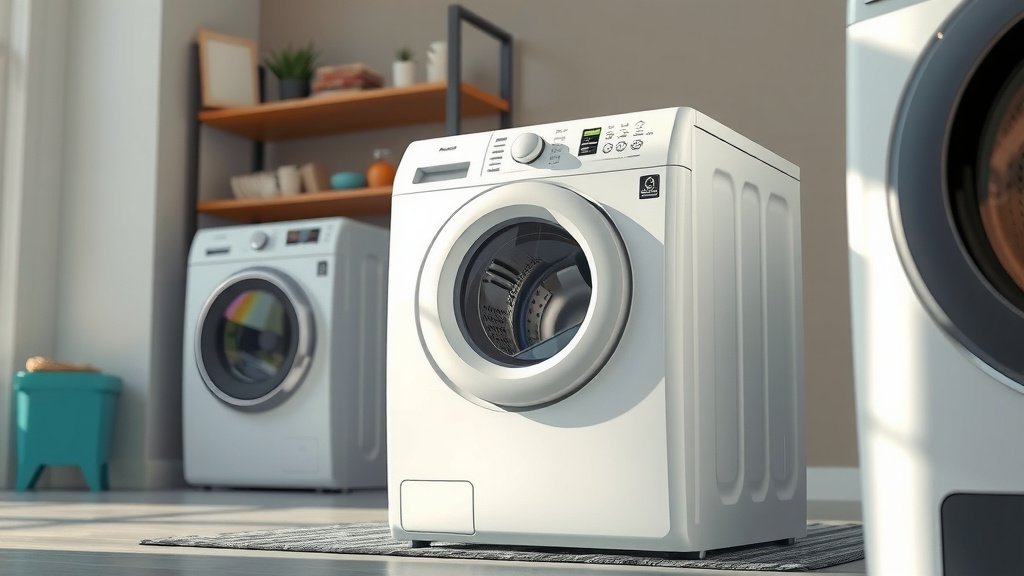
Budget and Long-Term Costs
Washing machines range widely in price. Determine your budget before you shop. Remember to factor in installation costs. Also, consider the ongoing cost of water and energy. An energy-efficient model might cost more upfront. But it can save you money over time.
Quick Checklist for Buying
- Measure your laundry space first.
- Determine your household’s typical load size.
- Prioritize energy and water efficiency ratings.
- Decide if a top-loader or front-loader fits your needs.
- Read recent user reviews for real-world performance.
Conclusion
You’re now equipped to find the best washing machine for your home. Remember to match the capacity to your family size and lifestyle. Consider whether a top-load or front-load model suits you best. Always prioritize energy efficiency to save on utility bills. Don’t forget to read reviews for real-world performance feedback. Take your time, measure your space, and make an informed choice. Your next step is to head to a retailer or browse online, armed with this knowledge to ask the right questions.
Frequently Asked Questions
How often should I run my washing machine?
It’s best to run your washing machine based on your laundry needs. For smaller households, one to two loads a week might be sufficient. Families will likely need more. Avoid running half-empty loads, as this wastes energy and water. Aim to fill the machine appropriately for its size.
Are front-load washers really worth the extra cost?
Front-load washers often have a higher upfront cost. However, they tend to use less water and energy. This can lead to significant savings on utility bills over the machine’s lifespan. They are also generally gentler on clothes. For many, the long-term savings and better cleaning make them a worthwhile investment.
What’s the difference between an agitator and an impeller top-loader?
An agitator is a central post that twists and turns clothes. This can be tough on fabrics. An impeller is a low-profile disc at the bottom. It uses friction to move clothes. Impeller models use less water and are gentler on clothes than agitator models.
Can I use regular detergent in an HE washing machine?
No, you should not use regular detergent in an HE (High-Efficiency) washing machine. HE machines use less water. Regular detergents create too many suds with less water. This can lead to over-sudsing. It can also leave residue on your clothes and damage the machine. Always use detergents specifically labeled for HE machines.
How do I measure my laundry space for a new washing machine?
Measure the width, depth, and height of the space where the washer will go. Make sure to account for hoses and the door swing. You’ll need about 4-6 inches of clearance behind the machine for plumbing and ventilation. Also, ensure there’s enough space in front for loading and unloading.
![7 Best Washer Dryer For Small Space [In 2026]](https://homeunderstandable.com/wp-content/uploads/2026/08/7-best-washer-dryer-for-small-space-in-2026-featured-768x432.jpg)
![7 Best Compact Washers & Dryers [In 2026]](https://homeunderstandable.com/wp-content/uploads/2026/08/7-best-compact-washers-and-dryers-in-2026-featured-768x432.jpg)
![7 Best Front Load Washer And Dryer Stackable [In 2026]](https://homeunderstandable.com/wp-content/uploads/2026/08/7-best-front-load-washer-and-dryer-stackable-in-2026-featured-768x432.jpg)