Stackable Washer Dryer Size Guide September 2026
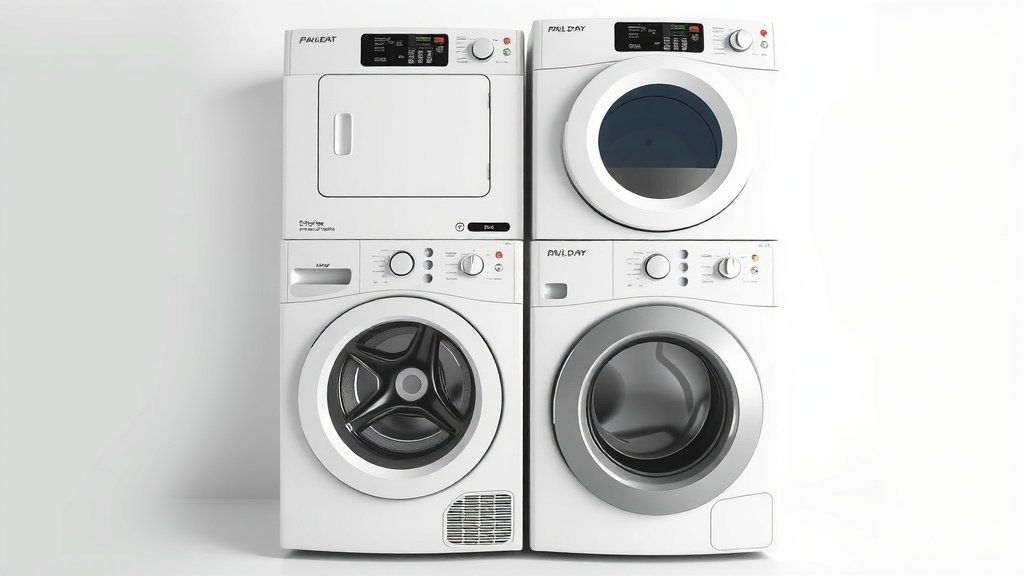
The size of a stackable washer dryer can vary, but most standard units stand around The size of a stackable washer dryer can vary, but our guide to the best stackable washer and dryer sets covers many options.27 inches wide and typically range from 30 to 36 inches deep. Height can range from 70 to 80 inches, depending on the model. These compact dimensions are designed to fit neatly into smaller living spaces, like apartments or condos.
When you’re looking for a stackable unit, you’ll find they offer a space-saving solution without sacrificing too much capacity. While they are smaller than side-by-side appliances, many still offer a decent amount of room for laundry. You’ll want to consider both the width and the overall height to ensure it fits your available area, especially in closets or tight laundry nooks. We found that measuring your space carefully is the first step to a successful purchase.
- Standard stackable units are about 27 inches wide.
- Depth is usually between 30 and 36 inches.
- Height typically falls between 70 and 80 inches.
- They are designed for small spaces like apartments.
- Measure your space before buying to ensure a good fit.
Let’s walk through the typical dimensions you can expect for stackable washer and dryer units, and what you should consider when measuring your home.
Understanding Stackable Washer Dryer Dimensions
You’ve decided a stackable washer and dryer is the way to go for your home. That’s a smart choice for maximizing space! But before you get too excited about fresh laundry, let’s talk about size. Knowing the typical dimensions will help you avoid any frustrating surprises. We’ve found that understanding the width, depth, and height is key to a perfect fit.
Standard Width: The Consistent Measurement
When we talk about stackable units, the width is often the most consistent measurement. Most models are designed to fit through standard doorways. This means you’ll find them to be around 27 inches wide. This is a pretty standard figure across many brands and types of stackable laundry pairs. It’s a good starting point for your measurements. Think of it like buying a standard-sized door – it usually fits!
Depth Considerations: From Wall to Front
The depth of a stackable washer dryer can vary a bit more. You’ll generally find depths ranging from about 30 inches to 36 inches. This measurement is important because it tells you how far the unit will stick out into your room. You don’t want to trip over it, right? Some models might have slightly deeper drums for larger capacities. Others might be more compact to save precious floor space. Always check this number carefully against your available space.
What Affects Depth?
Several factors can influence the depth. The size of the drum is a big one. Larger drums naturally require more depth. Also, some machines have control panels that extend forward a bit. Others have sleek, integrated designs. Don’t forget to account for any hoses or cords at the back. These can add an inch or two. It’s wise to add a little buffer room for these connections. We found that a few extra inches can make installation much smoother.
Height: Reaching New Laundry Heights
The height of a stackable unit is where you’ll see the most variation. Because the dryer sits on top of the washer, these units are tall. You can expect them to be between 70 and 80 inches tall. This is roughly the height of a refrigerator, sometimes a bit more. This measurement is absolutely critical, especially if you plan to install your unit in a closet or a space with a low ceiling. Measure from the floor all the way up to the highest point of the appliance.
Why So Tall?
The combined height is simply the washer and dryer stacked one atop the other. Each appliance has its own height, and when they’re put together, you get that impressive vertical measurement. Think of it like stacking two large boxes. The total height is just the sum of their individual heights. This vertical design is what makes them so efficient for small spaces. You’re using vertical space instead of floor space, which is often at a premium.
Capacity: How Much Laundry Can They Hold?
So, you’re probably wondering, “With these sizes, how much laundry can I actually wash and dry?” It’s a fair question! While stackable units are space-savers, they still offer respectable capacities. You can typically expect the washer to handle anywhere from 3.5 to 5 cubic feet of laundry. The dryer often has a slightly larger capacity, sometimes up to 6 or 7 cubic feet. This is usually enough for most households, even larger families.
Matching Capacity to Your Needs
For a single person or a couple, a smaller capacity might be perfectly fine. You might be able to get away with a washer around 3.5 cubic feet. If you have a larger family or do a lot of bulky items like comforters, you’ll want to look for models in the 4.5 to 5 cubic feet range for the washer. We found that many people are pleasantly surprised by how much a modern stackable unit can hold. It’s a good idea to think about your typical laundry loads. Are you washing king-size bedding weekly? Or mostly smaller loads of clothes?
| Component | Typical Range | Notes |
|---|---|---|
| Width | 27 inches | Most standard units. Fits through doorways. |
| Depth | 30 – 36 inches | Accounts for drum size and controls. Check for hose clearance. |
| Height | 70 – 80 inches | Combined height of washer and dryer. Crucial for closets. |
| Washer Capacity | 3.5 – 5.0 cu. ft. | Good for singles to families. |
| Dryer Capacity | 4.0 – 7.0 cu. ft. | Often larger than the washer. Handles bulky items. |
Measuring Your Space: The Golden Rule
We cannot stress this enough: measure, measure, measure! Before you even look at specific models online or in a store, grab your tape measure. You need to know the exact dimensions of the space where your stackable unit will live. This means measuring the width, depth, and height of the alcove, closet, or laundry nook. Don’t forget to consider doorway widths you’ll need to get the appliance *into* the space. A unit that fits perfectly in the spot might never make it through the hallway!
What to Measure Exactly
Here’s a quick checklist for your measuring mission:
- Width of the opening: Measure from wall to wall.
- Depth of the opening: Measure from the back wall to the front edge.
- Height of the opening: Measure from the floor to the ceiling or shelf above.
- Doorway width: Measure the narrowest point of any doors the unit must pass through.
- Depth with doors open: If the space has doors, check how far they open and if they’ll interfere.
- Clearance for connections: Allow a few extra inches behind for water hoses and power cords.
When we researched this, many users found that ignoring small clearances was a common mistake. Experts often recommend leaving at least 1-2 inches of space around the sides and top for proper ventilation. This is especially important for the dryer to function efficiently and safely (National Fire Protection Association).
Beyond Standard: Compact and Apartment-Sized Options
While 27 inches wide is standard, you might encounter even more compact units, sometimes around 24 inches. These are often called “apartment-sized” or “compact” stackables. They are designed for the absolute smallest spaces. Their capacities will also be smaller, so they’re best suited for one or two people. If you have a tiny home or a very limited laundry area, these might be your best bet. They can be a lifesaver when space is extremely tight.
Conclusion
You’ve learned that stackable washer dryer sizes are designed for efficiency. Most units offer a consistent 27-inch width, fitting through standard doorways. Depths typically range from 30 to 36 inches, while the overall height can reach 70 to 80 inches. Remember, these compact dimensions make them perfect for smaller homes without sacrificing too much capacity. Your next step is to grab that tape measure. Accurately measuring your laundry space is the most critical action you can take. This ensures your chosen stackable unit will be a perfect fit and a convenient addition to your home.
Frequently Asked Questions
Will a stackable washer dryer fit in a standard closet?
Generally, yes. Standard stackable units are about 27 inches wide, which is designed to fit through most doorways and often into closets. However, you must measure your closet’s width, depth, and especially height (70-80 inches) to be absolutely sure before purchasing. Always allow for a few inches of clearance for ventilation and hose connections.
Are there smaller stackable washer dryer options available?
Yes, you can find more compact, “apartment-sized” stackable units. These are often around 24 inches wide, making them ideal for even tighter spaces. Their capacities will be smaller, so they are best suited for one or two people. If you have a very small home, these might be your best solution for laundry convenience.
How much space do I need behind the stackable unit?
You’ll want to leave about 2-4 inches of space behind the unit. This clearance is essential for proper ventilation, preventing overheating, and allowing room for water hoses and power cords. Some experts recommend leaving at least 1-2 inches on the sides and top as well for optimal airflow.
Can I stack a regular washer and dryer on top of each other?
No, you should not stack regular, non-stackable washers and dryers. Stackable units are specifically designed and tested to be safely stacked, with the dryer housing the controls and often a more robust frame. Attempting to stack regular machines can be dangerous and damage the appliances.
Does the depth measurement include the hoses?
Typically, the listed depth measurement for a stackable washer dryer refers to the main body of the appliance. You should always account for an additional 2-4 inches of depth for water hoses and electrical cords at the back. This ensures the unit won’t be pushed too tightly against the wall, allowing for proper connections and ventilation.

![7 What Are The Best Washer And Dryers [In 2026]](https://homeunderstandable.com/wp-content/uploads/2026/09/7-what-are-the-best-washer-and-dryers-in-2026-featured-768x432.jpg)