
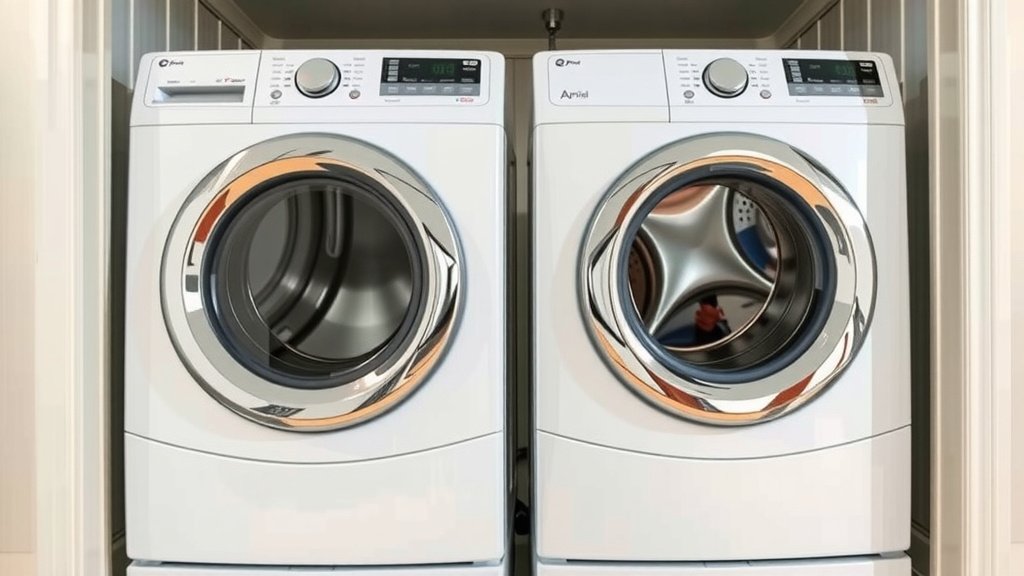
Standard Washer and Dryer Dimensions: What You Need to Know
Standard washers and dryers are typically around 27 to 30 inches wide. This width is common for both front-load and top-load machines, helping them fit into most laundry spaces. Height and depth can vary, but most units will also fit within typical home clearances. We found that understanding these basic dimensions is your first step to a smooth laundry room setup.
When you’re measuring your space, remember to account for door swings and ventilation needs. A little extra room makes a big difference for maintenance and airflow. It’s wise to check the specific measurements for any model you’re considering, as there can be slight variations between brands and types. We suggest measuring your doorway too, to ensure you can get them into the room!
- Standard washer/dryer width: 27-30 inches.
- Check height and depth too.
- Allow for door swings and airflow.
- Measure your doorways and space.
- Always check specific model dimensions.
Below, we break down the common dimensions for washers and dryers, along with tips to ensure they fit your laundry room perfectly.
Understanding Common Washer and Dryer Sizes
Figuring out the right appliance size is key to a functional laundry room. You want machines that clean your clothes effectively. You also need them to fit snugly into your designated space. We’ve researched the typical dimensions so you can plan with confidence. Our guide to choosing the best washer and dryer set can help you create a functional laundry room.
Standard Washer Dimensions: Getting the Fit Right
When we talk about standard washers, we’re usually referring to the most common models you’ll find. These are designed to work in the majority of homes. They balance capacity with a footprint that fits. Let’s break down the typical measurements you’ll encounter.
Width of a Standard Washer
The width is often the most critical measurement. This is where most washers align. You’ll find most standard washers are about 27 to 30 inches wide. This range ensures they can slide into most standard alcoves or laundry room setups. It’s a pretty consistent dimension across many brands and styles, from top-loaders to front-loaders. This consistency is a real blessing when you’re trying to visualize your new laundry area.
Height and Depth Considerations
While width is often the headline number, don’t forget height and depth! Height typically ranges from 36 to 45 inches for most standard models. This measurement matters if you’re stacking your dryer on top of the washer. You need to ensure you have enough headroom. The depth usually falls between 28 to 34 inches. This includes the hoses and any protruding parts at the back. It’s always wise to add a few inches to the depth for ventilation and clearance.
Top-Load vs. Front-Load Widths
You might wonder if there’s a big difference between top-load and front-load washers. For the most part, no. Most standard top-load washers and front-load washers stick to that 27-30 inch width. This makes choosing between the two types less about fitting and more about your personal preference for washing style and features. We found that the internal drum size is often more different than the external width.
Specialty and Compact Washer Sizes
What if your space is super tiny? There are also compact washers. These are designed for smaller apartments or tight nooks. Their widths can be as small as 24 inches. They offer less capacity but can be a lifesaver for small living spaces. If you’re looking at a stackable unit for an RV or a small condo, these might be your go-to. Just remember, smaller size often means fewer clothes per load.
Standard Dryer Dimensions: Matching the Washer
Dryers generally mirror the dimensions of their washer counterparts. This is especially true when you buy them as a matching set. The goal is a cohesive and functional laundry pair. Let’s look at what you can expect.
Dryer Width Standards
Just like washers, standard dryers typically measure between 27 and 30 inches wide. This ensures they sit flush with a standard washer. If you’re placing them side-by-side, this uniformity makes for a clean look. It also simplifies installation, as plumbing and venting requirements are often designed around these common widths.
Dryer Height and Depth
The height of a standard dryer often matches its washer sibling, around 36 to 45 inches. This is crucial if you plan on stacking your units. The depth is usually in the same ballpark as washers, around 28 to 34 inches. Again, remember to account for the vent hose that sticks out the back. This little bit of extra space is vital for air circulation and preventing kinks in the hose.
Stackable Washer/Dryer Units
Stackable units are a fantastic space-saving solution. When stacked, their combined height can be around 70 to 80 inches. The width and depth remain consistent with standard side-by-side units, typically 27-30 inches wide and 28-34 inches deep. This means they take up the floor space of just one machine. Many people find this option ideal for smaller homes or apartments. Just be sure your ceiling height can accommodate the stacked height! If you’re considering stacking, our guide to the best stackable washer and dryer sets covers units around 70 to 80 inches.
Essential Space Considerations Beyond Appliance Dimensions
Knowing the appliance dimensions is just the first step. You also need to think about the surrounding space. This is where many people run into trouble. A little planning here saves a lot of headaches later.
Allowing for Door Swings and Panel Access
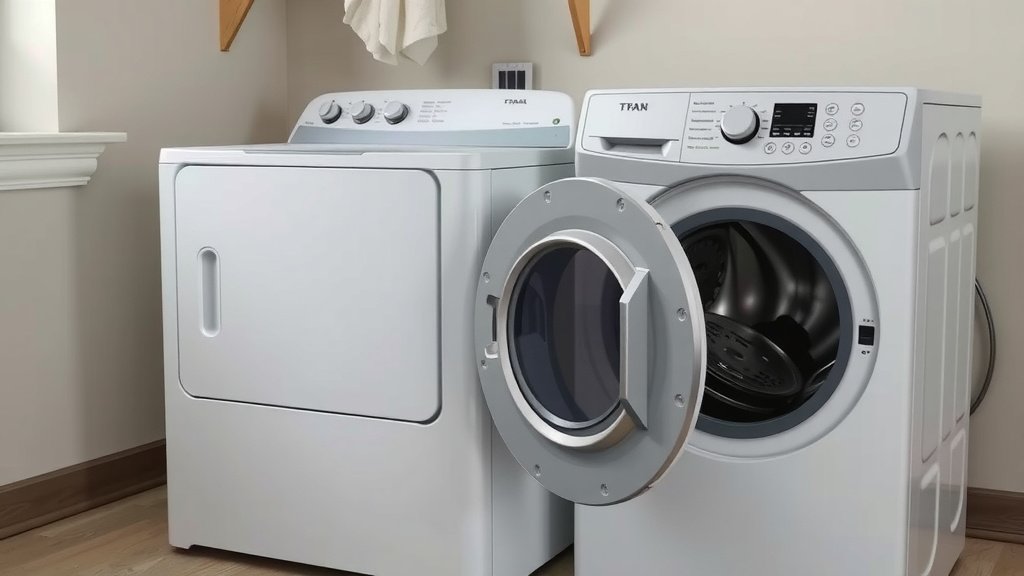
Whether you have a top-load washer or a front-load one, the doors need space to open fully. For top-loaders, you need clearance above for the lid. For front-loaders, you need space in front for the door to swing open. Many experts recommend at least 2-3 feet of clearance in front of a front-load washer or dryer door. This allows you to load and unload laundry comfortably. It also gives you room to pull out the lint filter or reach the control panel. Think about whether your laundry room door opens into the same space. You’ll need to factor that swing in too.
Ventilation and Utility Hookups
Proper ventilation is absolutely critical for dryers. They produce a lot of heat and moisture. Most dryers need about 3-4 inches of clearance behind them for the vent hose. Overlooking this can lead to longer drying times and potential fire hazards. We found that the American Home Appliance Association recommends keeping dryer vents clear and unobstructed for safety. You’ll also need space for water hookups for the washer and electrical outlets for both. Don’t forget access panels for repairs; sometimes, you need to pull the machine out a bit.
Measuring Your Pathways
This is a big one we often forget! You need to make sure the washer and dryer can actually get *into* your laundry room. Measure your doorways, hallways, and any staircases they might have to navigate. A standard washer or dryer might be 27 inches wide, but if your doorway is only 26 inches, you’re in a pickle. You might need to remove doors from their hinges or tilt the appliances to get them through tight spots. We always suggest measuring these pathways before you buy.
Quick Checklist for Your Laundry Space
Ready to measure? Here’s a quick rundown to ensure you don’t miss a beat:
- Measure the width of your laundry space.
- Measure the height and depth.
- Check doorway and hallway clearances.
- Allow 2-3 feet of space in front of doors.
- Ensure 3-4 inches of clearance behind for vents.
- Confirm ceiling height if stacking.
Conclusion
You now have a clear picture of standard washer and dryer dimensions. Remember that most units are 27-30 inches wide, but height and depth also matter. Don’t forget to measure your doorways and allow for door swings and ventilation space. Planning ahead is key to avoiding installation headaches. Your next step? Grab your tape measure and start mapping out your perfect laundry space!
Frequently Asked Questions
Will a standard washer and dryer fit through my front door?
Most standard washers and dryers are about 27 inches wide. You’ll need to measure your doorways and hallways to be sure. Often, removing the doors from their hinges can help get them through tight spots.
How much space do I really need around my washer and dryer?
You should allow about 2-3 feet of clearance in front of your machines for loading and unloading. For ventilation, ensure 3-4 inches of space behind your dryer.
Are compact washers the same width as standard ones?
No, compact washers are typically narrower. While standard units are usually 27-30 inches wide, compact models can be as small as 24 inches wide.
Does stacking my washer and dryer change their width?
Stacking doesn’t change the width or depth of the individual units. A stacked unit will take up the floor space of just one appliance, but their combined height will be around 70-80 inches.
What’s the biggest dimension I should worry about for my laundry room?
The width is often the most critical for fitting the appliances into the room itself. However, for stacking, the ceiling height becomes very important. Always measure your pathways into the room as well.
![7 Best Used Top Load Washer [In 2026]](https://homeunderstandable.com/wp-content/uploads/2026/09/7-best-used-top-load-washer-in-2026-featured-768x432.jpg)

![7 What Is The Best Stacked Washer Dryer [In 2026]](https://homeunderstandable.com/wp-content/uploads/2026/09/7-what-is-the-best-stacked-washer-dryer-in-2026-featured-768x432.jpg)
![7 Best Cheapest Washer Dryer [In 2026]](https://homeunderstandable.com/wp-content/uploads/2026/09/7-best-cheapest-washer-dryer-in-2026-featured-768x432.jpg)