

Stack Washer Dryer Width: What You Need to Know
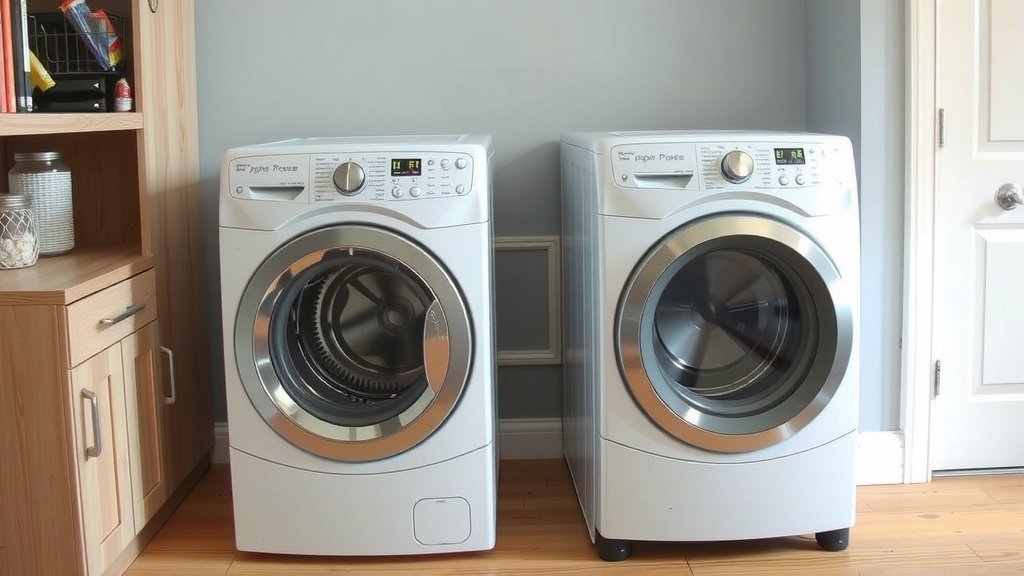
When thinking about a stack washer and dryer, you’re likely wondering about its footprint. Most standard stackable units are about 27 inches wide. This width is designed to fit into typical laundry alcoves and closets found in many homes across the US. You can usually find this measurement on the product specifications. It’s a common size that works for most laundry spaces.
Before buying, it’s smart to measure your available space. We found that while 27 inches is standard, some compact or apartment-sized models can be slightly narrower. Conversely, high-capacity units might be a little wider. Always double-check the exact dimensions before making a purchase to ensure a good fit. This small step can save you a lot of headaches later on.
- Standard stack washer/dryers are typically 27 inches wide.
- Always measure your space carefully.
- Compact models might be narrower.
- High-capacity units could be slightly wider.
- Check product specifications for precise measurements.
Ready to figure out if a stackable unit is the right fit for your laundry room? Let’s dive into the details of stackable washer and dryer sizes.
“`htmlUnderstanding Stackable Washer and Dryer Widths
So, you’re curious about how much space a stackable washer and dryer will take up horizontally? It’s a totally valid question! Most people assume they’re all the same size, but there’s a bit more to it. We’ve found that the standard width is quite consistent, making it easier to plan your laundry space.
The Standard Width: What to Expect
When we talk about stackable units, the most common width you’ll encounter is 27 inches. This isn’t just a random number; it’s a size that manufacturers have settled on because it fits neatly into standard laundry closets and alcoves. Think of it like a tall, slim refrigerator for your clothes. It’s designed to be space-efficient.
This 27-inch measurement typically applies to the main body of both the washer and the dryer. When they’re stacked, they form a single unit. So, when you measure your doorway or hallway, you’ll want to ensure you have at least 27 inches of clear passage, plus a little extra for maneuvering.
Why is 27 Inches So Common?
We did some digging, and it turns out this standard width is deeply tied to US building codes and common appliance dimensions. Many laundry rooms and closets are built with this width in mind. Manufacturers want their products to be compatible with existing homes.
It’s a kind of unspoken agreement in the appliance industry. A 27-inch width allows for a decent load capacity in the washer and dryer while still fitting into the typical “laundry nook.” This means you don’t usually have to do major renovations just to fit a stackable unit into your home.
Are There Any Exceptions to the 27-Inch Rule?
Yes, there are! While 27 inches is the go-to size, you might find variations. It’s important to know these so you don’t end up with a unit that’s too big or too small for your needs.
Compact or Apartment-Sized Units
For those living in smaller apartments or homes with very tight spaces, you’ll find compact stackable washer and dryer models. These are often narrower than the standard 27 inches. We’ve seen some that are as narrow as 24 inches. These are fantastic for maximizing space but might have smaller drum capacities.
If you’re considering a compact model, double-check the depth and height too. They might be shorter or shallower than standard units, but they can still be a lifesaver for small laundry areas.
High-Capacity or Oversized Models
On the flip side, some people need more washing power or capacity. You might find larger, high-capacity stackable units. These can be slightly wider than 27 inches, perhaps up to 30 inches. These models are less common for stacking, as their size often means they are designed as side-by-side units.
However, some manufacturers do offer larger stackable options for those who want to wash bigger loads. Just be prepared for them to take up a bit more horizontal real estate.
Beyond Width: Other Important Dimensions
While width is a major concern, don’t forget about the other dimensions! A stackable unit is tall, and its depth matters too.
Height and Depth Considerations
The height of a stacked unit can be quite significant, often ranging from 70 to 80 inches. Make sure your ceiling height is sufficient. You’ll need enough clearance to get it into the room and to access the top controls easily.
The depth usually falls between 25 to 30 inches. You need to account for this when deciding where to place the unit. You’ll want some space behind it for ventilation and possibly for hoses, but not so much that it sticks out too far into your room or walkway.
A Quick Comparison Table
To help you visualize, here’s a look at typical dimensions. Keep in mind these are general guidelines, and specific models will vary.
| Dimension | Standard Unit | Compact Unit | Larger Unit (Less Common for Stacking) |
|---|---|---|---|
| Width | 27 inches | 24 – 25 inches | 28 – 30 inches |
| Height | 70 – 80 inches | 65 – 75 inches | 75 – 85 inches |
| Depth | 25 – 30 inches | 24 – 27 inches | 28 – 32 inches |
Where to Find Specific Dimensions
So, how do you get the exact numbers for a unit you’re interested in? It’s simpler than you might think. Manufacturers are required to provide this information. We always recommend looking at the product specifications sheet. You can usually find this on the retailer’s website or the manufacturer’s official site.
Don’t be shy about checking reviews or even calling customer service if you’re having trouble finding the dimensions. They want you to buy their product, and they’ll be happy to help clarify any measurements.
Measuring Your Space: A Crucial Step
Before you fall in love with a particular stackable unit, you absolutely must measure your laundry space. This includes not just the width, but also the height and depth. Think about doorways, hallways, and staircases too – how will you get it into the room?
We found that many people overlook the need for clearance around the unit for ventilation and maintenance. Ensure you have a few inches of wiggle room on all sides, especially the back. This helps prevent overheating and makes repairs much easier down the line.
Don’t Forget Doorways and Hallways
It’s a classic mistake: buying an appliance only to find it won’t fit through the door. Measure all potential entry points. A 27-inch washer might fit into a 27-inch space, but getting it there could be the real challenge. Sometimes appliances are shipped with doors or handles removed to make them narrower for transport.
A Quick Pre-Purchase Checklist
Ready to ensure you’re making the right choice? Here’s a handy checklist to review before you click ‘buy’:
- Measure your laundry alcove/closet width, height, and depth.
- Measure all doorways and hallways the unit must pass through.
- Check the product specifications for the exact width of your chosen model.
- Verify the unit’s height fits under your ceiling or cabinets.
- Confirm there’s adequate depth clearance for hoses and ventilation.
- Note if any parts (like doors) need to be removed for delivery.
Conclusion
You’ve learned that the standard width for a stackable washer and dryer is typically 27 inches. However, you also know that compact units can be narrower, around 24 inches, and larger, less common stackable models might reach 30 inches. Remember, these measurements are just for the appliance itself. Always factor in clearance for ventilation and doorways when measuring your space.
Your next step is clear: grab your measuring tape! Measure your intended laundry spot and all paths leading to it. Comparing these measurements to the specific product dimensions will ensure your new stackable unit fits perfectly, saving you hassle and potential headaches.
Frequently Asked Questions
Will a 27-inch stackable washer and dryer fit through a standard 30-inch doorway?
Yes, a 27-inch wide stackable unit should comfortably fit through a standard 30-inch doorway. You’ll have about 3 inches of clearance. We recommend still measuring your doorway, as some older homes might have narrower openings, and checking if any handles or panels need to be temporarily removed for easier passage.
Are there stackable washer and dryer units that are narrower than 24 inches?
While 24 inches is considered very compact, we haven’t commonly found stackable units significantly narrower than that for residential use. If you need an extremely small footprint, you might need to consider specialized or commercial-grade appliances, which often come with different features and price points.
Does the 27-inch width include the space needed for hoses and venting?
No, the 27-inch width refers to the actual cabinet of the washer and dryer unit itself. You will need to account for additional space behind the unit for water hoses, drain hoses, and potentially dryer venting. We advise leaving at least a few inches of clearance on the back and sides for proper airflow and connections.
What is the typical depth of a stackable washer and dryer?
The depth of a stackable washer and dryer unit typically ranges from 25 to 30 inches. This measurement is important for ensuring the unit doesn’t stick out too far into your room or walkway. Always double-check the product specifications, as depth can vary slightly between models and brands.
Can I stack a washer and dryer from different brands if they are both 27 inches wide?
While many 27-inch units are designed to be compatible, we generally advise against stacking washers and dryers from different brands or even different models within the same brand. Stacking kits are often brand-specific, and mismatched units may not fit securely, could cause damage, or void warranties.



![7 What Is The Best Stackable Washer And Dryer [In 2026]](https://homeunderstandable.com/wp-content/uploads/2026/09/7-what-is-the-best-stackable-washer-and-dryer-in-2026-featured-768x432.jpg)