
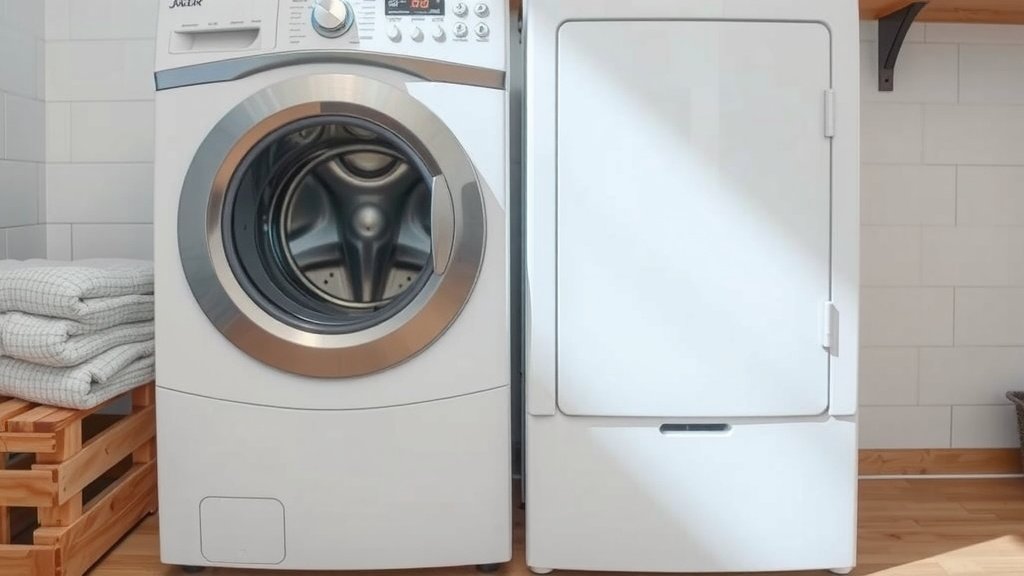
Stackable Washer Dryer Widths Explained
Stackable washer and dryer units typically measure around 27 inches wide, which is a standard dimension for most laundry appliances. This space-saving design is perfect for smaller homes and apartments. You can generally expect them to be about the same width as a traditional side-by-side washer and dryer.
When considering a stackable set, width is a primary factor for fitting into your laundry space. We found that manufacturers aim for standardized dimensions to accommodate common laundry room layouts. This consistency makes shopping for a new unit much easier for homeowners.
- Stackable washer and dryer units are usually 27 inches wide.
- This width is standard for most laundry appliances.
- It allows them to fit easily into smaller spaces.
- Look for this width when shopping for a space-saving solution. Look for this width when shopping for a space-saving solution, especially for apartments.
Below, we’ll walk you through the typical dimensions you can expect and what to measure before you buy your new stackable washer and dryer.
Understanding Stackable Washer and Dryer Widths
So, you’re curious about how wide stackable washer and dryer units are, right? It’s a super common question, and for good reason! Your laundry space might be cozy, and knowing dimensions is key to a perfect fit. We found that most stackable washer and dryer units are designed to be around 27 inches wide. This measurement is pretty standard across the board. It’s the same width you’d typically see for a full-sized, traditional washing machine or dryer. This consistency is a lifesaver when you’re planning your laundry room layout.
Think of it like buying a standard-sized door for your house. Manufacturers know that most doorways are a certain size. Similarly, appliance makers aim for dimensions that work in most homes. This means you can generally assume a 27-inch width as a starting point. This helps simplify the shopping process a lot, doesn’t it? You’re not hunting for a unicorn appliance.
Why 27 Inches Is the Magic Number
Why 27 inches? Well, it’s a sweet spot for a few reasons. This width allows the appliances to be roomy enough inside for a good-sized load of laundry. You don’t want to feel like you’re washing socks one at a time! Yet, it’s narrow enough to fit through standard doorways and into typical laundry alcoves. We found that this dimension has become an industry standard for a reason. It balances capacity with accessibility.
The beauty of the stackable design is maximizing vertical space. But the designers also know you need to get the machines *into* your home and laundry area in the first place. A 27-inch width helps ensure that. It’s a thoughtful engineering choice that serves most homeowners well.
Beyond Width: Other Dimensions to Consider
While width is your primary concern, don’t forget about the other dimensions. Stackable units are tall, obviously. They stack one on top of the other. So, height is a major factor. You’ll need to measure the ceiling height in your laundry space. Make sure there’s enough room for the stacked unit plus any ventilation or clearance needed. Many stackable units can reach over 6 feet tall. That’s quite a bit of vertical real estate!
Depth is another dimension that can sometimes surprise people. You need to ensure the machines don’t stick out too far into your walkway. This is especially important if your laundry area is also a high-traffic zone. We recommend measuring the depth from the wall to the front of where the appliance will sit. Also, factor in a few extra inches for the doors to open fully and for hose connections at the back.
Height: The Vertical Challenge
Let’s talk height. This is where stackable units really differ from side-by-side models. A typical washing machine might be around 36 inches tall, and a dryer similar. Stacked, you’re looking at double that, plus a bit more. We found that the combined height can range anywhere from 70 to 80 inches, sometimes even more. Before you get too excited about a particular model, measure your ceiling height. Don’t forget to account for things like sloped ceilings or ductwork.
Think about how you’ll actually get the unit into your house and up to its final resting place. Will it fit through any hallways or staircases? It’s a bit like planning a move – you need to measure the route, not just the destination!
Depth: Making Sure You Can Walk By
The depth of a stackable unit is often quite similar to its non-stacked counterparts. You can expect most to be around 27 to 34 inches deep. This might seem straightforward, but it’s easy to overlook. If your laundry closet is very shallow, a deep unit could block a doorway or make it difficult to access other items. We found that leaving about 15 inches of clearance in front of the machines is a good rule of thumb for comfortable use.
This extra space allows you to comfortably load and unload clothes. It also gives you room to maneuver if you need to access the back for maintenance or cleaning. Always double-check the manufacturer’s specifications for the exact depth measurement.
What to Measure Before You Shop
So, what’s the game plan for measuring your space? First, grab your trusty tape measure. You’ll need it to get accurate readings. We recommend measuring the width, height, and depth of the space where your new stackable washer and dryer will go. Measure twice, buy once is a saying for a reason, especially with appliances!
- Measure the width of the available space.
- Measure the height from floor to ceiling.
- Measure the depth from the wall to the desired front edge.
- Don’t forget to measure doorways and hallways!
Measuring the Width of Your Laundry Space
This is where you confirm if that standard 27-inch width will work. Measure the space from one wall to the other. If you have side-by-side existing machines, measure the total width they occupy. Then, divide that in half. Most stackable units are designed to fit within this 27-inch footprint. However, we found that it’s wise to add a little wiggle room. A couple of inches on each side for ease of installation and airflow is always a good idea.
Assessing Height and Depth Requirements
For height, measure from the floor to the lowest point of any obstruction above. This could be a ceiling, a shelf, or ductwork. We found that many homeowners overlook the height when stacking. Ensure you have several inches of clearance above the unit. For depth, measure from the wall to the front of the appliance. Remember to account for the hoses and the space needed to open the doors. This ensures your laundry area remains functional.
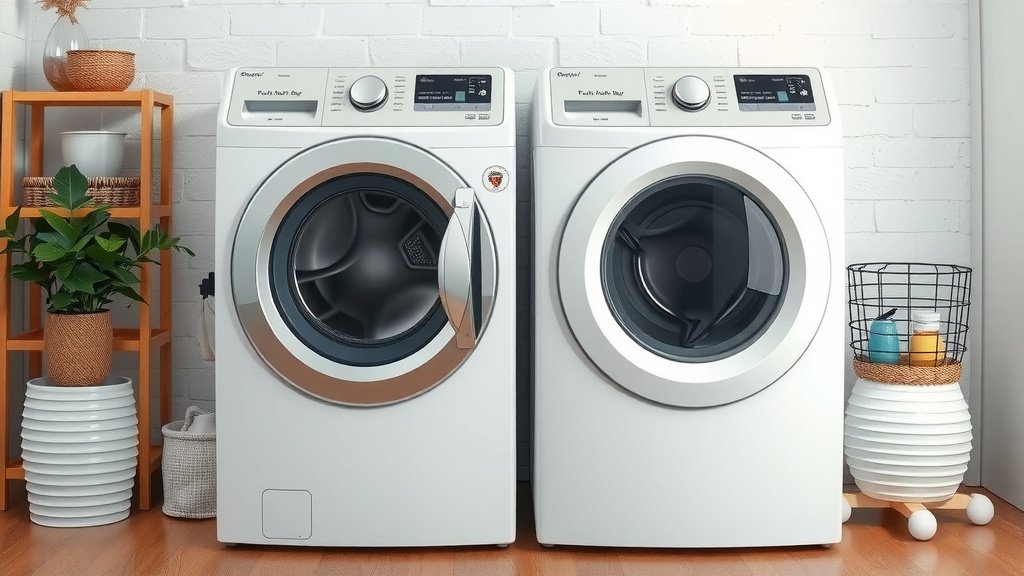
Common Stackable Washer Dryer Dimensions in a Table
To make things crystal clear, here’s a quick rundown of typical dimensions. Keep in mind these are averages, and exact measurements can vary slightly by brand and model. We found that most manufacturers aim for these general sizes to cater to the majority of homes.
| Dimension | Typical Range | Notes |
|---|---|---|
| Width | 27 | Standard for most units. |
| Height (Stacked) | 70 – 80+ | Measure your ceiling carefully. |
| Depth | 27 – 34 | Ensure enough clearance in front. |
A Quick Checklist Before You Buy
Ready to make a decision? Before you click “add to cart” or head to the store, run through this quick checklist. We put this together to help you avoid any last-minute surprises. It’s all about making sure your new appliance fits perfectly and works beautifully for you!
- Confirm the width of your laundry space (aim for at least 27 inches, ideally a bit more).
- Measure the height of your laundry space, including any potential obstructions.
- Check the depth required and ensure adequate clearance for door swings and hoses.
- Verify that the stacked unit fits through doorways and hallways leading to the laundry area.
- Consider the electrical and water hookups – are they in the right place?
- Double-check the manufacturer’s specifications for the exact dimensions of your chosen model.
Conclusion
You’ve learned that stackable washer and dryer units usually stick to a standard 27 inches wide. This dimension is designed to fit most laundry spaces, making your shopping journey smoother. Remember, while width is key, don’t forget to measure your ceiling height and the depth of your laundry area. These other dimensions are just as vital for a perfect fit. You’ve got this!
Your next step is simple: grab that tape measure. Confirm the width, height, and depth of your laundry space. Then, you’ll be ready to confidently choose a stackable set that fits your needs and your home perfectly. Happy laundry room planning!
Frequently Asked Questions
Will a 27-inch wide stackable unit fit in my current washer/dryer space?
In most cases, yes. The 27-inch width is designed to match traditional single-unit washers and dryers. We recommend measuring your existing space from wall to wall just to be absolutely sure. Adding a couple of inches of clearance on each side is also wise for installation ease and airflow.
Can I fit a stackable washer and dryer through a standard doorway?
Typically, yes. The 27-inch width is generally narrow enough to pass through standard 30-inch or 32-inch doorways. However, it’s a good idea to measure your doorways, hallways, and any stairwells the units will need to navigate. This avoids any surprises during delivery.
Are there stackable washer and dryer units that are narrower than 27 inches?
While 27 inches is the most common width, some compact or apartment-sized stackable units might be slightly narrower, perhaps around 24 inches. These are less common, so you’ll need to specifically search for “compact” or “apartment-sized” models. Always check the product specifications carefully.
What’s the typical depth of a stackable washer and dryer?
Most stackable units are about 27 to 34 inches deep, similar to individual machines. You need to account for this depth and ensure you have enough clearance in front for the doors to open fully. We found that about 15 inches of clear space in front is ideal for comfortable loading and unloading.
Does the width of the washer differ from the width of the dryer in a stackable set?
No, the width is designed to be consistent across the set. Both the washer and dryer components of a stackable unit are typically around 27 inches wide. This standardized width allows them to fit together perfectly when stacked, maintaining a uniform footprint.
![7 What Are The Best Stackable Washer And Dryers [In 2026]](https://homeunderstandable.com/wp-content/uploads/2026/09/7-what-are-the-best-stackable-washer-and-dryers-in-2026-featured-768x432.jpg)
![7 Best Price On Dishwashers [In 2026]](https://homeunderstandable.com/wp-content/uploads/2026/09/7-best-price-on-dishwashers-in-2026-featured-768x432.jpg)
![7 Best Washer And Dryer Sets Under $1500 [In 2026]](https://homeunderstandable.com/wp-content/uploads/2026/09/7-best-washer-and-dryer-sets-under-1500-in-2026-featured-768x432.jpg)
![7 Best Stackable Washer Dryer For Small Spaces [In 2026]](https://homeunderstandable.com/wp-content/uploads/2026/09/7-best-stackable-washer-dryer-for-small-spaces-in-2026-featured-768x432.jpg)