Washer and Dryer Space: How Much Room Do You Need
You need about 30-36 inches of width for a standard front-loading washer and dryer. This measurement gives you enough space for the machines themselves and some clearance. Don’t forget you’ll also need depth for ventilation and hoses. Getting these dimensions right ensures your laundry setup works smoothly.
The exact room required can vary based on your specific appliances and local building codes. Standard stackable units might need less floor space but require significant vertical room. Always measure your chosen machines carefully before planning your laundry area. You’ll want to consider door swing clearance too.
- Standard washers and dryers need about 30-36 inches of width.
- Factor in space for ventilation hoses and water hookups.
- Stackable units save floor space but need vertical clearance.
- Measure your specific appliances for accurate planning.
- Don’t forget clearance for opening appliance doors.
Below, we’ll walk you through the typical space requirements so you can plan your laundry room layout with confidence.
Sizing Up Your Laundry Space Needs
You’re probably wondering just how much real estate your washer and dryer will command. It’s a smart question to ask! Getting the measurements right upfront saves you headaches later.
Generally, a standard front-loading washer and dryer pair takes up about 30 to 36 inches in width. This range accounts for the machines themselves, plus a little breathing room. Think of it like giving them a small personal bubble so they can operate without bumping into walls or each other. We found that this width ensures easy access for loading and unloading clothes too.
Beyond the Footprint: Depth and Clearance Matter
But wait, there’s more to consider than just the width! The depth of your appliances is key, especially when you factor in hookups and ventilation. You’ll need to add space behind the units for the water hoses, drain hoses, and the dryer vent. Many experts recommend at least 6 inches of clearance behind each appliance for these connections. This prevents kinking and ensures proper airflow, which is super important for your dryer’s efficiency and safety.
Don’t forget the front, either. You need ample space for the doors to swing open fully. This allows you to load and unload laundry without playing a game of Tetris. For most front-loaders, plan for an extra 15 to 20 inches of depth when the door is open. Some machines have doors that can be reversed, which might give you a little more layout flexibility. We found that measuring the door swing from its furthest point is the best approach.
Stackable Solutions: Saving Floor Space
Thinking about going vertical? Stackable washer and dryer units are fantastic space-savers for smaller homes or apartments. These are designed so the dryer sits right on top of the washer. This dramatically reduces the floor space needed.
Vertical Real Estate for Stackables
While they win on floor space, stackable units require significant The best stacking washer dryer combos are ideal for those needing to save space.vertical clearance. You’ll need enough height for both machines stacked, plus a bit of room above for the venting and electrical connections. A typical stackable unit might stand around 70 to 80 inches tall. Always check the manufacturer’s specifications for the exact height of the combined unit. Many guidelines suggest having at least 1-2 inches of clearance above the stacked units for ventilation. We found that measuring from the floor to the ceiling in your chosen spot is essential.
Installation Kits for Stacking
To safely stack a dryer on top of a washer, you’ll almost always need a specific stacking kit. These kits usually include a bracket or strap that secures the two appliances together. This is a safety must-have to prevent the dryer from toppling over. The kit itself might add a tiny bit to the overall dimensions, so factor that in.
Calculating Your Laundry Room Dimensions
Let’s break down the numbers to make planning easier. Think of your laundry area as a puzzle. You need to fit the pieces (your appliances) into the available space.
Standard Pair Space Requirements
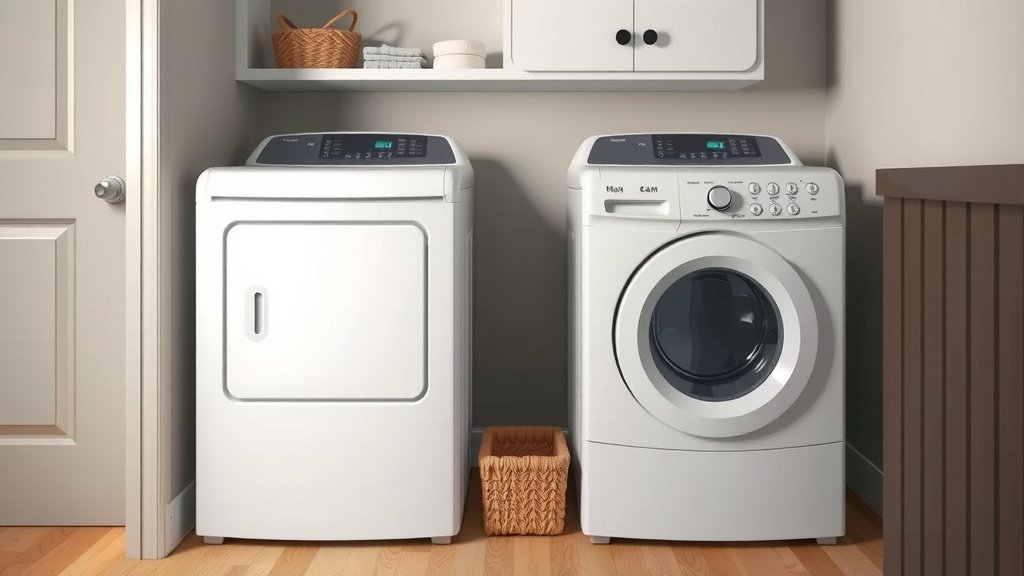
For a traditional side-by-side setup with a standard-sized washer and dryer, here’s a good rule of thumb:
- Width: 60-72 inches (30-36 inches per appliance, plus a small gap between them).
- Depth: 40-50 inches (30-35 inches for the appliance depth, plus 6-15 inches for door swing and hose clearance).
- Height: 40-45 inches (standard appliance height, plus clearance if you have upper cabinets).
We found that this provides enough room to comfortably operate and maintain the machines. It also allows for easy access to the controls and detergent.
Stackable Unit Space Requirements
If you’re opting for a stackable unit, your needs change:
- Width: 30-36 inches (just enough for one machine footprint).
- Depth: 30-35 inches (appliance depth plus hose/vent clearance).
- Height: 75-85 inches (for stacked units plus ventilation space above).
Many experts say this is ideal for tight spaces, like a closet laundry setup. It maximizes your usable square footage.
The Importance of a “Landing Zone”
Have you ever thought about where you’ll fold your clean clothes? It’s helpful to have a small staging area. This “landing zone” can be a countertop, a small table, or even just a clear section of floor nearby. We found that having at least 18-24 inches of clear space next to your machines is a game-changer. It makes transferring clothes easier and provides a spot to sort or fold. This doesn’t have to be built-in; sometimes a portable cart works wonders.
Don’t Forget the Utilities!
Your washer and dryer need more than just physical space. They need access to water, electricity, and ventilation.
Water Supply and Drainage
Washers require hot and cold water hookups. Ensure your chosen location has accessible valves. The drain hose needs a place to empty – typically a standpipe or a laundry tub. Many plumbers advise leaving some slack in the hoses so they don’t pull taut during cycles. We found that proper drainage prevents water backup and potential leaks.
Electrical and Venting Needs
Dryers (especially electric ones) need dedicated, high-voltage outlets. Gas dryers need a gas line and a standard electrical outlet for the drum. And crucially, your dryer needs a vent to the outside to expel moist air and lint. A clogged or inadequate vent is a fire hazard and makes your dryer work harder. Many safety organizations stress the importance of a properly installed and maintained vent system (Consumer Product Safety Commission).
Planning Your Layout: A Quick Checklist
Before you finalize your laundry room plans, run through this quick checklist:
- Measure the exact dimensions of your chosen washer and dryer.
- Measure the space where you plan to install them, including height.
- Account for door swing clearance on all appliances.
- Add at least 6 inches of space behind for hoses and venting.
- Consider a small counter or table for folding clothes.
- Ensure utility hookups (water, electric, gas, vent) are accessible.
Taking these steps will help ensure your new laundry setup is functional, safe, and a joy to use. We found that careful planning is the secret ingredient to a happy laundry room!
Conclusion
You’ve learned that fitting a washer and dryer requires more than just the appliance dimensions. You need to think about width, depth for hoses, and door swings. For stackable units, vertical space is the main concern. We found that careful measurement is key to a functional laundry space. Before you buy, measure your appliances and your planned spot. Then, confirm utility access. Following these steps will help you create a laundry area that works perfectly for your home.
Frequently Asked Questions
What’s the minimum width for a standard washer and dryer?
For a standard side-by-side setup, you’ll generally need about 60 to 72 inches of width. This allows for two machines spaced slightly apart. We found this width ensures you can easily access both appliances.
How much space behind the washer and dryer is essential?
You should plan for at least 6 inches of clearance behind each appliance. This space is vital for connecting water hoses, drain hoses, and the dryer vent. This prevents kinking and ensures proper airflow for your dryer.
Can I put a washer and dryer in a small closet?
Yes, you can often fit a washer and dryer in a closet, especially if you opt for stackable units. These save floor space and fit into tighter footprints. Just be sure the closet is deep enough and properly vented.
Do I need extra space for the dryer vent hose?
Absolutely. The dryer vent hose needs space to connect without being crushed. You’ll need room for the hose to curve or bend, typically adding a few inches to the depth requirement behind the unit. We found that a straight, unobstructed vent is best for efficiency.
What is a “landing zone” for laundry, and how much space do I need?
A landing zone is an area next to your washer and dryer for folding clothes or staging laundry baskets. We suggest having at least 18 to 24 inches of clear space for this. This makes transferring clothes much easier.
![7 Best Rated Stackable Washer And Dryer [In 2026]](https://homeunderstandable.com/wp-content/uploads/2026/09/7-best-rated-stackable-washer-and-dryer-in-2026-featured-768x432.jpg)

![7 Best Washing Front Load Washing Machine [In 2026]](https://homeunderstandable.com/wp-content/uploads/2026/09/7-best-washing-front-load-washing-machine-in-2026-featured-768x432.jpg)