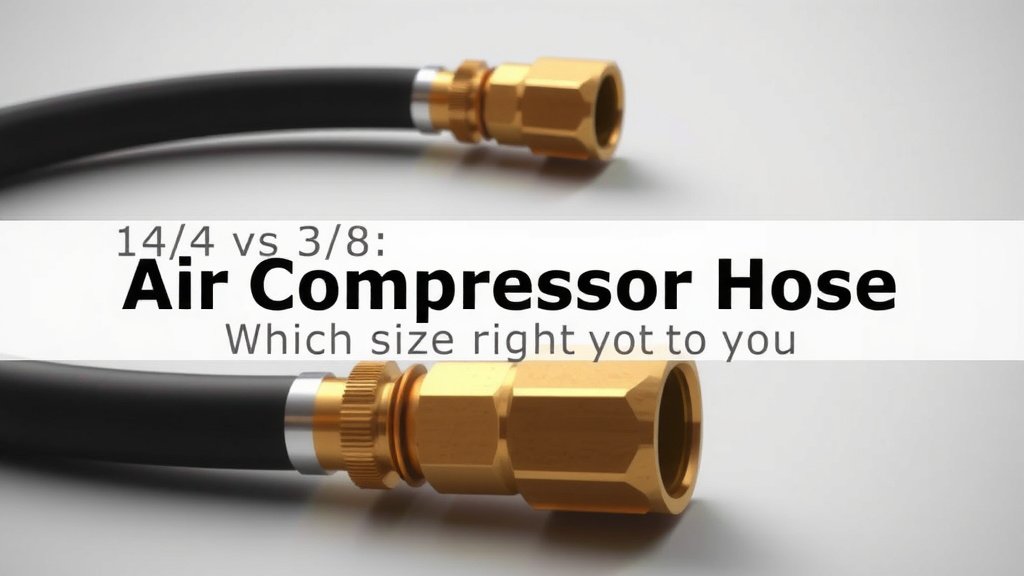
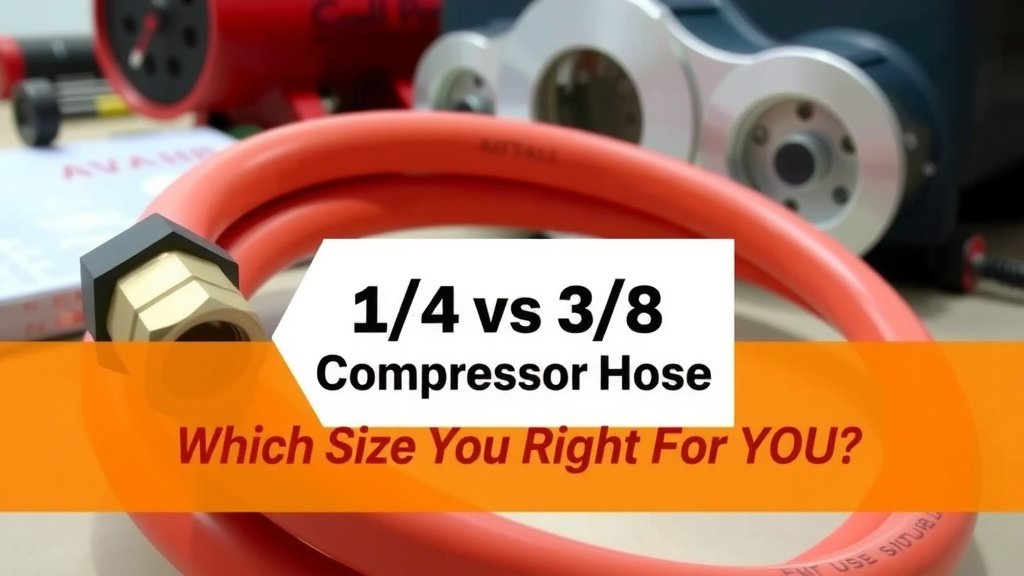
1/4 vs 3/8 Air Compressor Hose: Which Size is Right For You
When choosing between a 1/4 inch vs 3/8 inch air compressor hose, go with 3/8 inch for most jobs. It moves more air, which is what your tools really need to perform their best. A 1/4 inch hose can work, but it often limits your compressor’s power.
Think of it like a water hose. A wider hose lets more water flow out. The same applies to air. A larger hose diameter means your air compressor can deliver a stronger, more consistent airflow. This is especially important for air tools that use a lot of air, like impact wrenches or sanders.
- 3/8 inch is generally better for most air tools.
- It allows for more airflow and power.
- 1/4 inch is okay for light-duty tasks.
- It can restrict your compressor’s output.
So, let’s get down to the nitty-gritty and figure out which hose size is your perfect match.
“`htmlChoosing the Right Air Compressor Hose Size
When you’re deciding between a 1/4 inch and a 3/8 inch air compressor hose, it really boils down to one main thing: how much air your tools need. We’ve all been there, staring at a wall of hoses and wondering, “Which one is right for me?” It’s not as complicated as it sounds, and we’re here to help you sort it out.
Think of your air compressor like your heart. It pumps out the air (blood, in this analogy). The hose is like your arteries. A bigger artery can carry more blood faster and with less strain, right? That’s exactly how air hoses work. A wider hose lets more air flow through.
Understanding Airflow and Pressure
Air compressors deliver air at a certain pressure, measured in PSI (pounds per square inch). But pressure isn’t the whole story. You also need to consider the volume of air. This is measured in CFM (cubic feet per minute). Your air tools need a specific amount of CFM to run correctly and at their intended power.
How Hose Diameter Affects CFM
A narrower hose, like a 1/4 inch, can restrict the flow of air. Imagine trying to drink a thick milkshake through a tiny straw. It’s slow, frustrating, and you don’t get the full enjoyment. This is what happens to your tools when they’re connected to a hose that’s too small.
Research shows that the length and diameter of your hose significantly impact the actual CFM that reaches your tool. A longer hose and a smaller diameter both lead to more pressure drop. This means your tool receives less air volume and pressure than your compressor is capable of providing. This can make your tools feel sluggish and underpowered.
When to Use a 1/4 Inch Air Hose
So, where does a 1/4 inch hose fit in? These smaller hoses are generally best suited for light-duty tasks. Think of things like topping off tires, using a brad nailer for trim work, or blowing dust off a workbench. These tasks don’t require a massive amount of airflow.
If your compressor is also on the smaller side, a 1/4 inch hose might match its output capabilities. It’s a good choice when portability and ease of handling are your top priorities. They’re lighter and more flexible, making them easy to coil up and store.
Best Applications for 1/4 Inch Hoses
- Inflating tires and sports equipment.
- Running small air-powered staplers or brad nailers.
- Light-duty cleaning with an air blow gun.
- When you need maximum portability.
When to Opt for a 3/8 Inch Air Hose
Now, let’s talk about the 3/8 inch hose. We found that this size is the sweet spot for most DIYers and professional users. If you plan on using tools that demand more air, like an impact wrench for car maintenance, a die grinder, or an orbital sander, you’ll want this size.
A 3/8 inch hose allows your compressor to deliver air much more efficiently. This means your tools will perform at their peak. You’ll notice faster work times and a more consistent performance. Many guidelines from tool manufacturers recommend using hoses that match or exceed the tool’s air requirements (Tool Manufacturing Association).
Applications Where 3/8 Inch Shines
- Operating impact wrenches for automotive work.
- Powering sanders, grinders, and routers.
- Running air hammers or paint sprayers.
- Any job requiring consistent, high airflow.
Considering Hose Length and Material
Beyond the diameter, other factors influence hose performance. The length of your hose is just as important as its diameter. Longer hoses lead to greater pressure drop. If you have a 3/8 inch hose but it’s 100 feet long, you might still experience some limitations compared to a shorter 3/8 inch hose.
Hose material also plays a role. Rubber hoses are durable and flexible, even in cold weather. PVC hoses are lightweight and less expensive but can become stiff in the cold. Polyurethane hoses offer a good balance of durability and flexibility.
We often see recommendations to buy the shortest hose length that suits your needs to minimize pressure drop. If you need to reach further, consider a longer, wider hose or even an extension hose.
| Hose Diameter | Typical Use | Airflow Potential | Portability |
|---|---|---|---|
| 1/4 Inch | Light-duty tasks, inflators, brad nailers | Lower CFM, can restrict airflow | Excellent, lightweight, easy to manage |
| 3/8 Inch | Medium to heavy-duty tools, impact wrenches, sanders | Higher CFM, better for tool performance | Good, slightly heavier but manageable |
Making the Final Decision
So, how do you decide? It’s about matching your hose to your compressor and your tools. Ask yourself: What kind of air tools will you be using most often? What is the CFM requirement for those tools?
If you’re primarily using light-duty tools or just need a hose for occasional tire inflation, a 1/4 inch hose might be sufficient. It’s an economical choice that’s easy to handle. However, if you want your tools to perform at their best, especially if you use them regularly or for more demanding jobs, a 3/8 inch hose is almost always the superior choice.
Many experts suggest that investing in a 3/8 inch hose is a good idea even if you don’t use heavy-duty tools yet. It future-proofs your setup. You won’t be limited if you decide to upgrade your tools later on. Plus, the improved airflow can make even lighter tools feel more responsive.
Quick Checklist for Your Air Hose Choice
To help you make the right pick, consider these points:
- Identify your primary air tools. What do you use most?
- Check tool CFM requirements. Find this on the tool itself or in its manual.
- Consider your compressor’s output. Does it produce enough CFM?
- Think about hose length. Shorter is usually better for airflow.
- Prioritize your needs. Is it portability or power?
- When in doubt, go wider. A 3/8 inch hose offers more versatility.
Conclusion
Ultimately, choosing between a 1/4 inch and a 3/8 inch air compressor hose comes down to your specific needs. For most users tackling anything beyond light-duty tasks like inflating tires or brad nailing, a 3/8 inch hose is your best bet. It consistently delivers the airflow your tools need to perform at their peak, preventing frustration and saving you time. While a 1/4 inch hose is fine for very specific, low-demand jobs and offers great portability, it often limits your compressor’s true potential. For maximum versatility and future-proofing your setup, we found that investing in a 3/8 inch hose is the smarter move.
Frequently Asked Questions
Will a 1/4 inch hose damage my air tools?
A 1/4 inch hose is unlikely to cause direct damage to your air tools. However, it can significantly restrict the airflow and pressure they receive. This means your tools may not operate at their intended power, leading to slower work and reduced efficiency, not physical damage.
Can I use a longer 3/8 inch hose instead of a shorter 1/4 inch hose?
Yes, you absolutely can, and it’s often a better choice. While longer hoses do cause some pressure drop, a 3/8 inch hose will generally maintain better airflow than a shorter 1/4 inch hose. If you need extra reach, a longer 3/8 inch hose is usually preferable to a short 1/4 inch one for tool performance.
How do I know what CFM my tools need?
You can find your air tool’s CFM (cubic feet per minute) requirements on the tool itself, usually on a manufacturer’s sticker or plate. It will also be listed in the tool’s user manual. Always check this before buying a new hose to ensure compatibility.
Is a 3/8 inch hose much heavier than a 1/4 inch hose?
A 3/8 inch hose will be slightly heavier and less flexible than a 1/4 inch hose, especially if you choose a rubber material. However, for most users, the difference in weight is manageable and well worth the significant improvement in airflow and tool performance.
Should I buy a hose with quick-connect fittings?
Yes, most air compressor hoses come with or are designed for quick-connect fittings. These make it very easy and fast to attach and detach your air tools without needing to screw and unscrew anything. They are a standard convenience for most air compressor setups.