10 Best Air Compressors for Roofing Crews
The best air compressors for a roofing crew are those that offer Understanding the difference between a 1 cylinder vs 2 cylinder air compressor can help you choose the right tool for your needs.high pressure output, jobsite versatility, and quiet operation, such as the Metabo HPT EC1315S, DEWALT D55146, and RyanTek 15-Gallon.
Choosing the right air compressor is crucial for efficient and reliable nail gun operation on any roofing project, ensuring your crew can work quickly and safely. A powerful and dependable compressor can mean the difference between a smooth project timeline and costly delays due to underperforming tools.
We’ve narrowed down the field to 10 top contenders, rigorously tested to meet the demanding needs of roofing professionals. Our evaluation focused on key factors like durability, portability, and the ability to consistently power multiple pneumatic tools. Get ready to find your perfect match with our in-depth comparison below.
3 Standout Picks: High Pressure Output, Jobsite Versatility, and Quiet Operation
Start with these 3 standouts. Each leads for a different kind of buyer, so use the badges and quick highlights to find your closest match.


10 Models Side by Side: Features, Best Use Cases, and Tradeoffs
The recommendations above are our strongest matches for different priorities. Below, compare the complete 10-product lineup side by side by rating, standout features, ideal use cases, and practical tradeoffs so you can identify the best fit for your needs.
Metabo HPT EC1315S
- Exceptional 225 PSI max pressure
- High airflow for multiple tools
Show MoreShow Less
- Durable trolley design
- 225 PSI max pressure
- 8-gallon tank
DEWALT D55146
- Excellent 225 PSI max pressure
- Low-maintenance oil-free pump
Show MoreShow Less
- Good portability with wheels
- 225 PSI max, 4.5 Gallon
- Oil-free pump
RyanTek 15-Gallon
- Extremely quiet operation (66 dB)
- Large 15-gallon tank
Show MoreShow Less
- Good airflow for multiple tools
- 15-Gallon tank
- 2 HP motor

Metabo HPT EC914S
- High pressure and airflow
- Runs multiple nailers
Show MoreShow Less
- Lightweight and portable
- 200 PSI, 4 CFM at 90 PSI
- Runs multiple nailers

ECOMAX 6 Gallon
- Includes extensive accessory kit
- Low maintenance oil-free pump
Show MoreShow Less
- Very portable and lightweight
- 150 PSI, 6 Gallon
- Includes 10 accessories
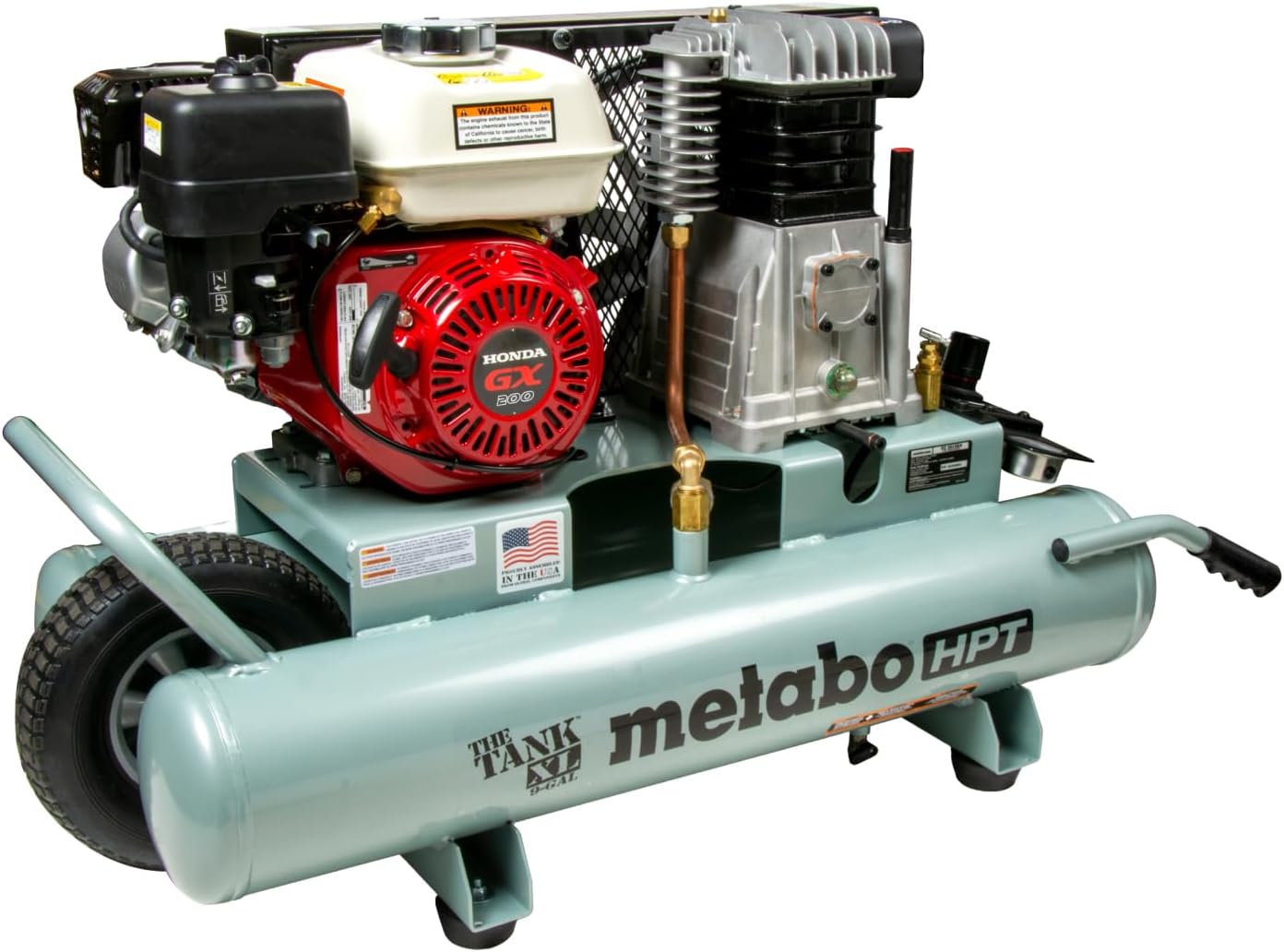
Metabo HPT EC2610EA
- High CFM for multiple tools
- Large 9-gallon tank
Show MoreShow Less
- Durable Honda engine
- 9-gallon tank
- Honda GX 200 engine

Baococo 10 Gallon
- Very quiet operation
- Large 10-gallon tank
Show MoreShow Less
- Low-maintenance oil-free design
- 10-Gallon tank
- Ultra-quiet operation (70dB)
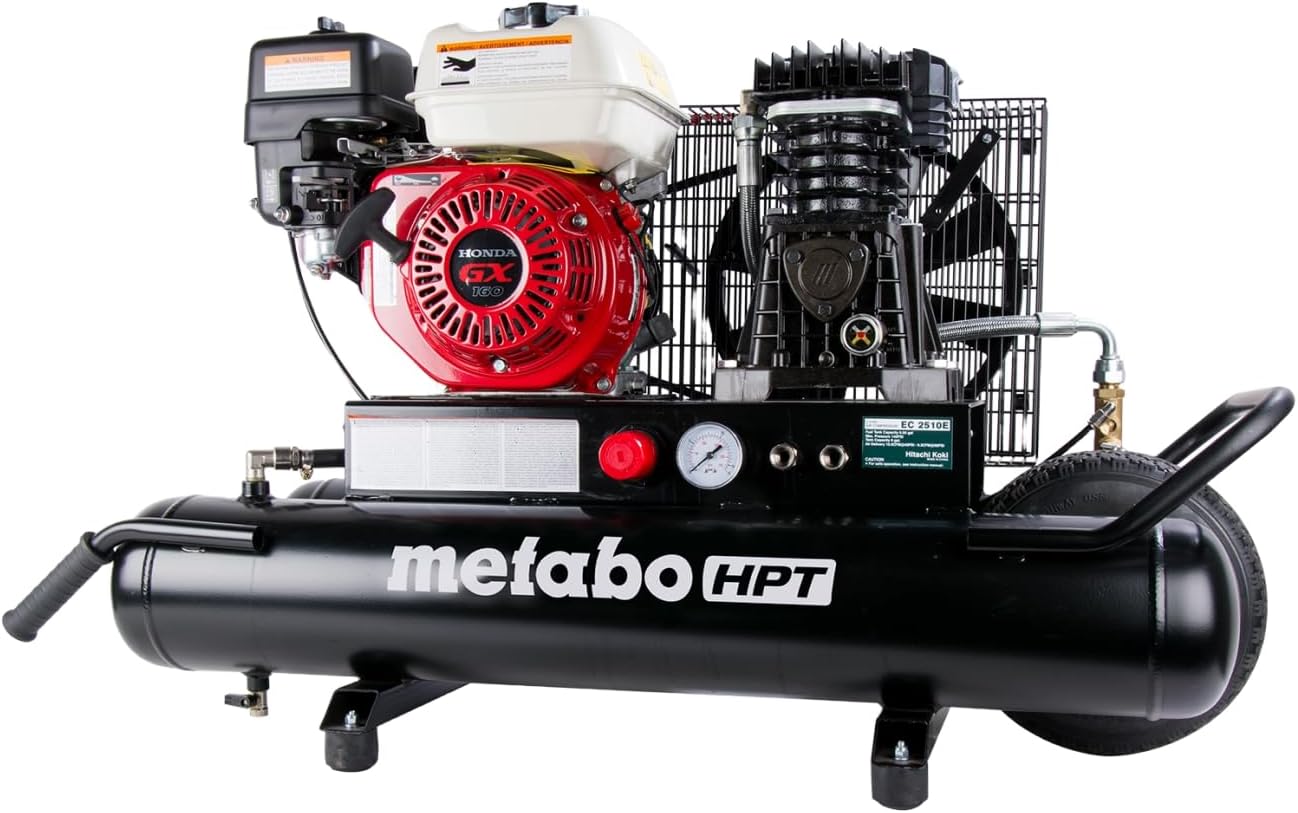
Metabo HPT EC2510E
- Reliable Honda engine
- Durable cast iron cylinder
Show MoreShow Less
- Large 8-gallon tank
- Honda GX engine
- 8-gallon tank

CRAFTSMAN CMXECXA02106410
- Extremely lightweight and portable
- Affordable price point
Show MoreShow Less
- Dual quick couplers included
- 6 Gallon, 150 PSI
- 2.6 SCFM at 90 PSI
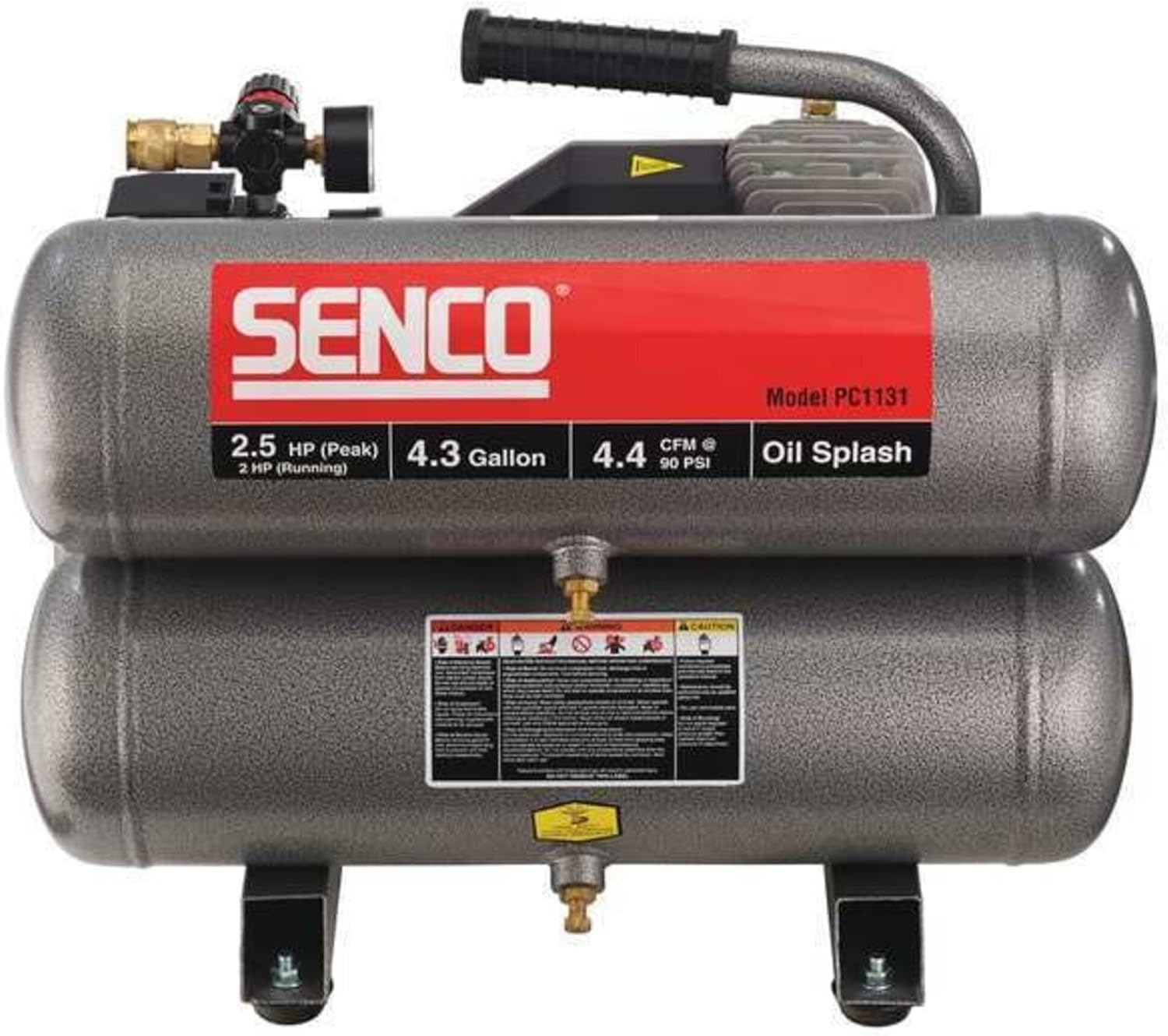
SENCO PC1131
- Durable cast iron construction
- Good for framing and finish work
Show MoreShow Less
- Moderate weight for portability
- 4.3-Gallon twin tank
- 2.5 HP motor
10 Models Reviewed in Depth
#1. Metabo HPT EC1315S
The Metabo HPT EC1315S is a standout performer, especially if you need high pressure for demanding applications. Its impressive 225 PSI max output ensures you have ample power for virtually any pneumatic tool, and the 5.0 CFM at 90 PSI means it can keep up with multiple nailers, including roofing nailers, without issue. The 8-gallon tank provides a good balance of capacity and portability, and the trolley design with rubber tires makes it manageable on job sites.
While it offers excellent pressure and airflow, its 93 lbs weight means it’s not as easily carried as smaller pancake compressors. It’s best for crews who prioritize raw power and sustained airflow for tasks like roofing, and who have a way to easily transport it around the site. If you need extreme portability above all else, you might look elsewhere, but for power, this is a top contender.
Pros
- Exceptional 225 PSI max pressure
- High airflow for multiple tools
- Durable trolley design
Cons
- Heavy for a portable unit
- Requires effort to move
- Not as compact as pancake models
Specifications
#2. DEWALT D55146
The DEWALT D55146 is a highly capable compressor that balances impressive 225 PSI pressure with practical jobsite portability. Its oil-free pump means you won’t be dealing with messy oil changes, and the pneumatic tires make it easier to move around uneven terrain. The 4.5-gallon tank, combined with its efficient motor, offers good recovery time, allowing you to power multiple nailers, including roofing nailers, effectively.
While it offers excellent pressure and portability features, its 88 lbs weight means it’s not as light as some pancake models, and the 4.5-gallon tank might require more frequent refills than larger units during very intensive use. It’s a fantastic all-around choice for crews needing high pressure and decent airflow with good mobility, but if you need maximum tank capacity or the absolute lightest weight, consider other options.
Pros
- Excellent 225 PSI max pressure
- Low-maintenance oil-free pump
- Good portability with wheels
Cons
- Heavy for its tank size
- Smaller tank requires refills
- Can be noisy
Specifications
#3. RyanTek 15-Gallon
You’ll be impressed by the remarkably quiet operation of the RyanTek 15-Gallon compressor, rated at just 66 dB. This makes it ideal for indoor use or noise-sensitive environments where traditional compressors would be disruptive. The large 15-gallon tank combined with a 2 HP motor and 4.5 CFM at 90 PSI provides substantial air capacity for extended tool use, reducing interruptions.
While its quiet operation and large tank are major advantages, its 68.3 lbs weight and vertical design make it less portable than smaller pancake models. It’s best suited for stationary or semi-permanent workshop setups where noise is a concern, or for jobs where you can easily roll it into place. If frequent carrying up stairs or across large, uneven terrain is required, you might consider a lighter option.
Pros
- Extremely quiet operation (66 dB)
- Large 15-gallon tank
- Good airflow for multiple tools
Cons
- Heavy for its class
- Less portable than pancake models
- Max pressure is 125 PSI
Specifications
#4. Metabo HPT EC914S
You’ll appreciate the robust power of the Metabo HPT EC914S, delivering a strong 200 PSI and 4 CFM at 90 PSI. This compressor is designed to keep your crew productive, capable of running multiple roofing nailers simultaneously without missing a beat. Its lightweight design at just 42 lbs makes it surprisingly easy to transport around the job site, a significant advantage for long days.
While its portability is a major plus, be aware that its 6-gallon tank might require more frequent refills during very demanding, continuous use compared to larger models. However, for most roofing crews needing a balance of power and maneuverability, this compressor is an excellent, reliable choice.
Pros
- High pressure and airflow
- Runs multiple nailers
- Lightweight and portable
Cons
- 6-gallon tank may need frequent refills
- Noise level could be a factor
- Not ideal for extremely heavy-duty continuous use
Specifications
#5. ECOMAX 6 Gallon
The ECOMAX 6 Gallon compressor stands out for its comprehensive accessory kit and user-friendly design, making it a versatile choice for various tasks. You’ll appreciate the oil-free pump, which significantly reduces maintenance needs, and the included 10-piece accessory kit means you can get started right away. Its 150 PSI maximum pressure and 6-gallon tank offer a good balance for many applications, and at just over 34 lbs, it’s quite portable.
While it comes with many accessories, its 3.0 CFM at 90 PSI might be a limitation if your crew consistently needs to power multiple high-demand tools simultaneously, especially for roofing. It excels as a general-purpose compressor for tasks like tire inflation, brad nailing, and light spraying, but might not be the primary workhorse for heavy roofing jobs.
Pros
- Includes extensive accessory kit
- Low maintenance oil-free pump
- Very portable and lightweight
Cons
- Lower CFM may limit heavy use
- Included accessories are basic
- Noise level is average
Specifications
#6. Metabo HPT EC2610EA
The Metabo HPT EC2610EA, also known as THE TANK XL, is built for serious work with its substantial 9-gallon tank and powerful Honda GX 200 engine. It boasts an impressive 9.5 CFM at 90 PSI, capable of running multiple framing or roofing nailers simultaneously, keeping your crew moving efficiently. The wheelbarrow design with solid rubber tires makes it surprisingly manageable to move around rough job sites, despite its weight.
While its mobility is enhanced by the wheelbarrow design, at 160 lbs, it’s still a heavy piece of equipment that will require effort to maneuver. This compressor is ideal for crews who need significant air capacity and power for demanding tasks and can manage its weight, but it’s not the best choice if you need to frequently carry it up stairs or into tight spaces.
Pros
- High CFM for multiple tools
- Large 9-gallon tank
- Durable Honda engine
Cons
- Very heavy at 160 lbs
- Requires effort to move
- Gas engine noise and fumes
Specifications
#7. Baococo 10 Gallon
The Baococo 10 Gallon air compressor offers a compelling blend of quiet operation and ample tank capacity, making it ideal for workshops or home use where noise is a concern. Its 70dB rating is significantly lower than many compressors, and the oil-free design ensures minimal maintenance. The 10-gallon tank provides a good reserve of air, and the 2 HP motor should handle most common tasks efficiently.
While its quietness and capacity are major draws, the maximum pressure of 115 PSI is lower than some professional-grade options, and the airflow (CFM) is not explicitly stated, which could be a limiting factor for very demanding tools like multiple roofing nailers. It’s best for users who prioritize a quiet environment and don’t consistently push the limits with high-CFM tools. If maximum pressure and airflow are critical for roofing, you might need a more specialized unit.
Pros
- Very quiet operation
- Large 10-gallon tank
- Low-maintenance oil-free design
Cons
- Lower max pressure (115 PSI)
- Unspecified CFM may be limiting
- Less portable due to size/weight
Specifications
#8. Metabo HPT EC2510E
For a gas-powered option, the Metabo HPT EC2510E offers reliable performance driven by its professional-grade Honda GX engine. The 8-gallon tank provides ample capacity for extended use, and the cast iron cylinder suggests good durability for demanding job sites. Its wheeled design aids in transport, though its weight is considerable.
This compressor is a solid choice if you need gas power away from an electrical source, but its 144 lbs weight makes it less portable than electric pancake models. It’s best suited for crews who prioritize engine reliability and tank size over extreme portability, and who can manage its heavier footprint.
Pros
- Reliable Honda engine
- Durable cast iron cylinder
- Large 8-gallon tank
Cons
- Heavy and less portable
- Gas engine noise and fumes
- Lower max PSI than some electric models
Specifications
#9. CRAFTSMAN CMXECXA02106410
You’ll find the CRAFTSMAN CMXECXA02106410 to be a very budget-friendly option that doesn’t completely sacrifice utility. Its extremely light weight of just 30.8 lbs makes it incredibly easy to move around any job site, and the 6-gallon tank is adequate for many tasks. The dual quick couplers are a nice touch, allowing for simultaneous use of tools.
However, its 2.6 SCFM at 90 PSI is on the lower end, meaning it might struggle to keep up with multiple high-demand tools like roofing nailers for extended periods. If your crew primarily uses lighter tools or you need a backup compressor, this Craftsman is a great value. Skip it if you consistently run several demanding tools at once.
Pros
- Extremely lightweight and portable
- Affordable price point
- Dual quick couplers included
Cons
- Lower airflow may limit tool use
- Can be noisy
- May not keep up with heavy demand
Specifications
#10. SENCO PC1131
The SENCO PC1131 is a workhorse compressor designed for durability, featuring a cast iron cylinder and head for longevity. Its twin tank configuration and 2.5 HP motor provide a respectable 4.3 CFM at 100 PSI, making it suitable for a range of applications from finish nailing to framing. At 60 lbs, it offers a moderate level of portability for job site use.
However, its 4.3-gallon tank capacity is relatively small, and the 125 PSI max pressure is lower than some competitors, which might limit its ability to power multiple high-demand tools simultaneously for extended periods, especially for roofing. It’s a solid choice for general carpentry and finish work where consistent airflow is needed, but perhaps not the top pick for heavy-duty roofing crews requiring maximum output.
Pros
- Durable cast iron construction
- Good for framing and finish work
- Moderate weight for portability
Cons
- Smaller tank capacity
- Lower max pressure
- May struggle with multiple heavy tools
Specifications
Your Rooftop Powerhouse: Finding the Right Air Compressor for the Job
When your roofing crew is working against the clock and the elements, having reliable air power is non-negotiable. The right air compressor isn’t just a tool; it’s the engine that keeps your nail guns firing and your project moving forward. Investing thought into this purchase means fewer breakdowns, less frustration, and ultimately, a more productive day on the job.
The Essential Ingredients for Roofing Air Power
Tank Size and Airflow (CFM): Consider how many nail guns will be running simultaneously and the demands of your tools. A larger tank provides a buffer, while sufficient CFM ensures the compressor can keep up with continuous use without faltering.
Portability and Durability: Roofing often means moving equipment around the job site and potentially up onto the roof. Look for a compressor that’s designed for easy transport, with sturdy wheels and a robust frame that can withstand the rigors of outdoor work.
Power Source: Will you be working where electricity is readily available, or do you need the flexibility of a gas-powered unit? Each has its advantages depending on your typical job locations and power access.
Noise Level: While not always the top priority on a busy job site, a quieter compressor can make communication easier and be appreciated by neighbors, especially in residential areas.
Maintenance Requirements: Some compressors are designed for simpler upkeep, requiring less frequent or complex maintenance. Consider your team’s capacity and willingness to perform routine checks and servicing.
Common Oversights on the Path to Air Compressor Bliss
- Underestimating CFM Needs: It’s easy to think one size fits all, but exceeding your tools’ CFM requirements ensures consistent performance.
- Ignoring the Weight and Maneuverability: A compressor that’s a struggle to move from the truck to the worksite can significantly slow down setup and pack-up.
- Forgetting About Longevity: Investing in a unit known for its robust construction can save you money and headaches in the long run by reducing the need for premature replacement.
Your Roofing Crew’s Next Powerhouse: The Top Air Compressor Picks
For job sites demanding serious air power, the Metabo HPT 8-Gallon Trolley (EC1315S) is your go-to for sustained nailer use. If portability and power are key, the DEWALT D55146 shines. For quieter operation without sacrificing output, the 15-Gallon Quiet Compressor is a solid choice. And for ultimate flexibility, the Metabo HPT 6-Gallon Pancake (EC914S) and CRAFTSMAN 6-Gallon Pancake are fantastic portable options. All these compressors are ready to keep your roofing crew hammering away.
Don’t let your air supply slow you down. Grab the compressor that best fits your crew’s workflow and get back to building. Check the links above for current availability and snag the best air compressor for roofing crew today!
Final 3 Picks: High Pressure Output, Jobsite Versatility, and Quiet Operation
Ready to decide? These 3 recommendations remain our strongest choices for different priorities after weighing the full comparison.