Bike Pump vs Air Compressor: Which Inflates Your Tires Best
When you need to inflate your bike tires, a bike pump is usually your best bet for quick, on-the-go fixes. While an air compressor can also do the job, it’s often overkill and less convenient for everyday bike needs.
Both tools use compressed air, but they differ greatly in portability and power. We found that choosing the right one depends on where and how you plan to inflate your tires. Think about whether you need something for your backpack or a stationary workshop tool.
- Bike pumps are portable and great for roadside repairs.
- Air compressors are powerful but stationary and bulky.
- For casual tire inflation, a bike pump is generally preferred.
- Compressors are better suited for tasks needing high pressure or volume.
Let’s break down the differences between a bike pump and an air compressor so you can pick the perfect tool for your needs.
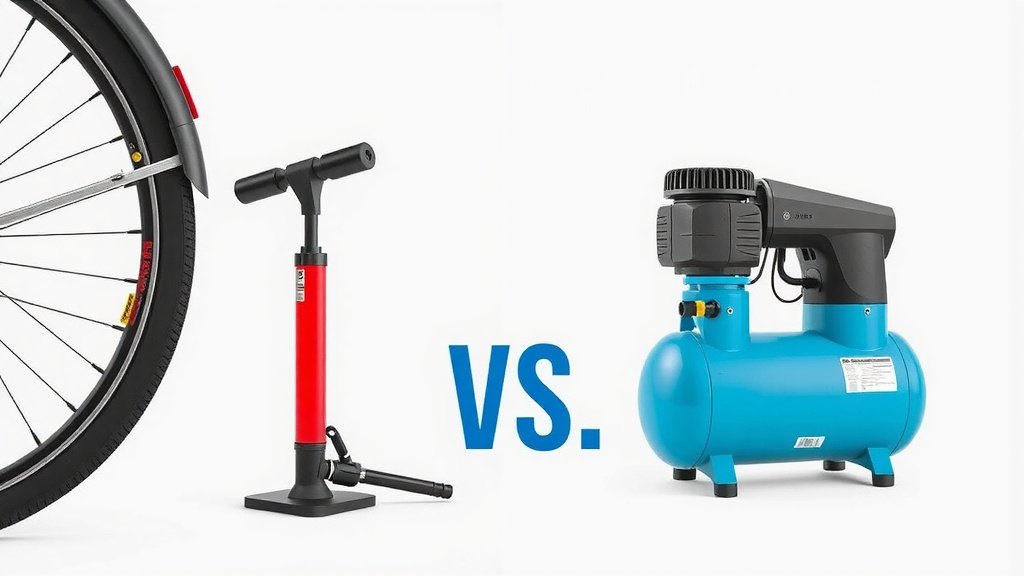
Bike Pump vs. Air Compressor: Which is Right for Your Ride?
Choosing between a bike pump and an air compressor might seem straightforward. But when you really think about it, they serve different purposes. You wouldn’t use a sledgehammer to hang a picture, right? It’s kind of like that.
Understanding the Core Difference: Power and Portability
The biggest contrast between these two inflation tools lies in their power output and how easy they are to carry around. A bike pump is designed for quick fixes and is small enough to take with you anywhere. An air compressor is a powerhouse, but it’s big, heavy, and usually stays put.
Bike Pumps: Your Mobile Tire Companion
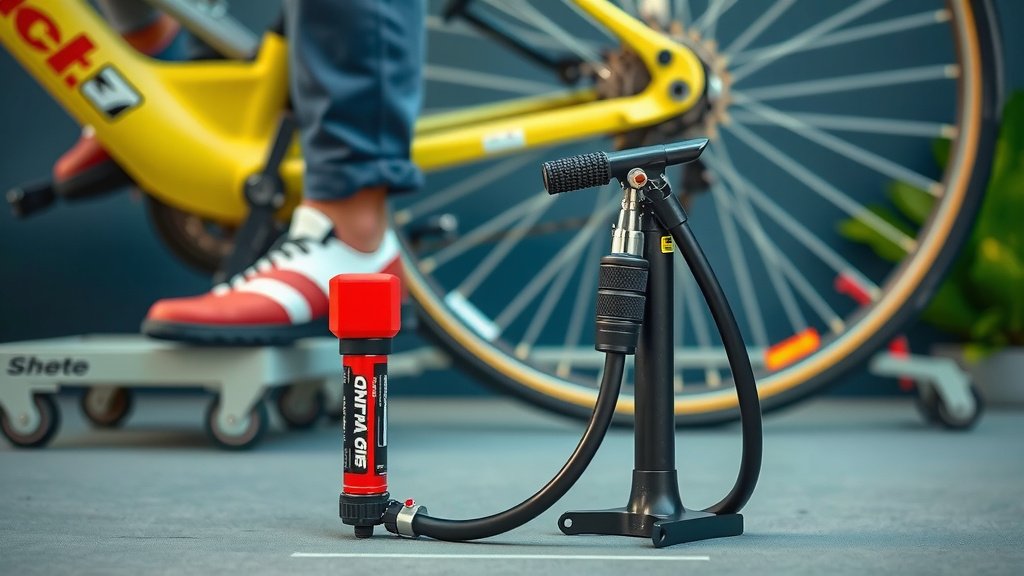
Think of a bike pump as your trusty sidekick for tire maintenance. These come in various forms, from tiny frame pumps that disappear on your bike to floor pumps that give you more leverage at home. They’re built specifically to get your bike tires to the right pressure, whether you’re fixing a flat on a trail or just topping them off before a ride.
Air Compressors: The Workshop Workhorse
An air compressor is a completely different beast. It’s a machine that stores a large volume of compressed air. You’ll often find these in garages, workshops, or auto shops. They’re great for tasks that need a lot of air, like powering pneumatic tools or inflating large tires quickly. For a bike tire, it’s like bringing a cannon to a water balloon fight – powerful, but perhaps more than you need.
Key Factors to Consider When Choosing
To make the best choice for your situation, let’s look at what really matters. It’s all about matching the tool to your needs, not just picking the flashiest one.
Portability: Taking Your Pump on the Go
This is where bike pumps shine. You can find mini pumps that fit in your jersey pocket or a small bag. Frame pumps attach directly to your bike’s tubing. These are lifesavers when you get a flat miles from home. Air compressors, on the other hand, are heavy and require a power source, making them completely impractical for mobile use.
Power and Speed: How Fast You Need Air
Air compressors deliver air much faster and at higher volumes than bike pumps. If you need to inflate many tires or large ones very quickly, an air compressor has the advantage. However, for a single bike tire, the difference in speed might not be that noticeable or important. A good floor pump can get your tire inflated efficiently without making you wait forever.
Pressure Capabilities: Reaching High PSI
Many modern bike tires require high inflation pressures, sometimes 100 PSI or more. Both bike pumps and air compressors can reach these pressures. However, you need to ensure the bike pump you choose is rated for the PSI your tires need. Some basic pumps might struggle to reach very high pressures.
Specific Needs for Different Bikes
Road bike tires often need 80-120 PSI. Mountain bike tires typically require lower pressures, around 20-40 PSI, but the volume of air needed is larger. Fat tire bikes can need as little as 5-15 PSI. Research and found that most quality bike pumps can handle the range needed for various bicycle types. Air compressors can also provide this, but they offer more power than usually necessary.
Ease of Use: The User Experience
Using a bike pump is generally very simple. You attach it to the valve, and start pumping. Floor pumps make this easier with a stable base and a long handle. Mini pumps can require more effort due to their size. Air compressors involve connecting a hose and often setting a pressure regulator, which can be a bit more complex for a beginner. Many experts say simplicity is key for quick repairs (National Bicycle Technical Association).
Cost and Investment: What’s Your Budget?
Bike pumps are significantly less expensive than air compressors. You can get a decent bike pump for $20-$50. A usable air compressor typically starts around $100 and can go up to several hundred dollars, depending on its size and features. For just inflating bike tires, a bike pump is a much more budget-friendly option.
When to Choose Which Tool: A Quick Guide
Let’s sum it up. When should you reach for which tool?
- You need to carry it with you: Grab a bike pump.
- You’re fixing a flat on the road or trail: A bike pump is your only practical option.
- You primarily inflate bike tires at home: A floor pump is a great choice for ease and efficiency.
- You have multiple bikes or need to inflate often: A good floor pump will serve you well.
- You need to power air tools or inflate large vehicle tires: An air compressor is necessary.
- You want a multi-purpose tool for home and car: An air compressor might be considered, but it’s overkill for just bikes.
Checklist: Are You Ready to Decide?
Before you buy, ask yourself these quick questions:
- Do I need to take this tool with me on rides?
- How often will I be inflating my tires?
- What is the maximum PSI my bike tires require?
- What’s my budget for this tool?
- Will I use this tool for anything besides my bike?
- Am I comfortable with a more complex setup, or do I prefer simplicity?
A Simple Comparison Table
Here’s a quick look at how they stack up:
| Feature | Bike Pump | Air Compressor |
|---|---|---|
| Portability | High (pocketable, frame-mounted, portable floor pumps) | Low (heavy, stationary) |
| Power | Sufficient for bike tires | High (can power tools, inflate large items) |
| Speed | Moderate | Fast |
| Pressure Range | Varies, but many reach high PSI | Varies, typically high |
| Ease of Use (for bike tires) | Very easy | Moderate (more setup) |
| Cost | Low ($20 – $100) | High ($100 – $500+) |
| Primary Use | Inflating bicycle tires | Powering tools, inflating various items (cars, bikes, sports equipment) |
Conclusion
Ultimately, your choice between a bike pump and an air compressor hinges on your specific needs. For any cyclist who rides away from home, a portable bike pump is essential. It’s your reliable partner for quick fixes on the trail or roadside. If you’re looking for efficiency and convenience for home use, a floor pump offers great performance. An air compressor, while powerful, is usually overkill and impractical for just inflating your bike tires. To make the best decision, consider where you’ll be inflating, how often, and your budget. Now that you know the differences, you can confidently pick the tool that keeps your tires perfectly inflated for every ride!
Frequently Asked Questions
Can I use an air compressor to inflate bike tires if I don’t have a bike pump?
Yes, you can use an air compressor. Just be sure to use a pressure gauge to avoid overinflating your tires, as compressors can deliver air much faster than a pump. Attach the hose gently to the valve stem and monitor the pressure closely.
Are there mini air compressors small enough to carry on a bike?
While there are very small portable air compressors, they are generally still bulkier and heavier than a typical bike pump. They also require a power source like a car battery or a rechargeable battery pack, making them less practical for carrying on your bike compared to a manual pump.
How do I know if my bike pump can reach the high PSI my road bike tires need?
Most quality bike pumps, especially floor pumps, will clearly state their maximum PSI rating on the packaging or the pump itself. Always check this rating to ensure it meets or exceeds the recommended PSI for your road bike tires, which is often between 80-120 PSI.
Is a floor pump easier to use than a handheld mini-pump for home inflation?
For most people, yes. A floor pump provides a stable base and uses your body weight for leverage, making it easier and faster to inflate tires to higher pressures. Mini-pumps are great for portability but require more physical effort and time for a full inflation at home.
Can an air compressor be used for other things besides inflating bike tires?
Absolutely. Air compressors are versatile tools used for powering pneumatic tools like nail guns or impact wrenches, inflating car tires, cleaning dusty equipment, and even running airbrushes. They offer a much wider range of applications than a bike pump.