Air Compressor 1/4 vs 3/8: Which Is Right for You
When choosing between an air compressor with a 1/4-inch and a 3/8-inch outlet, the 3/8-inch generally offers better performance for most DIY tasks. This is because the larger diameter allows for more airflow and less resistance, meaning your tools will receive a consistent, powerful stream of air. So, if you want your air tools to run at their best, a 3/8-inch outlet is often the way to go.
But don’t dismiss the 1/4-inch so quickly! We found that while a 3/8-inch outlet is great for demanding tools like impact wrenches or paint sprayers, a 1/4-inch can be perfectly adequate for lighter jobs. Think airbrushes or inflating tires. It really comes down to the specific tools you plan to use and the air volume they require. We’ve seen many DIYers get by just fine with a 1/4-inch for basic needs.
- The 3/8-inch outlet is better for tools needing lots of airflow.
- It provides less resistance, giving your tools more power.
- The 1/4-inch outlet is fine for smaller, less demanding tools.
- Consider the air requirements of your specific tools.
Let’s walk through exactly how these differences matter for your projects, so you can make the best choice for your workshop.
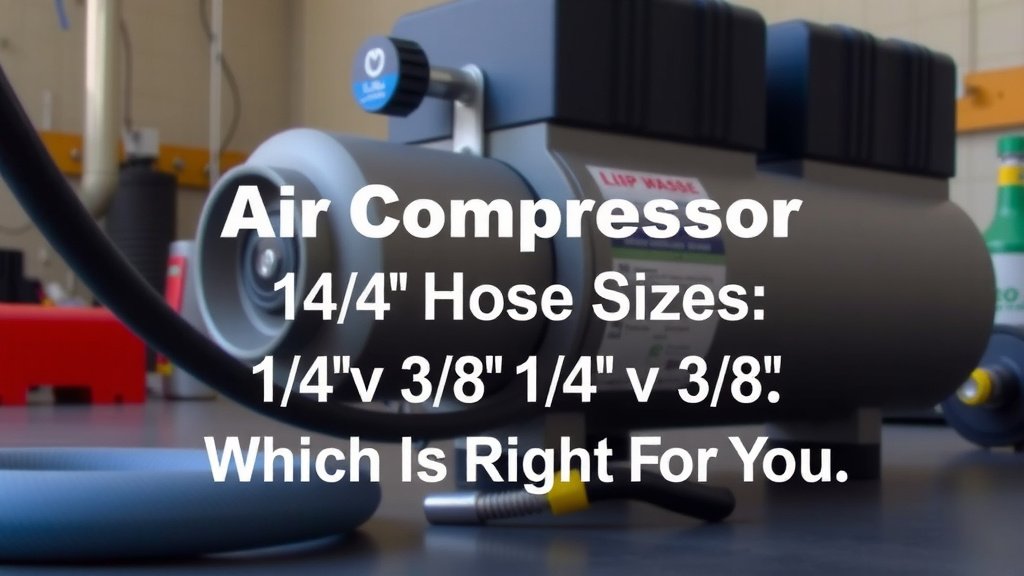
Understanding Air Compressor Hose Sizes: 1/4″ vs. 3/8″
When you’re looking to power your workshop tools, the size of your air compressor’s outlet fitting plays a bigger role than you might think. We’re talking about the difference between a 1/4-inch and a 3/8-inch connection. This isn’t just a small detail; it directly impacts how well your air tools perform. Let’s break down what these sizes mean for you and your projects.
The Role of Hose Diameter in Airflow
Think of your air compressor hose like a highway for air. A wider highway can handle more traffic, right? It’s the same with air hoses.
A larger diameter hose, like a 3/8-inch, allows for a greater volume of air to flow through it. This means less resistance. When air can move freely, your tools get a more consistent and powerful supply of air. This is crucial for tools that demand a lot of air to operate correctly. We found that this leads to a noticeable improvement in tool performance.
On the other hand, a smaller diameter hose, like a 1/4-inch, will naturally restrict the airflow more. While this might be fine for some applications, it can starve more demanding tools of the air they need. This can result in tools not performing at their peak, or even failing to work properly.
Understanding Airflow and CFM
Airflow is measured in Cubic Feet per Minute (CFM). This tells you how much air your compressor can deliver. Your tools also have CFM requirements. The hose size needs to match these demands.
A 1/4-inch hose can often limit the CFM your tools receive. This is especially true if the compressor itself is capable of higher CFM output. The hose becomes a bottleneck. Many DIYers don’t realize their hose size is holding back their tools. We found that even with a powerful compressor, a restrictive hose can cause issues.
A 3/8-inch hose generally offers less restriction. It can handle higher CFM numbers. This ensures that the air from your compressor can actually reach your tools efficiently. It helps you get the most out of your equipment. This is why it’s often recommended for a wider range of tools.
When a 1/4-Inch Hose Might Be Enough
So, when is a 1/4-inch hose the right choice? It’s all about the tools you plan to use.
If you mainly use your air compressor for lighter-duty tasks, a 1/4-inch setup might serve you well. Think about things like inflating tires on your car or bike. Or maybe you use a small airbrush for crafts and painting models. These tasks don’t require a massive amount of airflow.
We found that for tasks like powering a brad nailer for trim work, a 1/4-inch hose can often do the job. It really depends on the specific nailer and how continuously you’re using it. For casual use, it’s often sufficient. You just need to be mindful of the tool’s requirements.
Tools That Typically Pair Well with 1/4-Inch
- Tire inflators
- Airbrushes
- Brad nailers (for light trim)
- Staplers (for upholstery or crafts)
- Blow guns for cleaning
These tools generally have lower CFM demands. They won’t quickly overwhelm a 1/4-inch hose. You’ll get consistent performance for these types of jobs.
Why 3/8-Inch is Often the Better Choice for Most DIYers
For the average DIY enthusiast, a 3/8-inch hose often provides a more versatile and capable setup. It opens up possibilities for a wider range of tools and tasks.
If you’re thinking about using air tools for automotive repairs, like an impact wrench, a 3/8-inch hose is almost essential. Impact wrenches consume a lot of air. A 1/4-inch hose would likely lead to disappointing results. You might find the wrench struggles to deliver full power. This could really slow down your work.
We found that a 3/8-inch hose offers that needed capacity. It ensures your tools get the airflow they need to perform at their best. This means less frustration and more efficient work for you.
Tools That Benefit from a 3/8-Inch Hose
- Impact wrenches
- Ratchet wrenches
- Paint sprayers (HVLP and conventional)
- Sanders (orbital, belt)
- Chisels
- Die grinders
These tools are air hungry. A 3/8-inch hose helps ensure they get the consistent supply of air needed for optimal operation. It’s like giving your tools a steady meal instead of just a snack.
The Impact on Compressor Efficiency
Using the right size hose also affects how efficiently your compressor works. A hose that’s too small forces the compressor to work harder to try and push enough air through. This can lead to increased wear and tear on the compressor itself.
We found that by using a 3/8-inch hose when appropriate, you reduce the strain on your compressor. This can potentially lead to a longer lifespan for your machine. It also means your compressor might not have to run as often to keep up. That’s a win-win!
Comparing the Two: A Quick Look
To help you decide, let’s look at a simple comparison. This table highlights the key differences you’ll encounter.
| Feature | 1/4-Inch Hose | 3/8-Inch Hose |
|---|---|---|
| Airflow Capacity | Lower | Higher |
| Resistance | Higher | Lower |
| Best For | Light-duty tools (tire inflators, airbrushes) | Medium to heavy-duty tools (impact wrenches, sanders) |
| Tool Performance | Adequate for low-demand tools | Better for most power tools, more consistent |
| Compressor Strain | Can increase strain if tool demand is high | Generally less strain for higher-demand tools |
Making the Right Choice for Your Workshop
So, which hose size is right for you? The answer truly lies in understanding your tools.
Start by identifying the primary air tools you plan to use. Check their CFM requirements. Most tool manufacturers provide this information. Compare it to what your air compressor can deliver. Then, consider your hose size.
If your tools are mostly for simple tasks like inflating and light nailing, a 1/4-inch setup is probably fine. However, if you envision tackling more demanding jobs like automotive work or significant woodworking projects, investing in a 3/8-inch hose and associated fittings is a smart move. It’s an upgrade that pays off in performance.
Key Considerations Before You Buy:
- List all the air tools you own or plan to buy.
- Note the CFM requirement for each tool.
- Check your air compressor’s maximum CFM output.
- Consider the length of hose you’ll need. Longer hoses can benefit from larger diameters.
- Think about the fittings on your compressor and tools – they need to match!
By taking these steps, you can confidently choose the air compressor hose size that will best serve your needs and ensure your tools perform as they should. It’s all about matching the right equipment to the right job.
Conclusion
Choosing between a 1/4-inch and a 3/8-inch air compressor outlet is all about matching your tools’ needs with the right airflow. For lighter tasks like inflating tires or airbrushing, a 1/4-inch hose often suffices. However, if you’re tackling more demanding jobs with impact wrenches, sanders, or sprayers, a 3/8-inch hose is your best bet for consistent power and efficiency. Don’t let a restrictive hose bottleneck your compressor’s potential.
We found that making the right choice now prevents frustration later. Before your next project, take a moment to list your tools and their air requirements. Then, select the hose size that will let them perform at their peak. This simple step ensures you get the most out of your air compressor and your tools.
Frequently Asked Questions
Will a 1/4-inch hose damage my air tools?
A 1/4-inch hose typically won’t damage your tools directly. However, it can prevent them from performing optimally. If a tool requires more airflow (CFM) than the hose can deliver, it might run weaker or not work at all. This lack of proper air supply is the main issue.
Can I use a 3/8-inch hose with a compressor that only has a 1/4-inch outlet?
Yes, you can connect a 3/8-inch hose to a 1/4-inch outlet, but you’ll need the correct adapter fitting. Keep in mind that the compressor’s output is still limited by its 1/4-inch port. The larger hose won’t magically increase the air volume your compressor can produce.
How does hose length affect the choice between 1/4-inch and 3/8-inch?
Longer hoses create more resistance. If you plan to use long hoses, especially for tools that need a lot of air, a 3/8-inch diameter is generally better. It helps maintain adequate airflow over the longer distance compared to a 1/4-inch hose.
What if my compressor’s manual doesn’t specify hose size recommendations?
If your compressor manual doesn’t specify, consider the CFM output of your compressor and the CFM requirements of your tools. We found that most DIYers benefit from a 3/8-inch hose if they plan to use anything beyond basic inflation or brad nailing.
Is it worth upgrading from a 1/4-inch to a 3/8-inch hose if I only use it occasionally?
If you only use your compressor for very light tasks infrequently, a 1/4-inch hose might be fine. But if you anticipate using more demanding tools even occasionally, investing in a 3/8-inch hose setup is a good idea. It provides a better experience and protects your tools from insufficient airflow.