120V vs 240V Air Compressor: Which is Right for You
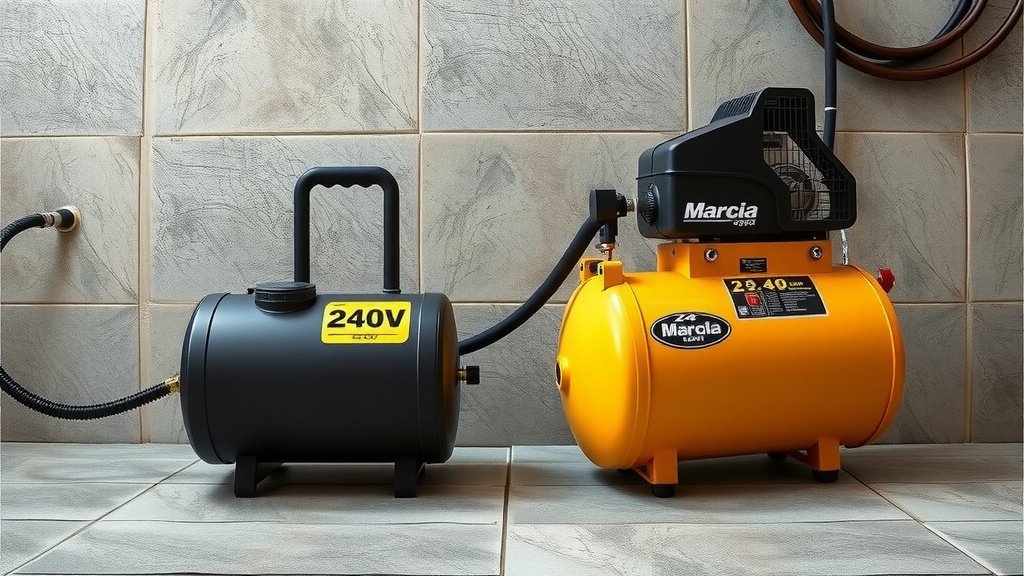
When choosing between an air compressor that runs on 120v versus 240v, you’ll find that 240v models offer more power and efficiency for demanding tasks. While 120v compressors are convenient for lighter jobs, 240v units are the better choice for continuous operation and powering larger tools like impact wrenches or sanders.
Understanding the difference isn’t just about voltage; it’s about matching your air compressor to your specific needs. A 240v compressor can provide the necessary airflow (CFM) and pressure for professional garage use. Meanwhile, a 120v unit is perfectly suited for DIY home projects and tasks that don’t require constant, high-volume air supply. Understanding the difference between 1 cylinder vs 2 cylinder air compressors is also important for matching power to your needs.
- 120v compressors are good for light-duty tasks.
- 240v compressors provide more power for heavy-duty work.
- Consider your tools and how often you’ll use them.
- Check your home’s electrical panel capacity.
Let’s break down exactly what these differences mean for your workshop and help you make the best choice for your needs.
Choosing the Right Air Compressor Voltage for Your Needs
Deciding between a 120v and a 240v air compressor is a big step. It means matching the right power source to the job. You want your compressor to work hard without breaking a sweat. Let’s get into the nuts and bolts of it all.
Understanding Air Compressor Power: More Than Just Volts
When we talk about air compressors, it’s not just about the voltage. You’ll also hear a lot about CFM (cubic feet per minute) and PSI (pounds per square inch). These are the real measures of how much air your compressor can deliver and at what force. Choosing the right air compressor hose size is also crucial for optimal tool performance.
What CFM and PSI Really Mean for You
Think of CFM as the volume of air. Your tools need a certain amount of air to run properly. If your compressor can’t keep up with that demand, your tools will sputter or stop. PSI is the pressure or force of that air. Too little pressure, and your tool won’t perform as it should.
Many tool manufacturers list the CFM requirements for their tools. You’ll often find this information right on the tool itself or in its manual. It’s a good idea to check this before you buy a compressor. You don’t want to be stuck with a compressor that can’t power your favorite impact wrench.
How Voltage Affects CFM and PSI
Generally, a 240v air compressor can deliver more CFM and PSI than a 120v model. This is because 240v systems can move more power. They can run larger, more powerful motors. These motors can then compress air more effectively and for longer periods. A 120v compressor is like a nimble sprinter, good for short bursts. A 240v compressor is more like a marathon runner, built for endurance and steady power.
120V Air Compressors: The Convenient Choice
So, when does a 120v compressor make sense? They’re incredibly convenient. Most homes and workshops already have 120v outlets. You can just plug it in and go. This makes them perfect for DIYers and hobbyists. They are also great for lighter tasks.
Best Uses for 120V Compressors
You’ll find that 120v units are excellent for tasks like:
- Inflating tires on your car or bicycle.
- Running small air nailers for trim work.
- Blowing dust off surfaces.
- Occasional use of smaller air tools.
Many 120v compressors are also portable. This means you can easily move them around your garage or even take them to a job site. This portability is a huge plus if you don’t have a dedicated workshop space.
Limitations of 120V Power
However, 120v compressors have their limits. If you plan to run tools that require a lot of air, like an impact wrench for extended periods, a 120v unit might struggle. You might find yourself waiting for the tank to refill often. This can interrupt your workflow. For continuous or heavy-duty use, 120v might not be enough. Many sources suggest that for professional-grade tools, more power is needed (Home Depot).
240V Air Compressors: Power for Demanding Jobs
Now, let’s talk about the heavy hitters: 240v air compressors. These are the machines you want when you mean business. They are built for tasks that demand a constant supply of high-pressure air. If you’re running a professional auto shop or tackling big renovation projects, 240v is likely your sweet spot.
Why Choose 240V?
The primary advantage is raw power. A 240v compressor can deliver significantly more CFM and PSI. This means your tools will run at their peak performance. They won’t bog down, even under heavy use. Think about using an air sander for hours or powering multiple tools simultaneously. A 240v system handles this with ease.
Many experts note that 240v systems are also more energy-efficient for the amount of work they do. While they draw more power overall, they can complete tasks faster. This can sometimes lead to lower overall energy consumption for a given job. It’s like choosing a bigger engine for a heavy truck; it gets the job done more effectively.
Considerations for 240V
The biggest hurdle with 240v is the electrical setup. You need a 240v outlet and circuit in your garage or workshop. This might mean running new wiring or upgrading your electrical panel. This can add to the initial cost. You also need to ensure your breaker box can handle the load. It’s always a good idea to consult an electrician for this. They can make sure the installation is safe and up to code.
Comparing the Two: A Quick Glance
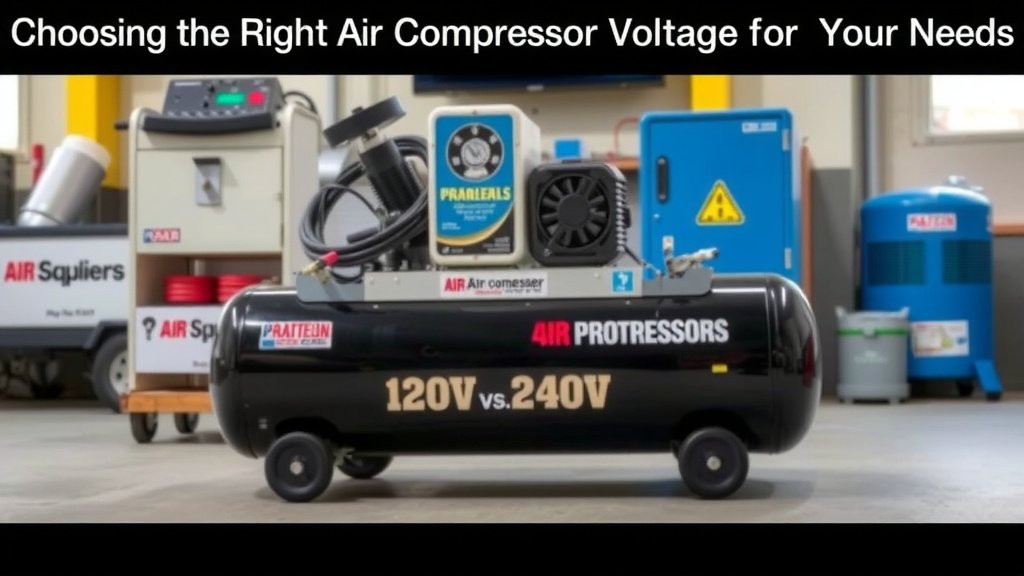
Let’s put the key differences side-by-side. This will help you visualize which one fits your needs best.
| Feature | 120V Air Compressor | 240V Air Compressor |
|---|---|---|
| Power Output | Lower CFM and PSI | Higher CFM and PSI |
| Motor Size | Smaller, less powerful | Larger, more powerful |
| Best For | Light-duty, intermittent use, DIY | Heavy-duty, continuous use, professional |
| Portability | Often very portable | Less portable, often stationary |
| Electrical Needs | Standard household outlet | Requires 240V outlet and circuit |
| Cost (Unit) | Generally lower | Generally higher |
| Cost (Installation) | Minimal to none | Potentially significant (electrician needed) |
Making Your Final Decision: What to Ask Yourself
Before you click that buy button, take a moment to think about your specific situation. What questions should you be asking yourself?
- What tools will you power? List them out and check their CFM requirements.
- How often will you use the compressor? Daily, weekly, or just a few times a year?
- What kind of tasks will you be doing? Inflating tires is very different from running a plasma cutter.
- What is your current electrical setup? Do you have a 240v outlet readily available?
- What is your budget? Consider both the unit price and potential installation costs.
We found that many people start with a 120v unit for convenience. But as their projects get more ambitious, they often find themselves needing the extra power of a 240v system. It’s a common upgrade path (tool reviewers often mention this trend).
Checklist for Your Air Compressor Decision
Here’s a quick checklist to help you stay on track:
- List all air tools you plan to use.
- Note the CFM and PSI requirements for each tool.
- Assess your typical usage frequency and duration.
- Verify your available electrical outlets and circuits.
- Get quotes from an electrician if a 240v setup is needed.
- Compare specific compressor models based on your findings.
By carefully considering these points, you can confidently choose the air compressor that will serve you best for years to come. It’s all about finding that perfect match for your workshop and your ambitions.
Conclusion
Choosing between a 120v and 240v air compressor comes down to your specific workshop needs. For light DIY tasks and occasional use, a 120v compressor offers great convenience and portability. However, if you’re powering demanding tools or require consistent airflow for professional work, a 240v compressor is the clear winner for its superior power and efficiency. Don’t forget to assess your tools’ air requirements and your home’s electrical capacity before making your final decision. Your next step is to list your tools and their CFM needs, then check your electrical panel.
Frequently Asked Questions
Can I run a 240V air compressor on a 120V outlet?
No, you cannot directly run a 240V air compressor on a standard 120V outlet. These compressors require a dedicated 240V circuit and plug to function safely and effectively. Attempting to adapt one could damage the compressor or create a fire hazard.
How do I know if my home has 240V power available?
Your home likely has 240V power available if you have certain large appliances like a clothes dryer, electric range, or central air conditioning unit. You can also check your main electrical panel for a double-pole breaker, which indicates a 240V circuit. If you’re unsure, it’s best to consult a qualified electrician.
Will a 120V compressor be enough for automotive work?
It depends on the specific automotive tasks. For simple tasks like inflating tires or using a small brad nailer for trim work, a 120V might suffice. However, for powering impact wrenches, sanders, or grinders for extended periods, you will likely need the higher output of a 240V compressor.
Are 240V compressors more energy-efficient?
While 240V compressors draw more power overall, they can be more energy-efficient for the amount of work they do. They often complete tasks faster and can maintain consistent pressure better, which can sometimes lead to lower total energy consumption for a given job compared to a struggling 120V unit.
What happens if my air compressor’s CFM is too low for my tool?
If your air compressor’s CFM output is lower than your tool requires, the tool will likely perform poorly or stop working altogether. You might experience the tool losing power intermittently, or the compressor’s motor may overheat from being overworked as it struggles to keep up with the demand.