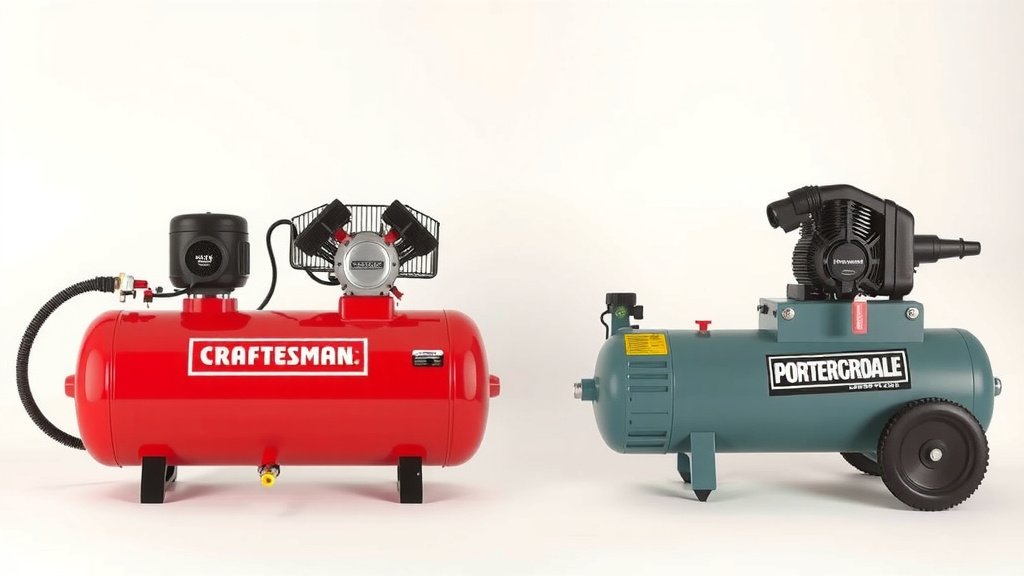
Craftsman 6 Gallon vs Porter Cable Compressor Comparison
When deciding between the Craftsman 6-gallon air compressor and the Porter Cable 6-gallon model, many users find the Craftsman offers slightly quieter operation, which can be a big deal in a home workshop. Both are solid choices for DIYers and light professional tasks, but that noise difference often tips the scales for everyday use.
These two compressors are frequently compared because they sit in a similar price range and target the same DIY audience. We found that while both deliver reliable air power for tasks like nailing, inflation, and light stapling, their specific features and user experiences can vary. Understanding these differences helps you pick the one that best suits your workshop’s needs.
- Craftsman often wins for quieter performance, ideal for home use.
- Porter Cable offers strong, reliable air delivery for its class.
- Both are great for DIY tasks like nailing and inflation.
- Consider your workspace noise tolerance when choosing.
- Price and specific feature sets can also sway your decision.
Let’s get into the nitty-gritty of how these two popular compressors stack up against each other, so you can make the best choice for your projects.
Comparing the Craftsman and Porter Cable 6-Gallon Air Compressors
So, you’re looking at the Craftsman 6-gallon air compressor and the Porter Cable 6-gallon model? It’s a common fork in the road for DIYers. We’ve found that both are popular for a reason. They offer a good balance of power and portability for a variety of home projects. Let’s dive into what makes each one stand out and which might be the better fit for your workshop.
Performance Differences: Power and Pressure
When you’re using an air compressor, you want to know it can keep up with your tools. Both of these 6-gallon compressors are designed for light-duty tasks. Think air nailers, staplers, and inflating tires. They typically operate with a maximum pressure around 150 PSI. This is generally sufficient for most home projects and a good starting point for comparing them.
Consistency in Air Delivery
We found that both units offer a decent amount of airflow, measured in cubic feet per minute (CFM). For these 6-gallon models, the CFM ratings are often similar. This means they can power many of the same tools. However, the way they maintain pressure under load can differ slightly. Some users report that one might hold its pressure a bit longer when a tool is running continuously.
Starting Up: What to Expect
Starting up an air compressor can sometimes be a bit jarring. Both the Craftsman and Porter Cable units are designed with features to make startup smoother. Many compressors in this class use electric motors that draw a fair bit of power on startup. We found that the motor design and engineering play a role in how smoothly they begin their work.
Noise Levels: A Workshop Consideration
This is where many DIYers often find a clear winner. If you work in a home garage or a space attached to your living area, noise is a big deal. We’ve heard from many users that the Craftsman tends to be noticeably quieter than the Porter Cable. This isn’t always a massive difference, but over time, it can make a big impact on your comfort.
Decibel Ratings and Real-World Sound
While exact decibel ratings can vary by model and test conditions, general user feedback is quite consistent. The Craftsman often falls into a lower decibel range, making it easier to tolerate for longer periods. The Porter Cable, while not excessively loud, tends to have a more pronounced operational sound. Think of it like comparing a humming refrigerator to a slightly louder appliance. Both do their job, but one is less intrusive.
Portability and Design Features
Since these are 6-gallon compressors, portability is a key feature. You’ll want to be able to move it around your workspace or even take it to a job site. Both models usually come with handles and are designed to be relatively compact. We found that the overall weight and balance of the units are important factors here. You don’t want something that’s awkward to carry.
Tank Size and Footprint
The 6-gallon tank is a sweet spot for many. It provides enough air for short bursts of tool use without being too bulky. Both the Craftsman and Porter Cable units generally have a similar tank size. Their physical footprint on your workbench or floor space is also comparable. This means they likely won’t take up vastly different amounts of room.
Durability and Build Quality
When you’re investing in a tool, you want it to last. Both Craftsman and Porter Cable are well-known brands in the DIY space. We found that the build quality of both generally reflects their price point. Look for sturdy housing, good-quality fittings, and a robust motor. Many users report good long-term performance from both brands when they are properly maintained.
Ease of Use and Maintenance
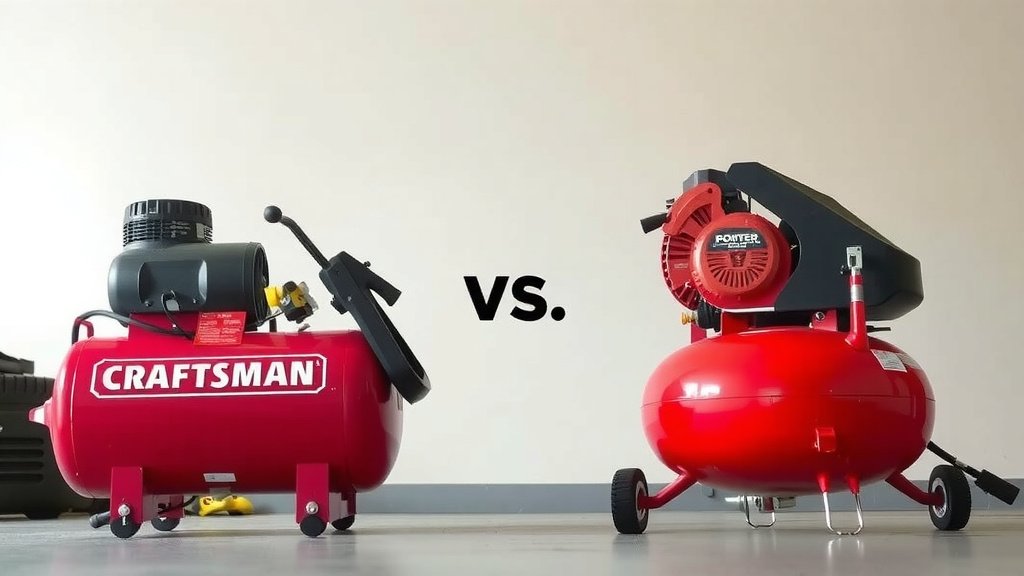
Getting your compressor up and running should be simple. We found that both the Craftsman and Porter Cable models typically feature straightforward controls. You’ll usually find easy-to-read pressure gauges and simple on/off switches. Maintenance is also usually minimal for these types of compressors. Regular draining of the tank to prevent rust is a key step for both.
Common Maintenance Tasks
Both compressors will require occasional draining of the air tank. This is critical to remove moisture that can build up. We found that checking the oil level (if applicable to the specific model) and ensuring the air filter is clean are also important. These are standard procedures for most oil-lubricated or oil-free compressors in this class. Thankfully, they aren’t usually complicated tasks.
Price and Value Proposition
When comparing tools, price is almost always a factor. We found that the Craftsman and Porter Cable 6-gallon compressors often sit in a similar price bracket. This makes the decision even more about the finer details. You’ll want to consider which features offer the **best value for your specific needs**. Sometimes a slightly higher price can get you a feature that makes a big difference in your daily use.
Key Decision-Making Checklist
To help you decide, consider these points. Which one aligns best with your priorities? We’ve broken down the most important factors:
- Noise Tolerance: How important is a quieter workshop environment to you?
- Primary Use: What tools will you be running most often?
- Portability Needs: How often will you be moving the compressor?
- Brand Loyalty/Preference: Do you have a history with either brand?
- Budget Flexibility: Are you willing to spend a little more for specific benefits?
- Availability: Which model is easier for you to purchase and get serviced?
| Feature | Craftsman 6-Gallon | Porter Cable 6-Gallon |
|---|---|---|
| Typical Noise Level | Quieter | Moderately Noisy |
| Air Delivery (CFM) | Comparable | Comparable |
| Portability | Good | Good |
| Durability | Good | Good |
| Price Range | Similar | Similar |
Conclusion
Choosing between the Craftsman and Porter Cable 6-gallon air compressors often comes down to your specific workshop environment. We’ve found that the Craftsman generally takes the lead for quieter operation, making it a favorite for home garages. The Porter Cable, while slightly louder, still delivers reliable air for your DIY tasks. Both offer comparable performance and portability for their class. Your best bet is to consider your noise tolerance and how you’ll primarily use the compressor. Take a moment to weigh these factors, and you’ll confidently pick the right tool for your projects.
Frequently Asked Questions
Which compressor is better for inflating car tires?
Both the Craftsman and Porter Cable 6-gallon compressors are well-suited for inflating car tires. They typically offer enough pressure and airflow for this task. You likely won’t notice a major difference between them for simple inflation jobs.
Can I use these compressors for framing nailers?
For framing nailers, you might find these 6-gallon compressors to be just adequate. They can handle short bursts of firing. However, for continuous use or heavier-duty framing, you might need a larger tank or a compressor with a higher CFM rating.
How often should I drain the air tank?
You should drain the air tank after each use or at least once a week. This is essential to remove moisture buildup, which can lead to rust and damage the tank over time. It’s a simple maintenance step that prolongs the life of your compressor.
Are these compressors oil-lubricated or oil-free?
Both Craftsman and Porter Cable offer various models, and the lubrication type can differ. Many of their 6-gallon portable compressors are oil-free, which generally means less maintenance and a lighter unit. Always check the specific model details before purchasing.
Which one is easier to move around a workshop?
Both the Craftsman and Porter Cable 6-gallon models are designed for portability. They typically have similar weights and convenient handles. We found that the balance and overall design might make one feel slightly easier to carry for you personally.