How an Air Compressor Pump Works: A Simple Guide
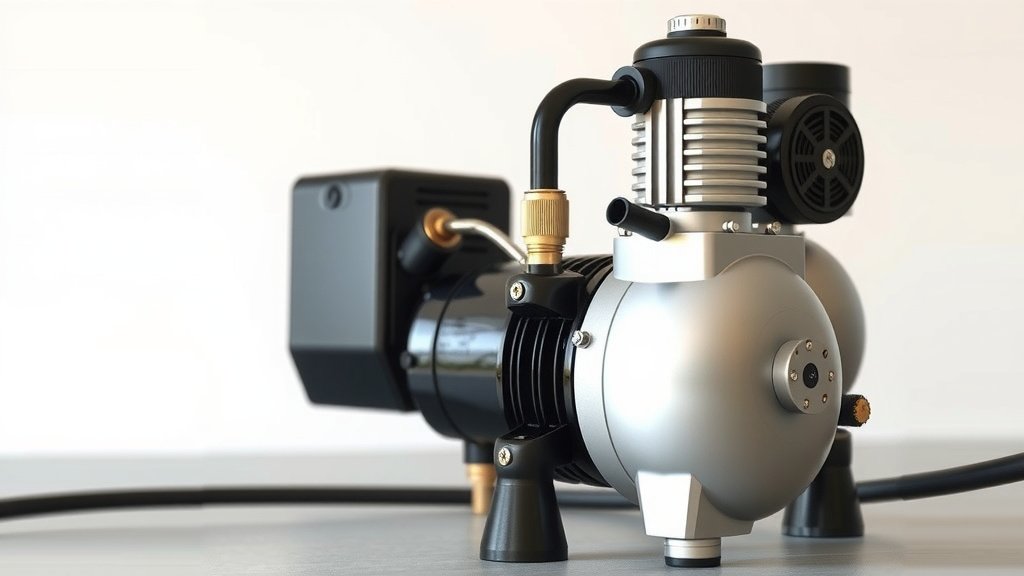
An air compressor pump works by using a motor to drive a piston. This piston moves within a cylinder. It sucks air in and then compresses it. This pressurized air is stored in a tank for later use. Think of it like a bicycle pump, but way more powerful!
Understanding how your air compressor pump functions can help you maintain it better. It’s a surprisingly straightforward process. We found that most issues can be prevented with simple knowledge. Knowing the basic mechanics helps you appreciate this handy tool.
- Air compressor pumps use a motor and piston.
- They suck air into a cylinder.
- The piston then compresses the air.
- Pressurized air is stored in a tank.
- This process makes compressed air available for tools.
Let’s walk through exactly how this magic happens, step by step. We’ll break down the components and their roles so you can see it all clearly.
How Your Air Compressor Pump Creates Power
You’re probably wondering how that little box can generate so much force. It’s all thanks to a clever dance of mechanical parts. Think of it as a tiny, powerful engine. This engine takes regular air and squeezes it. That squeeze is what gives you the power to run your tools.
The Heart of the Operation: The Motor and Piston
At its core, an air compressor pump relies on a few key players. The main ones are the motor and the piston. The motor is the muscle. It provides the rotational energy. This energy is then transferred to the piston. The piston is like the workhorse.
Many designs use an electric motor. Some larger units might use a gas engine. Regardless of the power source, its job is to spin a shaft. This spinning motion is vital for the next step. It’s the initial spark that gets the whole process going.
The Piston’s Cycle: Intake and Compression
Imagine a syringe. You pull the plunger back, and it sucks in liquid. Then you push it, and the liquid comes out under pressure. An air compressor piston works in a very similar way, but with air. This cycle happens thousands of times a minute.
First, the piston moves down inside a sealed cylinder. This creates a vacuum. A small valve opens, letting outside air rush into the cylinder. This is the intake stroke. It’s like the compressor taking a deep breath.
Next, the piston moves back up. This closes the intake valve. The air trapped inside the cylinder now has nowhere to go. As the piston continues to move up, it pushes the air into a smaller space. This is the compression stroke. You’re essentially squishing that air.
Building the Pressure: Valves and Stages
Forcing air into a smaller space raises its pressure. This is basic physics. We found that the efficiency of this compression is key to a compressor’s performance (Engineering Toolbox). The more you squeeze the air, the higher the pressure gets.
To ensure air only moves in the right direction, special valves are used. There’s an intake valve to let air in. There’s also a discharge valve. This valve opens only when the air inside reaches a certain pressure. It then allows the compressed air to move out of the cylinder.
Some compressors use a single-stage design. This means one piston does all the compressing. Others are multi-stage. These have multiple pistons. Each piston compresses the air a bit more than the last. This is like squeezing a balloon multiple times. It can achieve much higher pressures.
From Cylinder to Tank: Storing the Power
Once the air is compressed, it needs a place to go. It’s not immediately used by your tools. Instead, it’s channeled into a storage tank. This tank is built to withstand high pressure. It acts like a reservoir of potential energy.
When the piston pushes the high-pressure air out, it goes through the discharge valve. From there, it travels through a tube or hose. This leads directly to the air tank. You might hear a “hiss” as the air enters. That’s the sound of stored power being made.
The tank is crucial. It allows the compressor motor to cycle on and off. It doesn’t need to run constantly. The tank provides a steady supply of air. This prevents the motor from overheating and wearing out too quickly. Many users found that maintaining the tank is key to longevity.
Regulating the Flow: Pressure Switches and Gauges
You don’t want the tank to overfill. That’s where the pressure switch comes in. This is a very important safety and functional component. It monitors the air pressure inside the tank. When the pressure reaches a preset limit, the switch tells the motor to stop.
This is usually a simple, robust mechanism. It’s designed to be reliable over many cycles. We found that proper calibration of the pressure switch is essential for optimal operation. It ensures you have enough air without risking damage.
On the other hand, when you use air from the tank, the pressure drops. The pressure switch has a lower limit too. When the air pressure falls below this point, it signals the motor to turn back on. This restarts the compression cycle. It replenishes the air supply.
You’ll also see a pressure gauge. This lets you see the current air pressure inside the tank. It’s your visual indicator. Knowing how to read it is helpful. You can see when the compressor is working and when it’s resting.
Delivering the Air: The Regulator and Hose
The air in the tank is compressed, but it might be too much for some tools. That’s why most compressors have a regulator. This device allows you to set the desired working pressure. You can dial it down to what your specific tool needs.
Think of it like turning down the water faucet. You can have high pressure in the pipes, but you only want a gentle flow for washing your hands. The regulator does the same for air. It ensures your tools get the right amount of force.
Finally, the air travels through a hose to your tool. This hose is usually made of flexible material. It needs to be able to handle the pressure. A good quality hose is important for safety and performance. We found that hose leaks are a common energy drain.
Putting It All Together: A Quick Checklist
Let’s recap the journey of air through your compressor:
- The motor powers the piston.
- The piston moves in a cylinder, sucking in air.
- The piston compresses the air, increasing its pressure.
- Valves control the flow of air in and out.
- Compressed air is stored in the tank.
- The pressure switch manages when the motor runs.
- The regulator sets the output pressure for your tools.
Understanding these basic steps helps you appreciate the engineering. It also makes troubleshooting much easier. If something isn’t working right, you can often pinpoint the general area of the problem.
Conclusion
You’ve learned how your air compressor pump transforms simple air into powerful force. It’s a clever process involving a motor, piston, cylinder, and tank. Understanding these core components—the motor’s drive, the piston’s cycle, and the tank’s storage—helps you appreciate its function. This knowledge isn’t just interesting; it’s practical. It helps you maintain your compressor and use it more effectively. Now that you know the mechanics, take a moment to check your compressor’s tank and pressure settings. A little attention goes a long way in keeping it running smoothly for all your projects.
Frequently Asked Questions
What’s the main job of the piston in an air compressor?
The piston is the heart of the compression action. It moves up and down inside a cylinder. This movement creates a vacuum to suck in air and then squeezes that air to build pressure. Think of it as the workhorse that does all the heavy lifting.
Why is the air compressor tank so important?
The tank acts as a reservoir for the compressed air. This means your compressor motor doesn’t have to run constantly. It allows you to use air for your tools whenever you need it. It also helps keep the motor from overheating and wearing out prematurely.
How does the pressure switch keep my compressor safe?
The pressure switch monitors the air pressure inside the tank. When the pressure reaches a set limit, it automatically tells the motor to stop. This prevents over-pressurization and potential damage to the tank or other components. It ensures you have enough air without risking safety.
What’s the difference between single-stage and multi-stage compression?
In single-stage compression, one piston compresses the air all at once. Multi-stage compressors use two or more pistons. Each piston compresses the air a bit further than the last. This multi-step process can achieve much higher pressures more efficiently.
Do I always need to use the regulator on my air compressor?
Yes, you generally should use the regulator. While the tank holds compressed air, its pressure might be too high for your tools. The regulator allows you to adjust the output pressure to the specific level your tool requires. This protects your tools and ensures optimal performance.