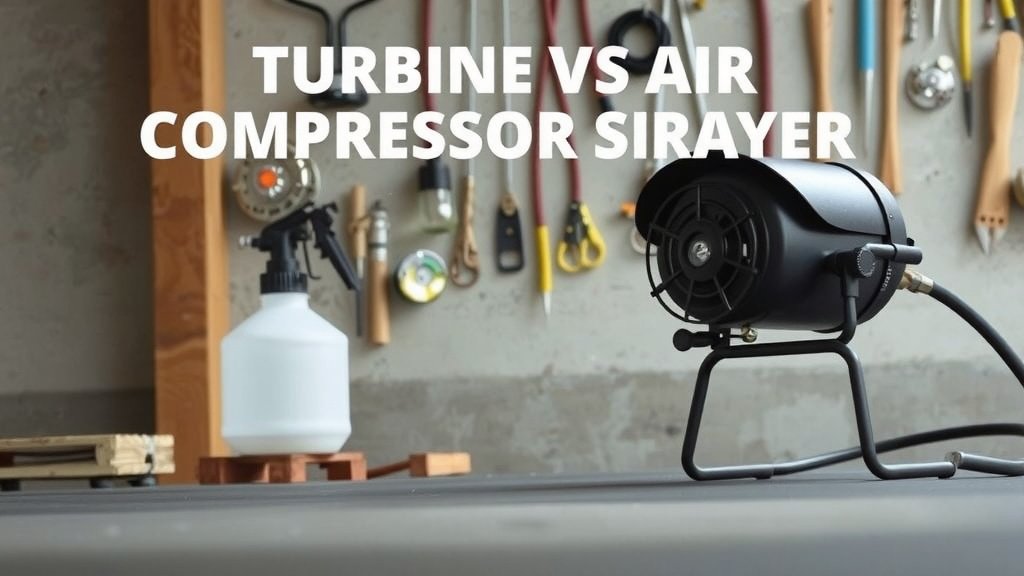
Turbine vs Air Compressor Sprayer: Which Is Best
When choosing between a turbine paint sprayer and an air compressor for your projects, the key difference lies in portability and power. Turbine sprayers are typically all-in-one units, offering convenience for mobile jobs. Air compressors require a separate spray gun and can provide more consistent, high-volume airflow for larger tasks.
Both types of sprayers can deliver a smooth, professional finish to various surfaces. Understanding their unique strengths helps you pick the right tool. This choice impacts efficiency and the final look of your paint job. We found that portability is often the deciding factor for DIYers.
- Turbine sprayers are compact and easy to move.
- Air compressors offer more power and control for big jobs.
- Consider your project size and location when choosing.
- Both can achieve excellent results with practice.
Let’s break down the pros and cons of each so you can make the best decision for your next painting project.
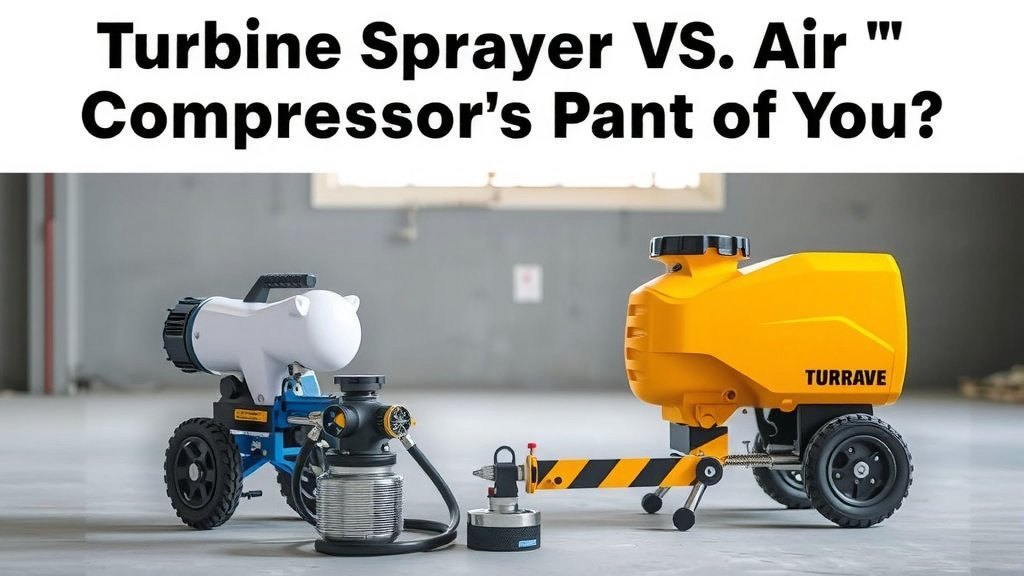
Turbine Sprayer vs. Air Compressor: Which Painting Tool Is Right for You?
Choosing between a turbine paint sprayer and an air compressor can feel like a big decision. We understand you want the best finish for your project. Both tools can help you achieve that. But they work differently and excel in different situations. Let’s explore which one fits your needs.
Understanding the Core Differences
At their heart, these sprayers use air to atomize paint. This means they break the paint into tiny droplets. These droplets then spray onto your surface. The main difference is how they generate and deliver that air.
Turbine Paint Sprayers: The All-in-One Wonder
Think of a turbine sprayer as a self-contained unit. It has a motor and a fan built right into the system. This motor powers the fan, which pulls air through the unit. The heated air is then pushed out to atomize the paint. Many DIYers love them for their simplicity.
How Turbine Sprayers Work
A turbine system uses a high-volume, low-pressure (HVLP) approach. This means it moves a lot of air, but at a gentler pressure. This HVLP method is great for reducing overspray. It helps more paint land on your target surface. You get a smoother finish with less mess.
Pros of Turbine Sprayers
- Portability: They are often lightweight and portable. You can easily move them around a job site.
- No Separate Compressor: Everything is in one unit. You don’t need to buy or maintain a bulky air compressor.
- User-Friendly: Many models are designed for ease of use. Setup is typically quick and straightforward.
- Less Overspray: The HVLP nature means less paint is wasted in the air. This is good for your wallet and your workspace.
Cons of Turbine Sprayers
- Power Limitations: They might not have the power for very thick paints. You may need to thin your paint more.
- Noise: Some units can be quite loud when running.
- Limited Adjustments: You might have fewer options to adjust airflow compared to some air compressors.
Air Compressors: The Powerhouse Option
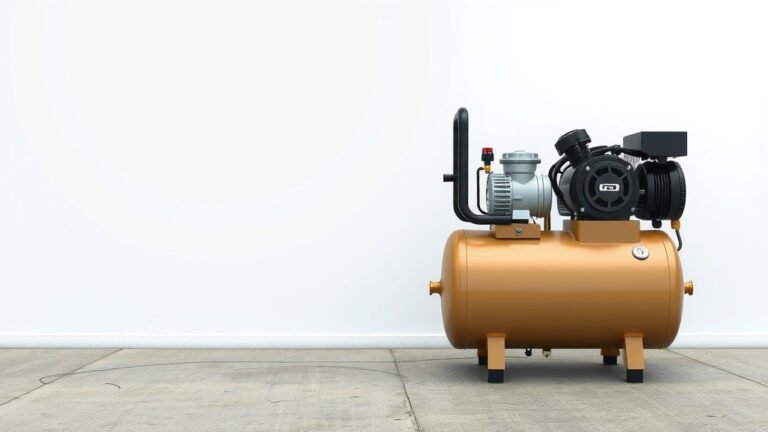
An air compressor is a machine that compresses air. It stores this compressed air in a tank. You then connect a separate spray gun to this tank. The spray gun uses the stored air to atomize and spray the paint. They are often found in professional shops.
How Air Compressors Work
Air compressors provide a steady, high-pressure stream of air. You can control the pressure at the compressor and at the spray gun. This gives you a lot of flexibility. You can use them for everything from small touch-ups to large wall projects.
Pros of Air Compressors
- Versatile Power: They can handle a wide range of paints, including thicker materials. You’ll need less thinning.
- Consistent Airflow: They offer a reliable and consistent air supply. This is great for longer painting sessions.
- More Control: You can fine-tune air pressure and flow for a precise finish.
- Durability: Many air compressors are built to last. They are a workhorse for demanding jobs.
Cons of Air Compressors
- Portability Issues: They are often heavy and bulky. Moving them can be a challenge.
- Requires Accessories: You need to buy a separate spray gun, hoses, and connectors.
- Maintenance: Air compressors require regular maintenance. You need to drain moisture and check oil levels.
Turbine Sprayer vs. Air Compressor: A Quick Comparison
To help you visualize the differences, let’s look at them side-by-side. This table highlights the key distinctions we’ve discussed.
| Feature | Turbine Sprayer | Air Compressor System |
|---|---|---|
| Power Source | Built-in motor and fan | Electric or gas motor compresses air |
| Components | All-in-one unit | Separate compressor, spray gun, hoses |
| Portability | High (lightweight, compact) | Low (heavy, bulky) |
| Paint Thickness | Best for thinned paints | Handles thicker paints well |
| Overspray | Low | Can be higher without proper setup |
| Ideal Use | Smaller projects, furniture, fences, DIY | Large walls, cabinets, professional use, automotive |
Which One Should You Choose?
Your project needs are the biggest factor. Think about the scale of your work. Are you painting a single chair or an entire house? Location also matters. Will you be working indoors or outdoors? Do you need to move around a lot?
Consider Your Project Size and Scope
For smaller, intricate projects like furniture restoration, cabinets, or a birdhouse, a turbine sprayer is often ideal. Its portability and ease of use make it a joy to handle. You can move it easily from one piece to the next. Many users found that the reduced overspray was a lifesaver when working indoors.
If you’re tackling a large wall, an entire room, a deck, or a car, an air compressor system will likely serve you better. The consistent power and ability to handle thicker paints mean faster coverage. You won’t have to stop as often to thin your paint. Professionals often rely on these for their speed and efficiency.
Think About Your Painting Environment
Working in a small apartment or a garage with limited space? A turbine sprayer’s compact size and lower overspray are big advantages. You can set it up and pack it away with ease. It requires less space than a compressor and hoses.
If you’re working outdoors or in a large shop, an air compressor might be less of a hassle. You have more room to maneuver the equipment. Plus, the increased airflow can speed up the process on large surfaces. Some experts suggest that for very large areas, the consistent air supply from a compressor is unmatched.
Making the Final Decision: A Checklist
Still on the fence? Let this quick checklist help you sort it out. Ask yourself these questions:
- How large is the project I’m painting?
- Do I need to move the sprayer frequently?
- What type of paint will I be using most often?
- How much space do I have for equipment?
- What’s my budget for the sprayer and any accessories?
- How much time do I want to spend on setup and cleanup?
By answering these, you’ll likely see a clearer path to the right choice for your painting needs.
Conclusion
Choosing between a turbine sprayer and an air compressor ultimately comes down to your specific painting needs. For DIYers prioritizing portability and ease of use on smaller projects, a turbine sprayer is often the way to go. If you need raw power, consistent airflow for large surfaces, or plan on tackling thicker paints, an air compressor system is your best bet. We found that understanding your project’s size, location, and the type of paint you’ll use will guide you to the perfect tool. Take a moment to consider these factors, and you’ll be painting like a pro in no time!
Frequently Asked Questions
Can I use a turbine sprayer for automotive painting?
While possible for small touch-ups, turbine sprayers are generally not ideal for full automotive painting. Their HVLP (High Volume, Low Pressure) design is better suited for less demanding projects, and thicker automotive paints might require more thinning than a turbine can efficiently handle.
How much maintenance does an air compressor require compared to a turbine sprayer?
Air compressors typically require more regular maintenance, such as draining moisture from the tank and checking oil levels on certain models. Turbine sprayers are generally more low-maintenance, with their primary upkeep involving cleaning the spray gun components.
Will a turbine sprayer produce more overspray than an air compressor?
No, quite the opposite. Turbine sprayers, using the HVLP principle, are designed to produce less overspray than many air compressor setups, especially if the compressor isn’t perfectly dialed in. This means less wasted paint and a cleaner workspace.
Can an air compressor system be used for small, detailed projects?
Yes, an air compressor system can be very effective for small, detailed projects. By using the right spray gun attachment and carefully controlling the air pressure, you can achieve a very precise finish on intricate items.
Which type of sprayer is better for a beginner painter?
For beginners, a turbine sprayer often offers a gentler learning curve due to its all-in-one design and reduced overspray. The setup is typically simpler, allowing new painters to focus more on technique rather than managing separate components like hoses and regulators.