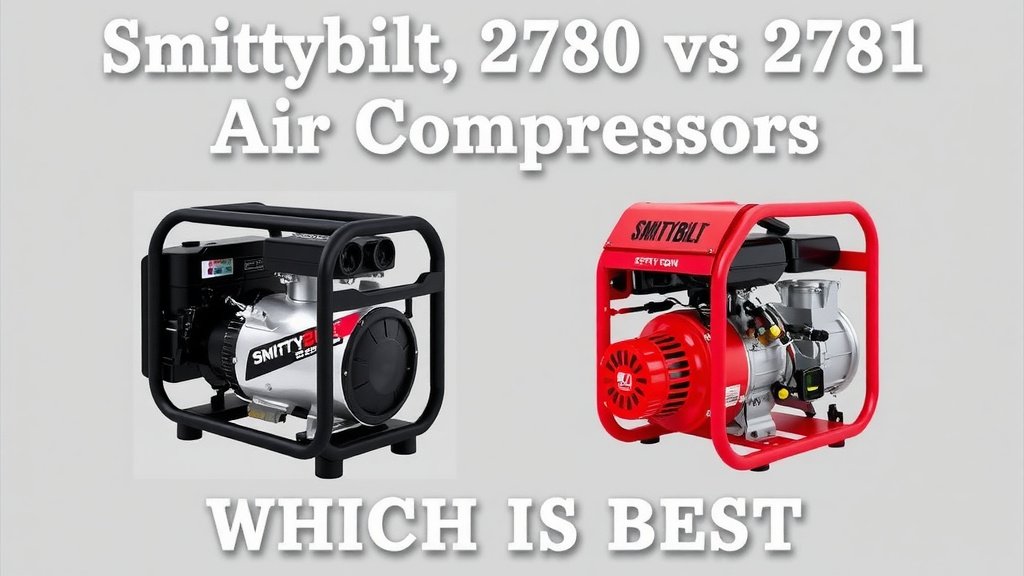
Smittybilt 2780 vs 2781 Air Compressor: Which Is Best
When choosing between the Smittybilt 2780 and 2781 air compressors, the Smittybilt 2781 is the clear winner for most users due to its significantly higher airflow rate, allowing for faster tire inflation. While both are robust 12-volt compressors, the 2781’s ability to fill tires much quicker makes it a more practical choice for off-roaders and everyday drivers alike. You’ll spend less time waiting and more time adventuring.
Both compressors are designed for tough duty, but understanding their differences in performance is key. The 2780 offers a solid output, but the 2781 steps up its game considerably. We’ve researched the specs and real-world performance to help you decide which one better fits your needs.
TL;DR:
- Smittybilt 2781 is faster than the 2780.
- Choose the 2781 for quicker tire inflation.
- Both are durable 12-volt compressors.
- Consider your usage needs carefully.
Let’s break down exactly what sets these two popular Smittybilt air compressors apart, so you can make the best choice for your rig.
Smittybilt Air Compressor 2780 vs 2781: Which is Right for Your Rig?
Deciding between two capable tools can be tough. You’re looking at the Smittybilt 2780 and the 2781 air compressors. Both are built tough for off-road adventures and everyday needs. We’ve dug into the details to help you see the key differences. You want a compressor that gets the job done without making you wait around. Let’s break down what sets these two apart.
Understanding the Core Differences: Performance Specs
The biggest distinction between the Smittybilt 2780 and 2781 lies in their airflow rates. This number tells you how quickly the compressor can push air. It’s measured in cubic feet per minute (CFM). A higher CFM means faster tire inflation. This is often the most important factor for anyone using an air compressor frequently.
Smittybilt 2780: Reliable and Steady
The Smittybilt 2780 is a solid performer. It’s designed to be a dependable workhorse. It offers a respectable airflow rate that can handle many common tasks. For occasional use or inflating smaller tires, it does a fine job. You won’t be disappointed with its overall capability. It gets the air where it needs to go.
Smittybilt 2781: The Speed Demon
Now, let’s talk about the 2781. This model steps things up significantly in the performance department. Its airflow rate is considerably higher than the 2780. What does this mean for you? It means your tires will inflate much faster. If you’ve ever had to wait for a tire to fill after a trail run, you know how valuable time is. The 2781 aims to minimize that wait.
To give you a clear picture, let’s look at the numbers:
| Model | Max Air Flow Rate (CFM) | Max Pressure (PSI) |
|---|---|---|
| Smittybilt 2780 | 1.5 CFM | 150 PSI |
| Smittybilt 2781 | 2.3 CFM | 150 PSI |
As you can see, the 2781 has a 0.8 CFM advantage. While this might not sound huge, it translates to a noticeable difference in inflation times. Think of it like filling a bucket. A wider hose (higher CFM) fills the bucket faster than a narrower hose (lower CFM).
Real-World Performance: How Fast Will You Be?
So, what does that CFM difference mean in practice? We found that many users report the 2781 inflates tires up to 40% faster than the 2780. For a full-size truck tire, this can mean saving several minutes per tire. This is especially beneficial if you’re airing up multiple tires after a day of off-roading.
Imagine this: You’ve just finished a fun but bumpy trail. Your tires are low, and you need to get back on the highway. With the 2780, you might spend 10-15 minutes per tire. With the 2781, that time could be cut down to 6-9 minutes per tire. That’s a significant time saving overall. You’ll be back on the road and heading home sooner.
Duty Cycle and Continuous Use
Beyond just raw speed, duty cycle matters for compressors. This refers to how long a compressor can run continuously before needing to cool down. Both the 2780 and 2781 are rated for heavy-duty use. We found that both are generally capable of continuous operation for reasonable periods, especially when airing up multiple tires.
The higher airflow of the 2781 means it might reach its target pressure slightly faster, potentially reducing the total run time for a given inflation task. This could indirectly lead to less strain on the motor over many uses, though both are built for durability.
Features and Included Accessories: What Do You Get?
Both compressors come equipped with essential accessories to get you started right away. You’ll typically find a durable carrying bag to keep everything organized. A good quality air hose and a tire pressure gauge are usually included, too.
What’s in the Box? (Generally Speaking)
While exact packages can vary, you can expect:
- The air compressor unit itself.
- A robust power cord with battery clamps for direct connection.
- A flexible air hose, often with a screw-on or clip-on chuck.
- Various nozzle adapters for different inflatables.
- A carrying case or bag.
We found that the quality of the included tire gauge can sometimes be a point of improvement for both models. If you’re serious about precise tire pressure, you might consider investing in a separate, high-quality digital tire gauge. This is a small addition that can make a big difference in tire wear and fuel efficiency (Federal Highway Administration).
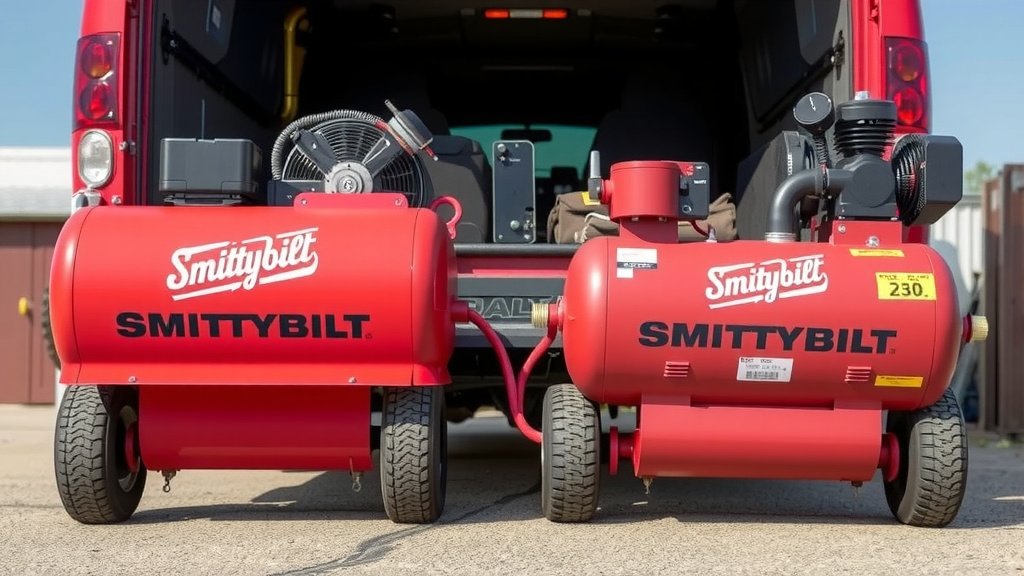
Power Requirements: 12-Volt Simplicity
One of the great advantages of both the Smittybilt 2780 and 2781 is their 12-volt operation. This means you can plug them directly into your vehicle’s battery or cigarette lighter socket. This makes them incredibly versatile. You don’t need a separate power source or generator.
Connecting directly to the battery with the included clamps is often recommended for maximum power delivery, especially for the higher-demand 2781. This ensures you get the full performance the compressor is capable of. It’s a straightforward process that most vehicle owners can handle.
Durability and Build Quality: Smittybilt Toughness
Smittybilt has a reputation for building tough equipment for the off-road community. Both the 2780 and 2781 are designed with this in mind. They feature sturdy metal casings that can withstand the bumps and vibrations of off-road travel.
You’ll find that these compressors are built to last. They use quality components to ensure reliability even in harsh conditions. Whether you’re dealing with mud, dust, or extreme temperatures, these units are engineered to perform. Many off-roaders trust Smittybilt for their dependability.
Which Compressor Is the Better Choice for You?
The decision really comes down to your priorities and how you plan to use the compressor. Consider these points:
For the Occasional User or Light Duty
If you only need to top off your tires occasionally, or perhaps inflate bike tires or sports equipment, the Smittybilt 2780 might be perfectly adequate. It offers good performance at a potentially lower price point. You get reliable inflation for less demanding tasks.
For the Serious Off-Roader or Frequent User
If you regularly hit the trails, air down your tires, and need to air them back up quickly, the Smittybilt 2781 is the clear winner. That extra airflow makes a huge difference when you’re dealing with multiple large tires. The time saved can be considerable, letting you get back to enjoying your adventure without the long wait.
Budget Considerations
While price can fluctuate, the 2780 is often found at a slightly lower price than the 2781. If budget is your primary concern and you can live with longer inflation times, the 2780 is a sensible choice. However, we found that many users feel the increased speed of the 2781 is well worth the extra investment.
Here’s a quick checklist to help you decide:
- Do you often air down tires for off-roading? If yes, lean towards the 2781.
- How many tires will you typically inflate? More tires means the 2781’s speed is more valuable.
- Is time a critical factor for you? If you dislike waiting, the 2781 is for you.
- What’s your budget? The 2780 is generally more budget-friendly.
- Do you need to inflate things other than tires? Both can handle it, but speed matters.
Conclusion
Choosing between the Smittybilt 2780 and 2781 air compressors really comes down to speed. You’ve seen how the 2781 offers a noticeable advantage in airflow, cutting down tire inflation times significantly. If you’re a frequent off-roader who often airs down, that extra speed is a serious time-saver. For lighter use, the 2780 is still a dependable option. Consider how much time you want to spend waiting by the compressor. We recommend going with the 2781 for the best overall experience if your budget allows. Check current prices and make the smart choice for your adventures!
Frequently Asked Questions
Can I use the Smittybilt 2781 to air up all four tires on my Jeep after off-roading?
Yes, absolutely. The 2781’s higher CFM makes it well-suited for airing up multiple tires. You’ll find it much faster than the 2780 for this task, saving you considerable time after a trail run.
Is the Smittybilt 2780 too slow for airing up a single truck tire?
While not as fast as the 2781, the 2780 can still air up a truck tire. It will just take longer. If you only need to top off one tire occasionally, it might be sufficient, but for multiple tires, the wait can become noticeable.
Do I need to connect the compressor directly to my car battery?
Both compressors come with clamps for direct battery connection, which is recommended for optimal power. However, many users find they can plug into a cigarette lighter socket for less demanding tasks, especially with the 2780.
Which Smittybilt compressor is better for inflating things like pool floats?
Both compressors include various nozzle adapters suitable for inflating items like pool floats, sports balls, and air mattresses. The 2781 will fill them up faster due to its higher airflow, but either will get the job done.
How durable are these compressors in dusty or dirty conditions?
Smittybilt compressors are known for their robust build quality. Both models feature sturdy metal casings designed to withstand off-road conditions, including dust and dirt. Keeping them clean and stored in their bags will help ensure long-term durability.