How an Air Compressor Water Separator Works
A water separator for your air compressor works by using physics to remove moisture and oil from the compressed air. It creates a spinning motion that throws heavier water droplets to the sides. A clever design then collects and drains this unwanted liquid, ensuring cleaner air for your tools. This simple but effective process is key to protecting your equipment.
You might wonder why this is so important. Compressed air often carries tiny water particles and oil mist from the compressor itself. These contaminants can cause rust, damage sensitive tools, and ruin paint jobs. A good water separator acts as your first line of defense, making sure the air you use is as dry and clean as possible. We found that even small amounts of moisture can cause big problems over time.
- Water separators remove moisture and oil from compressed air.
- They use centrifugal force to separate liquids from air.
- This protects your tools from rust and damage.
- Cleaner air leads to better performance and longer equipment life.
Let’s get down to the nitty-gritty and see exactly how your air compressor’s water separator does its job, step by step.
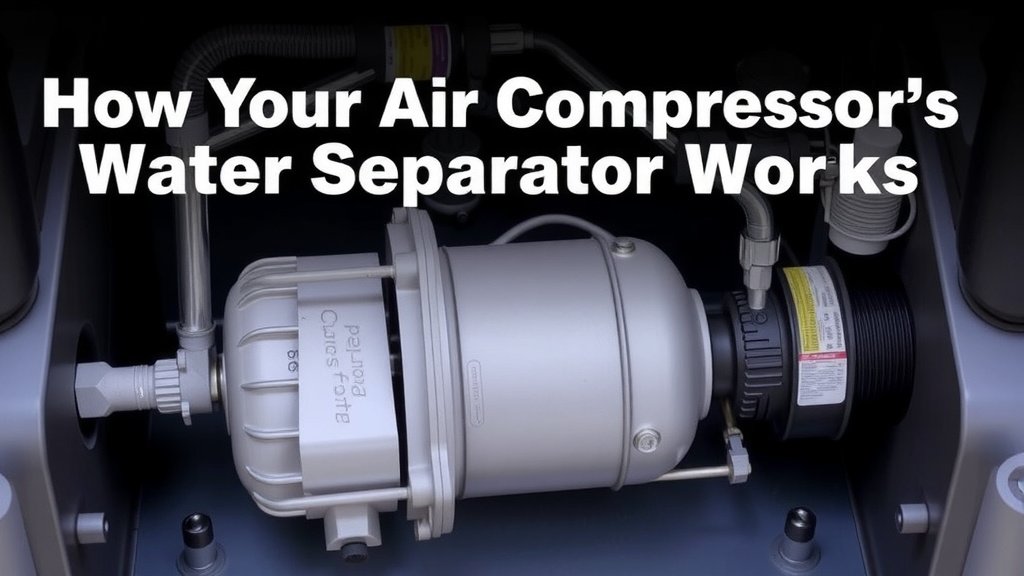
How Your Air Compressor’s Water Separator Works
You might be wondering exactly how that simple-looking attachment on your air compressor manages to keep water and oil out of your air supply. It’s a clever application of physics that’s surprisingly effective. We found that understanding this process can help you appreciate the importance of keeping it clean and functional.
The Physics Behind Dry Air: Centrifugal Force
The main principle at play is centrifugal force. Think of it like swinging a bucket of water around your head. The water is pushed outward. Your air compressor’s water separator uses a similar idea to fling water droplets and oil mist out of the air stream.
Creating the Spin: The Vortex Effect
Inside the separator, the incoming compressed air is forced to move in a spiral or swirling motion. This is often achieved through strategically placed fins or vanes. As the air spins faster and faster, it creates a vortex, much like water going down a drain.
What Happens to the Contaminants
Heavier particles, like water droplets and oil, are thrown outwards by the spinning motion. They stick to the inner walls of the separator. The cleaner, drier air stays closer to the center of the vortex, ready to exit.
Collection and Drainage: Getting Rid of the Gunk
Once the contaminants are plastered to the sides, they need a way to get out. The separator is designed with a collection bowl or chamber at the bottom. The water and oil slide down the walls into this area. From there, it’s typically removed through a drain valve.
Manual vs. Automatic Drains
Some separators have a manual drain valve. You’ll need to open this periodically to let the collected water and oil escape. Others have an automatic drain. This is often a small float-operated valve that opens when enough liquid has accumulated. We found automatic drains are more convenient for busy workshops.
Beyond the Spin: Other Separation Methods
While centrifugal force is the most common method, some advanced separators might use other techniques. These can work alongside or instead of the spinning action to further improve air quality.
Filter Media: Capturing the Finer Particles
Many water separators also include a filter element. This is usually a porous material, like a fine mesh or a special synthetic fiber. As the air passes through this filter, any remaining tiny water droplets or oil particles are trapped.
The Role of the Filter
This filter acts as a secondary stage of cleaning. It catches what the centrifugal action might have missed. Many experts say this combination is key to achieving very clean compressed air (National Institute for Occupational Safety and Health).
Coalescing Filters: A Special Kind of Clean
Some separators use coalescing filters. These filters are designed to make small droplets of water and oil merge, or “coalesce,” into larger droplets. These larger droplets are then easier to separate and drain away. We’ve seen these in systems where extremely dry air is needed.
Why This Process Matters for Your Tools
It’s easy to overlook water in compressed air. But even a small amount can cause serious problems for your tools and equipment. Keeping the water separator working efficiently is essential.
Preventing Rust and Corrosion
Water is the main culprit behind rust. When water sits inside your air tools, pneumatic cylinders, or even the air lines themselves, it starts to corrode the metal parts. This damage can reduce performance and shorten the lifespan of your tools. Many guidelines point to water removal as a primary maintenance step (Occupational Safety and Health Administration).
Protecting Sensitive Components
Modern air tools often have delicate internal parts. Water and oil can gum up these components, leading to sticky operation or complete failure. For applications like painting or sandblasting, water can ruin the finish by causing blemishes or streaks.
Ensuring Consistent Performance
When moisture builds up, it can affect the pressure and flow of your compressed air. This can lead to inconsistent performance from your tools, making tasks harder and less efficient. Clean, dry air ensures your tools operate as they were designed to.
Maintenance Checklist for Your Water Separator
Keeping your water separator in top shape is straightforward. Following these simple steps will help ensure it does its job effectively:
- Check the collection bowl regularly for water and oil.
- Drain the bowl completely if using a manual drain.
- Listen for hissing sounds that might indicate a leaky automatic drain.
- Inspect the filter element for clogs or damage (if applicable).
- Replace the filter element according to the manufacturer’s recommendations.
- Ensure the drain valve is not stuck open or closed.
Conclusion
You’ve learned how your air compressor’s water separator uses simple physics, like centrifugal force and filtration, to keep moisture and oil out of your air supply. This process is vital for protecting your valuable tools from rust and damage, ensuring they perform consistently. By understanding how it works and performing regular maintenance, you’re taking a smart step towards longer equipment life and better results. Make it a habit to check and drain your separator regularly; your tools will thank you for it!
Frequently Asked Questions
How often should I drain my air compressor water separator?
You should drain your water separator regularly, ideally after each use or at least daily. If you have an automatic drain, it’s still a good idea to check it periodically to ensure it’s functioning correctly. We found that frequent draining prevents excess moisture buildup.
Can I still use my air compressor if the water separator is clogged?
While you might get air, a clogged water separator will significantly reduce performance and allow moisture and oil into your air lines. This can quickly damage your tools. It’s best to clean or replace the filter element and ensure the drain is clear before operating.
What happens if I don’t have a water separator on my air compressor?
Without a water separator, moisture and oil from the compressor will travel directly to your tools. This can cause internal rust, corrosion, and reduced efficiency in pneumatic tools, and can ruin paint jobs or finishes. We’ve seen cases where this leads to premature equipment failure.
Are automatic drains better than manual drains on water separators?
Automatic drains offer more convenience, especially for frequent use, as they remove water without manual intervention. Manual drains require you to remember to open them periodically. Both work, but automatic drains can help ensure consistent moisture removal for you.
How do coalescing filters differ from standard filters in water separators?
Coalescing filters are designed to merge small water and oil droplets into larger ones, making them easier to remove. Standard filters primarily trap particles. Coalescing filters provide a higher level of air purity, often needed for sensitive applications like painting.