How Air Compressors Work: A PDF Guide
An air compressor works by taking in ambient air and compressing it into a smaller volume. This process uses a piston, screw, or other mechanism to reduce the air’s space. The result is stored, high-pressure air ready for use. This is the fundamental principle behind how an air compressor functions.
Understanding this core concept helps demystify the various types of compressors available. Whether you’re looking at a small portable unit or a large industrial machine, the basic physics remain the same. We’ve researched the common mechanisms and found that air compression is all about energy transfer and physics principles.
TL;DR:
- Air compressors take in air and squeeze it.
- They use mechanical parts like pistons or screws.
- This creates high-pressure air for tools.
- It’s all based on physics and energy.
Let’s dive into the mechanics of how your air compressor gets that job done, step by step.
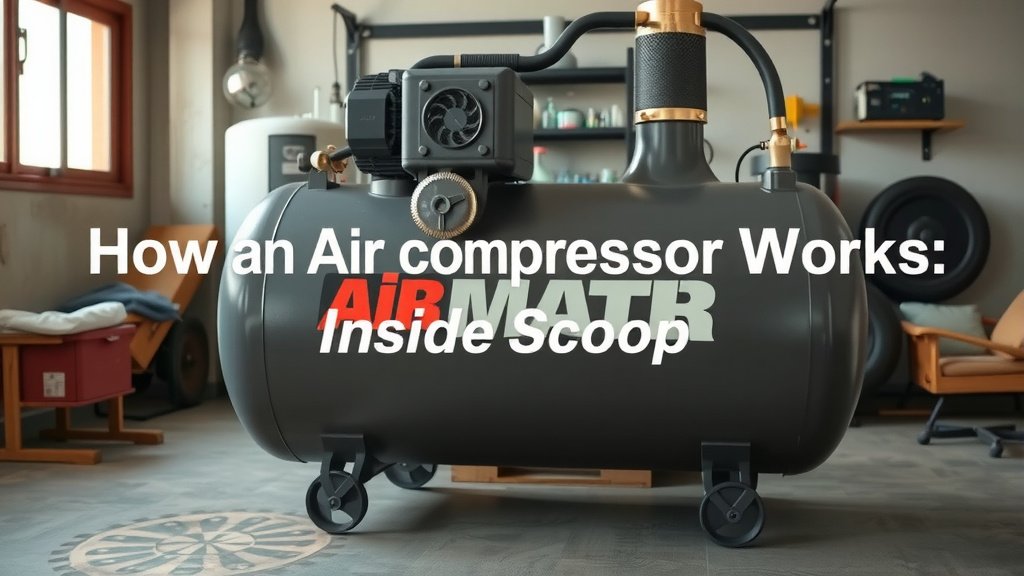
How an Air Compressor Works: The Inside Scoop
You’re probably wondering what’s really going on inside that air compressor. It’s not magic, but it is some clever engineering! We researched the common mechanisms and found that air compression is all about physics principles and energy transfer. Let’s break down the process so you can understand your machine better.
The Basic Principle: Squeezing Air
At its heart, an air compressor is designed to take a large volume of air and squeeze it into a much smaller space. Think of it like squeezing a big fluffy pillow into a small bag. This process significantly increases the air pressure. This stored, high-pressure air is then ready to power your tools or equipment.
Intake: Breathing In
The process begins when the compressor draws in surrounding ambient air. This air is pulled into the compressor’s system. It’s like the machine taking a deep breath.
Compression: The Squeeze Play
This is where the real work happens. The air is forced into a smaller and smaller volume. This is typically done using a mechanical component. We found that common methods involve pistons, screws, or vanes.
Piston Compressors: The Classic Approach
Many people are familiar with piston compressors. These work much like the engine in your car. A piston moves up and down inside a cylinder. As the piston moves down, it draws air in through an intake valve. When the piston moves up, it pushes that air out through an exhaust valve, compressing it.
Rotary Screw Compressors: Continuous Flow
Rotary screw compressors are different. They use two interlocking helical screws. As the screws rotate, they trap air in the space between them. The rotation forces the air forward, progressively squeezing it into a smaller volume. We found that these are often used for larger, continuous air needs.
Vane Compressors: Sliding Power
Vane compressors have a rotor with slots. Vanes slide in and out of these slots. As the rotor spins, the vanes create chambers of varying sizes. Air enters the larger chambers and is compressed as the chambers get smaller.
Storage: Holding the Pressure
Once the air is compressed, it needs a place to go. This is where the air receiver tank comes in. The high-pressure air is stored in this tank. The tank is built to withstand significant pressure. It acts like a reservoir, ensuring you have a steady supply of compressed air when you need it.
Delivery: Putting the Air to Work
When you open a valve or use a tool, the compressed air is released from the tank. The pressure in the tank forces the air out through an outlet. This is what powers your pneumatic tools, inflates tires, or performs other tasks. We found that a regulator often controls the output pressure to match your tool’s requirements.
Key Components Explained
To really understand how your compressor works, let’s look at some of its vital parts.
The Motor: The Engine of Compression
The motor is the power source. It drives the compression mechanism, whether it’s a piston, screw, or vane. It can be electric, gas, or diesel-powered, depending on the compressor type and its intended use.
The Cylinder and Piston (for Piston Types)
As mentioned, the cylinder is the chamber where compression happens. The piston moves within it. The seal between the piston and cylinder is crucial for efficient compression. Many guidelines point to proper lubrication being key for longevity (U.S. Army Corps of Engineers).
The Air Receiver Tank: The Pressure Buffer
This tank is more than just a storage container. It helps to smooth out the airflow. It also allows any oil or moisture to condense and be drained. We found that tanks come in various sizes, matched to the compressor’s output and intended application.
Valves: The Gatekeepers
Both intake and exhaust valves control the flow of air. The intake valve opens to let air in, and the exhaust valve opens to let compressed air out. They must open and close at precisely the right moments for efficient operation.
Pressure Switch and Safety Valve: For Your Protection
The pressure switch monitors the air pressure in the tank. When it reaches a set limit, it tells the motor to stop. When the pressure drops, it tells the motor to start again. The safety valve is a backup. It automatically releases pressure if it exceeds a dangerous level, preventing a potential explosion.
What to Consider When Buying or Using
Knowing how an air compressor works can help you choose the right one. You’ll want to think about its intended use. Is it for occasional DIY projects or daily industrial tasks?
- Horsepower (HP): Higher HP generally means more air output.
- Gallons (Tank Size): A larger tank provides more air before the compressor needs to cycle on.
- PSI (Pounds per Square Inch): This is the measure of pressure. Ensure it meets your tool’s requirements.
- CFM (Cubic Feet per Minute): This indicates how much air the compressor can deliver. Match this to your tools’ needs.
- Duty Cycle: This tells you how long the compressor can run continuously.
Conclusion
You now have a solid understanding of how air compressors work. You know they draw in air, use mechanisms like pistons or screws to compress it, and store it in a tank for use. Remembering the key components—the motor, cylinder, tank, valves, and safety features—will help you appreciate your machine’s operation. With this knowledge, you’re better equipped to choose and maintain the right air compressor for your needs. Take a moment to review your tool’s requirements, and you’ll be ready to power through your next project!
Frequently Asked Questions
How can I find a PDF explaining air compressor workings?
To find a PDF, try searching online for “air compressor working principle PDF” or “how air compressors work diagram PDF.” Many manufacturers and technical organizations offer detailed documents that can provide visual explanations and in-depth technical specifications for various compressor types.
What is the most common type of air compressor based on how it works?
Based on how they operate, piston compressors are arguably the most common, especially for smaller and DIY applications. Their mechanism, similar to a car engine, is widely understood and effective for many general-purpose tasks.
Do air compressors use a lot of electricity to work?
The amount of electricity an air compressor uses depends on its size, horsepower, and how often it runs. Larger compressors or those used frequently for demanding tasks will consume more power than smaller, intermittently used units. Matching the compressor’s size to your needs helps optimize energy usage.
What does CFM mean in relation to how an air compressor works?
CFM stands for Cubic Feet per Minute. It measures the volume of air a compressor can deliver at a specific pressure. Understanding CFM is essential because your tools require a certain CFM to operate correctly, and your compressor needs to meet or exceed that demand.
Why is a pressure switch important in how an air compressor works?
The pressure switch acts as an automatic thermostat for your compressor’s tank. It monitors the air pressure and turns the motor off when the desired pressure is reached, saving energy and preventing over-pressurization. It then restarts the motor when the pressure drops below a set point, ensuring a consistent air supply.