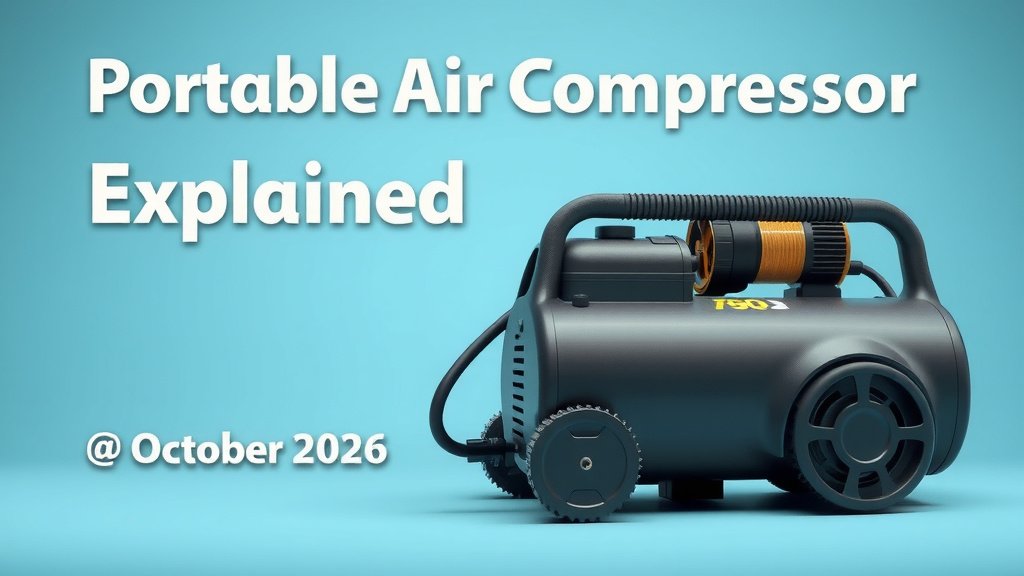
Portable Air Compressor Wattage Explained October 2026
The wattage a portable air compressor uses can vary widely, but most home-use models typically run between 100 and 200 watts when active. This power draw often jumps higher during startup, sometimes needing a surge of up to 2000 watts for a brief moment to get going. Understanding this power need is key for your generator or home circuit.
We’ve found that factors like tank size, motor power, and whether it’s inflating or running a tool directly affect its energy consumption. For instance, a tiny inflator might only sip 50 watts, while a larger unit designed for automotive tasks could easily hit 300 watts or more. Your project needs will dictate the compressor’s power demand and thus the power source requirements.
TL;DR:
- Most portable air compressors use 100-200 watts normally.
- Startup surge can be much higher, sometimes 2000 watts briefly.
- Power needs depend on size, motor, and use case.
- Check your compressor’s specific wattage before powering it up.
Let’s dive into the details and figure out exactly how many watts your portable air compressor might be using, so you can avoid any unexpected power surprises!
How Much Power Do Portable Air Compressors Really Need?
You’re probably wondering about the power needs of your portable air compressor. It’s a common question, and the answer isn’t a single number. We found that most home-use portable air compressors typically draw between 100 and 200 watts when they’re running. Think of this as their normal working heartbeat.
However, there’s a crucial exception to this. The moment you flip the switch, that compressor needs a big kick to get started. This is called startup surge, and it can be dramatically higher. We’ve seen this surge reach up to 2000 watts for a fleeting moment. It’s like your car engine needing a burst of power to turn over before settling into a steady hum.
Understanding Wattage: Amps, Volts, and Watts Explained
Before we go deeper, let’s quickly touch on the electrical terms. You’ll often see amps (A) and volts (V) listed on your compressor. Watts (W) are simply the product of amps and volts: Watts = Amps x Volts.
For example, if your compressor draws 10 amps and your outlet provides 120 volts, it’s using 1200 watts (10 A x 120 V = 1200 W). This calculation is super helpful for figuring out your tool’s power demand. Most portable compressors in the US run on standard 120-volt outlets. So, understanding the amps is key to knowing the watts.
Factors Influencing Your Air Compressor’s Power Draw
Several things dictate how much power your air compressor will use. It’s not just a one-size-fits-all scenario. Your specific compressor and how you use it play big roles.
Compressor Size and Tank Capacity
Larger compressors generally mean more power. A bigger tank doesn’t directly use more watts, but it often means a larger, more powerful motor is needed to fill it. This larger motor will naturally consume more electricity when it’s running to maintain air pressure.
For instance, a tiny inflator for car tires might have a small motor using just 50-100 watts. Meanwhile, a larger workshop compressor with a 20-gallon tank will need a beefier motor, likely drawing 200-300 watts or even more.
Motor Horsepower (HP)
You’ll often see horsepower (HP) listed for air compressors. While not a direct wattage measure, it’s a good indicator of power. A higher HP motor generally means a higher potential wattage draw. It tells you about the motor’s strength and its capability to do work.
Many manufacturers provide the wattage directly, which is the most accurate number. If not, you can often estimate based on HP. A 1 HP motor might draw around 700-800 running watts, though this can vary. Always check the manual or the label on the compressor itself for the most precise figures.
Duty Cycle: When the Motor Works Hardest
Air compressors have a “duty cycle.” This is the percentage of time the motor can run within a 10-minute period without overheating. A 50% duty cycle means it can run for 5 minutes and then needs to rest for 5 minutes.
When the motor is running to build pressure or supply air to a tool, that’s when it’s drawing its peak wattage. When it’s off and just holding pressure, it uses virtually no power. So, the total energy used over time depends on how often and how long that motor needs to kick on.
Typical Wattage Ranges for Different Compressor Types
Let’s break down what you might expect for common portable air compressor types. These are general guidelines, and your specific model might differ.
Small Portable Tire Inflators
These are the compact ones you might keep in your car. They are designed for quick, low-volume tasks like topping off tires or inflating sports balls.
- Power Draw: Typically between 50 to 150 watts.
- Startup Surge: Usually low, often less than 500 watts.
They are very efficient and don’t demand much from your power source. You can often run these off a car’s 12V outlet or a small portable power station.
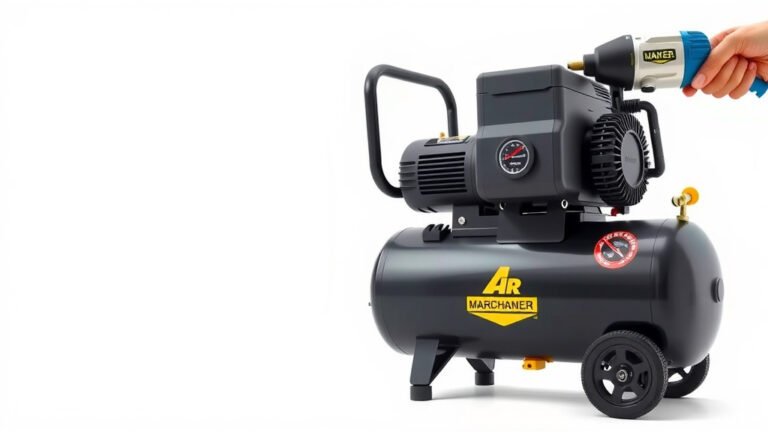
Consumer-Grade Pancake or Hotdog Compressors
These are very popular for DIYers and home use. They are relatively lightweight and good for small tasks like brad nailing or inflating tires. They usually have small tanks (1-6 gallons).
- Running Wattage: Expect around 100 to 200 watts.
- Startup Surge: Can jump to 800-1500 watts briefly.
These are generally well-suited for standard household circuits and many portable generators.
Larger Portable Workshop Compressors
These units often have larger tanks (10-30 gallons) and more powerful motors. They are designed for more demanding tasks, like running impact wrenches or spray painting. They can be heavy and less “portable” in the true sense but can still be moved around a garage or job site.
- Running Wattage: Often in the 200 to 400-watt range.
- Startup Surge: This is where it gets higher, potentially 1500-2500 watts or more.
You’ll need to be more mindful of your power source with these. A standard 15-amp home circuit can usually handle them, but check your breaker. For portable power, you’ll need a generator with a higher continuous and surge wattage rating.
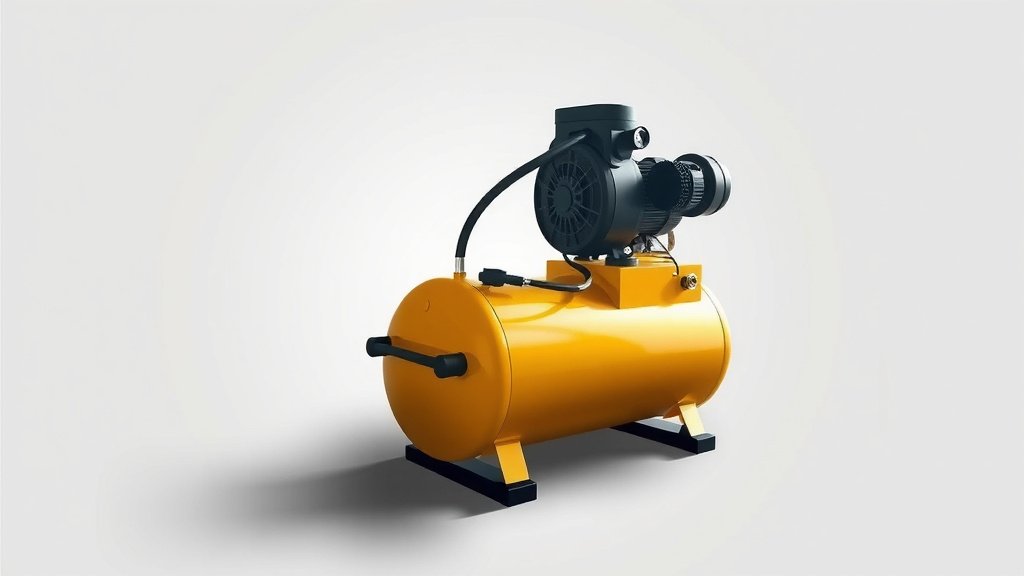
Portable Air Compressor Wattage at a Glance
Here’s a quick way to compare typical power needs. Remember, these are estimates!
| Compressor Type | Typical Running Watts | Estimated Startup Surge Watts |
|---|---|---|
| Small Tire Inflator | 50 – 150 W | Up to 500 W |
| Pancake/Hotdog (DIY) | 100 – 200 W | 800 – 1500 W |
| Workshop Portable | 200 – 400 W | 1500 – 2500+ W |
Why Startup Surge Matters for Your Power Source
The startup surge is the most critical wattage figure to consider when choosing a generator or portable power station. Many people focus only on the running watts, but that’s a mistake.
If your generator’s surge capacity isn’t high enough, the compressor won’t start. It might trip a breaker or simply refuse to power on. You need a power source that can handle both the initial jolt and the sustained running load. Many generators list both “running watts” and “peak/surge watts” for this exact reason. You want the peak number to be comfortably higher than your compressor’s startup surge.
We found that many experts recommend choosing a generator with a surge capacity that is at least 1.5 to 2 times the compressor’s peak surge wattage. This provides a buffer and ensures reliable operation. For example, if your compressor surges to 2000 watts, a generator with at least 3000-4000 surge watts would be a safe bet.
Maximizing Efficiency and Understanding Your Compressor’s Needs
To make sure you’re not overspending on power or choosing the wrong equipment, here’s a simple checklist:
- Find the Wattage Label: Always check the plate or manual on your specific air compressor.
- Note Running Watts: This is how much power it uses when actively working.
- Identify Startup Surge: This is the momentary, much higher power needed to start.
- Consider Your Project: What tools will you run? How long will the compressor need to work?
- Match Your Power Source: Ensure your generator or power station meets or exceeds the surge requirements.
- Use Appropriate Cords: Heavy-duty extension cords help maintain consistent power delivery.
By understanding these wattage details, you can confidently power your portable air compressor, whether you’re working in the garage, at a job site, or just need to inflate a tire on the go.
Conclusion
You’ve learned that portable air compressors have varying wattage needs, with most running between 100-200 watts but requiring a much higher surge to start. Understanding factors like compressor size, motor power, and your project’s demands helps you pick the right unit and power source. Don’t overlook that startup surge; it’s key to avoiding power issues.
Your next step is to check the wattage label on your compressor. Then, ensure your generator or portable power station can handle that startup surge comfortably, ideally with a 1.5 to 2 times buffer. This preparation means you’ll power your projects without unexpected interruptions. You’ve got this!
Frequently Asked Questions
What’s the biggest difference between running watts and surge watts for an air compressor?
Running watts are the steady amount of power your compressor uses while it’s actively working. Surge watts, also called startup watts, are the much higher, brief burst of power needed to get the motor spinning. Your power source must handle both, with the surge being the more demanding number.
Can I run a portable air compressor on a standard household outlet?
For smaller compressors like tire inflators or DIY pancake models, a standard 120-volt household outlet is usually sufficient. These typically draw under 200 running watts and a manageable surge. Larger workshop models might push the limits of a standard 15-amp circuit, so always check your compressor’s label and your home’s breaker capacity.
How does using an extension cord affect my air compressor’s wattage?
A long or thin extension cord can cause voltage drop, meaning your compressor might not receive the full power it needs. This can lead to inefficient operation or even prevent it from starting. Always use a heavy-duty, appropriately sized extension cord rated for the wattage your compressor requires to maintain consistent power delivery.
Do I need to worry about the duty cycle when calculating wattage needs?
The duty cycle tells you how long the compressor motor can run before needing a break. While it doesn’t directly change the instantaneous wattage draw, it affects your total energy consumption over time. A compressor with a 50% duty cycle will cycle on and off more, meaning the motor is only drawing peak wattage during its run times.
Can a portable power station handle an air compressor’s startup surge?
Many portable power stations can handle smaller air compressors, but you must check the unit’s surge (or peak) wattage rating. For example, a power station with a 2000-watt surge capacity could likely handle a compressor that surges to 1000-1500 watts. Always compare the power station’s surge rating to your compressor’s peak requirement.