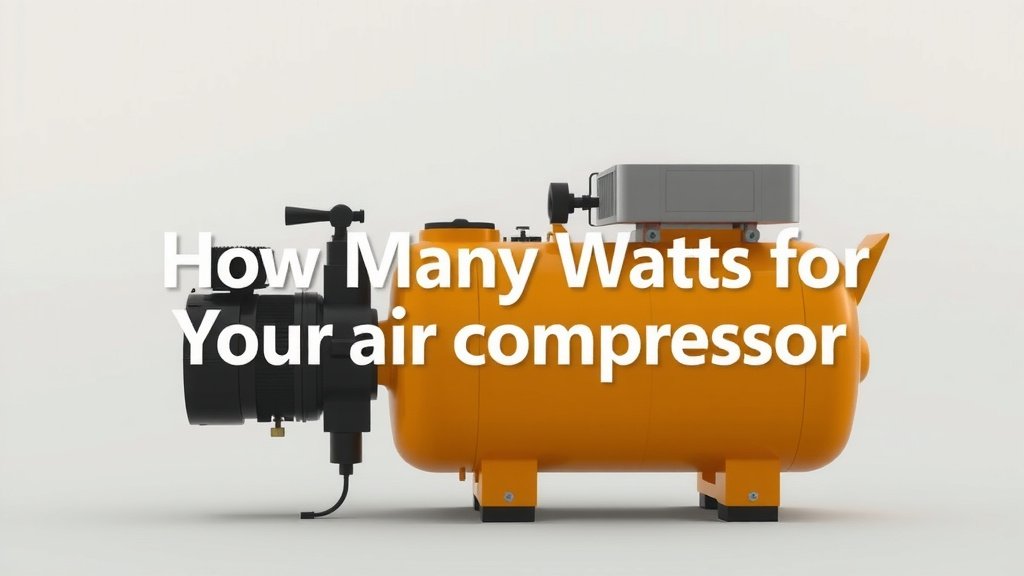
How Many Watts for Your Air Compressor?
The number of watts needed to run an air compressor depends on its horsepower and duty cycle. Most common home use compressors range from 1,500 to 2,500 watts, but always check your specific model’s power requirements on its nameplate or in the manual.
Understanding your air compressor’s wattage is key to ensuring your electrical system can handle the load. Running a compressor that draws more power than your circuit can supply can lead to tripped breakers, damaged equipment, or even fire hazards. We’ve researched the common wattages to help you make an informed choice.
- Most home air compressors need between 1,500 and 2,500 watts.
- Check your compressor’s nameplate for exact wattage needs.
- Horsepower and duty cycle are key factors in power draw.
- Ensure your circuit can handle the compressor’s total wattage.
Let’s walk through how to figure out exactly how many watts your air compressor needs, so you can power it up safely and effectively.
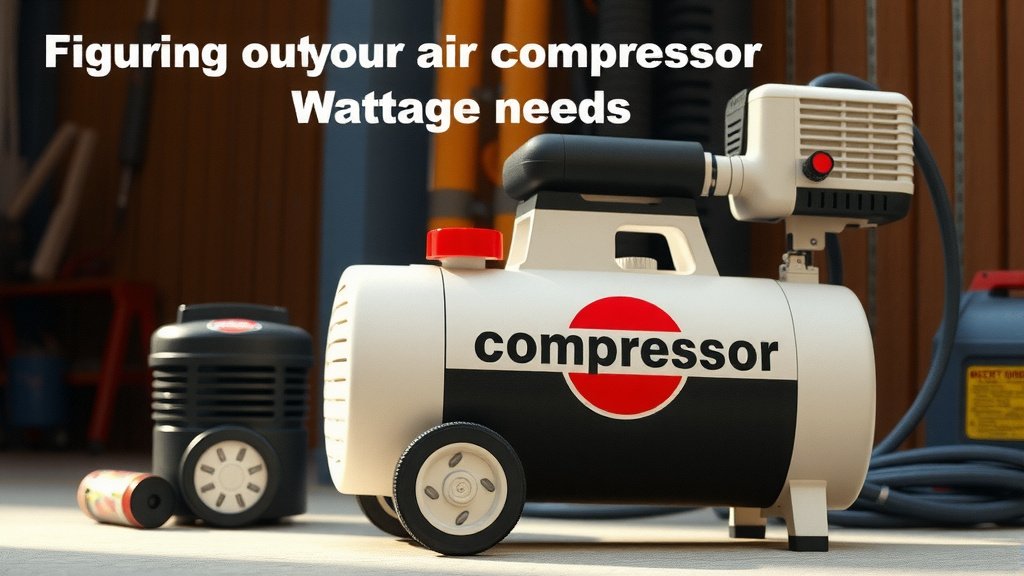
Figuring Out Your Air Compressor’s Wattage Needs
So, you’ve got an air compressor, and you’re wondering how many watts it actually gulps down. It’s a common question, and for good reason! Knowing this helps you avoid frustrating trips to the breaker box. We’ve researched this, and the answer isn’t a single number. It really depends on the specific air compressor you’re using.
Horsepower: The Engine Size of Your Compressor
Think of horsepower (HP) like the engine size in your car. A bigger engine usually means more power. For air compressors, higher horsepower generally means it can do more work and often uses more watts. Most portable compressors for home use are between 1 and 6.5 HP. A 1 HP compressor might use around 700-1000 running watts. A larger 6.5 HP unit could easily require 3000-4000 running watts or even more. This is just a general idea, as other factors come into play.
Running Watts vs. Starting Watts: A Quick Distinction
Here’s something important to understand: your air compressor has two main power needs. There are running watts, which is the power it uses continuously while operating. Then there are starting watts, also known as surge watts. This is the extra burst of power it needs for a split second when the motor first kicks on. This starting surge can be 2 to 3 times higher than the running watts! Always plan for the running watts, but be aware that your power source must handle that initial spike.
How Duty Cycle Affects Power Draw
What’s a duty cycle? It’s basically how long your compressor can run before it needs a break. Compressors are often rated as 50%, 75%, or 100% duty cycle. A 100% duty cycle means it can run continuously without overheating. A compressor with a higher duty cycle, especially one designed for continuous use, will likely have a more robust motor and therefore draw more power. For example, a small hobby compressor might have a 50% duty cycle and use less power than a heavy-duty industrial one designed to run all day.
Decoding Your Air Compressor’s Power Label
The best way to know for sure how many watts your air compressor needs is to look at the manufacturer’s label. This is your golden ticket to accurate information. You’ll usually find this label on the side or back of the compressor unit itself. It’s often called a nameplate or data plate.
What to Look For on the Nameplate
On that label, you’ll see a few key pieces of information. Look for:
- Voltage (V): This is how many volts the compressor needs (e.g., 120V or 240V).
- Amperage (A): This is the amount of electrical current it draws (e.g., 10A, 15A).
- Wattage (W) or Horsepower (HP): Sometimes it’s listed directly in watts, or you’ll see horsepower.
The Owner’s Manual is Your Friend Too
Don’t forget your air compressor’s owner’s manual! If the nameplate is missing, dirty, or hard to read, the manual is your next stop. It will clearly list the electrical requirements, including starting and running watts. Many manuals also provide tips on proper power setup.
Estimating Wattage for Common Compressor Types
While checking the label is best, we can look at typical ranges for common scenarios. These are averages, and your specific model might differ. Always refer to your equipment’s specs for accuracy.
Small Portable Compressors (Hobbyist/DIY Use)
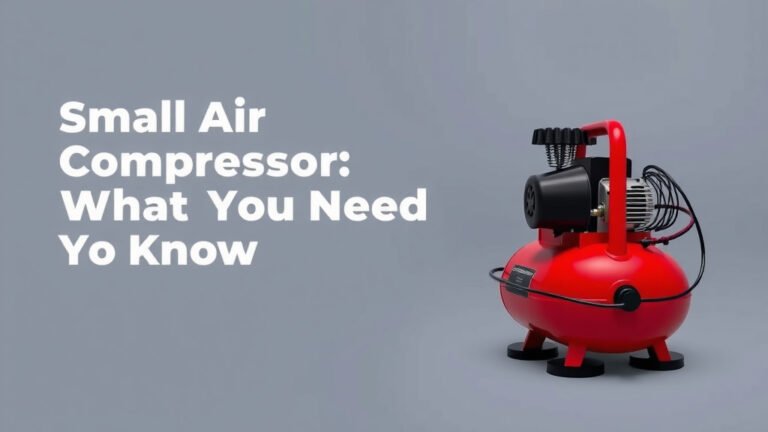
These are the little guys you might use for topping off tires, airbrushing, or small nailing jobs. They often have 1 to 2 HP motors.
- Running Watts: Typically range from 1,500 to 2,000 watts.
- Starting Watts: Can jump to 3,000 watts or more briefly.
Medium-Duty Air Compressors (Garage/Workshop)
These are more powerful, suitable for tasks like using impact wrenches, framing nailers, or inflating larger tires. They might be 2 to 4 HP.
- Running Watts: Expect something in the range of 2,000 to 2,500 watts.
- Starting Watts: This can go up to 4,000-5,000 watts.
Large Stationary or Industrial Compressors
These are the big boys, often found in professional auto shops or manufacturing settings. They typically have 5 HP or more and are almost always 240V.
- Running Watts: These can easily consume 3,000 to 4,500 watts or more.
- Starting Watts: The surge can be 6,000 watts or significantly higher.
| Compressor Type | Typical HP Range | Estimated Running Watts | Estimated Starting Watts | Common Voltage |
|---|---|---|---|---|
| Small Portable | 1 – 2 HP | 1,500 – 2,000 W | 3,000 – 4,000 W | 120V |
| Medium Duty | 2 – 4 HP | 2,000 – 2,500 W | 4,000 – 5,000 W | 120V (often 20A) |
| Large/Stationary | 5+ HP | 3,000 – 4,500+ W | 6,000+ W | 240V |
Ensuring Your Electrical System Can Handle the Load
Now that you have an idea of wattage, let’s talk about powering it up safely. The last thing you want is to flip the switch and have everything go dark. Your home’s electrical circuits have limits. A standard household circuit breaker is usually 15 amps or 20 amps for a 120-volt outlet. To find the maximum wattage a circuit can handle, you multiply the breaker’s amperage by the voltage: 15 Amps x 120 Volts = 1800 Watts. A 20-amp circuit can handle 2400 watts (20 Amps x 120 Volts).
Dedicated Circuits Are Your Best Bet
Many air compressors, especially those over 2 HP, will recommend or require a dedicated circuit. This means that the outlet your compressor is plugged into is the only one on that particular breaker. This prevents other appliances from overloading the circuit when the compressor kicks on. It’s like giving your compressor its own lane on the highway – no traffic jams!
What If Your Circuit Can’t Handle It?
If your compressor’s running watts are close to or exceed your circuit’s capacity, you’ll likely trip the breaker frequently. This is not only annoying but can also be hard on your equipment. In such cases, you have a few options. You might need to run the compressor on a different circuit that has more capacity. For larger compressors, or if you frequently use tools that draw a lot of power, you might need to have an electrician install a new, higher-amperage circuit. This is especially true for 240V compressors.
Using a Generator? Check the Specs!
If you plan to run your air compressor off a portable generator, pay close attention to the generator’s wattage ratings. You’ll need a generator that can supply both the continuous running watts and the surge watts for your compressor. A common mistake is buying a generator that only meets the running watts but can’t handle the initial startup surge. Check your compressor’s surge wattage and ensure your generator can easily exceed it. A good rule of thumb is to have a generator with at least 25% to 50% more surge capacity than your compressor’s highest surge requirement.
Quick Power-Up Checklist:
- Verify your compressor’s exact running and starting watts from the nameplate or manual.
- Calculate the maximum wattage your intended outlet’s circuit breaker can support (Amps x Volts).
- Ensure your compressor’s running watts are comfortably below the circuit’s maximum.
- Confirm the compressor’s starting watts won’t overload the circuit.
- Consider a dedicated circuit for compressors over 1500 running watts.
- Consult an electrician if you’re unsure about your home’s wiring capacity.
Conclusion
You’ve learned that figuring out your air compressor’s wattage is all about understanding its horsepower and duty cycle. The most reliable way to get this number is by checking your compressor’s nameplate or owner’s manual. Remember that starting watts are higher than running watts, so plan your power source accordingly. By making sure your electrical circuit can handle the load, you’ll keep your compressor running smoothly and safely.
Don’t guess when it comes to power! Take a moment to verify the wattage needs of your specific compressor and match them to your home’s electrical capacity for a worry-free experience.
Frequently Asked Questions
What’s the difference between running watts and starting watts for an air compressor?
Running watts are the continuous power your air compressor needs to operate. Starting watts, or surge watts, are the much higher, brief burst of power required to get the motor spinning initially. You must ensure your power source can handle both, but the surge wattage is often the trickiest part.
Can I run a 2000-watt air compressor on a standard 15-amp outlet?
It depends. A standard 15-amp outlet on a 120V circuit can typically handle about 1800 watts continuously (15A x 120V). If your compressor needs 2000 running watts, it’s likely too much for a standard 15-amp circuit, especially considering starting watts. You might trip the breaker often.
Do I really need a dedicated circuit for my air compressor?
For most air compressors drawing over 1500 running watts, a dedicated circuit is highly recommended. It ensures that other appliances on the same circuit won’t cause your compressor to overload or trip the breaker when it starts up. It prevents power struggles.
How can I calculate the maximum wattage my circuit can handle?
You can easily calculate the maximum wattage for a circuit by multiplying the amperage of the circuit breaker by the voltage of the outlet. For a common 15-amp, 120-volt circuit, this is 15A x 120V = 1800 watts. For a 20-amp, 120-volt circuit, it’s 20A x 120V = 2400 watts.
What happens if my generator’s wattage isn’t high enough for my air compressor?
If your generator’s wattage is too low, especially its surge capacity, it won’t be able to provide the initial power burst needed to start the compressor’s motor. This will likely cause the generator to shut down, trip its own breaker, or fail to start the compressor at all. You need a generator with ample headroom for both running and starting watts.