How Much CFM Do You Need for Your Air Compressor
Figuring out how much CFM you need for your air compressor depends on the tools you’ll use. For basic tasks, 4-6 CFM might be enough, but for heavy-duty jobs, you’ll want 10+ CFM. It’s all about matching the compressor’s output to your tools’ demands.
The air compressor’s CFM rating, or cubic feet per minute, is its most important spec. It tells you how much air the compressor can deliver at a specific pressure. Choosing the wrong CFM can lead to tools not working properly or the compressor running constantly. We’ll help you find that sweet spot for your specific needs.
- CFM matters most for your tools.
- Check your tool’s air requirements.
- Bigger CFM is usually better for demanding jobs.
- Don’t forget tank size and PSI.
Let’s walk through exactly how to figure out the right CFM for your air compressor so you can get the job done right.
Choosing the Right CFM for Your Air Compressor Needs
So, you’re wondering, “How much CFM do I really need from my air compressor?” That’s a smart question to ask! CFM, or cubic feet per minute, is the real workhorse number for any air compressor. It tells you how much air the compressor can pump out.
Think of CFM like the water pressure from your garden hose. Too little, and your sprinkler won’t reach the end of the lawn. Too much, and you might be wasting water. The same goes for air tools. We’ll help you find that perfect CFM match.
Understanding CFM and Its Importance
CFM measures the volume of air your compressor can deliver per minute. It’s usually measured at a specific pressure, often 90 PSI (pounds per square inch). Why is this so important? Because your air tools have specific air requirements to function correctly. For more on airflow, our guide to 1/4 vs 3/8 air compressor hose explains CFM ratings.
If your compressor’s CFM is too low for a tool, the tool might sputter, lose power, or not work at all. This can be incredibly frustrating, especially when you’re in the middle of a project. You might also find the compressor running non-stop, trying to keep up, which isn’t good for its lifespan.
How to Determine Your Tool’s CFM Requirements
The absolute best way to figure out your CFM needs is to check your air tools. Almost every air-powered tool will have a label or a section in its manual detailing its air consumption. This is usually listed in CFM or SC FM (standard cubic feet per minute).
Look for a number like “5 CFM @ 90 PSI.” This means the tool needs 5 cubic feet of air per minute to operate at its best pressure of 90 PSI. Don’t guess on this part; it’s the most critical step.
Calculating Total CFM Needs
Here’s where we start to add things up. If you plan to use multiple air tools at the same time, you’ll need to combine their CFM requirements. For example, if you have a sander that needs 8 CFM and a grinder that needs 6 CFM, you’ll need a compressor capable of at least 14 CFM.
However, it’s wise to add a buffer. Many experts recommend adding an extra 30% to 50% to your total CFM calculation. This accounts for any air leaks in your hoses or fittings and ensures the compressor isn’t always running at its absolute limit.
So, using our example: (8 CFM + 6 CFM) * 1.5 (for a 50% buffer) = 21 CFM. This gives your compressor some breathing room.
CFM Needs Based on Common Air Tools
Different tools have very different appetites for air. Let’s break down some common ones:
Light-Duty Tools (DIYer and Home Use)
These are typically used for occasional tasks around the house. Think inflating tires, running a brad nailer for trim work, or using an air duster.
- Brad Nailers/Staplers: Often require around 0.5 – 2 CFM.
- Impact Wrenches (light duty): Might need 2 – 5 CFM.
- Tire Inflators: Usually under 1 CFM.
- Air Dusters/Blow Guns: Can range from 2 – 4 CFM.
For users who primarily engage in these lighter tasks, a compressor in the 4 to 6 CFM range is often sufficient. You might even get away with less if you only use one low-demand tool at a time.
Medium-Duty Tools (Serious DIYer and Small Shop)
If you’re into woodworking, automotive repair, or more involved DIY projects, you’ll likely step up to these tools. These tools demand more air to perform effectively.
- HVLP Paint Sprayers: Can require 5 – 10 CFM, sometimes more for professional finishes.
- Die Grinders: Typically need 4 – 7 CFM.
- Orbital Sanders: Often in the 5 – 8 CFM range.
- Chisels/Blow Guns: Can demand 3 – 6 CFM.
For this category, aim for a compressor providing 7 to 10 CFM. This ensures you can handle most sanders, grinders, and sprayers without the compressor struggling.
Heavy-Duty Tools (Professional and Industrial Use)
Professionals in auto shops, construction sites, or fabrication facilities rely on tools that are air hungry. These tools are built for continuous, demanding work.
- Sandblasters: These are major air consumers, often needing 10 – 20 CFM or much higher.
- Large Impact Wrenches: Professional-grade wrenches can take 8 – 12 CFM.
- Air Hammers: These can require 4 – 8 CFM.
- Industrial Paint Sprayers: Often exceed 10 CFM.
If your work involves these types of tools, you’ll be looking at compressors with 10 to 20+ CFM. For very demanding applications like sandblasting, you might even need dual-stage compressors that can output 25 CFM or more.
Beyond CFM: Tank Size and PSI Matter Too!
While CFM is king for tool performance, don’t forget about the other important specs: tank size and maximum PSI (pounds per square inch).
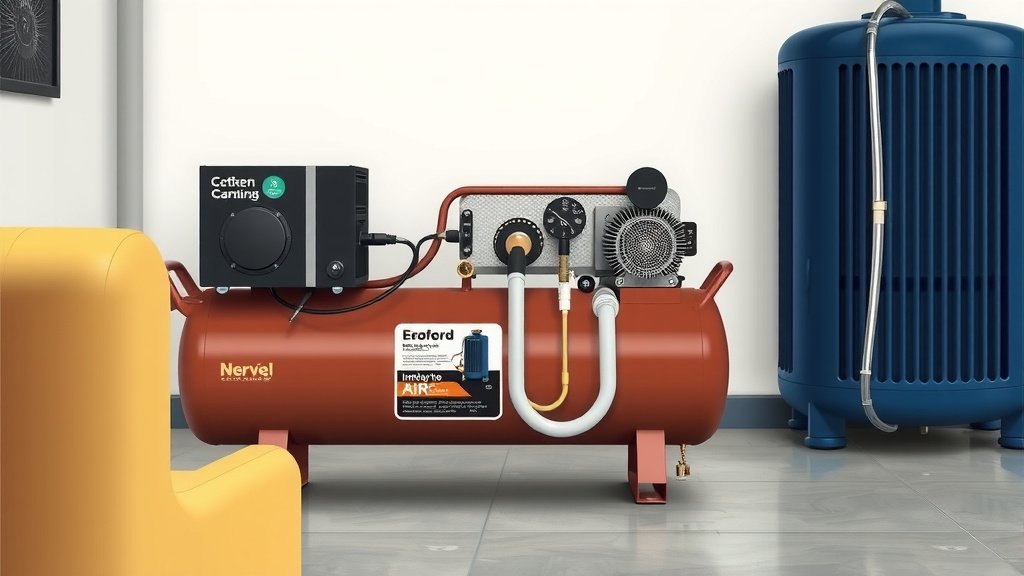
Tank Size: This is the reservoir that stores compressed air. A larger tank means the compressor motor will cycle on and off less frequently. This is great for tools that have short bursts of high air demand, like nail guns. It gives the motor a break and provides a consistent air supply. For heavy-duty use, a 60-gallon tank or larger is common.
PSI: This is the pressure at which the air is delivered. Most air tools are designed to work at around 90 PSI. Your compressor needs to be able to reach and maintain this pressure. Ensure the maximum PSI rating of the compressor is comfortably above your tool’s requirement.
What If Your CFM Needs Are Borderline?
It’s often better to oversize your CFM slightly than to undersize it. If you’re on the fence between two compressor sizes, go for the one with higher CFM. Why? Because a compressor with more CFM can always be throttled down, but you can’t magically create more air if your tool demands it and your compressor can’t keep up.
Buying a compressor that’s too small can lead to early wear and tear on the motor. It will constantly be running to try and meet the demand. This is like running a marathon without proper training – not sustainable!
Quick Checklist for Your CFM Decision
To help you summarize and make your choice, here’s a quick checklist:
- List all the air tools you plan to use.
- Find the CFM rating for each tool (usually at 90 PSI).
- Add up the CFM ratings of the tools you might use simultaneously.
- Add a 30-50% buffer to this total for leaks and efficiency.
- Compare your calculated CFM to compressor ratings.
- Consider your tank size and PSI needs as well.
| Tool Usage Type | Typical CFM Needed (at 90 PSI) | Recommended Compressor CFM |
|---|---|---|
| Light Duty (Inflating, small nailers) | 1-3 CFM | 4-6 CFM |
| Medium Duty (Sanding, painting, moderate use) | 4-8 CFM | 7-10 CFM |
| Heavy Duty (Auto repair, sandblasting, continuous use) | 9+ CFM | 10-20+ CFM |
Conclusion
You’ve learned that CFM is the powerhouse spec for any air compressor. Matching your tools’ air needs with the right CFM rating is key to getting work done efficiently and without frustration. Remember to always check your tool’s manual and add a buffer for optimal performance. Don’t overlook tank size and PSI either. By following these steps, you’ll select a compressor that’s up to the task, saving you time and preventing wear and tear. Now you’re ready to confidently choose the perfect air compressor for your projects!
Frequently Asked Questions
What happens if my air compressor’s CFM is too low?
If your compressor’s CFM is too low, your air tools might not perform as expected. They could lose power, run intermittently, or not work at all. Your compressor motor will also likely run continuously, leading to premature wear and potential overheating.
Can I use a higher CFM compressor than my tools require?
Yes, you absolutely can. Using a compressor with a higher CFM than your tools require is generally a good idea. You can often regulate the output pressure with your tool’s regulator, and it provides a safety margin, ensuring your tools always have enough air.
Do I need to consider CFM for a small air tank compressor?
Yes, CFM is still important for small air tank compressors, but its impact might be different. A smaller tank will deplete faster, meaning the compressor motor will cycle on and off more frequently. For tools that use air in short bursts, a larger tank can help smooth out demand, but the compressor’s CFM still dictates how quickly that tank can be refilled.
How does SC FM differ from CFM?
SC FM (Standard Cubic Feet per Minute) measures airflow under standard atmospheric conditions (temperature and pressure). CFM is measured at actual operating conditions, which can vary. For most consumer tools, CFM ratings are used, and they are usually specified at 90 PSI, which is what you should focus on for tool compatibility.
Do I need to add a buffer to my CFM calculation?
Yes, adding a buffer to your CFM calculation is highly recommended. A buffer of 30% to 50% is common. This accounts for potential air leaks in hoses and fittings, wear on the compressor over time, and ensures the compressor isn’t constantly running at its absolute maximum capacity, which extends its lifespan.