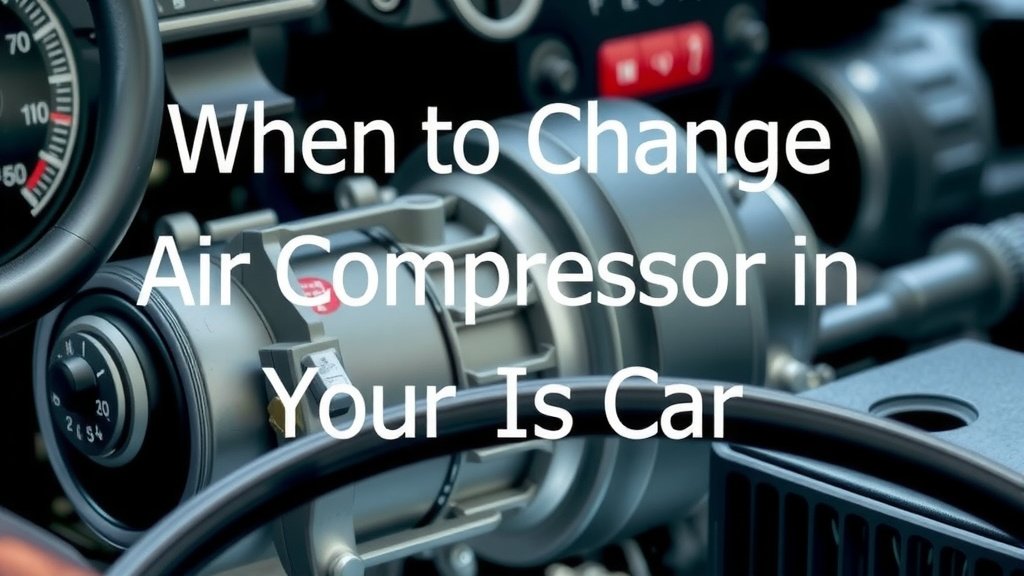
When to Change Air Compressor in Your Car
You might be wondering how often you really need to change the air filter in your car. The general rule is to change your car air filter every 12,000 to 15,000 miles, or about once a year. However, this can change depending on your driving habits and environment.
A dirty air filter can really impact your car’s performance. It can lead to reduced fuel efficiency and even affect your engine’s ability to breathe properly. We found that in dusty conditions, it might need changing even sooner than the standard recommendation.
- Change car air filter every 12,000-15,000 miles.
- Consider changing it annually.
- More frequent changes are needed in dusty areas.
- A clean filter improves fuel economy.
- A dirty filter can harm engine performance.
Let’s get into the specifics of when and why you should be swapping out that air filter for your car.
When Should You Replace Your Car’s Air Filter?
Knowing when to change your car’s air filter is key to keeping your engine running smoothly. You’re probably wondering about the ideal schedule. We found that most experts agree on a general timeframe, but your unique driving conditions can really change things.
The Standard Air Filter Replacement Schedule
For most drivers, a good rule of thumb is to change your air filter every 12,000 to 15,000 miles. Think of it like giving your car a breath of fresh air. This recommendation often lines up with your car’s regular oil change service. Many manufacturers suggest this interval as a solid starting point.
Another common benchmark is changing it about once a year. Even if you don’t hit those mileage numbers, the filter can still become clogged with dust and debris over time. So, if it’s been a year and you haven’t driven much, it might still be time for a swap. It’s better to be safe than sorry when it comes to your engine.
Factors That Affect Your Air Filter’s Lifespan
While those numbers are helpful, your actual driving environment plays a huge role. Are you driving on pristine highways or navigating dusty backroads? The answer makes a big difference. We found that certain conditions can wear out your air filter much faster.
Driving in Dusty or Gritty Conditions
If you frequently drive on unpaved roads, in construction zones, or through areas with a lot of dust and dirt, your air filter works overtime. These particles are much coarser than typical road dust. They can clog the filter’s pores rapidly. In these situations, you might need to check and replace your filter much sooner than the standard 12,000-mile mark. Some research suggests checking it as often as every 5,000 miles.
City Driving vs. Highway Driving
City driving often means more idling and stop-and-go traffic. This can lead to more airborne pollutants entering your filter. Highway driving, while potentially faster, can also expose your filter to different types of road dust and debris. We found that a mix of both can mean the 12,000-15,000 mile range is usually pretty accurate.
Climate and Seasonal Changes
Extreme weather can also impact your air filter. During pollen season, high concentrations of pollen can quickly build up. In areas with heavy sandstorms or frequent dust storms, the filter will become saturated much faster. Consider the climate where you live and drive most often.
Why a Clean Air Filter is So Important
You might be thinking, “Does it really matter if my air filter is a little dirty?” The answer is a resounding yes! A clean air filter is essential for your engine’s health and your car’s overall performance. It’s like the lungs of your car; it needs to breathe freely.
Impact on Fuel Efficiency
One of the most noticeable effects of a clogged air filter is on your wallet. When the filter is dirty, your engine has to work harder to draw in air. This struggle means it burns more fuel to achieve the same power output. We found that replacing a dirty air filter can improve your fuel economy by as much as 10%. That adds up over time!
Engine Performance and Power
Beyond saving on gas, a dirty filter can actually make your car feel sluggish. Insufficient airflow can lead to poor acceleration and a general lack of power. Think of trying to run a race while holding your breath – not very effective, right? Your engine feels the same way. Experts say proper airflow is key to optimal engine combustion.
Preventing Engine Damage
The primary job of the air filter is to stop dirt, bugs, and other debris from entering your engine. If the filter is damaged or completely saturated, these contaminants can bypass it. Small particles can cause significant wear and tear on delicate engine components over time. This could lead to more serious and expensive repairs down the line. Many mechanics stress this preventive aspect of air filter maintenance.
How to Check If Your Air Filter Needs Changing
You don’t need to be a master mechanic to check your air filter. It’s a pretty straightforward process. Many vehicle owner’s manuals will guide you on how to locate and inspect it. It’s usually found in a black plastic box under the hood.
Visual Inspection Steps
The easiest way to tell if your filter needs changing is by looking at it. You’ll typically need to unclip or unscrew the air filter housing. Once you have the filter out, hold it up to a light source. If you can’t see light passing through it easily, or if it looks visibly dirty, dark, and full of debris, it’s likely time for a replacement. Some filters even have a color indicator that fades with use.
Signs Your Car is Telling You Something
Pay attention to how your car is performing. If you notice a significant drop in fuel efficiency, or if your engine sounds rough or sounds like it’s struggling, the air filter could be the culprit. These are often the first audible and noticeable signs. Don’t ignore these symptoms!
Making the Air Filter Replacement Easy
Replacing an air filter is one of the simplest car maintenance tasks you can do yourself. It requires minimal tools, usually just your hands or a screwdriver. You can find replacement filters at most auto parts stores or online retailers.
We found that purchasing the correct filter for your specific car model is important. Check your owner’s manual or the auto parts store’s database for the exact part number. Once you have the new filter, simply remove the old one and insert the new one in the same orientation. It’s a quick job that can make a big difference!
Consider Your Driving Habits for Best Results
To summarize, your ideal replacement schedule depends heavily on where and how you drive. The 12,000-15,000 mile or annual mark is a great starting point. However, if you’re in dusty areas, check it more often. If you’re on clean, paved roads most of the time, you might be able to stretch it a bit further. Listening to your car and doing a quick visual check are your best bets for keeping it running efficiently.
Checklist for Air Filter Maintenance:
- Note your car’s recommended mileage interval.
- Consider your typical driving environment.
- Visually inspect the filter every 6 months.
- Look for signs of excessive dirt or debris.
- Listen for changes in engine performance.
- Replace annually even if it looks okay.

Conclusion
You’ve learned that changing your car’s air filter is more than just a routine task; it’s vital for your engine’s health and your wallet. While the 12,000-15,000 mile or annual mark is a solid guideline, your environment plays a starring role. Dusty roads, city traffic, and seasonal changes can all mean you need to swap that filter sooner. By performing simple visual checks and listening to your car, you can ensure it breathes easy and performs its best. Don’t wait for symptoms; make checking your air filter a regular part of your car care.
Frequently Asked Questions
How often should I check my car’s air filter?
It’s a good idea to visually check your air filter at least twice a year, or every 6 months. This quick inspection can help you spot excessive dirt and debris buildup before it impacts your car’s performance. Early detection is key to preventing potential issues.
Can a dirty air filter really hurt my engine?
Yes, a severely clogged air filter can restrict airflow, making your engine work harder. This can lead to reduced fuel efficiency and, in the long run, could potentially cause wear and tear on engine components if contaminants get through. Your engine needs clean air to function optimally.
What happens if I never change my car’s air filter?
If you never change your air filter, it will eventually become completely saturated with dirt and debris. This means your engine won’t get enough air, leading to poor performance, decreased gas mileage, and increased emissions. In extreme cases, it could lead to more serious engine problems.
Does the type of air filter I buy matter?
Yes, it’s important to buy the correct air filter for your specific car model. Using the wrong filter might not fit properly, or it could be less effective at trapping dirt. Always consult your owner’s manual or an auto parts store database to ensure you get the right fit.
How can I tell if my air filter is dirty just by looking?
Hold the old filter up to a light source. If you can’t see light passing through it easily, or if it looks dark, matted, and filled with visible dust or debris, it’s definitely time for a change. A clean filter should allow light to pass through without much obstruction.