Air Compressor: How to Air Up Your Bike Tires
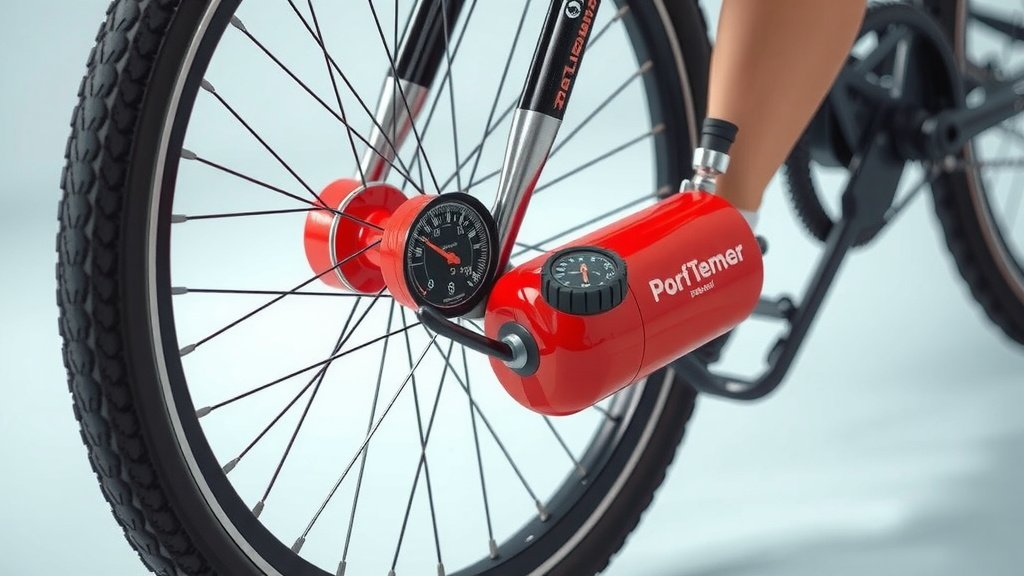
Yes, you can easily air up a bike tire with an air compressor. It’s a quick and effective way to get your tires to the perfect pressure. Just make sure you have the right adapter for your valve stem.
Using an air compressor can save you a lot of time compared to a manual pump. It’s especially helpful for getting your tires up to their recommended PSI quickly. We found this method is a lifesaver on those days you’re in a hurry.
- Connect the compressor hose to your bike valve.
- Set the compressor to the correct pressure.
- Inflate the tire in short bursts.
- Check the pressure regularly.
- Don’t over-inflate your tire!
Let’s walk through exactly how to use an air compressor to get your bike tires perfectly inflated.
Inflating Your Bike Tires with an Air Compressor: A Step-by-Step Guide
You’ve probably got an air compressor kicking around your garage for your car tires or maybe some DIY projects. Good news! It’s also a fantastic tool for giving your bicycle tires a quick and easy boost of air. Forget the arm workout from a manual pump; your compressor can do the heavy lifting. We found this method to be a real time-saver, especially when you’re just trying to get your bike ready for a ride.
What You’ll Need to Air Up Your Bike Tire
Before you connect anything, let’s make sure you have the right gear. The biggest hurdle can be the valve stem connection, but it’s usually a simple fix. We want to make sure you don’t accidentally damage anything, so gathering your tools first is key.
The Right Air Compressor and Hose
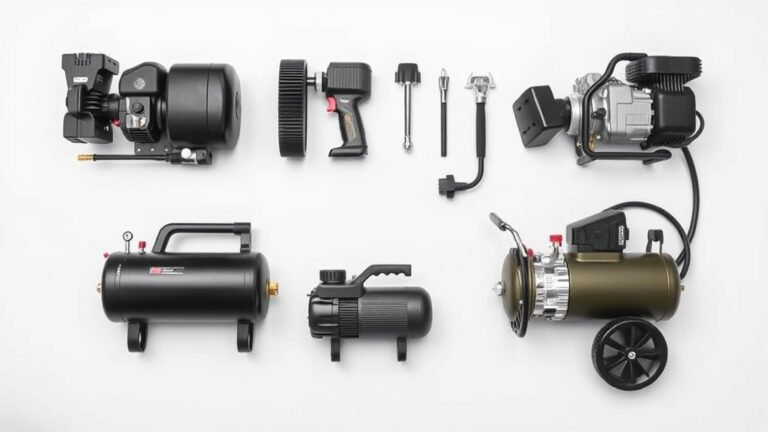
Any standard air compressor will work, whether it’s a portable pancake style or a larger shop compressor. The crucial part is the air hose and its fitting. Most air compressor hoses have a standard chuck at the end. You might need to check if this chuck will directly fit onto your bike tire valve.
Valve Stem Adapters: Your Best Friend
This is where things can get a little tricky, but it’s usually straightforward to solve. Bike tires use one of two main valve types: Schrader (like on car tires) or Presta (thinner with a small nut on top). Your air compressor chuck might fit a Schrader valve perfectly. If you have Presta valves, you’ll likely need a Presta-to-Schrader adapter. These are small, inexpensive, and easily found at bike shops or online. We found them to be essential for Presta users.
Sometimes, even with a Schrader valve, a universal tire chuck on your compressor hose might not create a perfect seal. In such cases, a Schrader valve adapter can also help create a tighter connection. Always look for adapters that screw onto the valve stem threads securely.
Tire Pressure Gauge
While many air compressors have built-in gauges, they aren’t always the most accurate for delicate bike tire pressures. Bike tires require much lower pressures than car tires, often in the 30-80 PSI range, sometimes even lower for mountain bikes. A separate, reliable bike tire pressure gauge is highly recommended. We found that trusting your compressor’s gauge alone can lead to over-inflation.
Getting Your Bike Ready for Inflation
Once you have your compressor and any necessary adapters, it’s time to prepare your bike. It’s a good idea to check the recommended tire pressure before you start. You’ll usually find this information printed on the sidewall of your bike tire.
Locate Your Tire’s Recommended Pressure
Look closely at the side of your bike tire. You’ll see numbers indicating the minimum and maximum pressure, often labeled “MIN” and “MAX” or simply a range like “40-65 PSI.” This is your target zone. We found that sticking within this range ensures a safe and comfortable ride.
Identify Your Valve Type
As mentioned, Schrader valves are wider and look like car tire valves. Presta valves are thinner and have a small nut at the tip. If you have Presta valves, remember to unscrew that small nut before attempting to inflate. It’s a common mistake to forget this step!
The Inflation Process: Step-by-Step
Now for the main event! This is where your air compressor really shines. We’ll go through each step to ensure a smooth inflation process.
Step 1: Connect the Air Compressor Hose
Attach the appropriate adapter (if needed) to your bike’s valve stem. Make sure it’s screwed on snugly. Then, firmly press the chuck of your air compressor hose onto the adapter or directly onto the valve stem. You should hear a slight hiss of air escaping initially, which is normal. Ensure a good seal so air doesn’t leak out.
Step 2: Set Your Compressor to the Right Pressure
This is a critical step. Do NOT just blast air into your tire. If your compressor has an adjustable regulator, set it to a pressure slightly *lower* than your target PSI. For instance, if your tire’s recommended range is 50-70 PSI, you might set your compressor’s regulator to around 40 PSI. This gives you a buffer. We found that starting lower and adding more is much safer than trying to let air out of an over-inflated tire.
Step 3: Inflate in Short Bursts
Hold the chuck firmly in place and begin inflating. It’s best to do this in short bursts. Imagine giving your tire a few quick puffs of air. This allows you to monitor the pressure closely and prevents sudden over-inflation. Many compressors have a trigger for on-demand air, which is perfect for this.
Step 4: Check Pressure Frequently
After each short burst, release the chuck and check your tire pressure with your separate bike tire gauge. Compare this reading to the recommended range on your tire sidewall. Repeat the short bursts and checking process until you reach your desired pressure. This iterative approach is why we recommend a separate gauge – it provides more control.
Step 5: Disconnect Carefully
Once you hit the right pressure, carefully remove the air compressor chuck from the valve stem. Again, you might hear a small hiss as air escapes from the hose. If you have Presta valves, remember to screw the small nut back down on top of the valve to seal it.
Quick Checklist for Using an Air Compressor
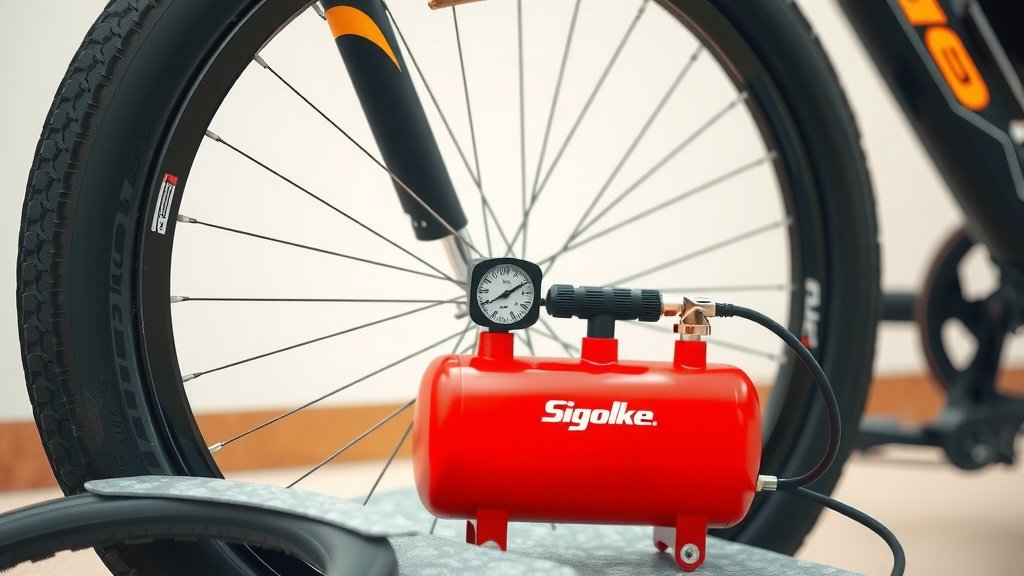
Here’s a quick rundown to keep you on track:
- Gather your air compressor, hose, and any needed valve adapters.
- Check your bike tire’s sidewall for recommended PSI.
- Identify your valve type (Schrader or Presta).
- Connect the compressor chuck securely to the valve.
- Inflate in short bursts, checking pressure often with a separate gauge.
- Stop at your desired PSI and disconnect carefully.
Common Mistakes to Avoid
Even with a simple task like inflating a tire, a few common slip-ups can happen. Being aware of them can save you a lot of hassle.
Over-Inflation Dangers
The most common and potentially dangerous mistake is over-inflating your tire. A tire filled with too much air can burst, which can cause a sudden loss of control, leading to accidents. Many experts say that over-inflated tires also offer a rougher ride and can cause damage to your rims (CDC). Always err on the side of caution and stay within the recommended PSI range. Your bike’s handling will thank you.
Incorrect Valve Adapter Use
Forgetting to screw on a Presta-to-Schrader adapter, or not screwing it on tightly, can lead to air escaping or not entering the tire properly. Double-check that adapters are firmly in place before you start inflating.
Not Checking the Tire Sidewall
Guessing the tire pressure is a recipe for disaster. The number on the sidewall is there for a reason. It’s based on the tire’s construction and intended use. We found that riders who consult this information consistently have a better experience.
Conclusion
You’ve learned that using an air compressor for your bike tires is a simple and efficient method. By gathering the right adapter, checking your tire’s recommended pressure, and inflating in short bursts while monitoring your gauge, you can easily achieve optimal tire inflation. This technique saves you time and effort compared to manual pumping. So next time your tires are looking a bit flat, reach for your air compressor and get back on the road with confidence!
Frequently Asked Questions
Can I use my car’s air compressor on my bike tires?
Yes, you can. The main thing to ensure is that the compressor’s chuck or an appropriate adapter fits your bike’s valve stem securely. Always remember to set the compressor regulator to a lower pressure and inflate slowly, using a bike-specific gauge for accuracy.
What happens if I over-inflate my bike tires with an air compressor?
Over-inflating can lead to a rough ride and, more seriously, can cause your tire to blow out, which is dangerous. It can also damage your rims. It’s best to always stay within the PSI range printed on your tire’s sidewall.
How do I know if I need an adapter for my bike tire valve?
You’ll likely need an adapter if your bike has Presta valves, which are thinner than standard Schrader (car tire) valves. Most air compressor chucks are designed for Schrader valves, so a Presta-to-Schrader adapter is usually necessary for Presta users.
Is it better to use an air compressor or a floor pump for my bike?
An air compressor is generally faster and requires less physical effort. A floor pump offers more control for fine-tuning pressure, especially for very specific or low PSI requirements. For most everyday riders, an air compressor is a convenient choice, especially if you use a separate pressure gauge.
How often should I check my bike tire pressure when using an air compressor?
You should check your tire pressure frequently during inflation. After each short burst of air from the compressor, release the chuck and use your separate bike tire gauge to get an accurate reading. Repeat this process until you reach your desired PSI.