How to Calculate Air Compressor CFM: A Simple Guide
Determining your air compressor’s CFM, or cubic feet per minute, is key to choosing the right tools. You need to match your compressor’s CFM output to your tool’s air consumption. This ensures your tools run smoothly and efficiently without straining the compressor. Getting this balance right is vital for performance and tool longevity.
CFM isn’t just a number; it’s how much air your compressor can deliver. Air tools have different CFM requirements based on their power and how they operate. A tool that needs more air than your compressor can provide will often sputter or stop working altogether. Understanding this relationship helps you avoid costly mistakes and frustration. We’ll guide you through finding the right CFM for your needs.
- CFM measures air volume output.
- Match compressor CFM to tool CFM.
- Low CFM causes tool malfunction.
- High CFM can overwork a compressor.
- Proper matching ensures efficiency.
Let’s walk through exactly how to figure out your air compressor’s CFM and what it means for your projects.
Understanding Your Air Compressor’s CFM Output
So, you’ve got an air compressor and you’re wondering about its CFM. This isn’t just a technical spec; it’s the heartbeat of your compressed air system. CFM stands for Cubic Feet per Minute. It tells you how much air your compressor can deliver. Think of it like the water pressure from your faucet. Too little, and your shower is sad. Too much, and you might have a mess. The same goes for air compressors and your tools.
Choosing the right CFM means your tools will perform as they should. It also means your compressor won’t be working overtime. We want both you and your equipment to be happy campers. Let’s break down how to figure out what your compressor is putting out.
Where to Find Your Compressor’s CFM Rating
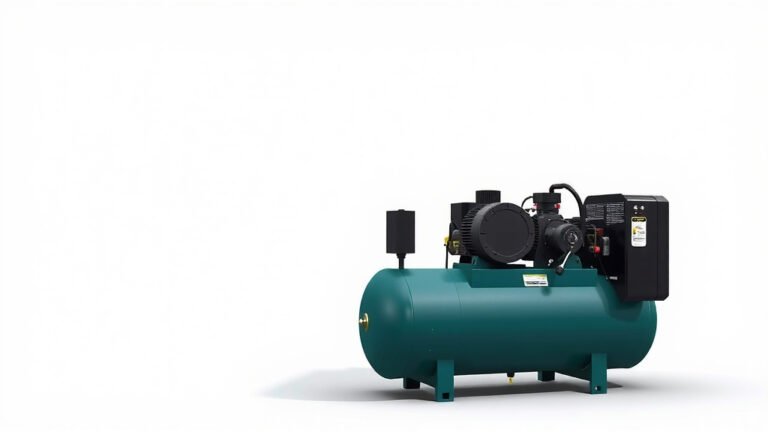
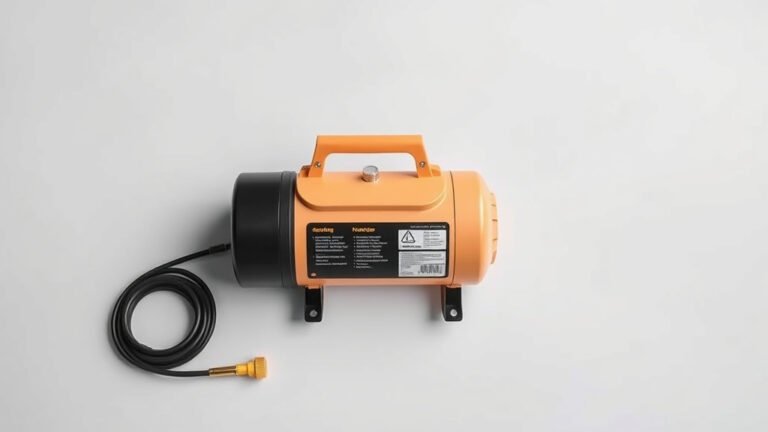
The easiest place to start is your compressor’s manufacturer’s plate. This is usually a metal tag attached directly to the unit. It’s like a nutrition label for your compressor. You’ll find all sorts of information there, including the horsepower, tank size, and, importantly, the CFM rating.
Sometimes, this plate can be a bit worn or hard to read. Don’t worry, there are other ways. The owner’s manual that came with your compressor is another great resource. If you’ve misplaced it, a quick search on the manufacturer’s website for your specific model should bring up a digital copy.
What CFM Numbers Really Mean
You’ll often see CFM listed at different pressure levels, typically 90 PSI (pounds per square inch). This is important because air compressors are rated under specific conditions. A compressor might say it delivers 5 CFM at 90 PSI. This means it can supply 5 cubic feet of air every minute when the pressure is maintained at 90 PSI.
Why is this measurement standard? Because most air tools operate best around 90 PSI. So, when you see a CFM rating, always look for the associated pressure. This makes comparing different compressors much more straightforward. It’s like comparing apples to apples, or in this case, air to air!
Calculating Your Air Tool’s CFM Needs
Now that you have an idea of what your compressor offers, it’s time to look at your tools. Every air-powered tool has its own thirst for compressed air. This is usually measured in CFM as well. You’ll typically find this information on the tool itself, its packaging, or in its user manual.
When you’re checking your tools, pay close attention to the CFM requirement. Some tools use a lot of air, while others are quite stingy. You need to know which is which to make a good match. It’s like knowing how much fuel a car needs before you go on a long trip.
Finding the CFM Rating on Your Tools
Most tool manufacturers are pretty good about listing specifications. Look for a label or stamp directly on the tool. For larger tools, this might be on the side or base. For smaller handheld tools, it could be on the body or near the air inlet.
If you can’t find it on the tool itself, grab the instruction manual. These manuals are packed with helpful details. If the manual is lost, the manufacturer’s website is your next best bet. Searching for your tool’s model number should yield the specifications you need.
Understanding Different CFM Ratings
You might notice that some tools list a CFM rating at 40 PSI, while others list it at 90 PSI. It’s crucial to compare apples to apples. For most common applications, the CFM at 90 PSI is the most relevant number. This is because many tools are designed to work optimally at this pressure.
Some tools, like impact wrenches or sanders, are heavy air users. They might have a higher CFM requirement. Others, like air ratchets or small nail guns, use much less air. Knowing these differences will prevent you from buying a tool that your compressor can’t support.
Continuous vs. Intermittent Air Consumption
An important distinction to make is between tools that use air continuously and those that use it intermittently. A paint sprayer, for example, uses air the entire time you’re spraying. An impact wrench, however, uses air in short bursts when you pull the trigger. This difference matters when you’re matching tools to your compressor.
Tools with intermittent use can often get away with a slightly lower CFM compressor. The compressor can “catch up” during the pauses. Continuous users demand a more consistent and often higher CFM output from your compressor. It’s about understanding the rhythm of your tool’s operation.
Calculating Total CFM Requirements for Multiple Tools
If you plan to use multiple air tools at the same time, or if you have a shop with several people working, you need to think about the combined CFM. It’s not always a simple addition game, but it’s a good starting point. You’ll want to add up the CFM requirements of the tools you anticipate using simultaneously.
Many experts suggest adding a buffer of 25-50% to your total CFM calculation. This safety margin ensures your compressor isn’t pushed to its absolute limit. It helps maintain consistent pressure and extends the life of your equipment. Think of it as a little extra breathing room for your compressor.
Matching Your Compressor to Your Tools: The Golden Rule
The absolute golden rule here is simple: Your air compressor’s CFM output should be higher than the CFM requirement of the tool you intend to use. Many sources, including those from engineering associations, suggest that your compressor should ideally provide at least 1.5 times the CFM needed by your most demanding tool (Engineering Tool Handbook).
For example, if your favorite impact wrench needs 5 CFM at 90 PSI, your compressor should ideally deliver at least 7.5 CFM at 90 PSI. Why the extra capacity? It ensures your tool operates at its peak performance and doesn’t cause the compressor’s motor to run constantly. Overworking the compressor can lead to overheating and premature wear.
What Happens When CFM Isn’t Matched?
When your compressor’s CFM is too low for your tool, you’ll notice it right away. Tools might start strong but then lose power. An air sander might slow down, or a nail gun might not drive nails all the way. It’s incredibly frustrating and can ruin your workflow. You might even damage your tools through inconsistent air delivery.
On the flip side, while it’s generally better to have a little extra CFM, having way too much might not be ideal either. A compressor that’s vastly oversized for your needs can cycle on and off too frequently. This can be inefficient. However, this is a less common problem than having a compressor that’s too small.
A Quick CFM Checklist for Success
Ready to put it all together? Here’s a simple checklist:
- Find your compressor’s CFM rating on its plate or in the manual.
- Note the pressure (usually 90 PSI) at which this rating is given.
- Check the CFM requirement for each of your air tools.
- Always ensure your compressor’s CFM is higher than your tool’s needs.
- Consider adding a 25-50% buffer for demanding or multiple tool uses.
- When in doubt, aim for a compressor with a higher CFM rating.
Getting this right means your tools will perform beautifully, and your compressor will thank you for it with a long and productive life. It’s about finding that sweet spot where everything just works.
Conclusion
You’ve now got a clear roadmap to understanding your air compressor’s CFM and your tools’ needs. Remember, matching your compressor’s output to your tools’ consumption is the key to efficient operation and longevity. Don’t just guess; take a moment to check those ratings. A little planning now saves you frustration and money later.
For your next project, confidently grab your tool’s manual and your compressor’s specs. You’ll ensure your tools perform at their best and your compressor runs smoothly without being overworked. Happy compressing!
Frequently Asked Questions
What’s the difference between SC FM and AC FM for air compressors?
SCFM stands for Standard Cubic Feet per Minute, measured at 68°F and 14.7 PSI. AC FM, or Actual Cubic Feet per Minute, is measured at actual operating conditions, which are usually hotter and at higher pressure. Most tool requirements are based on SCFM, so it’s the rating you’ll most often need to match.
Can I use a compressor with a lower CFM than my tool requires?
While you might get it to *run*, it’s not recommended. A compressor with a lower CFM than your tool needs will struggle to keep up. This leads to reduced tool performance, inconsistent operation, and can cause your compressor to overheat and wear out prematurely.
What if my tool’s CFM rating is not listed at 90 PSI?
For most common applications, 90 PSI is the standard. If your tool’s rating is different, try to find information for it at 90 PSI. If that’s not possible, consider it a general guideline. You’ll generally want your compressor’s 90 PSI rating to be higher than the tool’s rating, especially if the tool is a high-demand item.
How much extra CFM should I add for multiple tools?
If you plan to use multiple tools simultaneously, sum up their individual CFM requirements. It’s wise to add a buffer of about 25-50% to this total. This accounts for the combined demand and gives your compressor some breathing room to maintain consistent pressure.
Does compressor tank size affect CFM?
The tank size stores compressed air but doesn’t directly determine the CFM output. CFM is about how much air the pump can *produce* per minute. A larger tank can help smooth out air delivery and delay the compressor from cycling on, but it won’t increase the *rate* at which air is supplied.