Dryer Voltage Explained: 120V vs 240V for Homes
Most standard clothes dryers in the US run on 240 volts. This higher voltage is what powers the heating element to dry your clothes quickly and efficiently. You won’t find a standard 120-volt dryer, except for a few compact or RV models.
Your dryer needs a dedicated circuit and a specific outlet to handle this power. We found that the 240-volt requirement is a key difference between dryers and other major appliances. This is why you can’t just plug a dryer into a regular wall outlet. The electrical setup is a crucial part of installing a new dryer in your home.
- Standard dryers need 240 volts for the heating element to work.
- Gas dryers still need 120 volts to run the drum, lights, and controls.
- The dryer’s plug type depends on 240V vs. 120V and its age.
- You must have a dedicated circuit for your dryer.
- Always check the manufacturer’s specs before buying a new dryer.
Below, we break down everything you need to know about dryer voltage, from the different plug types to how to check your outlet safely. Let’s walk through it so you can be sure your laundry room is ready. Our guide to vent requirements for electric dryers explains what your laundry room needs.
Understanding Your Dryer’s Power Requirements
We found that most homes in the US are wired to support a 240-volt electric dryer. That’s the standard. But here’s the catch: your dryer actually uses both 240 volts and 120 volts. The heating element runs on 240 volts to get hot fast. The motor, lights, and beeps run on 120 volts.
Think of it like a hybrid vehicle. It needs a big battery for power, but it also uses a small 12-volt system for the radio and lights. Your dryer works the same way. It pulls high voltage for heat and lower voltage for the moving parts. This dual system is why the wiring looks a bit different from a regular outlet.
Why 240 Volts Instead of 120 Volts
Your standard kitchen outlet gives you 120 volts. That’s plenty for a toaster or a laptop. But drying clothes takes serious heat. A 120-volt circuit simply cannot push enough power to heat a large metal drum quickly.
We found that 240 volts doubles the power available to the heating element. This means your clothes dry in about 40 minutes instead of two hours. The math is simple: more voltage equals more heat, and more heat equals faster drying. That is why you will never see a full-size electric dryer plugged into a normal wall outlet. Learn more about the electricity usage of a clothes dryer to estimate your running costs.
The Role of Amps in Your Dryer Circuit
Voltage is only half the story. Your dryer also needs enough amps. Most standard dryers require a 30-amp dedicated circuit. The breaker in your panel should be rated for 30 amps. If it is smaller, the breaker will trip constantly. If it is larger, the wiring could overheat.
We always tell homeowners to check the breaker size first. It is stamped right on the switch. Look for the number 30. If you see anything different, call an electrician before plugging anything in. This is a safety issue, not a convenience issue.
Electric Dryers vs. Gas Dryers: Voltage Differences
Many people assume all dryers need 240 volts. That is only true for electric models. Gas dryers are completely different. They use natural gas or propane to create the heat. They only need 120 volts to spin the drum and run the controls.
This is a huge difference when you are shopping. If your laundry room only has a 120-volt outlet, you can still install a gas dryer. You will need a gas line, though. If you have a 240-volt outlet, you can use either type, but you might need to swap the plug.
What About Compact or RV Dryers?
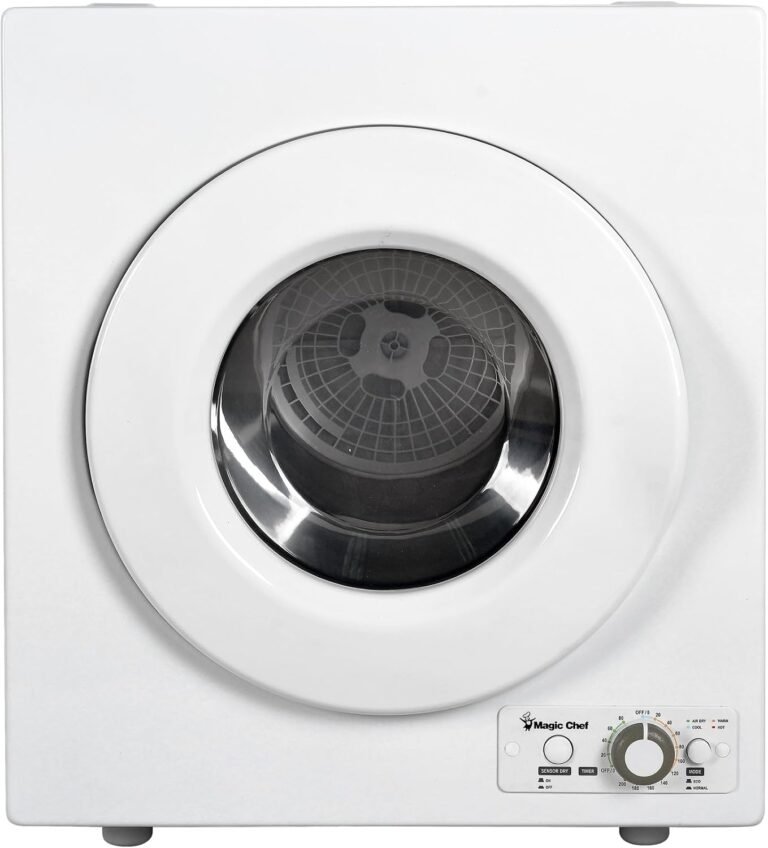
You might find a small “compact” dryer that runs on 120 volts. These are usually meant for apartments, boats, or RVs. They exist, but they are not the norm. We found that these small dryers take much longer to dry a load. They also hold far less laundry.
If you live in a small space, a 120-volt compact dryer might be your only option. Just know that it will not perform like a standard machine. A typical load of towels might take 90 minutes or more. For most families, that is not practical.
Dryer Plug Types and Outlet Shapes
The plug on your dryer tells you a lot about its voltage. We found that older homes often have three-prong outlets, while newer homes have four-prong outlets. The difference matters. A three-prong outlet has two hot wires and one neutral. A four-prong adds a separate ground wire.
You cannot just use an adapter to switch between them. The wiring inside the wall is different. If your house has a three-prong outlet and your new dryer has a four-prong plug, you have two choices. You can change the cord on the dryer, or you can hire an electrician to update the outlet. Changing the cord is a common DIY task, but only if you feel comfortable with basic wiring.
| Plug Type | Voltage | Common Use |
|---|---|---|
| NEMA 14-30 (4-prong) | 240V | Newer electric dryers |
| NEMA 10-30 (3-prong) | 240V | Older electric dryers |
| Standard 120V outlet | 120V | Gas dryers, compact dryers |
How to Identify Your Outlet Type
Walk over to your dryer and pull it out just a few inches. Look at the wall outlet. Count the slots. If you see three slots, it is likely a three-prong 240-volt outlet. If you see four slots, it is a four-prong 240-volt outlet. If the outlet looks exactly like a regular wall plug but with a horizontal slot, it might be 120 volts.
We found that four-prong outlets are now the national standard. They are safer because they provide a dedicated ground path. If your home was built after the year 2000, you almost certainly have a four-prong outlet. Older homes might still have three-prong, which is fine, but it lacks that extra safety ground.
Checking Your Home’s Electrical Panel
Before you buy any dryer, look at your electrical panel. Find the breaker that says “Dryer” or is labeled with 30. This is your dedicated circuit. We found that a dryer must have its own circuit. It cannot share a breaker with a washing machine, lights, or anything else.
If you do not see a 30-amp breaker labeled for the dryer, you might have a gas dryer setup. In that case, the 120-volt outlet on the wall might share a circuit with other things in the laundry room. That is allowed for gas dryers, but not for electric ones.
Signs Your Dryer Circuit Is Overloaded
Your circuit breaker is designed to protect you. If it trips, something is wrong. Common signs of an overloaded or faulty dryer circuit include flickering lights in the laundry room, a burning smell, or breakers that trip every time you start the dryer. Do not ignore these. These are fire hazards.
Many guidelines point to routine checks as a good first step (U.S. Consumer Product Safety Commission). If your dryer outlet feels warm to the touch, stop using it and call an electrician. A warm outlet means loose connections or bad wiring. Both can cause a fire.
Can You Convert a 120V Outlet to 240V?
This is a common question, and the answer is maybe. It depends on the wiring inside your walls. To run a 240-volt dryer, you need a cable with three or four wires. Most homes built in the last 50 years have the right kind of wire in the laundry room. But not always.
We found that you cannot simply change the breaker and outlet. You must verify that the wire gauge is thick enough. A 30-amp circuit needs at least 10-gauge wire. If your home has 12-gauge or 14-gauge wire, it will overheat. This job is best left to a licensed electrician. They will inspect the wire, the panel, and the outlet to make sure everything is safe.
What It Costs to Install a 240V Outlet
Hiring an electrician to install a 240-volt outlet is not cheap. We found that the cost usually ranges from $200 to $500, depending on your location and the complexity of the run. If the panel is far from the laundry room, the price goes up. If you need a new breaker and a new cable, expect to pay more.
Is it worth it? If you already have a gas line and want to switch to electric, yes. But if you are just moving into a new home, check what is already there first. You might not need any work at all.
How to Verify Your Dryer’s Voltage Requirements
The most reliable way to know what voltage your dryer needs is to check the manufacturer’s label. Open the dryer door and look at the door frame or the back panel. You will see a sticker with the model number, serial number, and electrical specs. It will list the voltage, like “240V” or “120/240V.”
We found that the label never lies. It is the final word. Even if a salesperson tells you something different, trust the label. If you cannot find the label, look up the model number online. The owner’s manual will have a full electrical section.
Using a Multimeter to Test the Outlet
If you are handy, you can test the outlet yourself. You will need a digital multimeter. Set it to measure AC voltage. Put one probe in the left slot and one in the right slot. For a 240-volt outlet, you should read around 240. For a 120-volt outlet, you should read around 120.
Be careful. 240 volts can kill you. If you are not comfortable using a multimeter, skip this step. You can buy a simple outlet tester for under $10. It plugs in and lights up to show the voltage range. That is much safer and easier to read.
What Happens If You Plug a Dryer into the Wrong Voltage?
This is a serious mistake. If you plug a 240-volt dryer into a 120-volt outlet, the dryer will not heat. It might spin, but the air will stay cold. The motor might run, but the heating element will never get enough power. Over time, this can damage the motor and the control board.
On the flip side, plugging a 120-volt appliance into a 240-volt outlet is worse. The extra voltage will fry the internal components. We found that this usually destroys the appliance instantly. You might see sparks, smoke, or hear a pop. Do not try this.
Preparing Your Laundry Room for a New Dryer
Before you buy a dryer, do a quick checklist. We put this together to help you avoid surprises. Go through each item before you make any purchase.
- Check the existing outlet type (3-prong or 4-prong).
- Verify the breaker size is 30 amps for electric dryers.
- Confirm the circuit is dedicated to the dryer only.
- Measure the space for the dryer’s width and depth.
- Look at the manufacturer’s label for voltage specs.
- Call an electrician if you see any outdated wiring.
We found that most installation problems come from people skipping these steps. They buy a dryer, bring it home, and then realize the outlet is wrong. That is a frustrating and costly mistake. Take five minutes to check these things first.
When to Call a Professional
Some tasks are fine to DIY, like swapping a dryer cord. Others are not. If you notice any of the following, call a licensed electrician immediately: discolored outlets, buzzing sounds from the panel, breakers that trip often, or a burning smell. Do not attempt repairs yourself. Your safety is more important than saving a few dollars.
We always say that electrical work is not the place to guess. The cost of an electrician is small compared to the cost of a house fire. Many local building codes require permits for new circuits. A pro will handle all of that for you.
Final Thoughts on Dryer Voltage
We hope this clears up the confusion. Standard dryers need 240 volts. Gas dryers only need 120 volts. Compact dryers might run on 120 volts. The plug type and breaker size are just as important as the voltage itself.
When you are ready to buy, keep your home’s setup in mind. Check the outlet, check the breaker, and read the label. If anything looks off, ask for help. A little preparation goes a long way. Your dryer is a workhorse, and it deserves the right power supply to do its job well.
Conclusion
Knowing your dryer’s voltage is the first step to a safe and efficient laundry room. We covered the main points: standard electric dryers need 240 volts, gas dryers only need 120 volts, and compact models fall somewhere in between. You also learned that the plug type and breaker size matter just as much as the voltage itself.
Before you buy a new dryer, check your outlet, verify your breaker is 30 amps, and read the manufacturer’s label. If anything looks outdated or unsafe, call a licensed electrician. A quick five-minute check now can save you from a costly mistake later. Get this right, and your dryer will run safely for years.
Frequently Asked Questions
Can I plug my dryer into a regular wall outlet?
No, you cannot plug a standard electric dryer into a regular 120-volt outlet. The heating element needs 240 volts to work properly. A gas dryer, however, can plug into a regular outlet because it only needs 120 volts for the drum and controls.
How do I know if my dryer is 120 or 240 volts?
Check the manufacturer’s label inside the dryer door or on the back panel. It will clearly list the voltage requirement. You can also look at the plug shape. A large three-prong or four-prong plug means 240 volts. A standard plug with two vertical slots and a round prong means 120 volts.
Is a gas dryer cheaper to run than an electric dryer?
We found that gas dryers are usually cheaper to operate over time. Natural gas costs less than electricity for the same amount of heat. The trade-off is that you need a gas line and professional installation. Electric dryers cost more per load but are easier to install in most homes.
Can I use an adapter to change a 3-prong dryer plug to a 4-prong?
We don’t recommend using an adapter for dryer plugs. The wiring behind the outlet is different between 3-prong and 4-prong systems. The 4-prong outlet has a separate ground wire, which is a safety feature. Instead of an adapter, change the dryer cord to match your outlet. That is the safer option.
Why does my dryer breaker keep tripping?
A tripping breaker usually means your circuit is overloaded or there is a wiring problem. Your dryer draws a lot of power, so it needs a dedicated 30-amp circuit. If other appliances share that circuit, the breaker will trip. If the circuit is dedicated and still trips, call an electrician to inspect for a short or a faulty breaker.