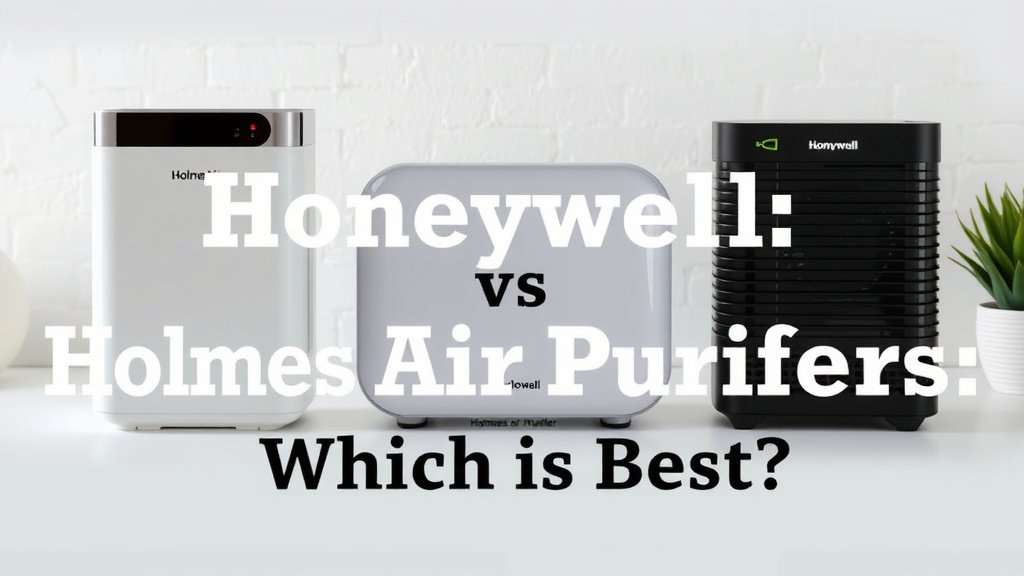
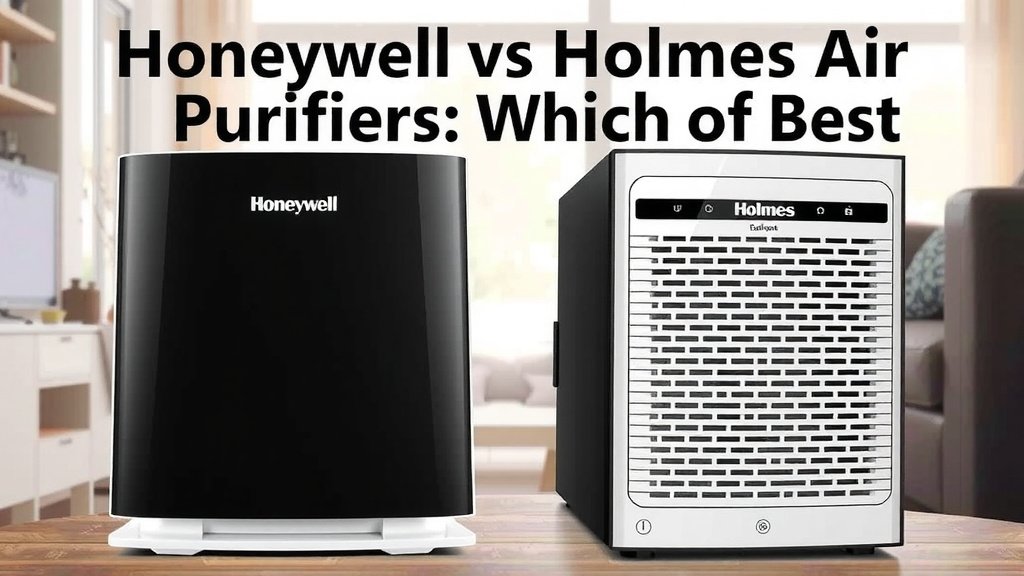
Honeywell vs Holmes Air Purifiers: Which is Best
Navigating the air purifier landscape in 2026 can feel overwhelming, and when Honeywell and Holmes enter the ring, the decision gets even tougher. Both are powerhouses in delivering cleaner air, but they cater to distinct priorities. Think of Honeywell as your go-to for serious air purification needs, often packing advanced tech for larger living areas, while Holmes shines with its wallet-friendly options and solid performance in more compact spaces. Ultimately, your perfect match hinges on your room dimensions and the specific features you’re chasing.
Both brands are household names in air purification, aiming to reduce allergens, dust, and odors in your home. We found that Honeywell often incorporates HEPA filtration and multiple fan speeds, making them suitable for allergy sufferers. Holmes models are frequently praised for their quiet operation and straightforward design, fitting well into bedrooms or home offices. They both aim to improve your indoor air quality.
TL;DR:
- Honeywell is often better for larger rooms and advanced features.
- Holmes is typically more budget-friendly and great for smaller spaces.
- Both brands effectively reduce common indoor air pollutants.
- Consider your room size and specific air quality needs.
- Your final choice depends on balancing cost, coverage area, and features.
Let’s dive into a more detailed comparison to help you decide which air purifier is the perfect fit for your home.
You’re looking to make your home’s air cleaner, and you’ve narrowed it down to two popular brands: Honeywell and Holmes. That’s a smart starting point! Both have a solid reputation for helping clear out dust, allergens, and those lingering household odors. But how do they stack up against each other? We’ve looked into what makes each brand unique to help you figure out which one will be the best fit for your needs.
Comparing Honeywell and Holmes Air Purifier Strengths
When you’re choosing an air purifier, you want something that works well for your specific situation. We found that both Honeywell and Holmes excel in different areas. Honeywell often leans towards powerful filtration and features for larger spaces, while Holmes is frequently the go-to for budget-conscious buyers needing good performance in smaller rooms.
Filtration Technology and Effectiveness
At the heart of any air purifier is its ability to clean the air. Both brands typically use HEPA filters, which are widely recommended for capturing tiny particles. HEPA filters are designed to trap 99.97% of airborne particles as small as 0.3 microns. This includes things like pollen, dust mites, pet dander, and mold spores. This is really important for people with allergies or asthma (CDC).
Honeywell’s Filtration Approach
Honeywell models often come with multiple stages of filtration. This can include a pre-filter to catch larger particles like hair, followed by a True HEPA filter for the fine stuff. Some units also include an activated carbon filter, which is great for absorbing odors from cooking, pets, or smoke. We found this multi-stage approach can be particularly effective for those with significant allergy concerns.
Holmes’ Filtration Approach
Holmes purifiers also frequently feature HEPA-type filters. While “True HEPA” is the standard for the highest efficiency, many Holmes models offer a comparable level of performance for everyday use. They also commonly incorporate carbon filters for odor control. Their systems are generally straightforward, focusing on delivering clean air without unnecessary bells and whistles. This makes them a reliable choice for general air quality improvement.
Room Size and Coverage
One of the most critical factors is ensuring your air purifier can handle the size of your room. An undersized unit will struggle to clean the air effectively, and an oversized one might be more than you need (and potentially louder or more expensive to run).
Honeywell for Larger Spaces
Many Honeywell units are designed for medium to large rooms. They often boast higher CADR (Clean Air Delivery Rate) scores, meaning they can move and filter air more quickly. If you have a spacious living room or an open-plan area, a Honeywell model might be better suited to cover the entire space efficiently. We found their performance in larger areas to be a strong selling point.
Holmes for Smaller to Medium Rooms
Holmes purifiers tend to be a great fit for smaller to medium-sized rooms, such as bedrooms, home offices, or dorm rooms. Their coverage areas are generally well-defined for these spaces. If you’re looking to purify a single room or a smaller apartment, a Holmes unit can provide excellent results without being overpowering. Many users appreciate their ability to fit neatly into various living spaces.
Features and Technology
Beyond basic filtration, air purifiers come with a range of features that can enhance your experience. These can range from simple fan speeds to advanced smart technology.
Honeywell’s Feature Set
Honeywell often packs its units with a variety of features. You’ll frequently find multiple fan speeds, allowing you to adjust the cleaning power and noise level. Many models include air quality sensors that can automatically adjust fan speed based on detected pollutants. Some higher-end Honeywell purifiers even offer Wi-Fi connectivity for app control, making them smart home-compatible. Filter replacement indicators are also a common and helpful feature.
Holmes’ Feature Set
Holmes generally focuses on user-friendly operation. While they might not always have the most advanced smart features, they often include essential functions like adjustable fan speeds and filter indicators. Many Holmes models are praised for their quiet operation, especially on lower settings, making them ideal for bedrooms. Simplicity is often key with Holmes, meaning they are easy to set up and use right out of the box.
Cost and Value
Price is always a consideration. You want a unit that delivers good performance without breaking the bank. Both brands offer a range of options, but there’s a general trend in their pricing.
Honeywell’s Price Point
Honeywell units can sometimes come with a higher upfront cost, especially those with advanced features and larger coverage areas. However, many users find the investment worthwhile due to their robust performance and durability. Replacement filters for Honeywell can also vary in price, so it’s good to factor that into your long-term budget.
Holmes’ Price Point
Holmes purifiers are often more budget-friendly. They provide good value for the price, making clean air accessible for more people. Their replacement filters are generally competitively priced as well. If you’re looking for an effective air purifier without a significant financial commitment, Holmes is often a solid contender.
Making Your Final Choice: A Quick Checklist
To help you decide, consider these points:
- What is the square footage of the room you need to purify?
- Are you primarily concerned with allergens, odors, or general air freshness?
- What is your budget for the initial purchase and ongoing filter replacements?
- How important are advanced features like smart controls or air quality sensors to you?
- Do you prefer a unit that is very quiet, especially for use in a bedroom?
By thinking through these questions, you’ll get a clearer picture of whether a Honeywell or Holmes air purifier will better suit your home. Both brands aim to deliver cleaner air, but understanding their individual strengths will guide you to the right decision.
Conclusion
You’re now equipped to make a smart choice between Honeywell and Holmes air purifiers. Remember, Honeywell often leads in powerful features and larger room coverage, ideal if you have significant air quality concerns or a bigger space. Conversely, Holmes offers excellent value and effective purification for smaller rooms, fitting perfectly into bedrooms or home offices on a budget. Your best bet is to consider your room size, primary air quality concerns like allergies or odors, and your budget. Take a moment to review the room dimensions and your specific needs, then confidently pick the unit that feels right for your home.
Frequently Asked Questions
Are Holmes air purifiers as effective as Honeywell?
Both brands offer effective air purification, but their strengths differ. Honeywell often excels in larger spaces and with advanced features, while Holmes provides reliable performance for smaller rooms at a more accessible price. For general air cleaning in a suitably sized room, Holmes can be just as effective as Honeywell.
Which brand is better for allergies, Honeywell or Holmes?
Honeywell often has a slight edge for allergy sufferers due to their frequent use of multi-stage filtration, including activated carbon for odors and strong True HEPA filters. Many Honeywell models are designed for larger spaces, which can be beneficial if allergens are widespread in your home. However, a Holmes unit with a True HEPA filter in a smaller room can still greatly improve allergy symptoms.
Do Holmes air purifiers have True HEPA filters?
Many Holmes air purifiers feature HEPA-type filters, which capture a high percentage of airborne particles. While not always explicitly labeled “True HEPA,” they offer comparable performance for most household needs. Always check the product specifications to confirm the exact filtration technology used in the Holmes model you’re considering.
Are Honeywell air purifiers noisy?
Noise levels can vary by model and fan speed. Honeywell units, especially those designed for larger rooms with higher CADR ratings, may be louder on their highest settings as they work to filter more air quickly. However, most models include multiple fan speeds, allowing you to use a quieter setting when full power isn’t needed.
What is the average cost difference between Honeywell and Holmes air purifiers?
Generally, Honeywell air purifiers tend to have a higher upfront cost, particularly for models with advanced features like air quality sensors or smart connectivity. Holmes air purifiers are typically more budget-friendly, offering a good balance of price and performance for smaller spaces. Remember to also factor in the cost of replacement filters for both brands.

![What Is The Best Air Purifier for Condo [In 2026]](https://homeunderstandable.com/wp-content/uploads/2025/06/best-air-purifier-for-condo.jpg)