
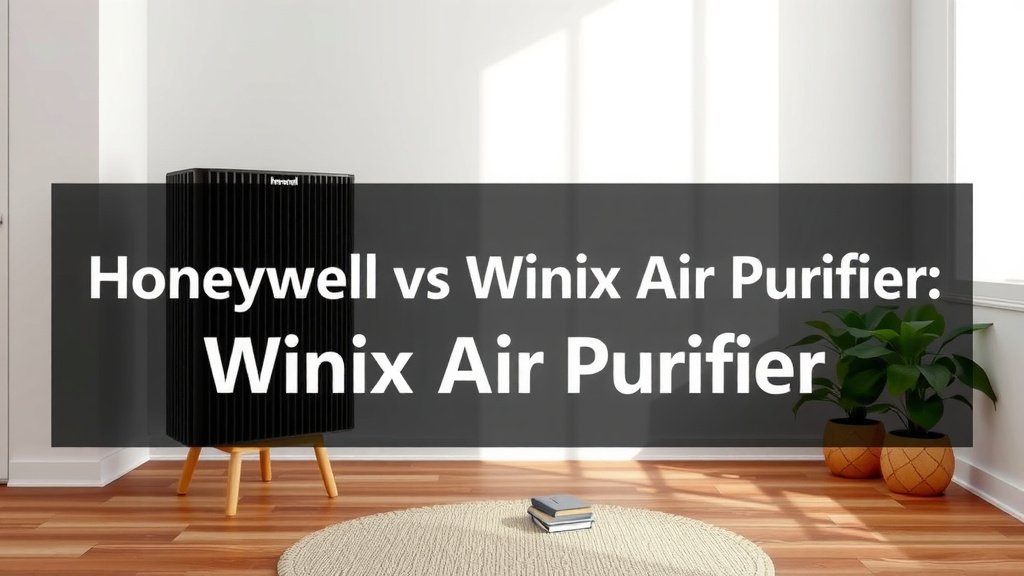
Honeywell vs Winix Air Purifier: Which is Best for You
Navigating the world of air purifiers in 2026 can feel like a breath of fresh air, especially when the Honeywell vs. Winix debate comes up. Both brands are powerhouses in keeping your indoor environment clean, but your perfect match hinges on what truly matters to you. Think of Honeywell as your go-to for serious, no-nonsense filtration and enduring build quality, while Winix often shines with its intuitive smart tech and whisper-quiet performance that won’t break the bank.
You’re looking to breathe cleaner air, and that’s a smart move for your home environment. We’ve looked at what makes these popular brands stand out. Understanding their core strengths helps you make the right decision for your family’s health.
- Honeywell: Often lauded for powerful filtration and long-term reliability.
- Winix: Known for smart technology, quiet performance, and value.
- Consider your primary concern: allergy relief, odor control, or general air quality.
- Think about noise levels and any desired smart home integrations.
Let’s get into the details of what each brand brings to the table so you can pick the perfect air purifier for your space.
Comparing Honeywell and Winix Air Purifiers
When you’re looking to improve your home’s air quality, choosing between Honeywell and Winix can feel like a big decision. Both brands are well-respected, but they cater to slightly different needs and preferences. We’ve found that understanding their core strengths can really help you narrow down the best fit for your household. Think of it like choosing between a sturdy, reliable workhorse and a sleek, smart companion. Which one fits your lifestyle better?
Honeywell: A Legacy of Filtration Power
Honeywell has built a strong reputation over the years for creating products that are known for their durability and robust performance. When it comes to air purifiers, this often translates into units that are built to last and designed to tackle serious air quality issues. Many users praise Honeywell for its powerful filtration capabilities, making them a go-to for homes dealing with persistent allergens or pollutants.
Filtration Technology and Effectiveness
Honeywell purifiers typically feature multi-stage filtration systems. This often includes a pre-filter to capture larger particles like pet hair, an activated carbon filter for odors and VOCs (volatile organic compounds), and a HEPA filter for microscopic allergens. We found that their HEPA filters are often highly effective, capturing 99.97% of airborne particles as small as 0.3 microns. This level of filtration is excellent for allergy sufferers and those concerned about fine dust and pollen. Some models even incorporate additional technologies like UV-C light for germicidal treatment, offering an extra layer of purification.
Build Quality and Durability
You’ll often notice that Honeywell units feel solid and well-constructed. Research suggests this is a deliberate design choice, aiming for longevity. They are often built with robust materials that can withstand daily use over many years. This makes them a good investment if you’re looking for a purifier that you won’t have to replace frequently. Many users report having their Honeywell purifiers for a decade or more with consistent performance.
Ease of Use and Maintenance
While powerful, Honeywell models are generally designed with user-friendliness in mind. Filter replacement is typically straightforward, with clear indicators when it’s time for a change. The controls are often simple and intuitive, meaning you won’t need a manual to figure out basic operation. We found that maintaining these units is usually a hassle-free process, which is a big plus for busy households.
Winix: Smart Features and Quiet Efficiency
Winix has made a name for itself by blending advanced technology with user-friendly designs, often at a more accessible price point. They are particularly known for integrating smart features and aiming for quiet operation, which appeals to those who want convenience and minimal disruption. If you’re looking for a purifier that can connect with your lifestyle and operate almost unnoticed, Winix is definitely worth a close look.
Advanced Smart Technology Integration
One of Winix’s standout features is its smart sensor technology. Many of their purifiers come equipped with sensors that can detect air quality in real-time. These sensors automatically adjust the fan speed based on detected pollutant levels. This means the purifier works harder when needed and conserves energy when the air is clean. We found this auto mode to be very convenient for maintaining consistent air quality without constant manual adjustments. Some higher-end models even offer Wi-Fi connectivity, allowing you to control and monitor your air purifier through a smartphone app.
Quiet Operation and Sleep Mode
Noise levels can be a major factor, especially for bedrooms or living areas. Winix often excels in this area. Many of their units feature a WhisperQuiet™ technology or a dedicated sleep mode. When activated, the fan speed is reduced to its lowest setting, and all indicator lights are dimmed or turned off. This allows you to enjoy purified air throughout the night without being disturbed. We discovered that many users are pleasantly surprised by how quiet these units can be, even on higher settings compared to some competitors.
PlasmaWave® Technology and Odor Control
Winix also incorporates its proprietary PlasmaWave® technology. This feature works to break down airborne pollutants at a molecular level without producing harmful ozone. Many experts note that this can be effective in reducing viruses, bacteria, odors, and VOCs. While some users might be hesitant about ionization technologies, Winix assures that PlasmaWave® operates safely within established ozone limits (UL certified). It adds another dimension to their air purification approach, particularly for tackling stubborn smells and airborne contaminants.
Key Considerations When Choosing
So, how do you decide? It really boils down to what matters most to you and your home. Let’s break down a few key areas to help you make that choice. Consider these points carefully:
- Allergy and Asthma Relief: Both brands offer HEPA filtration, but Honeywell often emphasizes its heavy-duty capabilities, which might be preferable for severe sufferers.
- Smart Home Integration: If you love smart gadgets and app control, Winix generally offers more options in this category.
- Budget: Winix often provides a strong feature set at a competitive price, making it a great value proposition. Honeywell can sometimes be a higher upfront investment, but often touts longer lifespan.
- Room Size: Always check the CADR (Clean Air Delivery Rate) and recommended room size for each model. Neither brand is a one-size-fits-all solution.
- Noise Sensitivity: If quiet operation is a top priority, especially for bedrooms, Winix’s sleep modes are a compelling feature.
| Feature | Honeywell | Winix |
|---|---|---|
| Filtration Strength | Often excels in robust, multi-stage HEPA filtration. | Strong HEPA filtration with added PlasmaWave® technology. |
| Smart Features | Less common, more basic controls on many models. | Abundant smart sensors, app control on many models. |
| Build & Durability | Known for solid, long-lasting construction. | Good build quality, often lighter plastic construction. |
| Noise Level | Can be louder on higher settings, generally good. | Often quieter, dedicated sleep modes available. |
| Odor Control | Effective with activated carbon filters. | Effective with carbon filters and PlasmaWave® technology. |
| Price Point | Can be a higher initial investment. | Often more budget-friendly with strong features. |
Making Your Final Decision
Ultimately, the best air purifier is the one that best meets your specific needs. If you prioritize uncompromising filtration power and long-term, rugged durability, a Honeywell might be your ideal choice. Think of it as an investment in serious air quality assurance. On the other hand, if you’re looking for smart convenience, quiet operation, and excellent value, a Winix purifier could be the perfect addition to your home.
Before you commit, consider these final points to ensure you’re making the best choice:
- Check the CADR ratings for the specific models you’re considering.
- Read recent reviews to gauge real-world performance.
- Factor in the cost and availability of replacement filters.
- Think about where the purifier will live – a noisy bedroom or a busy living area?
- Does Wi-Fi connectivity or app control matter to you?
By weighing these factors, you can confidently select an air purifier that will help you breathe easier and enjoy a cleaner, healthier home environment. Both brands offer excellent solutions, so it’s about finding the right match for your unique situation.
Conclusion
You’ve seen how both Honeywell and Winix bring powerful air purification to your home. If you’re after unyielding filtration power and a unit built for the long haul, a Honeywell is a solid choice. For those who appreciate smart conveniences and quiet operation without breaking the bank, Winix delivers great value. We found that understanding your specific needs, like allergy relief or noise sensitivity, is key. Your next step is to check the CADR ratings and filter costs for the models that caught your eye. Then, you can confidently choose the purifier that will help you breathe easier every day.
Frequently Asked Questions
Which brand is better for severe allergies?
For severe allergies, many users find Honeywell’s robust, multi-stage HEPA filtration to be highly effective. Their focus on powerful particle capture can make a noticeable difference for those with significant allergen sensitivities. While Winix also has strong HEPA filters, Honeywell often emphasizes heavy-duty performance for serious air quality concerns.
Are Winix air purifiers ozone-free?
Yes, Winix purifiers with PlasmaWave® technology are designed to be ozone-free. This technology works to break down airborne pollutants without producing harmful ozone. They are UL certified to operate within established ozone safety limits, offering peace of mind alongside their purification capabilities.
How often do I need to replace filters for each brand?
Filter replacement frequency varies by model and usage, but generally, you’ll look to replace pre-filters every few months and HEPA/carbon filters annually. We found that both brands usually provide clear indicators when filters need attention. Always check your specific model’s manual for precise recommendations to ensure optimal performance.
Which brand is generally quieter?
Winix often has an edge in quiet operation, especially with its dedicated sleep modes. Many Winix units are specifically designed for minimal noise, making them ideal for bedrooms. While Honeywell purifiers are generally not excessively loud, they might produce more noticeable sound on higher settings compared to Winix’s quieter models.
Is a smart air purifier worth the extra cost?
Whether a smart air purifier is worth it depends on your lifestyle. If you value convenience and enjoy controlling devices via apps or voice commands, Winix’s smart features can be a great addition. You can monitor air quality and adjust settings remotely, which many users find very useful for maintaining a clean environment effortlessly.


![5 Best Humidifier And Air Purifier for Bedroom [In 2026]](https://homeunderstandable.com/wp-content/uploads/2025/05/best-humidifier-and-air-purifier-for-bedroom.jpg)