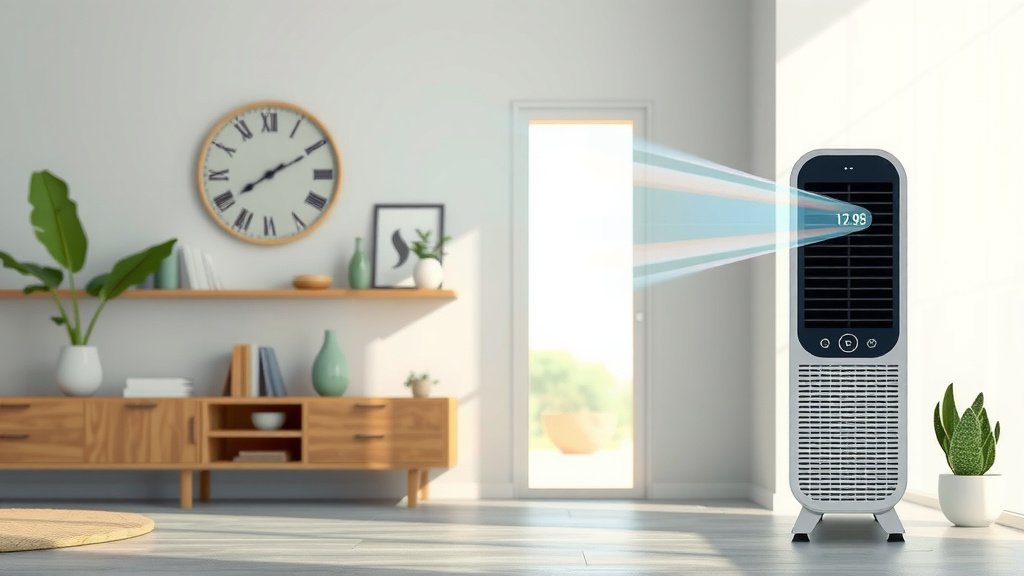
See How Air Purifiers Work: A Visual Guide
An air purifier works by drawing in air, passing it through a series of filters to trap pollutants, and then releasing cleaner air back into your room. Think of it like a fancy fan with a built-in garbage disposal for tiny particles. This process is essential for removing allergens like pollen and dust, as well as odors and even some airborne germs, helping you breathe easier in your own home. We found this animation really helps visualize the whole thing.
When you see an animation of how an air purifier works, you’ll notice different filter stages. Each stage tackles specific types of contaminants. A common setup includes a pre-filter for larger particles, an activated carbon filter for odors and gases, and a HEPA filter for the smallest particles. Many modern units also feature UV-C light or ionizers to further purify the air. We found that understanding these stages makes the cleaning process much clearer.
TL;DR:
- Air purifiers suck in air and push out clean air.
- Filters trap dust, pollen, odors, and germs.
- HEPA filters are key for tiny particles.
- Carbon filters tackle smells.
- Animations make the process easy to see!
Ready to see the magic happen? Let’s walk through exactly how this works step by step with some visuals to guide you!
“`htmlVisualizing How Air Purifiers Clean Your Air
Seeing an animation can truly bring to life how an air purifier works. It’s more than just a fan; it’s a multi-stage system. Let’s break down each step you’d typically see in a visual demonstration.
The Journey of Air Through Your Purifier
Imagine air entering your purifier like it’s going through a welcome mat for your home’s atmosphere. It’s the first point of contact for everything floating around.
Step 1: Intake and the Pre-Filter’s Role
You’ll first see air being gently pulled into the unit. Most purifiers have a fan that creates this suction. The air first hits the pre-filter. Think of this as the rough broom. It’s designed to catch the larger debris. This includes things like pet hair, visible dust bunnies, and larger lint particles. This is important because it protects the more sensitive filters inside. Without it, those bigger items could clog the finer filters too quickly. You’ll see this layer as a mesh or a thin, fibrous material.
Step 2: Tackling Odors and Gases with Activated Carbon
After the pre-filter, the air moves to the next stage. Here, you often see a dark, porous material. This is the activated carbon filter. It’s like a sponge for smells and gases. Activated carbon has been treated to be incredibly porous. This means it has a massive surface area. This large surface area is perfect for adsorbing (sticking to the surface) volatile organic compounds (VOCs). These are the things that cause cooking smells, pet odors, and chemical fumes. The animation will show gases and odor molecules being trapped on the carbon’s surface. This step is key for making your home smell fresh.
Step 3: Capturing Microscopic Particles with HEPA
This is arguably the most important stage for health. You’ll see the air directed through the HEPA filter. HEPA stands for High-Efficiency Particulate Air. This filter is a dense mat of fibers. It’s designed to trap at least 99.97% of airborne particles. These particles are as small as 0.3 microns. That’s incredibly tiny! To put it in perspective, a human hair is about 70-100 microns wide. The animation will show microscopic particles like pollen, mold spores, bacteria, and fine dust being caught. The filter works through a combination of impaction, interception, and diffusion. Different sized particles get caught in different ways, but the result is cleaner air.
How HEPA Filters Actually Work
You might wonder how such tiny particles get stuck. It’s not just a simple sieve.
- Impaction: Larger particles collide directly with the filter fibers.
- Interception: Mid-sized particles follow the airflow but brush against fibers as they pass.
- Diffusion: The smallest particles move randomly and eventually bump into fibers.
Step 4: Additional Purification Technologies (Optional but Common)
Some purifiers go even further. You might see these technologies demonstrated:
UV-C Light Sterilization
An ultraviolet-C (UV-C) light can be included. This light is known for its germicidal properties. The animation would show airborne bacteria and viruses passing through the light beam. The UV-C light damages their DNA or RNA. This inactivates them, preventing them from reproducing. It’s like a silent killer for microscopic organisms. Research shows UV-C light can be effective against many common pathogens (NIH).
Ionizers
Some units use ionizers. These devices release negatively charged ions into the air. These ions attach themselves to airborne particles. This makes the particles heavier. They then fall to the floor or stick to surfaces more easily. Some units also have a collection plate that attracts these charged particles. It’s a bit like static electricity for dust. However, some ionizers can produce ozone, so it’s good to check the manufacturer’s specifications.
The Final Step: Clean Air Released
After passing through all these stages, the purified air is then expelled back into your room. The fan pushes this cleaner air out from the top or sides of the unit. The animation will show a clear stream of air emerging. This is the result of all the trapping and neutralizing processes. You can then see how the cycle repeats, constantly cleaning the air in your living space.
Key Filter Functions at a Glance
To help you remember, here’s a quick summary of what each filter aims to do:
| Filter Type | Primary Function | What it Captures |
|---|---|---|
| Pre-Filter | Initial large particle capture | Pet hair, lint, large dust |
| Activated Carbon | Odor and gas absorption | Smoke, cooking smells, VOCs |
| HEPA Filter | Microscopic particle removal | Pollen, dust mites, mold, bacteria |
| UV-C Light | Germ inactivation | Viruses, bacteria |
Checklist: What to Look For in an Air Purifier Animation
When you’re watching an animation, keep an eye out for these elements to really understand the process:
- Clear depiction of air intake.
- Visible pre-filter catching large particles.
- How the carbon filter shows odor molecules being trapped.
- The dense structure of the HEPA filter and particle capture.
- Any additional tech like UV light or ionizers being demonstrated.
- The clean air being released back into the room.
Seeing these steps visually can make the technology much easier to grasp. It confirms that your air purifier is actively working to create a healthier environment for you and your family.
“`Conclusion
You’ve now seen how an air purifier works through its animated journey! From the initial intake to the final release of clean air, each filter stage plays a vital role. You can visualize how pre-filters grab large debris, carbon filters absorb odors, and HEPA filters capture tiny particles. Advanced features like UV-C light further enhance air quality. Understanding this process empowers you to make informed choices about your home’s air. Ready to experience cleaner air? Your next step is to choose the right air purifier that fits your needs and start breathing easier.
Frequently Asked Questions
Do air purifier animations accurately show how they work?
Yes, most good animations provide a scientifically accurate representation. They simplify complex filtration processes for easy understanding. You’ll see the core functions of each filter stage clearly demonstrated.
Why is the HEPA filter animation usually the most detailed?
The HEPA filter is the primary defense against microscopic allergens and pollutants. Animations focus on it to show its efficiency and the scientific methods (impaction, interception, diffusion) it uses to capture these tiny particles effectively.
Can an animation show if an air purifier produces ozone?
Some advanced animations might hint at it if they depict ionizers. However, most focus on filtration and purification. It’s best to check the product specifications for ozone output details rather than relying solely on an animation.
How do animations explain the difference between adsorption and absorption?
Animations typically show gases and odors ‘sticking’ to the surface of activated carbon for adsorption. They usually don’t go into deep scientific detail on absorption versus adsorption, but the visual of molecules attaching to the filter material is clear.
What if an air purifier animation skips a filter stage?
If an animation skips a stage, it might be focusing on the most critical components for your health, like HEPA filtration. It’s always good to cross-reference the animation with the product’s listed filter types to ensure you’re getting the full picture.