How Ionic Air Purifiers Work: A Simple Explanation
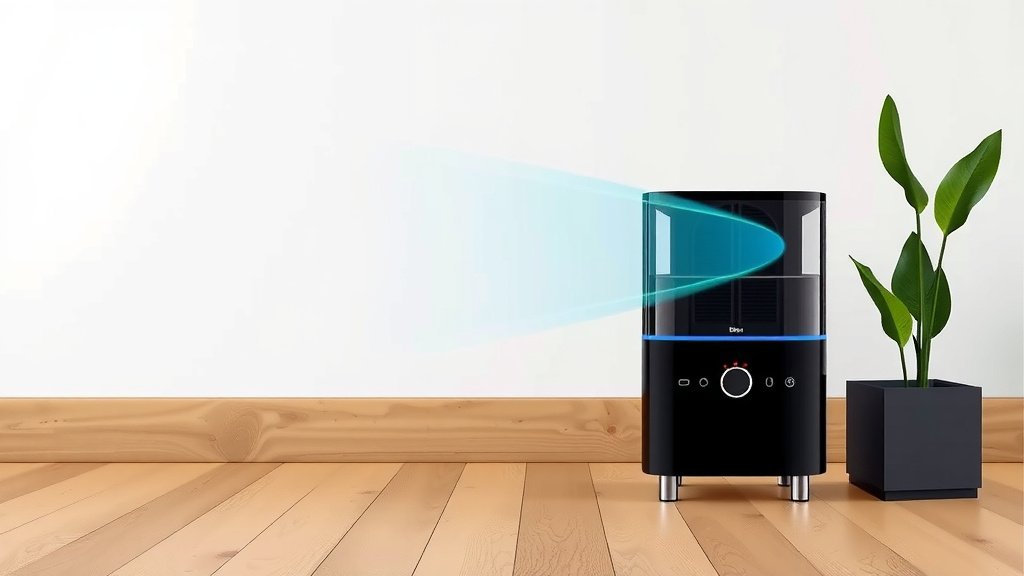
An ionic air purifier works by releasing negatively charged ions into the air. These ions attach themselves to positively charged particles like dust, pollen, and smoke. This process causes these particles to clump together, becoming heavier and falling out of the air. They then settle on surfaces, making them easier to clean up.
This method can be a simple and effective way to improve your indoor air quality. Unlike filters that trap particles, ionic purifiers essentially knock them out of the air. Many people find these devices helpful for reducing common airborne irritants. It’s a clever approach to creating a cleaner breathing environment.
- Ionic purifiers release negative ions.
- Ions make airborne particles fall out of the air.
- Particles land on surfaces to be cleaned.
- It’s an alternative to filter-based purifiers.
Let’s take a closer look at exactly how these unique devices clean your air. You might be surprised by the science behind it!
“`htmlUnderstanding How Ionic Air Purifiers Work
Ionic air purifiers use a fascinating process to clean your air. They employ electricity to create charged particles. These particles then actively seek out and neutralize airborne contaminants. It’s like a tiny, invisible cleaning crew working tirelessly in your home.
The Science Behind Negative Ionization
At its core, an ionic air purifier relies on negative ionization. It contains emitter points. These points give off a high voltage charge. This charge causes a reaction. It strips electrons from the surrounding air molecules. These freed electrons then attach to oxygen molecules. This creates negatively charged ions, also known as anions.
What Are Negative Ions?
Think of negative ions as tiny powerhouses. They are naturally found in environments like waterfalls or forests. These areas often feel fresher and cleaner. Negative ions are simply oxygen atoms with an extra electron. This extra electron makes them highly reactive. They are eager to bond with other particles.
How Ions Interact with Pollutants
Most common airborne pollutants have a positive electrical charge. This includes things like dust, smoke, pet dander, and pollen. When the negatively charged ions produced by the purifier encounter these positively charged particles, they bond. It’s a simple attraction, like magnets.
The Bonding Process Explained
Once a negative ion attaches to a pollutant particle, it neutralizes its positive charge. This bonding process has a significant effect. It makes the particle heavier. Imagine tiny balloons suddenly getting weighed down. This increased weight causes them to fall out of the air.
Settling on Surfaces
As the now-heavier particles descend, they land on surfaces. This includes your floors, furniture, and countertops. They are no longer suspended in the air for you to breathe. They simply become part of the dust you would normally clean anyway. This is a key difference from filter-based purifiers.
Types of Ionic Purifiers and Their Mechanisms
While the basic principle is the same, ionic purifiers can differ slightly. Some use a plate system. Others rely solely on emitter points.
Ionizers with Collection Plates
Some models include metal plates. These plates are designed to attract the charged particles. After the ions cause the particles to clump and become heavy, the plates capture them. This can make cleanup easier. You just wipe down the plates periodically. Many experts suggest this is a good way to see tangible results (Cleveland Clinic).
Ionizers Without Plates (Direct Ion Emission)
Other purifiers don’t have collection plates. They simply release ions into the room. The charged particles then fall onto nearby surfaces. You would then need to dust or vacuum these surfaces regularly. The key benefit here is often a simpler design. Fewer parts can mean less maintenance.
The Ozone Consideration
It’s important to be aware of a potential byproduct. Some ionic purifiers can produce ozone. Ozone is a gas. It can be harmful to your respiratory system in high concentrations. Reputable manufacturers design their units to minimize ozone production. Look for certifications like CARB (California Air Resources Board) compliance. These indicate the device meets strict ozone emission standards.
Ozone’s Impact on Air Quality
While ozone is a component of the upper atmosphere’s protective layer, ground-level ozone is a pollutant. The EPA states that breathing in ozone can trigger a variety of health problems. This includes coughing, throat irritation, and chest pain (EPA). Therefore, choosing an ozone-reducing unit is wise.
Comparing Ionic vs. Filter-Based Air Purifiers
How does this compare to the purifiers you might already know? Filter-based units use physical barriers. They trap particles as air passes through them.
| Feature | Ionic Air Purifier | Filter-Based Air Purifier |
|---|---|---|
| Mechanism | Uses negative ions to cause particles to fall out of the air. | Uses physical filters (HEPA, activated carbon) to trap particles. |
| Maintenance | May require cleaning of collection plates or dusting surfaces. No filter replacement needed. | Requires regular filter replacement, which is an ongoing cost. |
| Noise Level | Often very quiet, as there are no fans in some models. | Can be noisier due to fan operation. |
| Particle Size | Effective against a wide range of particles. | HEPA filters capture very small particles. |
| Ozone Production | Potential concern; choose low-ozone models. | Typically does not produce ozone. |
Key Benefits and Things to Consider
Ionic purifiers offer distinct advantages. They can be very quiet. Many don’t require costly filter replacements. You just need to perform basic cleaning.
- Quiet Operation: Many models are nearly silent.
- No Filter Costs: Save money on replacement filters.
- Compact Size: Often smaller and more portable than filter units.
- Effective Particle Removal: Good at removing common allergens.
However, remember the ozone factor. Always prioritize units designed for low or no ozone output. Also, be prepared to do some light cleaning of surfaces. This ensures you’re removing the settled particles effectively.
A Quick Checklist for Choosing an Ionic Air Purifier
Considering an ionic purifier? Here’s a quick rundown to help you decide:
- Check for Ozone Output: Ensure it’s CARB certified or rated for minimal ozone.
- Ease of Cleaning: How easy are collection plates or emitter points to access?
- Room Size Coverage: Does it suit the square footage of your space?
- Brand Reputation: Look for trusted brands with good reviews.
- Power Consumption: Consider its energy efficiency.
- User Reviews: See what other people say about its performance.
Understanding these points will help you make an informed choice for cleaner air in your home.
“`Conclusion
You’ve learned how ionic air purifiers work by creating negatively charged ions. These ions neutralize airborne pollutants, causing them to fall harmlessly from the air and settle on surfaces. While they offer a quiet, filter-free solution, it’s important to choose models that minimize ozone production, like those certified by CARB. By understanding the science and considering factors like ease of cleaning, you can make an informed decision.
Ready to breathe easier? Check the ozone rating on any ionic air purifier you consider to ensure it’s safe for your home environment.
Frequently Asked Questions
Do ionic air purifiers actually clean the air?
Yes, ionic air purifiers actively work to clean your air. They release negative ions that attract and neutralize positively charged particles like dust and pollen. This process makes these particles heavier, causing them to fall out of your breathing space.
What is ozone, and why should I be concerned about it with ionic purifiers?
Ozone is a gas that can be harmful to your lungs in high concentrations. Some ionic purifiers can produce ozone as a byproduct. It’s vital to choose units designed to produce very little or no ozone, often indicated by certifications like CARB compliance.
Are ionic air purifiers better than HEPA filters?
They offer different benefits. Ionic purifiers are often quieter and don’t require filter replacements, saving you money. HEPA filters are excellent at physically trapping tiny particles, but they need regular replacement and can be noisier.
How often do I need to clean an ionic air purifier?
Maintenance usually involves wiping down collection plates if your model has them, or dusting surfaces where particles have settled. Unlike filter purifiers, there are no filters to replace, making upkeep simpler.
Can ionic air purifiers help with pet dander and odors?
Ionic purifiers can help reduce airborne pet dander by causing it to fall out of the air. For odors, they can be less effective unless they specifically include activated carbon filters, which are designed to absorb smells.