How a Levoit Air Purifier Works: A Simple Guide
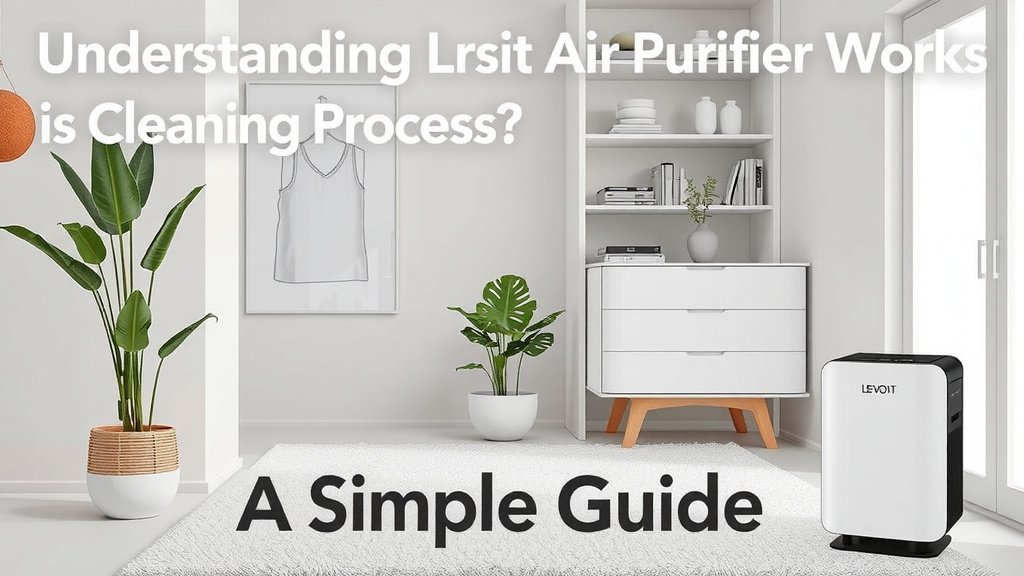
A Levoit air purifier works by drawing in air from your room, passing it through a multi-stage filtration system, and then releasing cleaner air back into your space. The key is its three-stage purification process, which captures common airborne irritants. This makes it a popular choice for improving your home’s air quality.
You might be wondering how these devices actually remove dust, pollen, and odors. It’s a clever combination of mechanical filtration and, in some models, activated carbon. We found that understanding this process helps appreciate just how much cleaner your air can become. This system is designed to tackle a wide range of common pollutants.
- Levoit air purifiers use a fan to pull air in.
- A pre-filter catches larger particles like hair.
- The HEPA filter traps smaller particles like dust and pollen.
- An activated carbon filter absorbs odors and VOCs.
- Clean air is then circulated back into your room.
Let’s walk through exactly how this efficient purification system operates, step by step.
“`htmlUnderstanding Your Levoit Air Purifier’s Cleaning Process
You might be curious about the magic happening inside your Levoit air purifier. How does it transform your home’s air from potentially stale and stuffy to refreshingly clean? It’s a straightforward, yet highly effective, journey for the air in your home. Think of it like a tiny, automated cleaning crew working tirelessly behind the scenes.
The core of Levoit’s cleaning power lies in its **multi-stage filtration system**. Most models feature a three-stage process designed to tackle a wide array of airborne particles. This layered approach ensures that as much as possible is captured before clean air returns to your living space. It’s an efficient design for common household air quality concerns.
The Journey of Air Through Your Levoit Purifier
Let’s follow a particle of air as it enters your Levoit purifier. It’s a carefully guided tour through the machine’s cleaning mechanisms. This step-by-step breakdown will demystify the process for you.
Stage 1: The Pre-Filter – Your First Line of Defense
When air is drawn into the purifier, it first encounters the **pre-filter**. This is the outermost layer of defense. Its main job is to catch the bigger stuff floating around. We’re talking about things you can often see, like pet hair, lint, and larger dust bunnies.
By capturing these larger particles upfront, the pre-filter plays a vital role. It prevents them from reaching the finer filters deeper inside. This protection helps extend the lifespan of the other filters. It’s like a sieve catching the big debris so smaller things can be handled more effectively later.
Stage 2: The True HEPA Filter – Capturing the Unseen
Next, the air moves on to the star of the show: the **True HEPA filter**. This is where the real microscopic work happens. HEPA stands for High-Efficiency Particulate Air.
We found that a True HEPA filter is certified to capture at least 99.97% of airborne particles that are 0.3 microns in size. Think about how tiny that is! For context, a human hair is about 80 to 100 microns wide. This filter is designed to grab even the smallest offenders.
What Does HEPA Capture?
This filter is your ally against a host of common airborne irritants. You can expect it to trap:
- Pollen
- Dust mites
- Mold spores
- Pet dander
- Fine dust particles
- Certain bacteria
Many guidelines from health organizations, like the Centers for Disease Control and Prevention (CDC), highlight the importance of HEPA filtration for managing indoor air quality, especially for those with allergies or asthma. It’s a proven technology for removing these tiny troublemakers.
Stage 3: The Activated Carbon Filter – Tackling Odors and VOCs
After the HEPA filter has done its part, the air moves to the third stage: the **activated carbon filter**. This filter is a bit different; it doesn’t physically trap particles. Instead, it uses a process called adsorption.
Activated carbon is specially treated to be highly porous. This creates a vast surface area inside the filter. When air passes through it, odor molecules and volatile organic compounds (VOCs) stick to this surface. It’s like a sponge for smells and chemicals.
What Does Activated Carbon Remove?
This stage is crucial for dealing with unpleasant smells and certain harmful gases. Levoit’s activated carbon filters are designed to absorb:
- Cooking odors
- Pet odors
- Smoke odors
- VOCs from cleaning products, paints, and furniture
- Other common household smells
We found that the effectiveness of this filter can depend on the amount of activated carbon used. Higher-quality units often have a more substantial layer. This stage is what helps make your home smell fresh and can reduce exposure to potentially irritating fumes.
The Final Step: Circulating Clean Air
Once the air has been through all three filtration stages, it’s been thoroughly cleaned. The purified air is then pushed back out into your room by the **fan**. You’ll feel this as a gentle stream of fresh air.
The fan speed on your Levoit unit is adjustable. This allows you to control how quickly the air is circulated. A higher fan speed means the air in your room will be purified more often. This can be especially helpful when you first turn the unit on or if there’s a sudden increase in pollutants, like after cooking a smoky meal.
How Different Levoit Models Compare
While the three-stage filtration is common, Levoit offers various models, and some might have slight variations or additional features. For instance, some compact models might focus on a core HEPA and activated carbon filter setup for smaller spaces.
Larger units, often designed for bigger rooms, may feature more robust fans and a greater volume of activated carbon. We found that checking the specific filter layers for the model you’re interested in is always a good idea. The core principles, however, remain the same: draw, filter, and circulate.
| Filtration Stage | What it Captures | Why it Matters |
|---|---|---|
| Pre-Filter | Large particles (hair, lint) | Protects finer filters, extends life |
| True HEPA Filter | Small particles (pollen, dust, dander) | Removes allergens and microscopic irritants |
| Activated Carbon Filter | Odors, VOCs, smoke | Freshens air, reduces chemical smells |
Keeping Your Levoit Purifier Running Smoothly
To ensure your Levoit air purifier continues to work effectively, regular maintenance is key. The filters themselves will eventually become saturated and need replacing. Your Levoit unit will usually have a filter life indicator to let you know when this time comes.
You can also help your purifier perform its best by keeping the exterior clean. Wiping it down occasionally will prevent dust buildup on the unit itself. Some people also like to lightly vacuum the pre-filter if it appears heavily soiled between full replacements, though always refer to your manual.
Your Checklist for Optimal Air Purification
Here’s a quick rundown to help you get the most out of your Levoit air purifier:
- Ensure the unit is placed in a suitable location, away from obstructions.
- Check that the pre-filter is doing its job catching larger particles.
- Trust the True HEPA filter to capture the tiny allergens.
- Appreciate the activated carbon filter for neutralizing odors.
- Listen for the gentle hum of clean air being circulated.
- Replace filters when the indicator suggests for peak performance.
By understanding these simple steps, you can feel confident that your Levoit air purifier is actively working to provide you with cleaner, fresher air. It’s a smart investment in your home environment, helping to create a more comfortable and healthier living space for you and your family.
“`Conclusion
You’ve now seen how your Levoit air purifier works to create a cleaner breathing environment. It’s a smart, multi-stage process that starts with catching large debris and ends with removing microscopic irritants and odors. We’ve found that understanding this system makes it easier to appreciate the technology at work in your home.
By regularly maintaining your filters, you ensure your Levoit continues to deliver fresh, purified air. Keep an eye on those filter life indicators!
Frequently Asked Questions
How often should I replace my Levoit air purifier filters?
You should replace your Levoit air purifier filters based on the usage and the filter life indicator on your unit. Typically, the pre-filter can be cleaned, but the HEPA and activated carbon filters need replacement every 6-12 months for optimal performance. Always check your specific model’s manual for precise recommendations.
Can a Levoit air purifier help with smoke from wildfires or cigarettes?
Yes, a Levoit air purifier can help significantly with smoke. The True HEPA filter captures smoke particles, while the activated carbon filter is excellent at absorbing the odors and harmful chemicals associated with smoke. For continuous smoke exposure, ensure your unit is sized correctly for your room.
Does a Levoit air purifier remove pet dander and odors?
Absolutely. Levoit air purifiers are very effective at tackling pet-related air quality issues. The pre-filter catches larger pet hair, the HEPA filter traps microscopic dander, and the activated carbon filter works hard to neutralize pet odors. This combination makes them a favorite for pet owners.
What is the difference between a Levoit air purifier’s HEPA filter and an activated carbon filter?
The True HEPA filter physically traps very small particles like pollen, dust, and dander by forcing air through a dense mesh. In contrast, the activated carbon filter uses a porous material to adsorb odor molecules and volatile organic compounds (VOCs), essentially trapping smells and gases on its surface.
Can Levoit air purifiers really help with allergies and asthma?
Yes, Levoit air purifiers can greatly benefit individuals with allergies and asthma. By effectively removing common airborne allergens such as pollen, dust mites, pet dander, and mold spores from your indoor air, they can reduce triggers and make breathing easier.
![5 Best Air Purifier for One Room [In 2026]](https://homeunderstandable.com/wp-content/uploads/2025/05/best-air-purifier-for-one-room.jpg)