How Long Can an Air Compressor Hose Be For Your Needs
So, how long can an air compressor hose be? Generally, you can safely use an air compressor hose up to 100 feet for most DIY and professional jobs. Shorter hoses are often better for consistent pressure, while longer ones offer more flexibility in your workspace.
You might wonder if a super long hose will cause problems. We found that while longer hoses give you more reach, they can lead to a slight drop in air pressure. This depends on the hose’s diameter and the compressor’s power. Keeping your hose organized also prevents kinks.
- Standard hose length is around 100 feet.
- Longer hoses can reduce air pressure.
- Hose diameter matters for pressure loss.
- Consider your compressor’s power.
- Keep your hose tidy to avoid damage.
Let’s break down how hose length affects your air tools and what to look for when choosing the right one for your needs.
Understanding Air Compressor Hose Length Limitations
So, how much hose can you realistically hook up to your air compressor? You’ll find that for most tasks, a hose length of up to 100 feet is generally safe and effective. This length provides a good balance between reach and performance for many users. We found that exceeding this can start to affect how well your air tools perform.
The Impact of Hose Length on Air Pressure
One of the biggest factors to consider with hose length is its effect on air pressure. Think of your air hose like a water pipe; the longer the pipe, the more resistance the water encounters. The same is true for compressed air.
Pressure Drop: What It Is and Why It Matters
As compressed air travels through a hose, it loses some of its pressure. This is known as pressure drop. Why does this happen? Friction between the air and the inside of the hose walls, plus the sheer volume of air that has to travel a longer distance, both contribute. For some air tools, even a small drop can make a noticeable difference. We found that tools requiring high airflow or consistent pressure, like impact wrenches or sanders, are most sensitive to this.
Factors Influencing Pressure Loss
The degree of pressure drop isn’t solely determined by length. Two other key players are hose diameter and the compressor’s overall power. A wider hose (larger diameter) allows more air to flow with less resistance. So, if you need a longer hose, opting for a wider one can help counteract some of the pressure loss. We found that a 1/2-inch diameter hose generally experiences less pressure loss than a 1/4-inch hose over the same distance. Your compressor’s ability to generate and maintain pressure also plays a vital role. A more powerful compressor can better overcome the resistance of a longer hose.
Choosing the Right Hose Length for Your Needs
Deciding on the ideal hose length involves looking at what you’ll be doing. Are you just inflating tires in your garage, or are you working on a large construction project?
Short Hoses: The Pressure Advantage
For tasks where consistent, high pressure is key and you don’t need much reach, a shorter hose (say, 25 to 50 feet) is often your best bet. This minimizes pressure loss, ensuring your tools get the full power your compressor can deliver. We found that for simple tasks like using an air nailer for trim work or blowing dust off a surface, a shorter, smaller-diameter hose might be perfectly adequate and more convenient.
Long Hoses: Flexibility with a Caveat
When you need to cover a large area or work on something far from the compressor, a longer hose (75 to 100 feet or more) offers that much-needed flexibility. Just be prepared for a slight reduction in pressure. To mitigate this, we recommend pairing longer hoses with a wider diameter (like 3/8 or 1/2 inch) and ensuring your compressor has enough horsepower to compensate.
Hose Diameter: A Critical Partner to Length
We can’t talk about hose length without talking about diameter. It’s like choosing between a narrow straw and a wide smoothie straw; the wider one lets more through with less effort. For typical DIY use with smaller air tools, a 1/4-inch or 3/8-inch hose might suffice, especially for shorter runs. However, if you’re running 100 feet or more, or using tools that consume a lot of air, stepping up to a 1/2-inch diameter hose is highly recommended. Many experts say this is key to maintaining good airflow and pressure.
| Hose Length | Recommended Minimum Diameter | Typical Use Case | Pressure Drop Concern |
|---|---|---|---|
| 25 – 50 feet | 1/4″ or 3/8″ | Tire inflation, light nailing, cleaning | Minimal |
| 50 – 75 feet | 3/8″ | General DIY, moderate air tools | Slight |
| 75 – 100+ feet | 3/8″ or 1/2″ | Automotive repair, woodworking, larger projects | Noticeable (mitigated by larger diameter) |
Maintaining Your Air Hose for Optimal Performance
Regardless of its length, keeping your air hose in good condition is essential. A damaged or kinked hose is like a bottleneck for your compressed air.
Organization Prevents Problems
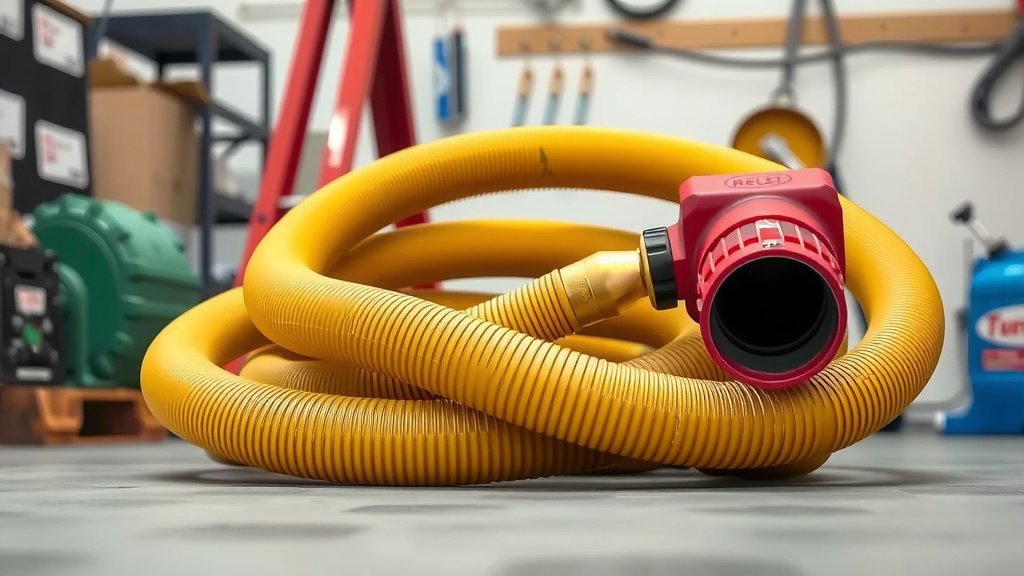
One of the simplest yet most effective ways to ensure your hose performs well is to keep it organized. When you’re done using it, coil it neatly. We found that avoiding sharp bends or kinks is crucial. A kinked hose severely restricts airflow and can put extra strain on your compressor. Investing in a hose reel or even just some Velcro straps can make a big difference.
Inspecting for Damage
Regularly check your hose for any signs of wear and tear. Look for cracks, abrasions, or damage to the fittings. We found that a damaged hose isn’t just inefficient; it can be a safety hazard. A compromised hose could rupture under pressure. If you see any damage, it’s best to replace the hose immediately.
Here’s a quick checklist to keep your air hose working its best:
- Coil your hose neatly after each use.
- Avoid sharp bends and kinks.
- Store your hose away from direct sunlight and extreme temperatures.
- Inspect for cracks or wear regularly.
- Ensure fittings are securely attached.
- Replace any damaged hoses promptly.
Conclusion
You’ve learned that while a standard air compressor hose can be up to 100 feet, longer isn’t always better without adjustments. We found that balancing hose length with its diameter is key to maintaining adequate air pressure for your tools. Remember, a wider hose diameter can help offset pressure loss on longer runs, and always keep your hose organized and damage-free for optimal performance. Your next step is to assess your typical workspace and the air requirements of your tools. Choose a hose length and diameter combination that gives you the reach you need without sacrificing the power your tools demand.
Frequently Asked Questions
Can I connect multiple air compressor hoses together?
Yes, you can connect multiple hoses to extend your reach. However, each connection point can introduce a slight restriction and potential for leaks, potentially causing more pressure drop than a single, longer hose. Ensure all connections are secure and leak-free to minimize issues.
How does a hose reel affect air pressure?
A hose reel itself does not typically affect air pressure. The pressure drop is determined by the length, diameter, and condition of the hose material. A reel simply provides a convenient way to store and manage your hose, helping to prevent kinks and damage.
What’s the maximum length for a 3/8-inch air hose?
For a 3/8-inch hose, you can generally go up to 100 feet or even a bit more before experiencing significant pressure loss, especially with a capable compressor. If you anticipate needing more than 75 feet consistently, consider a 1/2-inch diameter hose for better performance.
Will a very short air hose impact my tools?
A very short air hose, like 10-25 feet, will generally have a minimal impact on air pressure. In fact, it’s ideal for tasks requiring consistent, high pressure because it minimizes resistance. You’re unlikely to notice any negative effects on your tools with short hoses.
Is it safe to use an air compressor hose longer than 100 feet?
While it might be physically possible to connect a hose longer than 100 feet, we found it’s generally not recommended for most applications. The pressure drop can become substantial, potentially rendering your air tools ineffective. If you absolutely need that much reach, you’ll need a very powerful compressor and a large diameter hose.