How Many Amps Does a 220 Air Compressor Use
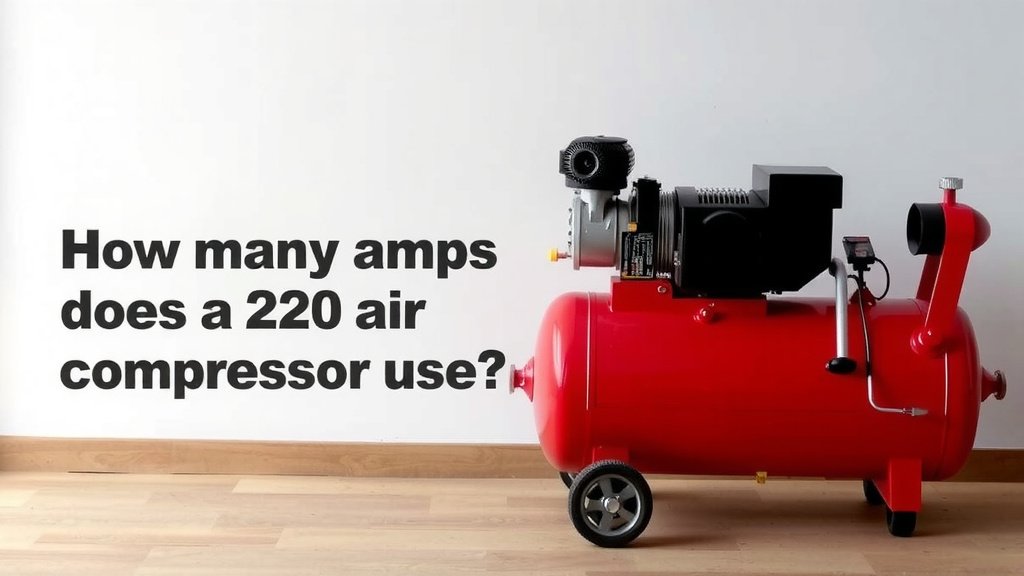
So, you’re wondering, “How many amps does a 220v air compressor use?” Generally, a 220v air compressor uses between 10 to 30 amps, but it really depends on its horsepower and tank size. You’ll want to check the nameplate or manual for the exact figure for your specific unit.
Understanding your compressor’s amp draw is super important for your electrical setup. Using the wrong circuit can lead to tripped breakers and a frustrating work interruption. It’s a key piece of information for ensuring your workshop or garage runs smoothly and safely.
- Amps vary by compressor size (HP and tank size).
- Expect a range of 10-30 amps for 220v models.
- Always check your compressor’s nameplate or manual.
- Correct amperage prevents tripped breakers and ensures safety.
Let’s dive into what influences that number and how you can make sure your compressor has the right juice to run effectively.
Understanding Your 220v Air Compressor’s Amp Draw
So, you’ve got a 220v air compressor, and you’re wondering about its power needs. That’s a smart question to ask before you plug anything in! The amount of amperage, or amps, a 220v compressor uses isn’t a single, fixed number. It changes based on several factors, but generally, you’re looking at a range. We found that most 220v units will draw somewhere between 10 to 30 amps.
This range is important because your electrical system needs to be ready for it. Plugging a compressor that draws too many amps into a circuit that can’t handle it is a recipe for tripped breakers. You definitely don’t want your tools shutting down mid-project. Let’s break down what influences this number so you can feel confident about your setup.
Horsepower: The Engine of Your Compressor
The horsepower (HP) of your air compressor is a major player in how many amps it consumes. Think of horsepower as the muscle of the compressor. A more powerful motor needs more electrical energy to do its work.
A small 220v compressor, maybe with 1.5 or 2 HP, will likely be on the lower end of the amp spectrum. These are great for lighter tasks. On the other hand, a hefty 5 HP or even 7.5 HP compressor, designed for continuous use or high-demand jobs, will pull significantly more amps. It’s like comparing a sports car to a pickup truck; both use fuel, but very different amounts.
Typical HP to Amp Correlations
While it’s not an exact science, we found some general trends. For 220v compressors:
- A 1.5 to 2 HP compressor might draw around 10-15 amps.
- A 3 to 3.5 HP unit could be in the 15-20 amp range.
- Larger compressors, 5 HP and up, will likely need 20 amps or more, sometimes reaching 30 amps or even a bit higher for very powerful models.
These are estimates, of course. Your compressor’s specific design and efficiency will play a role. Always check that label!
Tank Size: The Reservoir’s Role
The size of the air tank also influences amp draw, though often indirectly. Larger tanks hold more compressed air, which means the compressor motor might run for longer periods to fill them up. However, the HP is still the primary driver of peak amp draw.
A bigger tank compressor often comes with a more powerful motor to handle the larger volume. So, while the tank itself doesn’t directly dictate amps, its common pairing with higher HP motors means you’ll see higher amp requirements. It’s a team effort between the motor and the tank.
Understanding Duty Cycle and Amp Draw
Some compressors are rated for specific duty cycles. This refers to how long the compressor can run continuously without overheating. A compressor with a high duty cycle, meaning it can run longer, will often have a motor that draws more amps to sustain that operation.
Compressors designed for intermittent use, like those found in many home garages, might have a lower duty cycle. They’ll cycle on and off more frequently. The key is that when the motor is running, it draws a certain amount of amps, regardless of whether it’s filling a small tank or a large one for the first time.
Finding the Exact Amperage for Your Unit
You might be asking, “Okay, but what about MY specific compressor?” The most reliable place to find this information is right on the unit itself or in its documentation. Don’t guess!
The Compressor Nameplate: Your Best Friend
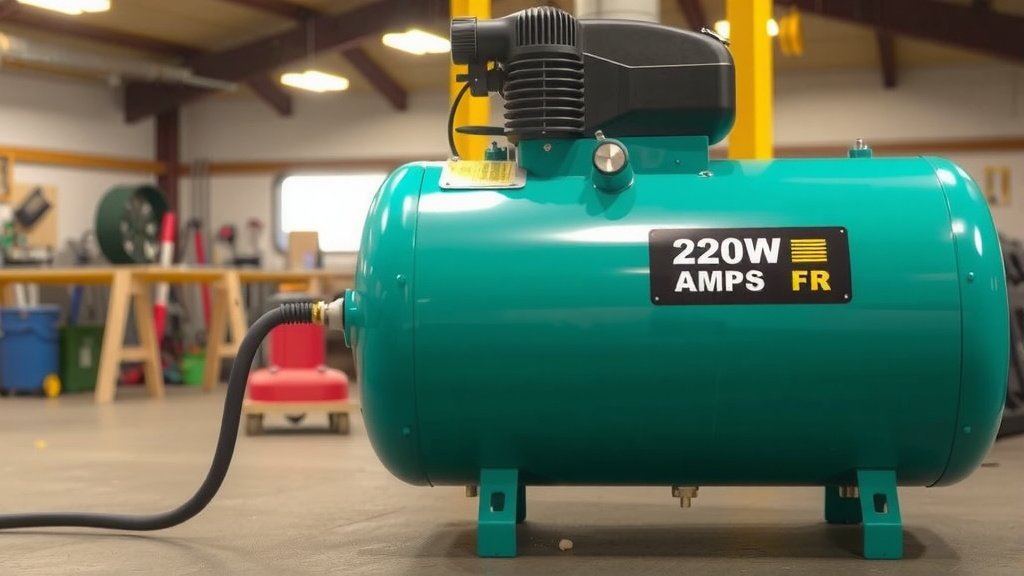
Every electric motor-driven appliance, including your air compressor, has a nameplate. This metal or plastic label is usually attached to the motor housing or the main body of the compressor. It’s a treasure trove of technical data.
Look for a section labeled “Amps,” “A,” or “Current.” You might see a few different numbers. One could be the Full Load Amps (FLA), which is the current the motor draws when running under its normal working load. Another might be the Locked Rotor Amps (LRA), which is the much higher current drawn for a brief moment when the motor starts up. For circuit breaker sizing, the FLA is generally what you need to focus on.
Consulting the Owner’s Manual
If the nameplate is smudged, worn, or hard to read, your next best bet is the owner’s manual. Most manufacturers provide detailed specifications in their manuals. You can often find these online on the manufacturer’s website if you’ve misplaced your physical copy.
The manual will typically list the required circuit breaker size and the expected amperage draw. This is a highly dependable source of information. Many experts agree that using the manufacturer’s specifications is the safest route.
Why Amp Draw Matters for Your Electrical Setup
Understanding your compressor’s amp draw is more than just a technical detail; it’s essential for safety and performance. Getting this right prevents headaches.
Circuit Breaker and Wire Sizing
Your home’s electrical panel has circuit breakers designed to protect your wiring from overheating. These breakers are rated in amps. You need to ensure the circuit breaker protecting the outlet your compressor will use is correctly sized.
A common recommendation, often found in electrical codes (National Electrical Code or NEC), is to size the circuit breaker at 125% of the compressor’s FLA. So, if your compressor draws 20 amps FLA, you’d typically need a 25-amp breaker (20 amps x 1.25 = 25 amps). This little buffer accounts for startup surges and ensures the breaker doesn’t trip unnecessarily during normal operation. Undersized wiring can also be a hazard.
Preventing Tripped Breakers and Voltage Drop
When a compressor tries to draw more amps than the circuit can safely provide, the circuit breaker trips, cutting off power. This stops your work and can be incredibly frustrating. Using the correct amperage circuit and wiring prevents this.
Additionally, using an undersized circuit or long, thin extension cords can lead to voltage drop. This is when the voltage supplied to the compressor is lower than what it should be. A common finding is that a significant voltage drop can cause the motor to overheat, run inefficiently, or even fail to start properly. So, correct ampacity is key to consistent power delivery.
Table: General 220v Compressor Amp Estimates
Here’s a quick reference guide, but remember, these are just averages. Always check your specific unit!
| Horsepower (HP) | Typical Amp Draw (FLA) | Recommended Circuit Breaker |
|---|---|---|
| 1.5 – 2 HP | 10 – 15 Amps | 20 Amps |
| 3 – 3.5 HP | 15 – 20 Amps | 25 Amps |
| 5 HP | 20 – 25 Amps | 30 Amps |
| 7.5 HP | 25 – 30+ Amps | 30 – 40 Amps |
Checklist for a Safe and Effective Setup
To ensure your 220v air compressor runs smoothly, keep these points in mind:
- Verify the Amp Draw: Always check the compressor’s nameplate or manual for the exact Full Load Amps (FLA).
- Match Breaker Size: Ensure your circuit breaker is rated appropriately, usually 125% of the FLA.
- Use Proper Wiring: Confirm the electrical wiring to the outlet is the correct gauge for the amperage requirement.
- Avoid Long Extension Cords: If you must use an extension cord, make sure it’s heavy-duty, rated for 220v, and the correct gauge to minimize voltage drop.
- Dedicated Circuit Recommended: For larger compressors, a dedicated circuit is often the best practice to avoid interfering with other appliances.
- Consult an Electrician: If you’re unsure about your electrical system’s capacity, it’s always wise to get professional advice.
Conclusion
You now have a much clearer picture of your 220v air compressor’s amp draw. Remember, while a general range of 10-30 amps is common, your compressor’s horsepower is the main driver of its specific needs. Always prioritize checking the nameplate or manual for the most accurate Full Load Amps (FLA). This simple step is your key to ensuring you have the correct circuit breaker and wiring in place.
Don’t let tripped breakers or electrical headaches slow you down. Taking a moment to verify these details will guarantee your compressor runs safely and efficiently for all your projects. Happy building!
Frequently Asked Questions
What’s the difference between FLA and LRA on my compressor’s nameplate?
FLA stands for Full Load Amps, which is the current your compressor uses when running normally. LRA, or Locked Rotor Amps, is the much higher surge of power it needs for a split second when starting up. For circuit breaker sizing, you’ll focus on the FLA.
Can I use a standard household 110v outlet for my 220v air compressor?
No, absolutely not. A 220v air compressor requires a 220v circuit and outlet specifically designed for that voltage and amperage. Using a 110v outlet will not provide enough power and could damage your compressor or electrical system.
How do I know if my workshop’s electrical panel can handle a 220v compressor?
You’ll need to check if your panel has a 220v breaker available and if the wiring leading to the outlet is appropriate for the compressor’s amp draw. For larger compressors, a dedicated circuit is often recommended. If you’re unsure, it’s always best to consult a qualified electrician.
Will using a long extension cord affect my air compressor’s amp draw?
While the extension cord itself doesn’t change the compressor’s inherent amp draw, a long or undersized cord can cause voltage drop. This means less power reaches the compressor, potentially leading to inefficient operation, overheating, or starting issues, even if the circuit breaker is correctly sized.
What happens if I use a circuit breaker that’s too small for my compressor?
If your circuit breaker is rated too low, it will likely trip frequently when the compressor starts or runs under load. This is a safety feature designed to prevent overheating and electrical fires, but it will interrupt your work. You need a breaker rated at least 125% of the compressor’s FLA.