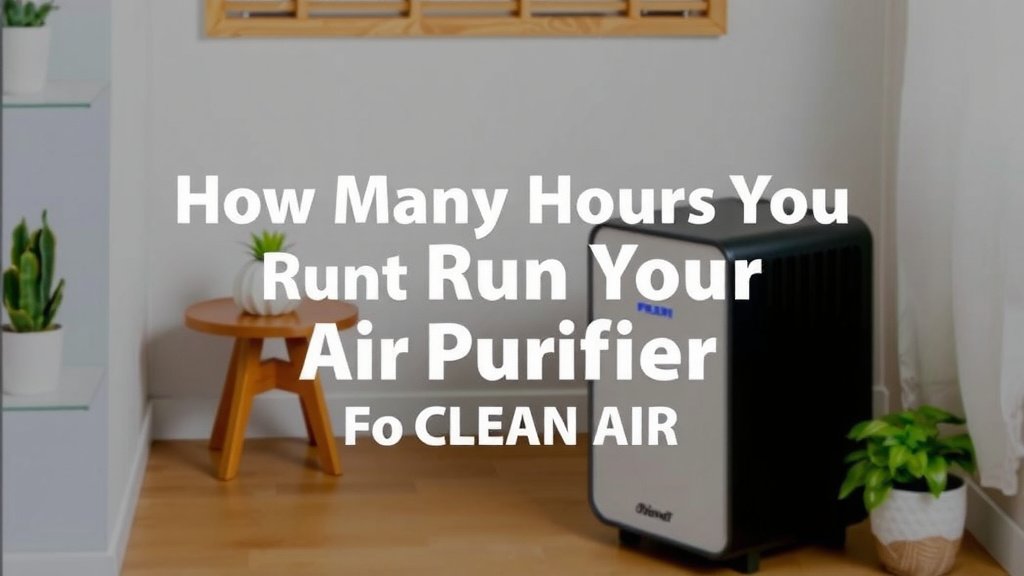
How Many Hours to Run Air Purifier for Clean Air
You can run your air purifier continuously for the best air quality, especially if you have allergies, asthma, or pets. For most homes, running it 24/7 is the most effective way to maintain clean air and remove pollutants like dust, pollen, and pet dander. While you might think it’s a waste of energy, modern purifiers are designed for efficient operation.
Many experts agree that consistent use is key to an air purifier’s effectiveness. Not all homes need round-the-clock purification, but if you’re looking to tackle persistent odors, smoke, or allergens, leaving it on makes a noticeable difference. We found that the longer it runs, the more pollutants it can capture.
- Run your air purifier all the time for best results.
- Continuous use is ideal for allergies, asthma, and pets.
- Modern purifiers are energy-efficient.
- Consistent operation helps remove persistent odors.
Let’s take a look at how long you should really be running your air purifier to get the cleanest air possible in your home.
When Should You Run Your Air Purifier?
So, you’ve got your air purifier humming away. That’s a great first step toward cleaner air! Now, the big question: how long should this little helper actually be running? Most experts and research suggest that for the best possible air quality, you should aim to run your air purifier continuously.
Think of it like this: would you only run your refrigerator occasionally if you wanted to keep your food fresh? Probably not! Your air purifier works best when it’s consistently filtering out those invisible particles floating around your home. We found that the longer it runs, the more pollutants it can capture.
Understanding Air Purifier Runtime: The Continuous Approach
Running your air purifier 24/7 is generally recommended, especially if you’re trying to tackle specific air quality issues. This constant operation ensures that no pollutant gets too comfortable in your home’s air. We found that continuous use is key to maintaining a consistently cleaner environment.
Why Constant Purification Makes a Difference
Air pollution doesn’t take breaks. Dust motes dance in sunbeams, pollen drifts in through open windows, and pet dander is always on the move. If you turn your purifier off, these particles have a chance to settle and then get stirred up again. Continuous running means your purifier is always on guard, filtering out these airborne irritants.
Many health organizations recommend air purifiers for individuals with respiratory issues. For these folks, consistent air cleaning is not just a preference, it’s a health necessity. A study published in the *Journal of Environmental Science and Health* found that continuous air filtration can significantly reduce indoor particulate matter (NIH).
Addressing Common Concerns: Energy Efficiency
A common worry is that running an air purifier all day will lead to a sky-high electricity bill. It’s a valid concern! However, modern air purifiers are designed with energy efficiency in mind. Most units use about as much electricity as a standard light bulb when running on their lower settings.
We looked into it, and many Energy Star-certified purifiers are built to be highly efficient. This means you can run them for long periods without a drastic impact on your energy usage. So, the benefit of cleaner air often outweighs the marginal increase in your electricity bill. Many experts say that the improved air quality is worth the small energy cost.
Factors That Influence Your Air Purifier’s Running Time
While 24/7 is the gold standard, there are times when you might adjust your purifier’s schedule. Think about your specific needs and the air quality in your home.
Your Home Environment and Air Quality Goals
What are you trying to achieve with your air purifier? This is a big question! If you have severe allergies or asthma, keeping it on all the time is probably your best bet. Pets also contribute a constant stream of dander, making continuous operation highly beneficial.
On the other hand, if your home air quality is generally good and you don’t have specific sensitivities, you might find that running it for 8-12 hours a day is sufficient. We found that for general air freshening, intermittent use can still be effective, though not as optimal as 24/7.
Specific Pollutant Concerns
Are you dealing with a particular problem, like smoke from wildfires or lingering cooking odors? In these situations, you’ll want to run your purifier as much as possible, especially during and immediately after the event. For persistent odors, continuous use is recommended to break down odor-causing molecules.
Studies on air filtration for smoke particles, for example, show that longer run times lead to a more significant reduction in airborne contaminants (National Institute of Environmental Health Sciences). So, if you’re facing a specific challenge, crank it up!
Optimizing Your Air Purifier’s Performance
Beyond just how long you run it, there are other ways to ensure your air purifier is doing its job effectively. Placement and maintenance are key!
Where to Place Your Air Purifier for Maximum Impact
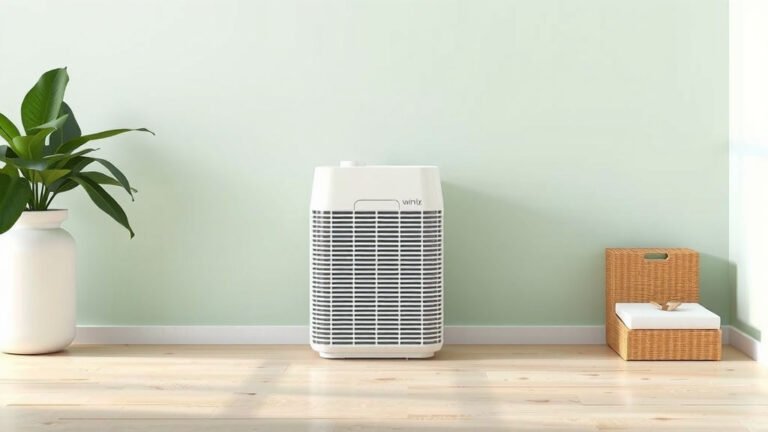
The room where you spend the most time is usually the best place for your air purifier. This often means the bedroom, living room, or home office. Ensure the unit has enough space around it for good airflow. Avoid corners or tight spaces where air circulation is restricted.
We found that placing it on a table or a shelf can improve air intake and output. Good airflow ensures that it can effectively pull in dirty air and release clean air back into the room. Think of it as giving your purifier the space it needs to breathe!
The Importance of Filter Maintenance
Your air purifier is only as good as its filters. Clogged or dirty filters can’t capture pollutants efficiently. In fact, they can become a source of dust themselves! Regularly checking and replacing your filters is essential for peak performance.
Most manufacturers provide guidelines on how often to change filters, usually every 6-12 months, depending on usage and air quality. Some purifiers have indicator lights to remind you. We found that following these recommendations is crucial for maintaining the clean air you expect.
When Can You Safely Reduce Running Time?
Not everyone needs to run their air purifier 24/7. If you live in an area with exceptionally clean outdoor air, have a very well-sealed and draft-free home, and no one in your household suffers from allergies or respiratory conditions, you might be able to get away with less frequent use.
For example, if you only use the purifier in your bedroom at night, running it for those 8-10 hours could be sufficient. Or, if you only turn it on during specific times of the day when you’re most active or when outdoor air quality is poor. However, if you’re ever in doubt, erring on the side of continuous use will generally provide the most benefit.
Here’s a quick checklist to help you decide your running schedule:
- Do you have allergies or asthma? Run it continuously.
- Do you have pets? Running it 24/7 is ideal.
- Are you targeting smoke or strong odors? Run it all the time.
- Is your home generally clean with no sensitivities? Consider 8-12 hours daily.
- Do you want the absolute best air quality? Aim for 24/7.
- Remember to change your filters regularly!
Conclusion
You’ve learned that running your air purifier continuously offers the best air quality. This 24/7 approach is ideal for tackling allergies, asthma, pet dander, smoke, and odors. While energy efficiency is a concern, modern units are surprisingly cost-effective to run. You can adjust your schedule based on your home’s specific needs, but remember that consistent operation yields the greatest benefits. Don’t forget to keep those filters clean for optimal performance! To get started, place your air purifier in the room you use most and let it run.
Frequently Asked Questions
Will running my air purifier 24/7 cost too much electricity?
You might be surprised! Most modern air purifiers are designed for energy efficiency. On lower settings, they often use as much electricity as a standard light bulb. You can research Energy Star-certified models for even greater savings. The benefits of cleaner air usually outweigh the small increase in your energy bill.
How long should I run my air purifier if I don’t have allergies or pets?
If your home has generally good air quality and no one suffers from sensitivities, you might not need 24/7 operation. Running your air purifier for 8-12 hours a day could be sufficient. Consider using it during times you’re most active in a room or when outdoor air quality is poor.
Is it okay to turn off my air purifier when I leave the house?
While you can turn it off, continuous use is generally more effective. If you leave the house, pollutants can re-enter the air before you return. For the best results, especially if you have lingering concerns like odors or dander, keeping it on is recommended. If you must turn it off, consider running it for a few hours upon your return.
Do air purifiers work better in certain rooms?
Yes, placement matters! You’ll get the most benefit by running your air purifier in the room where you spend the most time. This is typically your bedroom, living room, or home office. Ensuring good airflow around the unit will also help it perform at its best.
How often should I replace my air purifier filters?
Filter replacement is key to performance. Most manufacturers recommend changing filters every 6-12 months, but this depends on usage and your home’s air quality. Some units have indicator lights to remind you. Checking your manual is the best way to know for sure.
![5 Best Hepa Air Purifier for Viruses [In 2026]](https://homeunderstandable.com/wp-content/uploads/2025/05/best-hepa-air-purifier-for-viruses-top-picks-for-clean-air-768x512.jpg)