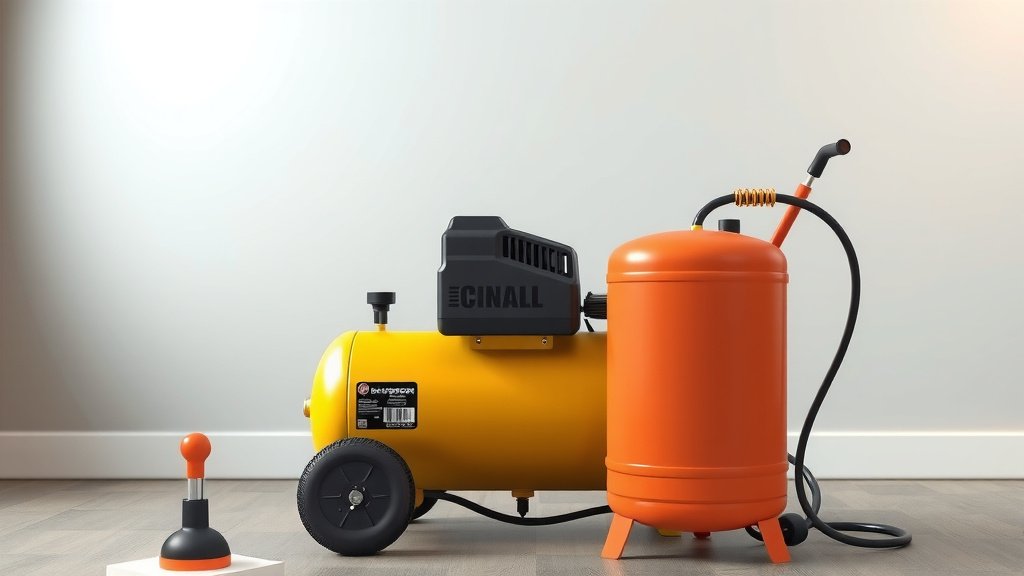
How Many Watts Does a 2.5 HP Air Compressor Use
A 2.5 horsepower (HP) air compressor typically uses between 1500 and 1800 watts of power when it’s running. This is because 1 HP is roughly equal to 746 watts, so a 2.5 HP motor needs approximately 1865 watts. However, the actual power draw can vary based on the compressor’s efficiency and the load it’s under. You’ll also see a much higher surge of power when it first starts up.
Understanding your air compressor’s wattage is key for managing your electrical needs. It helps you avoid tripping circuit breakers and ensures you have enough power for other tools. This wattage also influences how much electricity you’ll use, impacting your energy bills. We’ve researched this to help you get a clear picture of your power consumption.
- A 2.5 HP air compressor uses roughly 1500-1800 watts when running.
- This is based on 1 HP being about 746 watts.
- The startup surge is much higher than the running wattage.
- Knowing this helps you manage your electrical panel capacity.
- It also gives you an idea of potential energy costs.
Let’s break down the watts for your 2.5 HP air compressor so you know exactly what to expect. We’ll cover why it uses this much power and what you can do with that information.
Understanding Your 2.5 HP Air Compressor’s Power Needs
So, you’ve got a 2.5 horsepower (HP) air compressor and you’re wondering about its electrical demands. It’s a smart question to ask! Knowing how many watts your compressor uses helps you avoid headaches like tripped breakers and ensures your tools get the power they need. Let’s dive into the wattage details.
The Math Behind the Watts: HP to Kilowatts
The simplest way to estimate wattage is by understanding the conversion between horsepower and watts. One horsepower is generally accepted as being equal to about 746 watts. This is a standard conversion used across many industries.
So, for a 2.5 HP motor, you’d multiply 2.5 by 746. This gives you 1865 watts. That’s the theoretical maximum power your compressor’s motor would need under ideal conditions. Many sources, like engineering guides, use this calculation.
What to Expect in Real-World Usage
While the 1865-watt figure is a good starting point, your compressor won’t always draw that exact amount. In practice, a 2.5 HP air compressor often operates within a range of 1500 to 1800 watts when it’s actively running and pumping air. Why the difference? Efficiency plays a big role.
Compressor designs vary. Some are more efficient than others at converting electrical energy into mechanical power. An older or less efficient model might creep closer to the 1865-watt mark, while a newer, high-efficiency unit could stay closer to 1500 watts. Think of it like cars – some get better gas mileage than others, even with similar engine sizes.
The Startup Surge: A Brief Power Spike
Here’s an important point: when your air compressor kicks on, it uses a lot more power for a very short burst. This is called the startup surge, or inrush current. It’s like the initial grunt needed to get things moving.
This surge can be significantly higher than the running wattage. For a 2.5 HP compressor, this spike could momentarily reach 2500 watts or even more. Most household circuits are designed to handle these brief surges. However, it’s crucial information if you have other high-draw appliances on the same circuit.
Factors Affecting Your Compressor’s Wattage Draw
Several things can influence how much power your 2.5 HP compressor actually pulls. It’s not always a fixed number. Understanding these factors can help you predict its energy use more accurately.
Load and Duty Cycle
The amount of work your compressor is doing directly affects its power consumption. If it’s just topping off a small tank, it might use less power than when it’s running continuously to keep a large tank full under heavy use.
The duty cycle is also key. This refers to how long the compressor can run before needing to rest. A compressor with a 50% duty cycle, for example, can run for 5 minutes out of every 10. When it’s actively pumping, it’s drawing power. When it’s resting, it’s not.
Compressor Efficiency and Design
As mentioned earlier, not all compressors are created equal. The quality of the motor and the overall design of the compressor unit matter. More advanced designs use better materials and engineering to minimize energy loss.
A poorly maintained compressor, perhaps with dirty filters or worn parts, might also work harder and draw more power. Regular maintenance can help keep your unit running efficiently. Many user manuals offer maintenance tips.
Voltage and Amperage
Your compressor’s power draw is also linked to the voltage it’s supplied and the amperage it pulls. The formula Watts = Volts x Amps is fundamental. Most 2.5 HP compressors are designed for standard 120-volt household circuits, but some larger ones might require a 240-volt outlet.
If your home’s voltage dips slightly, the compressor might draw more amperage to compensate and reach its required horsepower. This is why ensuring you have a stable power supply is important for optimal performance.
Putting Wattage to Work: Practical Applications
Now that you know the numbers, what can you do with this information? Understanding your compressor’s wattage is more than just a number; it’s about practical management of your workshop or home garage.
Avoiding Electrical Overload
This is perhaps the most critical use. Standard household circuits in the U.S. are typically 15 or 20 amps. A 120-volt circuit with a 20-amp breaker can handle roughly 2400 watts (120V x 20A). Considering your compressor’s 1500-1800 running watts and its startup surge, you need to be mindful.
If you plan to run your 2.5 HP air compressor on the same circuit as other tools or appliances that draw significant power (like a welder, a shop vac, or even a microwave), you risk tripping the breaker. It’s wise to dedicate a circuit to your compressor if possible, or at least understand the combined load.
Estimating Energy Costs
Curious about how much that compressor use adds to your electricity bill? You can make a pretty good estimate. First, find your electricity rate per kilowatt-hour (kWh) from your utility bill. Then, calculate your compressor’s hourly energy use in kWh.
For example, if your compressor runs at 1.7 kW (1700 watts) and you use it for 2 hours, that’s 3.4 kWh. Multiply that by your rate (e.g., $0.15/kWh) to find the cost: 3.4 kWh x $0.15/kWh = $0.51. This helps you budget for energy consumption.
A Simple Cost Calculation Example
Let’s say your electricity costs $0.12 per kWh. Your 2.5 HP compressor runs at an average of 1600 watts (1.6 kW).
If you use it for one full hour, it consumes 1.6 kWh. The cost would be 1.6 kWh * $0.12/kWh = $0.192. This is for one hour of continuous running. Most users won’t run it constantly, so your actual costs will be less.
Matching Compressor to Power Source
If you’re buying a new compressor or setting up a new workshop space, knowing the wattage helps you ensure your electrical infrastructure is ready. A 2.5 HP unit generally fits well into a standard 120V, 20-amp outlet. If you were looking at a larger 5 HP compressor, you’d definitely need a heavier-duty, likely 240V circuit.
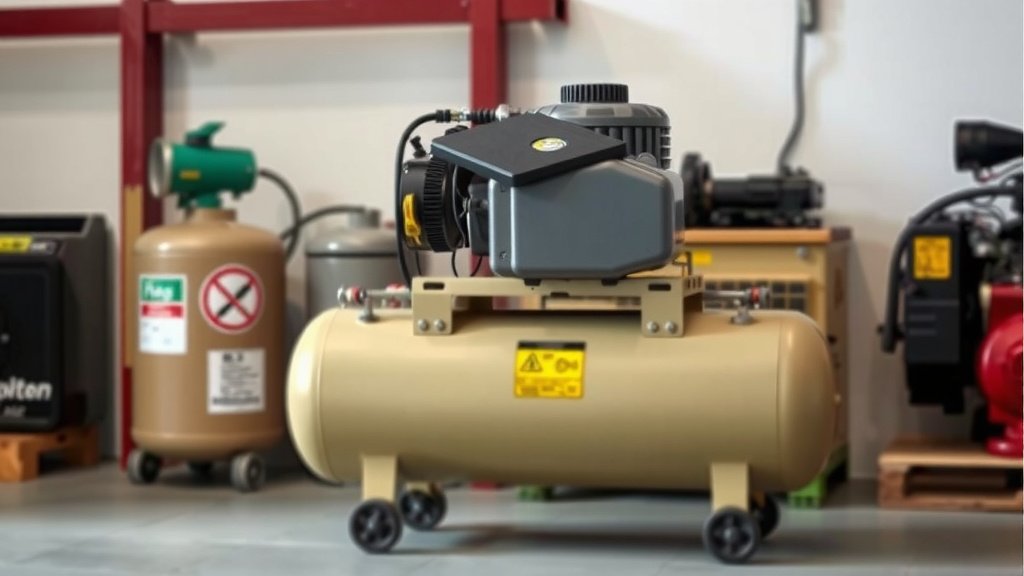
Quick Checklist for Managing Your Compressor’s Power
To make sure you’re using your 2.5 HP air compressor wisely and safely from an electrical perspective, keep these points in mind:
- Confirm your circuit breaker capacity: Ensure the circuit can handle the compressor’s running and startup watts.
- Check your wiring: Make sure the outlet and wiring are rated for at least 20 amps if your compressor requires it.
- Avoid overloading circuits: Don’t run other high-draw items on the same circuit simultaneously.
- Consider a dedicated circuit: For frequent use, a dedicated circuit is the safest bet.
- Factor in startup surge: Remember the brief, high power draw when the motor starts.
- Perform regular maintenance: Keep your compressor running efficiently to avoid increased power draw.
Conclusion
You’ve learned that your 2.5 HP air compressor typically runs between 1500 and 1800 watts, with a higher surge at startup. Understanding this wattage is key for managing your home’s electrical circuits and avoiding tripped breakers. It also helps you gauge potential energy costs and ensure your compressor is properly matched to your power supply. By keeping these numbers in mind and performing regular maintenance, you can ensure your compressor operates efficiently and reliably for all your projects. Now, you’re well-equipped to manage your compressor’s power needs confidently.
Frequently Asked Questions
Can I run my 2.5 HP air compressor on a standard 15-amp outlet?
Generally, a 2.5 HP air compressor requires a 20-amp circuit due to its wattage. A standard 15-amp outlet might not be sufficient, especially considering the startup surge. Check your compressor’s manual and circuit breaker rating to be sure.
Will a 2.5 HP air compressor trip a circuit breaker if I plug it in?
It’s possible, especially if the circuit is already powering other devices. The startup surge can momentarily exceed the breaker’s capacity. Ideally, your compressor should be on a dedicated 20-amp circuit for safe operation.
How much does it cost to run a 2.5 HP air compressor for an hour?
The cost depends on your local electricity rate. If your compressor draws 1.7 kW and your rate is $0.15 per kWh, running it for one hour would cost about $0.26 ($0.15 x 1.7). This estimate is for continuous running, which most users don’t experience.
Does an older 2.5 HP air compressor use more watts than a new one?
Yes, older or less efficient models often use more watts. Wear and tear, along with less advanced motor technology, can reduce efficiency. Regular maintenance can help older units run closer to their original wattage draw.
Is it safe to use an extension cord with my 2.5 HP air compressor?
If you must use an extension cord, choose a heavy-duty one rated for at least 20 amps and use the shortest length possible. Long or thin cords can cause voltage drops, making your compressor work harder and potentially drawing more power.