
How Much is a Desalination Plant to Filter Sea Water: Cost Breakdown

Credit: kaiyuan-water.en.made-in-china.com
Introduction to Desalination Plants
Desalination plants turn sea water into clean drinking water. These plants are very important in dry areas. They help provide fresh water where it is hard to find. But, how much do these plants cost?
The Basics of Desalination
Desalination is the process of removing salt from sea water. This makes the water safe to drink. There are two main types of desalination:
- Reverse Osmosis
- Thermal Desalination
Both methods help make sea water safe for drinking.
Reverse Osmosis
Reverse osmosis is the most common method. It uses a special filter to remove salt. The filter lets water pass but stops the salt. This method needs less energy than thermal desalination.
Thermal Desalination
Thermal desalination uses heat to remove salt. The water is boiled, and the steam is collected. The steam turns back into water without salt. This method uses more energy than reverse osmosis.
Cost of Building a Desalination Plant
Building a desalination plant can be very expensive. The cost depends on the size and type of plant. Let’s look at some factors that affect the cost:
| Factor | Impact on Cost |
|---|---|
| Plant Size | Larger plants cost more to build |
| Technology Used | Thermal plants are more expensive than reverse osmosis |
| Location | Building in remote areas costs more |
| Energy Source | Plants using renewable energy may cost more |
A small plant can cost around $10 million. A large plant can cost up to $1 billion or more.
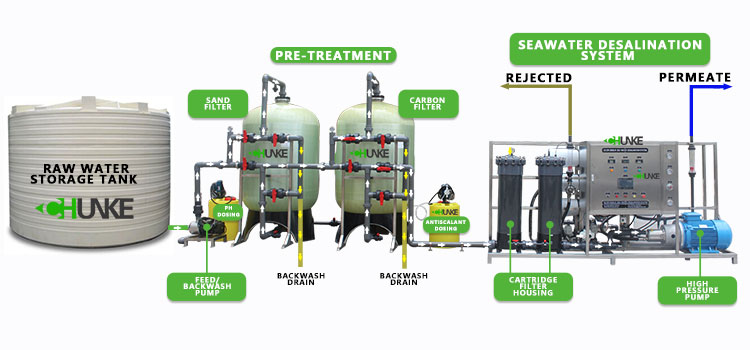
Credit: www.chunkerowaterplant.com
Operating Costs
After building the plant, there are also operating costs. These include:
- Energy costs
- Maintenance
- Labor
- Chemicals
Energy is the biggest cost. Desalination uses a lot of energy. This makes the water more expensive than other sources.
Cost to Consumers
Consumers pay for the water produced by desalination plants. The price depends on the plant’s costs. On average, desalinated water costs around $1 to $2 per cubic meter. This is more than water from rivers or lakes. But, in dry areas, it is sometimes the only option.
Environmental Impact
Desalination plants have an impact on the environment. They can harm marine life. The salty waste water is returned to the sea. This can affect the local ecosystem. Also, the plants use a lot of energy. This can increase carbon emissions.
Advantages of Desalination
Despite the high cost and environmental impact, desalination has many benefits:
- Provides clean water in dry areas
- Reduces dependence on freshwater sources
- Can be a reliable water source during droughts
Future of Desalination
The future of desalination looks promising. New technologies are being developed. These aim to reduce costs and environmental impact. Renewable energy can also help make desalination more sustainable.
Frequently Asked Questions
What Is The Cost Of A Desalination Plant?
A desalination plant typically costs between $1 million and $200 million, depending on size and technology.
How Does A Desalination Plant Work?
A desalination plant removes salt from seawater using processes like reverse osmosis, making it safe to drink.
What Factors Affect Desalination Plant Costs?
Factors include plant size, location, technology used, and energy costs. Maintenance and operation also impact costs.
How Much Water Can A Desalination Plant Produce?
Small plants produce around 1,000 gallons per day, while large ones can produce millions of gallons daily.
Is Desalinated Water Expensive?
Yes, desalinated water is more expensive than traditional sources due to energy and technology costs.
Are Desalination Plants Environmentally Friendly?
Desalination plants can impact marine life and use a lot of energy. New technologies aim to reduce these effects.
Conclusion
Desalination plants are important for providing clean water. They are expensive to build and operate. But they are essential in dry areas. The cost to consumers is higher than other sources. New technologies may help reduce costs in the future.