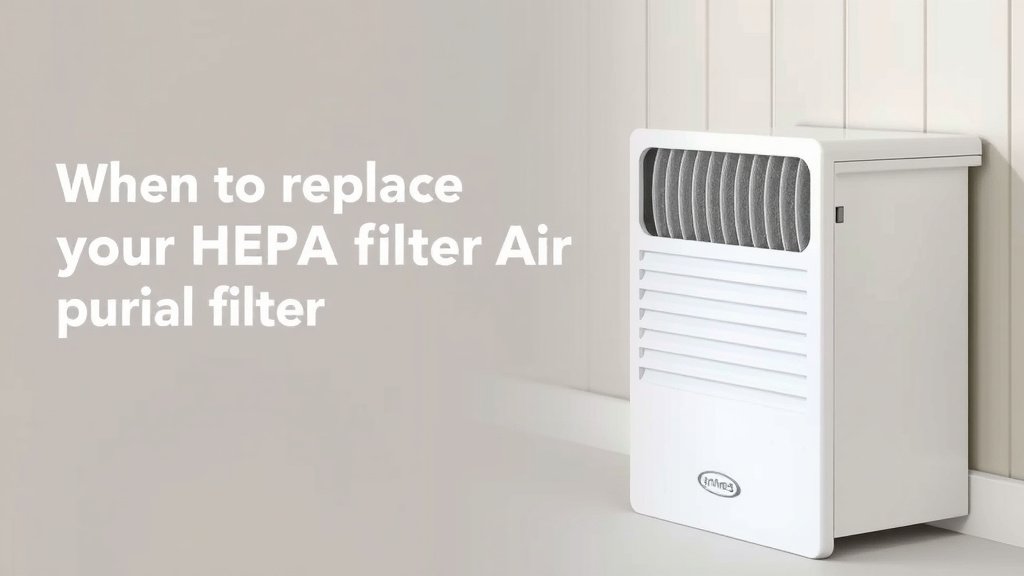
When to Replace Your HEPA Filter Air Purifier Filter
You should change your HEPA filter for your air purifier every 6 to 12 months. This timeframe can vary based on your specific purifier model and how often you run it. Regular changes ensure your filter is effectively cleaning your air.
Ignoring filter changes means your air purifier won’t work as well. A clogged filter can’t capture pollutants efficiently. This can even lead to your purifier working harder and using more energy. We found that many users forget this simple maintenance step.
- HEPA filters typically last 6-12 months.
- Check your purifier’s manual for exact recommendations.
- Usage and air quality affect filter life.
- A dirty filter makes your purifier less effective.
- Don’t forget this easy maintenance task!
Let’s dive into what influences your HEPA filter’s lifespan and how to know when it’s time for a swap.
“`htmlWhen Should You Swap Your Air Purifier HEPA Filter?
You’re probably wondering how often you actually need to change that HEPA filter in your air purifier. It’s a common question, and the answer isn’t always a simple number. While many manufacturers suggest a range, your filter’s lifespan depends on a few key factors.
Think of your HEPA filter like the lungs of your air purifier. They work hard to catch all the unwanted stuff floating around your home. When they get clogged, they just can’t breathe as well. We found that most manufacturers recommend changing your HEPA filter every 6 to 12 months. This is a good starting point for most households.
Factors Influencing Your HEPA Filter’s Life
So, what makes one filter last longer than another? It’s a mix of how much work it’s doing and the environment it’s working in. Your home isn’t a sterile lab, and that’s a good thing! But it does mean your filter is always on duty.
Usage Matters More Than You Think
How often do you actually run your air purifier? If you keep it on 24/7, it’s going to get dirty much faster than if you only turn it on occasionally. We found that running your purifier on a higher fan setting also increases the filter’s workload. This is because it’s pulling more air through, trapping more particles.
The Air Quality in Your Home
Do you live near a busy road? Do you have pets? Are there smokers in the house? All these things can dramatically affect how quickly your HEPA filter fills up. A home with heavy pet dander, for example, will likely require more frequent filter changes than a home without pets. We found that homes with higher levels of dust, pollen, or smoke will naturally wear out filters faster.
Pet Owners, Take Note!
Fido and Fluffy are adorable, but their dander can be tough on your air filter. You might find yourself needing to change your HEPA filter closer to the 6-month mark if you have furry companions shedding all year round. Regular vacuuming and grooming can help, but the filter is still the primary catcher.
Smoking Indoors? That’s a Big Factor.
If anyone in your household smokes inside, your air purifier is working overtime. Smoke particles are very fine and abundant. We found that in homes where smoking occurs indoors, HEPA filters can become overloaded and significantly less effective in as little as 3 to 4 months. It’s a good indicator that a filter needs replacing much sooner.
Environmental Allergens and Pollution
Homes in areas with high outdoor pollution or during peak allergy seasons (like pollen season) will put extra strain on your air purifier. Your filter is essentially a shield against these airborne irritants. We found that if you notice an increase in seasonal allergies, it’s a sign your filter might be struggling to keep up, suggesting a swap is due.
Signs Your HEPA Filter Needs Changing
Your air purifier might give you clues that it’s time for a new filter. These aren’t always obvious, but once you know what to look for, you can catch them easily. Ignoring these signs means your purifier isn’t doing its best job.
Noticeable Drop in Air Quality
Is the air in your home not feeling as fresh as it used to? Do you find yourself sneezing more, even when your allergies shouldn’t be acting up? This could be a sign your HEPA filter is clogged and unable to capture new pollutants. We found that a reduced airflow from the unit is often the first noticeable symptom.
Reduced Airflow
Have you noticed that the air coming out of your purifier doesn’t feel as strong? A dirty HEPA filter obstructs airflow. Imagine trying to breathe through a thick blanket – it’s much harder! We found that a significant decrease in the fan’s output is a strong indicator that the filter is saturated with particles.
Unpleasant Odors
HEPA filters are designed to trap particles, but some also have an activated carbon layer to help with odors. Even without a carbon layer, a saturated filter can start to hold onto smells. If your air purifier starts emitting a musty or unpleasant odor, it’s likely time for a filter change. This smell is often a sign of trapped mold or bacteria.
Visual Inspection of the Filter
If your air purifier model allows for easy filter access, take a peek! A new HEPA filter is usually bright white or off-white. When it’s dirty, it will be noticeably darkened with trapped dust and debris. If it looks gray, brown, or black, it’s definitely time for a replacement. We found that some people are surprised by how much gunk a filter can hold.
Checking Your Air Purifier Manual for Specifics
While general guidelines are helpful, your air purifier’s user manual is your ultimate guide. Manufacturers design their filters to work with specific models and often have precise recommendations. We found that neglecting the manual is a common oversight.
Your manual will tell you the exact type of filter needed and the recommended replacement schedule. It might also include specific instructions on how to check the filter’s status or reset the filter indicator light. Always refer to it for the most accurate information for your specific device.
A Simple Filter Replacement Checklist
Keeping your air purifier running smoothly doesn’t have to be complicated. Here’s a quick checklist to help you remember when to change your HEPA filter:
- Check your manual: Note the manufacturer’s recommended filter life.
- Note your usage: How many hours a day do you run it? On what setting?
- Consider your environment: Pets? Smokers? Allergies? High pollution?
- Watch for signs: Decreased airflow or new odors?
- Visual check: Does the filter look visibly dirty or discolored?
- Mark your calendar: Set a reminder for 6 months from your last change.
Conclusion
Keeping your air purifier’s HEPA filter fresh is key to breathing cleaner air. Remember, the 6-12 month guideline is a starting point, but your home’s specific conditions matter most. Pay attention to how often you run your purifier, the air quality around you, and any signs your unit might be giving you. A simple visual check or noticing reduced airflow can tell you a lot. Don’t forget to consult your manual for precise advice. Make it a habit to check and replace your filter regularly to ensure your air purifier always performs at its best for your health and comfort.
Frequently Asked Questions
How often should I change my HEPA filter if I don’t have pets or allergies?
If your home has relatively low pollutant levels, you might be able to extend the filter life closer to the 12-month mark. However, we recommend still checking it around the 6-month point. Consistent use of the purifier will still cause gradual accumulation of dust and other particles.
Can I clean my HEPA filter instead of replacing it?
Generally, no. True HEPA filters are designed to trap very fine particles, and washing them can damage the filter media, making it less effective. For best performance, you should replace your HEPA filter according to the manufacturer’s recommendations or when it shows signs of being dirty.
My air purifier has a filter indicator light. Should I rely on that?
Filter indicator lights are helpful reminders, but they aren’t always perfect. They often track runtime rather than actual filter condition. We found that it’s wise to use the indicator light as a guide but also to perform your own visual checks and consider your home’s air quality for the most accurate timing.
What happens if I don’t change my HEPA filter often enough?
If you don’t change your HEPA filter, it will become clogged. This significantly reduces its ability to clean your air and can even cause your purifier to work harder, consuming more energy. In some cases, a severely clogged filter can lead to reduced airflow and potential damage to the unit over time.
Does the type of air purifier affect how often I need to change the HEPA filter?
Yes, the design and intended use of the air purifier can influence filter life. Larger units or those designed for high-pollution environments might use more robust filters. Always refer to your specific air purifier model’s user manual for the manufacturer’s recommended filter replacement schedule.