
How to Buy a New Washing Machine: Your 2026 Guide
Buying a new washing machine can feel overwhelming. You want a reliable appliance that fits your space and budget. We found that focusing on a few key features first makes the process much simpler. Consider your laundry habits to choose the best type and size.
Your washing machine is a major home appliance. It needs to handle your family’s needs efficiently. We’ve researched the latest models and expert advice. Think about energy efficiency and the features that truly matter for your household.
- Know your laundry habits.
- Choose the right type (top-load, front-load).
- Measure your space carefully.
- Check capacity for your family size.
- Consider energy and water efficiency.
Let’s walk through exactly how to pick the perfect washing machine for your home. We’ll cover the essential steps to ensure you make a smart purchase.
Getting Started with Your New Washing Machine Purchase
Choosing a washing machine feels like a big decision. You want something that cleans well without causing headaches. We’ve researched what matters most. Let’s break down the key steps to finding your perfect match.
Choosing the Right Washing Machine Type for Your Home
The first big choice is between top-load and front-load machines. Each has its own pros and cons. Your laundry habits and preferences will guide you here. Think about how you typically do laundry. Do you prefer bending over or reaching in?
Top-Load Washing Machines Explained
Top-load washers are a familiar sight in many homes. They usually have an agitator or an impeller in the center. Agitators are the older style, a central post that twists clothes. Impellers are newer, flatter discs that move clothes around.
These machines are often more affordable upfront. They can also be faster to load and unload. You can add forgotten clothes mid-cycle easily. Many find them easier on the back. No bending down required here!
Front-Load Washing Machines Explained
Front-load washers use a tumbling action to clean clothes. They don’t have a central agitator. This means more space inside for your laundry. We found they are generally gentler on fabrics. Our guide to the best front-load washers can help you understand their benefits.
Front-loaders often use less water and energy. This can save you money on utility bills over time. They also tend to spin faster, removing more water. This means shorter drying times. Some people prefer the deeper clean they offer. They can also be stacked with a dryer to save space.
Understanding Washing Machine Capacity and Size
Next, let’s talk about size and how much laundry you do. A machine that’s too small will mean more loads. One that’s too big might waste water and energy. We found that matching capacity to household size is key.
How Much Laundry Do You Actually Do?
Consider your household size. A single person or couple needs less capacity. A large family with kids will need more. Think about bulky items too, like comforters or sleeping bags. Can your current machine handle them?
We suggest looking at the cubic feet of the drum. Smaller machines are around 3.5 cubic feet. Medium sizes are 4.0 to 4.5 cubic feet. Large capacity machines go up from there. It’s like picking the right-sized suitcase for your trip!
Measuring Your Laundry Space
This step is super important. You don’t want to buy a machine that won’t fit. Measure the width, depth, and height of the space. Don’t forget to account for door swings and any hoses or vents needed.
Measure the doorways too, especially if you have tight corners. You need to get the machine *into* the laundry area. Many experts recommend leaving a few inches of clearance around the machine. This helps with airflow and reduces vibration noise.
| Household Size | Recommended Capacity (Cubic Feet) | Typical Load Size |
|---|---|---|
| 1-2 People | 2.5 – 3.5 | Small loads, fewer items |
| 3-4 People | 3.5 – 4.5 | Medium loads, standard family laundry |
| 5+ People | 4.5+ | Large loads, bulky items, less frequent washing |
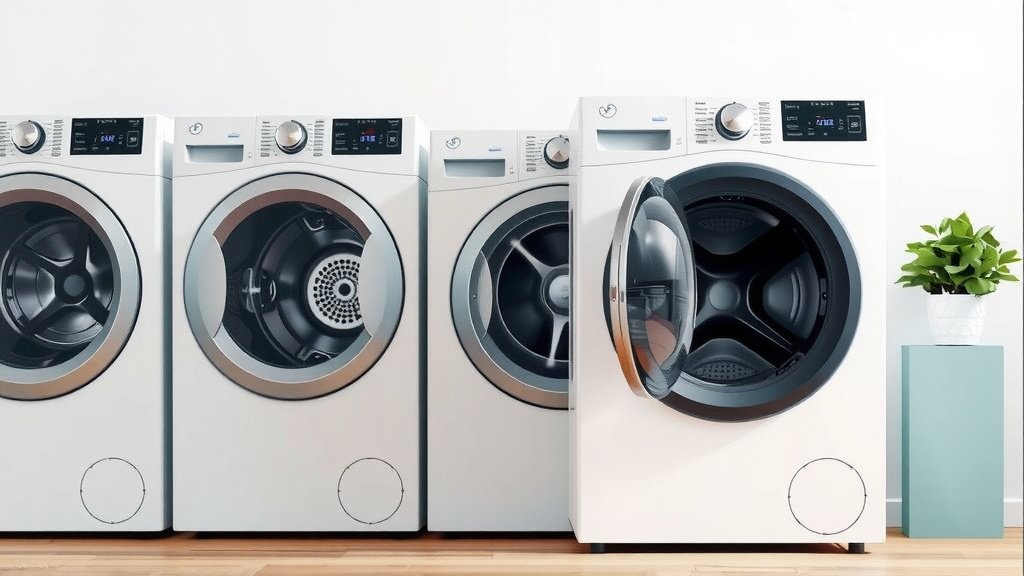
Key Features to Look For in a New Washer
Modern washing machines come with tons of features. It’s easy to get overwhelmed. We found that focusing on a few smart options can make a big difference. Think about what will genuinely make your laundry routine easier.
Energy and Water Efficiency Ratings
Look for the ENERGY STAR label. These appliances use less energy and water. This helps the environment and your wallet. The U.S. Department of Energy sets these standards. Many guidelines point to ENERGY STAR certified washers as a smart choice (U.S. Department of Energy).
Water factor (WF) is another rating. It tells you how many gallons of water are used per cubic foot of capacity. A lower WF means better efficiency. High-efficiency (HE) models are designed to use less water. This is common in front-loaders and some newer top-loaders.
Smart Features and Cycles
Do you need a washer that connects to your Wi-Fi? Some machines let you start, stop, and monitor cycles from your phone. Others can send you notifications when a load is done. These are nice-to-haves for some.
Consider specialized wash cycles. Do you wash a lot of delicates? Need extra sanitizing options? Look for cycles that match your needs. Steam cycles can help remove allergens and tough stains. Many experts say these specialized cycles can extend the life of your clothes (Cleveland Clinic).
Noise Levels and Vibration
Noisy machines can be a real nuisance. We found that front-loaders are generally quieter. Look for models that advertise quiet operation or vibration reduction technology. This is especially important if your laundry area is near living spaces.
Making Your Final Washing Machine Decision
You’ve got a lot of information now! It’s time to pull it all together. Remember to prioritize what matters most for your household. Don’t get swayed by features you’ll never use.
Check Reviews and Reliability
Once you’ve narrowed down your choices, read reviews. Look for patterns in customer feedback. Are people consistently happy with the cleaning performance? Are there recurring issues?
Consumer reports and repair statistics can be helpful. We found that some brands consistently score well for reliability. This research can help you avoid future problems. Think of it as getting a second opinion before you buy.
Consider Your Budget and Warranty
Set a budget before you start shopping. Washing machines range in price. Remember to factor in potential delivery and installation costs. Extended warranties can offer peace of mind, but weigh the cost against the machine’s warranty.
Most manufacturers offer a one-year parts and labor warranty. Some offer longer warranties on specific components, like the motor or tub. Read the warranty details carefully. This protects you if something goes wrong early on.
- Measure your space accurately.
- Match capacity to your household size.
- Decide between top-load and front-load.
- Prioritize energy and water efficiency.
- Read reviews for reliability and performance.
- Set a realistic budget.
Conclusion
You’re now well-equipped to buy your new washing machine! We’ve covered everything from choosing the right type and size to understanding efficiency ratings. You know to measure your space and match capacity to your family’s needs. Prioritizing energy efficiency and checking reviews will lead you to a reliable machine. Your next step is to gather those measurements and start comparing models that fit your criteria. You’ll find a washer that makes laundry day much easier.
Frequently Asked Questions
How do I know if a washing machine is too big for my laundry room?
Measure your laundry room’s width, depth, and height. Make sure to account for door swings and connections. Leave a few inches of clearance around the machine for airflow. This prevents it from bumping against walls or cabinets.
Are front-load washers really better for clothes than top-loaders?
Many experts suggest front-load washers are gentler on fabrics. They use a tumbling action, which is less harsh than an agitator. This can help your clothes last longer. They also tend to be more water-efficient.
What does “High Efficiency” (HE) mean on a washing machine?
High Efficiency means the machine uses less water and energy. HE washers are designed to clean effectively with lower water levels. You’ll often find this label on front-load models and some newer top-loaders.
Should I buy an extended warranty for a new washing machine?
Consider your budget and the manufacturer’s warranty. Extended warranties can offer peace of mind, but they add to the cost. Read the terms carefully to see what is covered and for how long.
How important is the “wash cycle” selection when buying?
Wash cycles are important if you have specific laundry needs. Think about delicates, heavy stains, or sanitizing requirements. Machines with specialized cycles can offer better cleaning results for different fabrics and soil levels.
![7 Best Small Front Loader Washing Machine [In 2026]](https://homeunderstandable.com/wp-content/uploads/2026/08/7-best-small-front-loader-washing-machine-in-2026-featured-768x432.jpg)
![7 Best Small Stackable Washer And Dryer [In 2026]](https://homeunderstandable.com/wp-content/uploads/2026/09/7-best-small-stackable-washer-and-dryer-in-2026-featured-768x432.jpg)
![7 Best Deals On Front Load Washer And Dryer [In 2026]](https://homeunderstandable.com/wp-content/uploads/2026/09/7-best-deals-on-front-load-washer-and-dryer-in-2026-featured-768x432.jpg)