Top Loading Washing Machine Buying Guide for 2026
Choosing a top-loading washing machine is a straightforward process when you know what to look for. You’ll want to consider capacity, efficiency ratings, and the types of cycles you need for your laundry. Focusing on these key features helps ensure you find a machine that fits your household’s demands and budget.
Top-loaders offer distinct advantages, like easier loading for many users. Research shows they can be more affordable upfront than front-loaders. Understanding your laundry habits will guide you to the best model, whether you’re washing bulky items or just everyday clothes.
- Capacity matters for your household size.
- Look for ENERGY STAR certification for savings.
- Consider wash cycle options for different fabrics.
- Check noise levels if your laundry area is near living spaces.
- Think about your budget and desired features.
Let’s walk through the essential factors to help you select the perfect top-loading washing machine for your home.
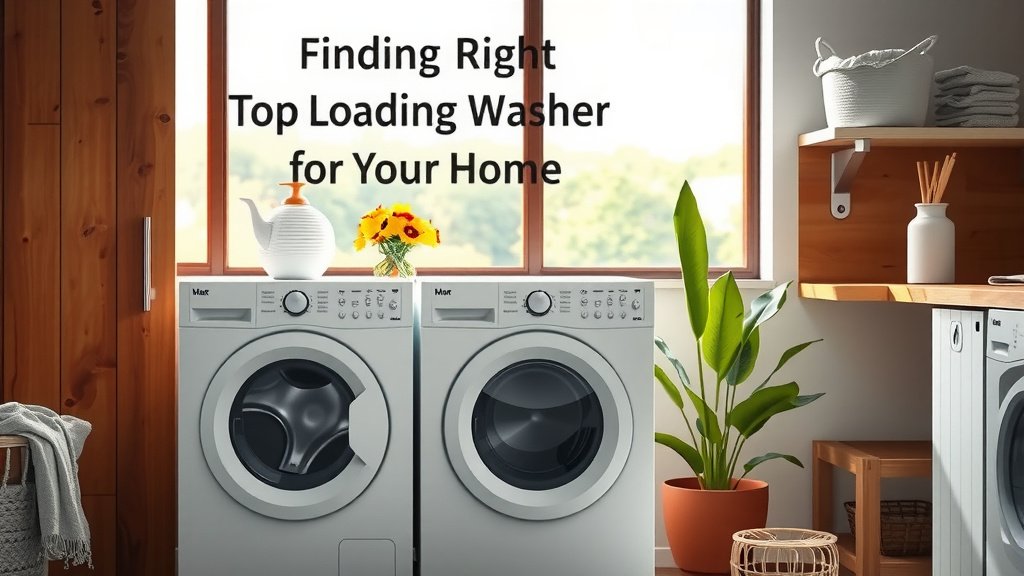
Finding the Right Top-Loading Washer for Your Home
Choosing a top-loading washing machine might seem simple, but there are a few key details that make a big difference. You want a machine that handles your laundry needs efficiently and fits your budget. Let’s break down what you should consider.
Understanding Washer Capacity: How Much Laundry Do You Have?
This is probably the most important factor to consider. How many people are in your household? Do you tend to wash large loads or smaller, more frequent ones? Washer capacity is measured in cubic feet.
Matching Capacity to Your Household Size
A good rule of thumb is to look at your typical laundry habits. A single person or a couple might be fine with a smaller capacity machine (around 3.5 to 4.0 cubic feet). This is often more affordable and uses less water and energy.
For a family of three to four, a medium capacity (4.0 to 4.5 cubic feet) is usually a good fit. It can handle larger loads of towels, bedding, and everyday clothes without issue. If you have a larger family or frequently wash bulky items like blankets or sleeping bags, you’ll want to look at high-capacity models (4.5 cubic feet and up). These can be a real time-saver.
The Trade-offs of Larger Capacity
While bigger is often better, larger machines can be more expensive upfront and may use more water and energy per load, even if they save you time by washing more at once. It’s a balance you need to strike based on your family’s needs and your budget.
Efficiency Ratings: Saving Energy and Money
When you’re looking at washing machines, you’ll see labels that tell you about their energy and water usage. Paying attention to these can lead to significant savings over the life of the appliance.
What is ENERGY STAR?
Look for the ENERGY STAR certification. Appliances with this label meet strict energy efficiency guidelines set by the U.S. Environmental Protection Agency. This means they use less energy and water than standard models. You’ll find it on many top-loading washing machines.
Understanding Water Factor (WF) and Energy Factor (EF)
Some machines will also have a Water Factor (WF) and an Energy Factor (EF). WF tells you how many gallons of water the machine uses per cubic foot of capacity. A lower WF is better. EF indicates how much energy the machine uses per cubic foot of capacity. A higher EF is better.
Research from ENERGY STAR shows that certified washers can use at least 25% less energy and 33% less water than their regular counterparts. Over time, this really adds up on your utility bills!
Types of Top-Loading Washers: Agitator vs. Impeller
Top-loading washers generally come in two main styles: those with an agitator and those with an impeller. They both do the job, but they work a bit differently, and this can affect your clothes and the washing experience.
The Traditional Agitator Model
The agitator is that tall, central post found in many older-style top-loaders. It has fins that twist back and forth, moving your clothes through the water. This method is known for being tough on stains and is great for heavily soiled items. Many people are familiar with how this type works.
However, agitator models can be harder on fabrics. The vigorous action can cause wear and tear on clothes over time. They also tend to use more water to ensure clothes are fully submerged.
The Modern Impeller (High-Efficiency) Model
Impeller models, often called high-efficiency (HE) top-loaders, don’t have a central post. Instead, they have a cone or disc at the bottom that spins. This impeller moves clothes around more gently in less water. Many experts say this method is kinder to your fabrics, reducing stretching and snagging.
Because they use less water, HE impeller models are generally more energy-efficient. They might take a little longer to wash, and some users find they need to rearrange clothes more often to ensure even cleaning. It’s a trade-off between fabric care and wash time.
Wash Cycles and Features You Might Need
Modern washing machines come with a variety of wash cycles and features designed to handle different types of laundry. Think about what you wash most often.
Common Wash Cycles
Most machines will have essential cycles like:
- Normal/Regular: For everyday cottons and blends.
- Delicate: For lighter fabrics, lingerie, or items that need gentle treatment.
- Heavy Duty: For heavily soiled items like work clothes or towels.
- Quick Wash: For small, lightly soiled loads that need to be done fast.
Useful Extra Features
Beyond cycles, consider other features. A delay start function lets you set the machine to start later, so your laundry is ready when you are. Internal water heaters can provide hotter water for better stain removal. Some machines even connect to your smartphone for remote control and notifications.
Think about whether you really need all the bells and whistles. More features often mean a higher price tag. For many households, the basic cycles are perfectly sufficient.
Noise Levels and Installation Considerations
Where will your washing machine be located? If it’s in a basement or a dedicated laundry room far from living areas, noise might not be a big concern. But if it’s on the main floor or near bedrooms, it’s worth paying attention to.
Quieter Operation
Some machines are designed with noise reduction technology. You might see terms like “quiet wash” or “vibration reduction.” Reading reviews can give you a good idea of how noisy a particular model is during operation. HE impeller models often tend to be quieter than agitator models.
Space and Installation
Make sure you measure the space where the washer will go, including the door opening to get it inside! You’ll also need access to a water supply, a drain, and an electrical outlet. Most top-loaders require a standard 120-volt outlet.
Your Top-Loading Washer Checklist
To help you narrow down your choices, here’s a quick checklist:
- Confirm the capacity needed for your household size.
- Look for the ENERGY STAR label for efficiency.
- Decide between an agitator or impeller model.
- Identify the essential wash cycles and features you’ll use.
- Consider the noise level if your laundry area is close to living spaces.
- Set a realistic budget for your purchase.
By thinking through these points, you’ll be well on your way to choosing a top-loading washing machine that makes laundry day a little easier!
Conclusion
You’re now equipped to choose the perfect top-loading washing machine for your home. Remember to match the capacity to your household’s needs and prioritize ENERGY STAR certification for long-term savings on utility bills. Deciding between an agitator and an impeller model depends on your fabric care preferences. By considering these key factors—capacity, efficiency, model type, essential cycles, and noise—you’ll find a machine that makes laundry day much simpler and more efficient. Your next step is to browse models based on these criteria and read user reviews to confirm your choice!
Frequently Asked Questions
Are top-loading washing machines still a good choice?
Yes, top-loading washing machines remain a popular choice for many households. They often have a lower upfront cost compared to front-loaders. Many people also find them easier to load and unload without bending over as much.
How do I know if I need a large capacity washer?
You likely need a large capacity washer if you have a family of three or more, or if you frequently wash bulky items like comforters, large towels, or sleeping bags. Consider your typical laundry pile size to make the best decision.
Will an ENERGY STAR certified washer really save me money?
Absolutely. ENERGY STAR certified washing machines are designed to use significantly less water and energy than standard models. While they might have a slightly higher initial cost, the savings on your monthly utility bills over the appliance’s lifespan can be quite substantial.
What’s the main difference between an agitator and an impeller top-loader?
An agitator is the central post that twists to move clothes, often being tougher on stains but potentially harder on fabrics. An impeller is a low-profile cone or disc at the bottom that spins, using less water and being gentler on clothes, making it more energy-efficient.
Should I worry about the noise level of a new washing machine?
You should consider noise levels if your laundry area is near your living spaces or bedrooms. Some machines are specifically designed with noise reduction features. Reading reviews can help you gauge how loud a particular model is during its spin cycles.
![7 Best Washing Machine For Single Person [In 2026]](https://homeunderstandable.com/wp-content/uploads/2026/08/7-best-washing-machine-for-single-person-in-2026-featured-768x432.jpg)
![7 Best Apt. Size Washer And Dryer [In 2026]](https://homeunderstandable.com/wp-content/uploads/2026/08/7-best-apt-size-washer-and-dryer-in-2026-featured-1-768x432.jpg)
![7 Best Deals On Front Load Washer And Dryer [In 2026]](https://homeunderstandable.com/wp-content/uploads/2026/09/7-best-deals-on-front-load-washer-and-dryer-in-2026-featured-768x432.jpg)
![7 Best Washing Machines [In 2026]](https://homeunderstandable.com/wp-content/uploads/2026/08/7-best-washing-machines-in-2026-featured-768x432.jpg)