
Choosing the Best Air Purifier for Your Home
Choosing the best air purifier for your home involves considering several key factors. You’ll want to look for a model with a HEPA filter to capture tiny particles, adequate CADR ratings for your room size, and features like low noise levels for comfort. Matching these elements to your specific needs ensures cleaner air effectively.
Air purifiers work by drawing in room air and passing it through a series of filters. This process removes common indoor pollutants such as dust, pollen, pet dander, and smoke. Finding the right one means understanding how these filters work and what performance metrics matter most for your air quality.
- Consider HEPA filter effectiveness for small particles.
- Check CADR ratings matched to your room size.
- Look for quiet operation and energy efficiency.
- Think about specific needs like pet dander or allergens.
- Factor in replacement filter costs and availability.
Let’s walk through exactly how to pick the right air purifier for your space, so you can breathe easier soon.
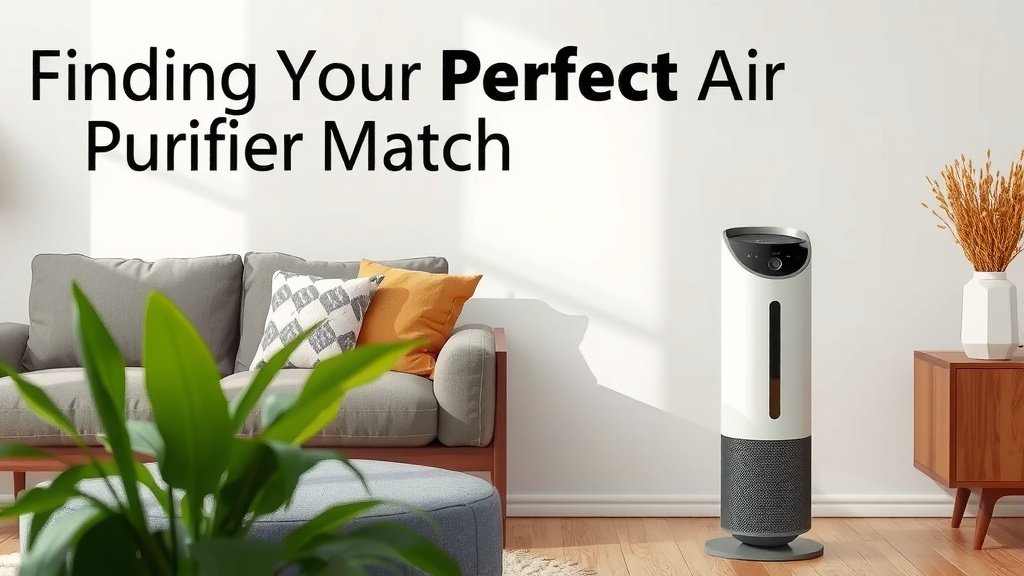
“`htmlFinding Your Perfect Air Purifier Match
Choosing the right air purifier can feel like a big decision. But we’re here to break it down for you. You want cleaner air, and we want to help you get it. Let’s figure out what matters most for your home.
Understanding the Core Technology: Filters and Airflow
At its heart, an air purifier is a fan that pulls air through a filtering system. The most important part of this system is the filter itself. Different filters tackle different types of pollutants.
The Mighty HEPA Filter
When you’re looking at air purifiers, HEPA filters are usually top of the list. HEPA stands for High-Efficiency Particulate Air. These filters are designed to trap 99.97% of airborne particles. We’re talking about particles as small as 0.3 microns. This includes things like dust mites, pollen, pet dander, and mold spores.
Many health organizations, like the American Lung Association, recommend HEPA filters for improving indoor air quality. They are excellent for allergy sufferers. You’ll often see “True HEPA” filters, which meet a specific standard for efficiency.
Activated Carbon Filters for Odors and Gases
Beyond particles, you might also deal with odors and gases. Think about cooking smells, pet odors, or even chemicals from cleaning products. For this, you’ll want an air purifier with an activated carbon filter. Carbon is porous and acts like a sponge, absorbing volatile organic compounds (VOCs) and odors.
The amount of carbon matters. A thicker, heavier carbon filter generally performs better and lasts longer. Some purifiers combine HEPA and carbon filters into a single unit, which is very convenient.
Matching Performance to Your Space: CADR Ratings
An air purifier needs to be powerful enough for the room you plan to use it in. This is where the CADR rating comes in. CADR stands for Clean Air Delivery Rate. It measures how quickly an air purifier can clean the air.
There are three main CADR ratings: one for smoke, one for dust, and one for pollen. A higher number means faster cleaning. For example, a smoke CADR of 300 means the purifier can remove 300 cubic feet of smoke per minute from the air. We found that many experts suggest choosing a purifier with a CADR rating at least two-thirds of your room’s square footage.
What Size Room Are You Purifying?
It’s essential to know the square footage of the room where you’ll place the air purifier. Measure your room’s length and width, then multiply them. This gives you the total square footage. For a living room that’s 20 feet by 20 feet, that’s 400 square feet.
We found that manufacturers usually provide a recommended room size for their units. Always check this against your room’s dimensions. It’s often better to get a unit rated for a slightly larger room than you need. This way, it won’t have to work as hard and can run more quietly.
Considering Your Specific Needs and Concerns
Your personal reasons for buying an air purifier will guide your choice. Are you mainly worried about allergies, or is pet dander a bigger issue? Perhaps you live in an area prone to wildfire smoke.
Allergies and Asthma
If you or someone in your home suffers from allergies or asthma, a True HEPA filter is non-negotiable. These filters capture the tiny allergens that can trigger symptoms. We found that many allergists recommend air purifiers with HEPA filters as part of a comprehensive allergy management plan.
Pet Owners’ Guide
Pets bring so much joy, but also dander and odors. For pet owners, we recommend a purifier with both a True HEPA filter and a substantial activated carbon filter. The HEPA filter will grab the dander, while the carbon filter tackles those pesky pet smells.
Some purifiers also come with pre-filters. These are washable layers that catch larger particles like pet hair before they reach the main HEPA filter. This helps extend the life of your HEPA filter. We think this is a smart feature for any pet household.
Smoke and Air Pollution
Living near busy roads or in areas affected by wildfire smoke means dealing with fine particulate matter and odors. In these cases, look for a purifier with a high CADR rating for smoke and a robust activated carbon filter. The carbon filter is key for absorbing the smoky smells and harmful gases.
Key Features to Look For Beyond the Basics
Once you’ve got the filter type and size sorted, let’s look at other features that can make a big difference in your daily life.
Noise Levels: Sleep Soundly
No one wants a loud appliance running all the time. Air purifier noise is measured in decibels (dB). Most units have multiple fan speeds. The highest speed is usually the loudest, while the lowest is often whisper-quiet. Many people look for units that are under 50 dB on their lowest setting. This is comparable to a quiet library.
Some purifiers have an “auto mode” that adjusts fan speed based on air quality sensors. This is handy because it only ramps up when needed. We found that a lower minimum fan speed is often more important than the absolute quietest setting, as you’ll likely use it most often.
Energy Efficiency: Saving Money and the Planet
Air purifiers run for many hours a day, so their energy consumption matters. Look for units that are Energy Star certified. This means they meet strict energy efficiency guidelines set by the EPA. While these might cost a bit more upfront, they can save you money on your electricity bill over time.
Filter Replacement Costs and Availability
Don’t forget about the ongoing costs. Replacement filters are a recurring expense. Check the price of replacement HEPA and carbon filters before you buy. Also, make sure these filters are readily available. You don’t want to buy a purifier only to find its filters are hard to find or out of stock.
We found that filter life can range from 6 months to 2 years, depending on usage and filter type. Some manufacturers offer filter subscription services, which can sometimes save you money.
Your Air Purifier Checklist
Ready to make a choice? Here’s a quick checklist to help you:
- Room Size: Does the CADR rating match your room?
- Filter Type: Do you need HEPA, carbon, or both?
- Noise Level: Is the lowest setting quiet enough for you?
- Pet/Allergy Needs: Are there extra features like pre-filters?
- Ongoing Costs: What’s the price and availability of replacement filters?
- Energy Star: Is it energy-efficient?
Taking these steps will help you narrow down your options and find an air purifier that truly suits your needs. You’ll be enjoying fresher, cleaner air in no time!
“`
Conclusion
You’ve learned how to pick the best air purifier for your home. We’ve covered the importance of HEPA filters for particles and carbon filters for odors. Remember to match the CADR rating to your room size for effective cleaning. Consider your personal needs, like allergies or pets, and look for features like quiet operation and energy efficiency. Checking replacement filter costs is also key for long-term satisfaction. Now you’re ready to make an informed decision and start breathing cleaner air!
Frequently Asked Questions
How often should I replace air purifier filters?
Filter replacement frequency varies by model and usage. We found that HEPA filters typically last 6 to 12 months, while carbon filters may need changing every 3 to 6 months. Always check your manufacturer’s recommendations for the most accurate schedule.
Can an air purifier really help with allergies?
Yes, a good air purifier can significantly help with allergies. True HEPA filters capture tiny allergens like pollen, dust mites, and pet dander that trigger reactions. Running your purifier consistently can help reduce these airborne irritants in your home.
Are air purifiers noisy?
Noise levels vary greatly between models. Most air purifiers have multiple fan speeds, with the lowest setting often being very quiet, around 30-50 decibels. If noise is a concern, look for models specifically mentioning quiet operation or an ‘auto’ mode that adjusts fan speed.
What’s the difference between HEPA and True HEPA filters?
A “True HEPA” filter is certified to capture at least 99.97% of airborne particles 0.3 microns in size. Other filters might claim “HEPA-like” or “HEPA-type” but don’t meet this strict standard. For maximum effectiveness, especially for allergies, always look for “True HEPA.”
Do air purifiers use a lot of electricity?
Modern air purifiers are generally energy-efficient. Look for the Energy Star certification, which indicates a unit meets strict energy efficiency guidelines. While they do consume power, running them on lower settings or using auto modes can help minimize electricity usage.
![5 Best Air Purifier for Cat Hair Reddit [In 2026]](https://homeunderstandable.com/wp-content/uploads/2025/06/best-air-purifier-for-cat-hair-reddit.jpg)
![What Is The Best Air Purifier for Travel [In 2026]](https://homeunderstandable.com/wp-content/uploads/2025/06/best-air-purifier-for-travel.jpg)