
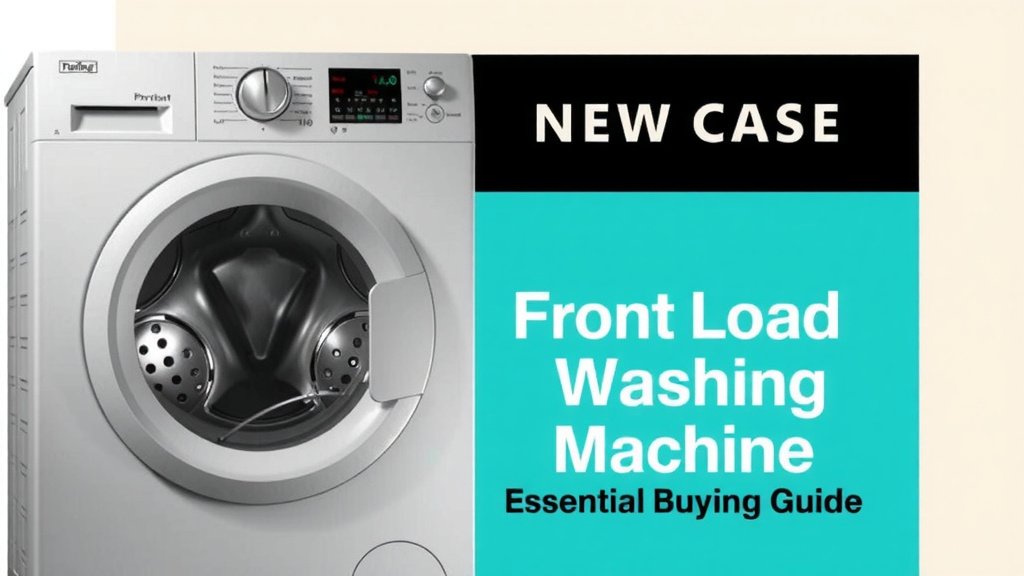
Front Load Washing Machine: Your Essential Buying Guide
Choosing the right front load washing machine involves balancing features, size, and budget. We found that the best models offer excellent cleaning power, water efficiency, and gentle fabric care. Consider capacity and spin speed to match your household needs.
Modern front loaders are designed for convenience and performance. They generally use less water than top-loaders. Look for features like steam cycles and quiet operation. Many people find these machines a great investment for their laundry room.
- Size and capacity matter most.
- Look for water and energy efficiency ratings.
- Consider noise levels and special wash cycles.
- Compare prices and warranty options carefully.
Let’s walk through how to pick the perfect front load washing machine for your home.
Navigating Your Front Load Washer Purchase
Finding the perfect front load washing machine can feel like a big task. We’re here to simplify it for you. Think of this as your friendly guide to making a smart choice. You want a machine that cleans well and is kind to your clothes. It should also be efficient and fit your laundry space. We’ve researched what makes a front loader a winner.
Understanding Capacity and Size
The first thing to consider is how much laundry you do. How many people are in your household? Do you often wash bulky items like comforters?
Matching Capacity to Your Needs
Washing machine capacity is measured in cubic feet. Smaller households (1-2 people) might do well with a 2.0 to 3.5 cubic feet model. For families of 3-4 people, a 3.5 to 4.5 cubic feet washer is usually a good fit. Larger families or those who wash big loads often should look for 4.5 cubic feet or more.
We found that choosing the right capacity means fewer loads. This saves you time and energy in the long run. It’s a smart investment for busy households.
Considering Your Space
Measure your laundry area carefully. Don’t forget to account for door swings and space for vent hoses. Most standard front load washers are about 27 inches wide. Height and depth can vary, so check the specifications.
Some models are designed for smaller spaces or stacked installations. If you plan to stack a dryer on top, ensure the washer can support it. Always check the manufacturer’s measurements before you buy.
Energy and Water Efficiency Matters
Front load washers are known for being water and energy savers. Look for the ENERGY STAR label. This means the appliance meets strict energy efficiency guidelines set by the U.S. Environmental Protection Agency.
The Benefits of High Efficiency (HE)
HE machines use less water per cycle. This is because they tumble clothes through a small amount of water. Traditional top-loaders often fill the entire tub. Less water means less energy needed to heat it for hot washes.
We found that ENERGY STAR certified models can save you money on utility bills. They are also better for the environment. Many federal and state rebates are available for purchasing these efficient appliances.
Understanding Water Factor and Energy Factor
You might see ratings like “Water Factor” (WF) and “Energy Factor” (EF). A lower Water Factor indicates better water efficiency. A higher Energy Factor means it uses less energy. These numbers help you compare models directly. Many experts say these ratings are the best way to gauge efficiency (Consumer Reports).
Key Features to Look For
Beyond basic washing, many front loaders offer features to make laundry easier. Think about what kind of cycles and options would benefit you most.
Wash Cycles and Options
Most machines come with standard cycles like Normal, Delicates, and Heavy Duty. Look for specialized cycles that match your needs. Common ones include:
- Sanitize cycle: Uses high heat to kill germs.
- Steam cycle: Helps remove stains and reduce wrinkles.
- Quick wash: For lightly soiled items when you’re in a hurry.
- Allergen cycle: Removes common allergens like dust mites and pet dander.
We found that steam functions can be a game-changer for tough stains. They also help refresh clothes without a full wash.
Spin Speed and Noise Level
Spin speed is measured in Revolutions Per Minute (RPM). Higher RPMs extract more water from clothes. This means less time in the dryer, saving energy. Look for models with at least 1200 RPM for good performance.
Noise level is also important, especially if your laundry is near living areas. Many modern front loaders are designed for quiet operation. Check reviews for comments on noise during the spin cycle. Some machines have vibration reduction technology.
Smart Features and Connectivity
Some washers connect to your home Wi-Fi. You can often control them with a smartphone app. This might include starting or stopping cycles, receiving notifications, and downloading custom wash programs. While not essential for everyone, these features add a layer of modern convenience.
Budget and Warranty Considerations
Front load washers vary in price. Basic models can be quite affordable. High-end machines with advanced features will cost more.
Setting Your Budget
We recommend setting a budget before you start shopping. Consider not just the purchase price but also long-term operating costs. More efficient models might have a higher upfront cost but save money over time.
Understanding Warranties
Check the warranty terms carefully. Most manufacturers offer a one-year limited warranty on parts and labor. The motor or drum might have a longer warranty, sometimes 10 years or more. A good warranty provides peace of mind.
Your Front Load Washer Checklist
To make your decision easier, use this quick checklist:
- Confirm the exact dimensions for your laundry space.
- Determine the ideal capacity for your household size.
- Look for the ENERGY STAR label for efficiency.
- Prioritize wash cycles that you’ll actually use.
- Read reviews for information on noise and reliability.
- Compare warranty details from different brands.
Conclusion
You’ve now got a clear path to choosing your next front load washing machine. Remember to balance your household’s laundry needs with the available space. Prioritize energy efficiency for long-term savings and environmental benefits. Don’t forget to consider the specialized wash cycles that will make your life easier. Your ideal washer is out there. Now, take your measurements and start comparing models to find the perfect fit for your home.
Frequently Asked Questions
How do I know what size front load washer I need?
Consider how many people are in your household and how often you do laundry. For 1-2 people, a smaller capacity (around 2.0-3.5 cu. ft.) often works. Families or those who wash bulky items like bedding should opt for larger capacities (4.5 cu. ft. or more).
Are front load washers really more energy efficient?
Yes, they generally are. Front loaders use significantly less water per load because they tumble clothes through a small amount of water. This means they also require less energy to heat that water, leading to lower utility bills.
What does “high efficiency” (HE) mean for a washing machine?
High Efficiency (HE) machines are designed to use less water and energy. They achieve this through different washing actions, like tumbling, and often use less detergent. Look for the ENERGY STAR label to confirm a machine meets strict efficiency standards.
Is a higher spin speed (RPM) always better?
A higher spin speed extracts more water from your clothes. This can reduce drying time and save energy. While a higher RPM is generally beneficial, aim for models with at least 1200 RPM for good results.
Should I worry about the noise level of a front load washer?
Noise can be a factor, especially if your laundry area is near living spaces. Many modern front loaders are engineered for quiet operation. Reading customer reviews is a good way to gauge a specific model’s noise levels during cycles, especially the spin cycle.
![7 Best Small Washer Dryers [In 2026]](https://homeunderstandable.com/wp-content/uploads/2026/08/7-best-small-washer-dryers-in-2026-featured-768x432.jpg)
![7 Washer Dryers Best [In 2026]](https://homeunderstandable.com/wp-content/uploads/2026/09/7-washer-dryers-best-in-2026-featured-768x432.jpg)
![7 Best Washing Machine For Blankets [In 2026]](https://homeunderstandable.com/wp-content/uploads/2026/09/7-best-washing-machine-for-blankets-in-2026-featured-768x432.jpg)
![7 Best Rated Wash Machines [In 2026]](https://homeunderstandable.com/wp-content/uploads/2026/09/7-best-rated-wash-machines-in-2026-featured-768x432.jpg)