
How to Clean Stains Out of a Mattress
The easiest way to clean stains out of a mattress is with a simple mixture of mild detergent and water. This method is effective for most common stains. You can also tackle tougher spots using a baking soda paste. Always remember to blot, not rub, to avoid damaging your mattress fibers. Getting rid of mattress stains doesn’t have to be a chore!
Dealing with spills and accidents is part of life, and your mattress doesn’t have to show it. We found that having a few go-to cleaning solutions can save your mattress from lasting damage. From coffee spills to mysterious dark spots, there are practical ways to refresh your sleep surface. Keeping your mattress clean also contributes to a healthier sleeping environment and can extend its lifespan.
- Act fast on fresh stains.
- Use mild cleaners first.
- Blotting is key for stain removal.
- Baking soda can help with tougher spots.
- Always allow the mattress to air dry completely.
Ready to say goodbye to those unsightly mattress marks? Let’s walk through the best methods step by step to get your mattress looking and feeling fresh again.
Tackling Mattress Stains: Your Step-by-Step Guide
Accidents happen, but they don’t have to ruin your mattress. We found that a few simple cleaning supplies can make a big difference. Your mattress can look and feel fresh again with the right approach. Let’s get started on making those stains disappear.
Understanding Mattress Stains and How to Approach Them
Mattress stains come in many forms. You might be dealing with sweat, urine, blood, food, or drink spills. Each type can require a slightly different touch. But the general principle is always the same: act quickly. The longer a stain sits, the harder it will be to remove. We learned that a fresh stain is much easier to lift than one that has set in for weeks.
The Golden Rule: Blot, Don’t Rub
This is probably the most important tip you’ll hear. Rubbing a stain can spread it wider. It also pushes the stain deeper into the mattress fibers. This can make it nearly impossible to remove. Instead, always blot gently with a clean cloth or paper towel. You’re essentially trying to lift the stain from the surface. Think of it like dabbing a delicate fabric.
Gathering Your Cleaning Supplies
Before you begin, make sure you have the right tools ready. Having everything within reach saves you time and frustration. We found that most of these items are probably already in your home.
- Clean white cloths or paper towels
- A spray bottle
- Mild laundry detergent or dish soap
- Baking soda
- White vinegar (optional)
- A vacuum cleaner
- A fan (for drying)
Effective Cleaning Methods for Common Mattress Stains
Different stains call for different treatments, but many respond well to basic solutions. We’ve outlined a few reliable methods below.
Your Go-To Mild Detergent Solution
This is your first line of defense for most everyday stains. It’s gentle yet effective. Many experts recommend a mild detergent for upholstery and fabric cleaning (National Center for Home Food Preservation).
How to use it:
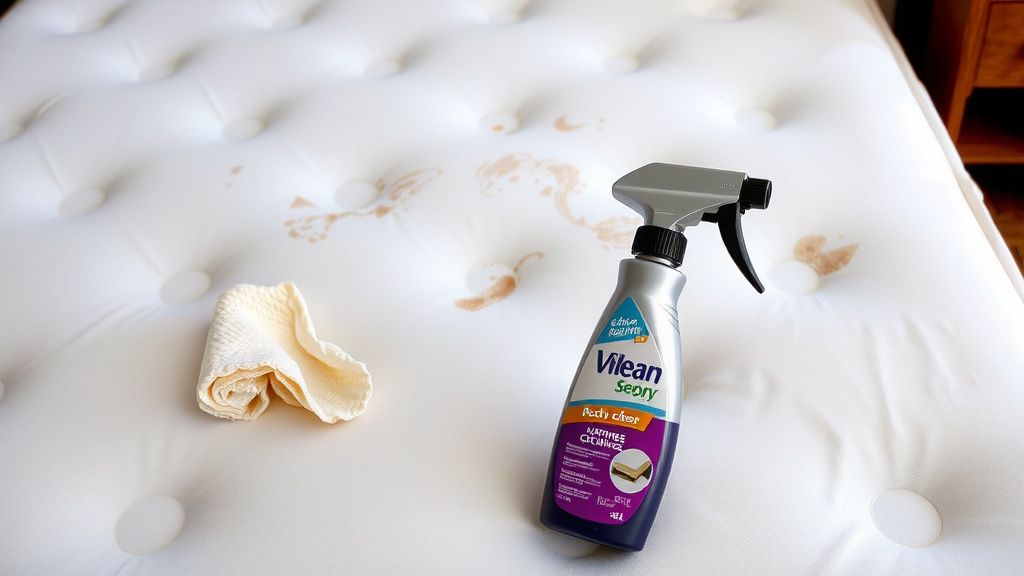
- Mix a small amount of mild laundry detergent or dish soap with cool water. Aim for about 1 teaspoon of soap per cup of water.
- Pour the mixture into a spray bottle.
- Lightly spray the stained area. Don’t saturate the mattress. You want it damp, not soaking wet.
- Gently blot the stain with a clean cloth. Work from the outside of the stain inward.
- Repeat as needed until the stain lifts.
Tackling Tougher Stains with Baking Soda
For those stubborn spots that don’t come out with detergent alone, baking soda is a lifesaver. It’s a natural deodorizer and a mild abrasive. Many household cleaning guides suggest baking soda for its effectiveness.
How to use it:
- Mix baking soda with a small amount of water to create a paste. It should be thick enough to apply without dripping.
- Apply the paste directly to the stain. Let it sit for at least 30 minutes, or even a few hours for tough stains.
- Once dry, gently scrape off the excess paste.
- Vacuum the area thoroughly to remove all residue.
What About Those Really Tricky Stains?
For stains like blood or urine, you might need a little extra power. A mixture of equal parts white vinegar and water can be helpful. Spray this on the stain and blot. Vinegar can help break down proteins in blood and neutralize odors from urine. Always test this in an inconspicuous spot first.
The Importance of Proper Drying
This step is critical, and often overlooked. A damp mattress can lead to mold and mildew growth. This is not good for your health or your mattress’s longevity. We found that thorough drying is just as important as the stain removal itself.
How to dry your mattress:
- After cleaning, blot the area with a dry towel to absorb excess moisture.
- Open windows to allow for ventilation.
- Use a fan to circulate air around the mattress. This speeds up the drying process considerably.
- Allow the mattress to air dry completely before putting on bedding. This can take several hours.
Never use heat to dry a mattress, as it can damage the materials. Patience is key here.
Preventative Measures and Quick Fixes
While cleaning is important, preventing stains in the first place is even better. A good mattress protector can be your best friend. It acts as a barrier against spills and accidents.
When to Call a Professional
For very old, large, or deeply set stains, you might need professional help. Some mattress cleaning services have specialized equipment and solutions. If you’re unsure or the stain is extensive, don’t hesitate to seek expert advice.
Your Mattress Stain Removal Checklist
Here’s a quick rundown to help you remember the essential steps:
- Act Fast: Treat fresh stains immediately.
- Blot Gently: Never rub stains.
- Mild Cleaners First: Start with soap and water.
- Baking Soda for Tough Spots: Use as a paste.
- Dry Thoroughly: Air dry with good ventilation.
- Protect Your Investment: Consider a mattress protector.
Conclusion
You’ve now learned how to tackle those pesky mattress stains effectively. Remember, speed is your ally when accidents happen. By using simple solutions like mild detergent and water, or a baking soda paste for tougher spots, you can refresh your mattress. Always blot gently and ensure your mattress dries completely to prevent further issues. Following these steps will help you maintain a cleaner, healthier sleep environment and extend the life of your mattress. Start by gathering your supplies and giving your mattress the TLC it deserves!
Frequently Asked Questions
How long does it take for a mattress to dry after cleaning?
Drying time can vary greatly depending on humidity and airflow. Generally, you should allow at least 6-8 hours for your mattress to air dry completely. Using a fan can significantly speed up this process. Never put bedding back on until the mattress is bone dry.
Can I use a steam cleaner on my mattress?
While steam cleaners can kill dust mites and bacteria, they also introduce a lot of moisture. This can be problematic for mattresses and may lead to mold or mildew if not dried properly. We researched and found it’s often safer to stick to blotting methods.
What’s the best way to remove a urine stain from a mattress?
For urine stains, act quickly and blot up as much liquid as possible. Then, use your mild detergent solution or a mixture of equal parts water and white vinegar. Blot the area, and follow up with a baking soda paste to absorb odors. Ensure it dries thoroughly afterward.
Should I be worried about using cleaning products directly on my mattress?
It’s best to use cleaning products sparingly and in a diluted form. Always test a small, inconspicuous area first to ensure it doesn’t damage the fabric. Never saturate the mattress; a lightly damp cloth is usually sufficient for cleaning.
How often should I clean my mattress?
Ideally, you should deep clean your mattress at least twice a year. However, spot cleaning should be done immediately whenever a stain or spill occurs. Regularly vacuuming your mattress can also help keep it fresh between deep cleans.


![What Is The Best Mattress for Metal Platform Bed [In 2026]](https://homeunderstandable.com/wp-content/uploads/2025/12/Best-Mattress-for-Metal-Platform-Bed.jpg)
![How to Get Rid of a King Size Mattress [Safely]](https://homeunderstandable.com/wp-content/uploads/2025/11/How-to-Get-Rid-of-a-King-Size-Mattress-1.jpg)
![What Is The best mattress for cold sleepers [In 2026]](https://homeunderstandable.com/wp-content/uploads/2025/12/Best-mattress-for-cold-sleepers.jpg)
